
Reviewed · HANOK VILLAGE & FOLK CULTURE
Korean Folk Village and Suwon Hwaseong Fortress Day Tour(EG Tour)
Step beyond Seoul’s modern skyline. This full-day outing pairs the reconstructed world of the Korean Folk Village with Suwon’s impressive 18th-century fortress, then adds time at a traditional market. I like the live cultural shows, especially the horseback martial arts and traditional wedding performances, and I like having transport, admission, and an English or Chinese-speaking guide bundled into one day. The main drawback is pace: with three stops, traffic, and a group of up to 43 people, some sightseeing can feel rushed.
The tour works best for first-time visitors who want a broad look at Korean culture without arranging trains, buses, and admission tickets themselves. Guides such as Joon, Cecilia, Gina, Laura, Stella, and Jonathan Kim have earned especially warm praise for clear explanations and personal stories. Still, you should know that the folk village is a purpose-built cultural park, not a living village, and the fortress visit covers only a small section of a much larger site.
In This Review
- Five things to know before you book
- What the day is really like from Seoul
- Korean Folk Village: culture with a theme-park frame
- Suwon Hwaseong: walls, gates, and a short walk
- Suwon Nammun Market and the best part of the food stop
- Guides make or break the experience
- Is $69.52 good value?
- Practical tips for a smoother day
- Who should book this day tour?
- FAQ
- How long does the Korean Folk Village and Suwon Hwaseong Fortress tour last?
- What is included in the tour price?
- Is the Korean Folk Village a real residential village?
- What can I see at the Korean Folk Village?
- How much time is spent at Suwon Hwaseong Fortress?
- Can I cancel the tour for a refund?
Five things to know before you book
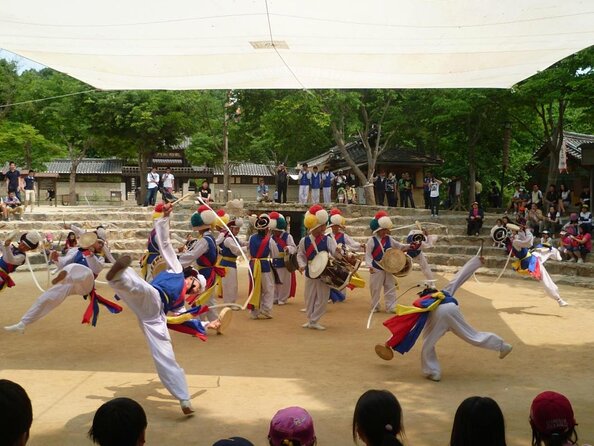
- The Folk Village includes live performances: Plan around the horseback martial arts, music, dance, and traditional wedding programs rather than treating the site as a simple open-air museum.
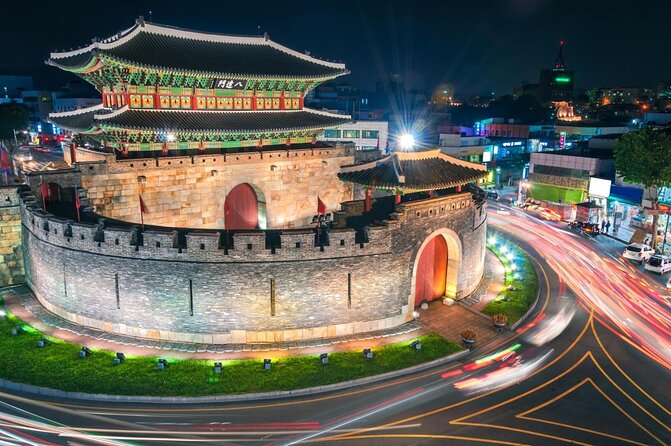
- Suwon Hwaseong is a UNESCO World Heritage site: You walk beside historic walls, gates, and watchtowers connected with King Jeongjo’s late-18th-century fortress and palace complex.
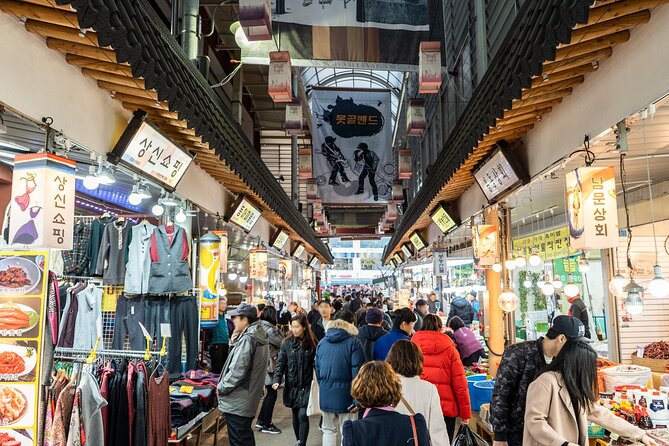
- The market stop adds local flavor: Suwon Nammun Market gives you free time to try foods such as hotteok, fishcake, sausage, and sweet rice drink.
- It is a long day: Expect roughly 10 to 11 hours in total, with the actual sightseeing schedule shaped by traffic and weather.
- The tour is good value for convenience: At $69.52 per person, you receive round-trip transport, entrance fees, and a guide, but meals and personal spending are extra.
What the day is really like from Seoul
This is sold as a day away from Seoul’s busy center, and that is exactly its appeal. You leave the city for two major cultural sights in Suwon, with someone else handling the driving and route planning. The day is less about lingering in one place and more about collecting several different views of Korean history and daily life.
The advertised sightseeing time is about 7 to 8 hours, while the full outing lasts around 10 to 11 hours. The difference is important. Road time, pickup arrangements, and traffic between Seoul and Suwon take up part of the day, so you should not expect ten straight hours on your feet inside the attractions.
The group can reach 43 people, which makes this a shared coach outing rather than a private tour. That keeps the price reasonable, but it can also mean waiting for late arrivals and moving at the pace of the whole group. One particularly useful lesson from the day is to arrive at the meeting point early. Delays at two pickup points caused one group to miss the first performance at the Folk Village.
Transport is one of the strongest parts of the package. You do not need to work out the trip to Suwon, buy separate attraction tickets, or find your way between the village, fortress, and market. The mobile ticket also keeps the booking simple. Meals are not included, so bring money for snacks or lunch, especially if you want to sample market food.
More hanok village visits:
- Seoul: Gyeongbok Palace, Bukchon Village, and Gwangjang Tour
★ 4.9 · 2,321 reviews - Seoul City Sightseeing Tour Including Gyeongbokgung Palace, N Seoul Tower, and Namsangol Hanok Village
★ 5.0 · 1,423 reviews - Seoul: Gyeongbok Palace, Bukchon Village, and Gwangjang Tour
★ 5.0 · 1,044 reviews
Korean Folk Village: culture with a theme-park frame
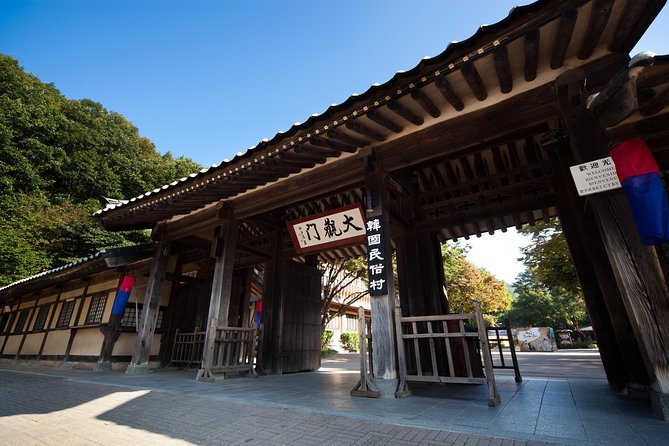
The Korean Folk Village is usually the main event. It presents traditional Korean culture from the late Joseon period through reconstructed houses, cultural demonstrations, seasonal customs, shaman practices, classes, and staged performances.
The important word is reconstructed. This is not a village where families still live in old houses and carry on an untouched rural routine. It is a tourist attraction designed to show how people lived during the Joseon era. That does not make it worthless, but it changes your expectations. You are visiting an organized cultural park with shops, restaurants, performances, and museum displays.
I find that this format works well for a first introduction. You can see traditional homes, examine displays about everyday life, and connect buildings with the social customs explained by your guide. The museum area, including depictions of ordinary life, has been a particular highlight for some people because it gives context beyond pretty roofs and courtyards.
The site is larger than many people expect. Three hours gives you enough time for a useful overview, but not enough to inspect every corner at leisure. Your guide may lead you through selected areas, point out details you could easily miss, and then direct you toward a show or free time. If you want a slow photographic walk, the schedule may feel tight.
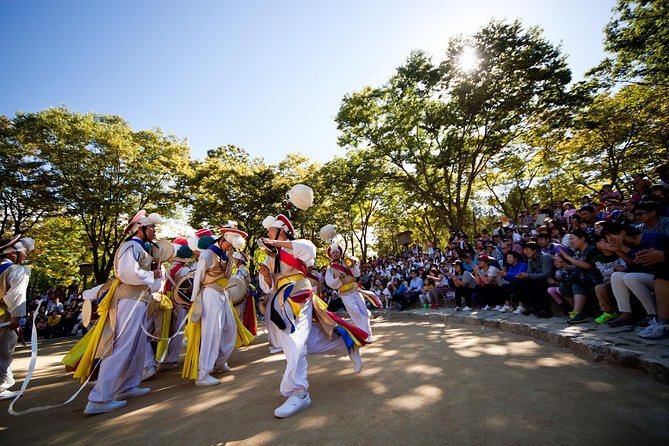
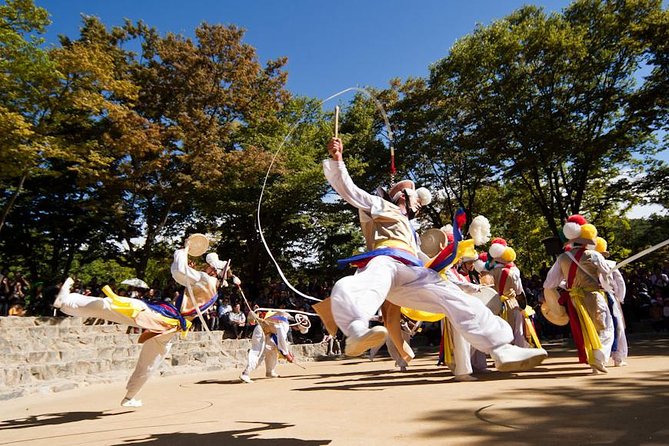
The performances add energy that static buildings cannot provide. Depending on the schedule and weather, you may see horseback martial arts, traditional music, dance, or a wedding ceremony. One special performance involving traditional music and hanbok dress was singled out as a memorable part of the day. These events help explain how movement, clothing, ceremony, and music fit into Korean culture.
Optional archery has also been available during some visits, and it was described as a fun extra. Programs can change, so treat performances and add-on activities as schedule-dependent rather than guaranteed at a particular time.
A guide makes a real difference here. Cecilia has been praised for explaining Joseon kings in a way that connects with people familiar with Korean television dramas. Joon has been described as patient and clear, while Gina, Laura, Stella, Julie, and Jonathan Kim have all received strong praise for mixing facts with personal anecdotes. Audio equipment or headphones may be provided so you can hear the guide in a larger group.
For families, the open grounds and shows offer more variety than a quiet palace interior. Still, the day is not ideal for every young child. One family found that children struggled with sitting still and keeping audio earbuds in place. Older children and teenagers who enjoy performances, costumes, and hands-on activities may have a better time than very young ones.
Suwon Hwaseong: walls, gates, and a short walk
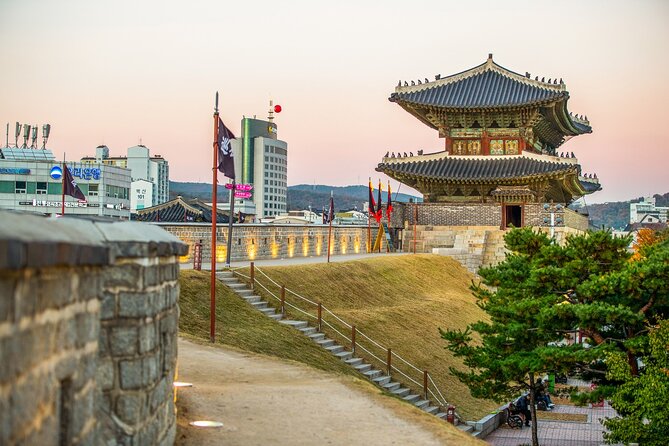
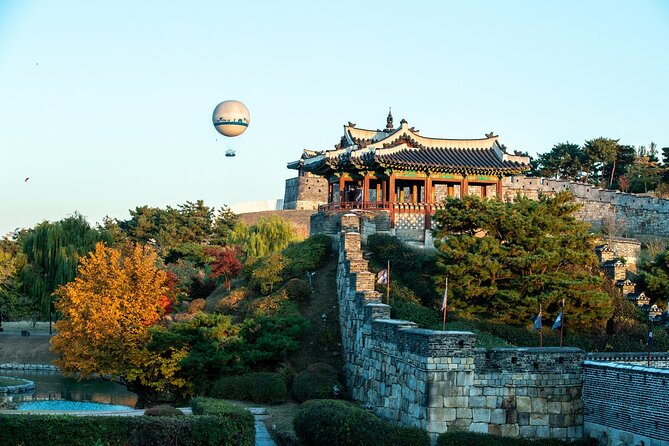
After the Folk Village, the tour continues to Suwon Hwaseong Fortress. Built in the late 18th century by King Jeongjo, the fortress formed part of a defensive and palace complex. Its walls extend for almost 6 kilometers, so a 90-minute stop can only show you a section.
That short visit is both a strength and a weakness. You get a clear introduction to the fortress, walk along part of the walls, and see gates and watchtowers without committing to a long full-site hike. For a compact day tour, that is sensible. If Suwon Hwaseong is your main reason for leaving Seoul, though, you may wish for more time.
The views and architecture are the reason to pay attention here. The wall line, gates, towers, and surrounding city create a striking contrast between historic military design and present-day Suwon. Some people find the fortress worth a special trip, while others consider it interesting but not essential on its own. Your reaction will depend on how strongly you enjoy historic walls and outdoor walking.
The guide’s explanation helps bring the site to life. Jonathan Kim has been praised for connecting the fortress to Korean history through small personal stories, and Stella has been credited with giving clear background throughout the visit. Joon’s patient style has also worked well for groups moving through the site together.
Weather matters. In heavy rain, a fortress walk becomes less pleasant, and a planned light show can be cancelled. In extreme heat, shade and rest stops become important. Laura and Cecilia were both praised for looking after the group during very hot days, while Jonathan kept a rainy visit enjoyable. Pack according to the forecast, because this part of the day is outdoors.
Do not expect to see all of Suwon Hwaseong. The visit is a sampler. If you want a longer wall walk, more gates, or a slower look at the complex, you would need to return independently.
Suwon Nammun Market and the best part of the food stop
The final stop is Suwon Nammun Market, a traditional market with roots reaching back to the Joseon period. It is included without an extra admission charge, and you receive about an hour to explore.
This is not a formal food tour, so meals are not included and you choose what to buy. That gives you freedom, but it also means the experience depends on your appetite and curiosity. Jonathan Kim has been praised for recommending foods and helping the group try hotteok, spicy fishcake, sausage, and a sweet rice drink.
The market provides a useful change of mood after the historical sites. Instead of looking at buildings and performances, you can watch ordinary commerce, browse stalls, and taste something warm or sweet. For many people, this becomes one of the most enjoyable parts because it turns cultural history into something immediate and edible.
There is a fair argument for dropping the market from the schedule. If you have already visited several Korean markets, you may prefer to return to Seoul earlier or spend more time at the Folk Village or fortress. If market food is new to you, the hour is a practical, low-pressure introduction.
A few more trips of this kind worth comparing:
- Best DMZ Tour Korea from Seoul (Red Suspension Bridge Optional)
★ 5.0 · 41,422 reviews - DMZ Tour: 3rd Tunnel, Option(Suspension Bridge, Boat) from Seoul
★ 5.0 · 21,373 reviews - DMZ tour south Korea from Seoul (NK experience hall, defector)
★ 5.0 · 20,599 reviews - Seoul: DMZ Tour with Optional Suspension Bridge
★ 4.8 · 5,277 reviews
Guides make or break the experience
The strongest thread running through this tour is the guide quality. Joon, Cecilia, Gina, Laura, Stella, Julie, Sally, and Jonathan Kim have each been praised for clear English, patience, warmth, and useful storytelling. The exact guide is not guaranteed, but the pattern is encouraging.
A good guide matters because both main stops can be confusing without context. At the Folk Village, you need help separating an original-looking traditional structure from a modern reconstruction. At Hwaseong, you need the story of King Jeongjo and the fortress plan before the walls become just another scenic walk.
The best guides also manage practical problems. They keep the group moving, answer questions, point out places to rest, and adjust when rain or heat interferes. Several guides took photographs for the group, which is a thoughtful touch when you are traveling alone or with family.
There is a tradeoff. A large group means the guide cannot give every person unlimited attention. Headphones can help, but you still need to stay close and follow meeting instructions. If you prefer spontaneous wandering, a private guide, or long quiet stops, this organized format may feel restrictive.
Is $69.52 good value?
At $69.52 per person, the price is reasonable for a full day outside Seoul. You receive transport, entrance fees, and English or Chinese-speaking staff. Those inclusions remove several costs and decisions that can add up when you arrange the same outing yourself.
The value is strongest if you want convenience. You can see two major Suwon-area attractions and a market in one day without managing transfers. For a first visit to Korea, that structure can be worth more than saving a little money through independent planning.
The price is less attractive if you want depth. The Folk Village gets about three hours, the fortress about 90 minutes, and the market about an hour. You pay for coverage across several locations, not for a leisurely study of one site.
Remember to budget for food and personal purchases. Admission is included, but meals are not. Market snacks are generally the most obvious extra, and the range of choices lets you control how much you spend.
The 94 percent recommendation rate and 4.7 rating from 80 reviews point to a consistently positive experience, but the lower scores reveal the main concern clearly: some people feel the tour spends too much time on the road and too little time exploring. That is a fair criticism of any long shared day tour from Seoul.
Practical tips for a smoother day
Arrive at the meeting point early. The tour uses pickup arrangements, and waiting for late arrivals can reduce your time at the Folk Village. Missing a scheduled performance is especially frustrating when the shows are one of the day’s strongest features.
Wear comfortable shoes. You will walk through the Folk Village and along part of the fortress wall, and the ground may be uneven or exposed to sun and rain. Bring water, sun protection, or rain gear based on the forecast.
Keep your schedule flexible. Traffic and weather can change the order or length of stops. Rain has affected fortress activities and cancelled a light show, while heat has made rest breaks important.
If you want the most from the Folk Village, ask your guide about the day’s performance times as soon as you arrive. Then use your free time around those fixed events. The village is large enough that wandering without a plan can leave you hurrying at the end.
For the market, arrive with an open mind and some spending money. You may want to try one savory snack and one sweet item rather than commit to a full meal. If you have already visited major markets in Seoul, use the hour for a quick taste rather than expecting a completely different experience.
The tour is near public transportation, and most people can participate, but the schedule still involves outdoor walking. The operator allows free cancellation up to 24 hours before the start time. Changes or cancellations inside that window are not accepted for a refund.
Who should book this day tour?
I would choose this tour if you want a guided introduction to Joseon-era culture, traditional performances, Suwon’s fortress, and Korean market food in one organized day. It is especially suited to first-time visitors, friend groups with different interests, and families with older children.
I would be more cautious if you dislike reconstructed attractions, large groups, fixed schedules, or long transport days. The Folk Village is not an untouched historic settlement, and the fortress deserves more than 90 minutes if you have a strong interest in architecture or military history.
For most people, the deciding question is simple: do you value convenience and variety more than unhurried exploration? If yes, $69.52 buys a useful, well-supported day with strong guides and plenty to see. If you want to walk the full fortress, linger in traditional houses, or avoid a market you have already seen, plan the Suwon sights independently.
FAQ
How long does the Korean Folk Village and Suwon Hwaseong Fortress tour last?
The full experience takes approximately 10 to 11 hours. The listed sightseeing schedule includes about three hours at the Korean Folk Village, 90 minutes at Suwon Hwaseong Fortress, and one hour at Suwon Nammun Market.
What is included in the tour price?
The price includes transportation, entrance fees, and English or Chinese-speaking staff. Meals, travel insurance, and personal expenses are not included.
Is the Korean Folk Village a real residential village?
No. It is a reconstructed cultural park presenting traditional life from the late Joseon period. It includes traditional houses, cultural displays, performances, shops, and restaurants.
What can I see at the Korean Folk Village?
The visit can include traditional houses, cultural classes and displays, seasonal customs, shaman practices, horseback martial arts, traditional music and dance, and a traditional wedding ceremony. The exact program can depend on scheduling and weather.
How much time is spent at Suwon Hwaseong Fortress?
The planned stop is about one hour and 30 minutes. You can walk along part of the fortress walls and see gates and watchtowers, but the full fortress complex is much larger.
Can I cancel the tour for a refund?
Yes. You can cancel up to 24 hours before the experience start time for a full refund. Cancellations or changes made less than 24 hours before the start time are not accepted for a refund.
Just added around Seoul
- Seoraksan National Park & Nami Island★ 4.5 · 3 reviews
- Strawberry Picking, Winter Sled with Eobi Ice Valley from Seoul★ 4.5 · 3 reviews
- Seoul Full Day small group Tour★ 5.0 · 3 reviews
- Seoul Korean BBQ Dinner Experience with Secret Food Tours★ 5.0 · 3 reviews
- Rice Wine Tasting with Sommelier – Finest Makgeolli (& Soju)★ 5.0 · 3 reviews
- Majang Meat Market Experience: Private Tour with Han-woo Beef BBQ★ 5.0 · 3 reviews
- Seoul: Alpaca World and Nami Island (with Garden / Railbike)★ 5.0 · 3 reviews
- Max Out Seoul: Must Visit City Highlights Panoramic Day Tour★ 5.0 · 3 reviews
Hanok Village & Folk Culture, compared.

Gyeongbok Palace, Bukchon Village, and Gwangjang Tour
Read our review →
Seoul City Sightseeing Tour Including Gyeongbokgung Palace, N Seoul Tower, and Namsangol Hanok Village
Read our review →Gyeongbok Palace, Bukchon Village, and Gwangjang Tour
Read our review →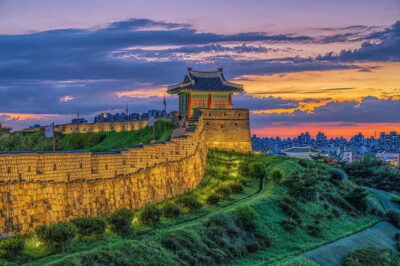
Suwon Hwaseong Fortress & Korean Folk Village Tour
Read our review →
Gyeongbok Palace and Bukchon Hanok Walking Tour
Read our review →
Best Walking Tour to Gyeongbok Palace Bukchon Hanok Village
Read our review →
Experience Korean Cooking in Modern Hanok Kitchen
Read our review →
Royal Seoul Cooking Class in a 100-Year-Old Hanok
Read our review →Browse the lists this tour appears in