
Reviewed · DMZ & BORDER TOURS
Seoul DMZ Tour with 3rd Tunnel and Red Suspension Bridge
The Korean border is closer than you think. This eight-hour outing from central Seoul combines war history, a tunnel built for invasion, a lookout toward North Korea, and a mountain suspension bridge tied to a fierce 1951 battle. I especially like the way the day connects past and present, and I like that the tour skips the usual shopping stops.
The main drawback is physical: the Third Tunnel and bridge both require serious uphill and downhill walking. At $45 per person, the price is excellent for an air-conditioned vehicle, entrance tickets, and a professional guide, but you should bring water, snacks, a passport, and sturdy shoes.
In This Review
- Key points before you book
- Why this tour works as a day from Seoul
- Imjingak Park and the story of divided families
- Walking through the Third Tunnel
- Dora Observatory and the view toward North Korea
- The red suspension bridge at Gamaksan
- Guide quality and the rhythm of the day
- Food, transport, and what to pack
- Is $45 a good value?
- Who should book this DMZ day trip?
- Should you book it?
- FAQ
- How long does the Seoul DMZ tour last?
- Where does the tour begin and end?
- Is a passport required?
- How difficult is the Third Tunnel?
- Is food included?
- Does the tour visit the Joint Security Area?
- Can I cancel for a full refund?
Key points before you book
- The Third Tunnel is a real workout: Expect a steep walk down, a low ceiling, and an equally demanding climb back up.
- Dora Observatory is weather dependent: On a clear day, you may see Gaeseong, Songaksan, farms, and other sites in North Korea.
- The Gamaksan Chulleong Bridge adds wartime meaning: The 150-meter bridge crosses a mountain area linked to the 1951 Battle of Solma-ri.
- Imjingak gives the day emotional context: Monuments, the Bridge of Freedom, Mangbaedan, and Dokgae Bridge connect the DMZ to divided families.
- The 9 a.m. departure is practical: You avoid the very early starts used by some other DMZ outings.
- Pack lunch substitutes: There is no official meal break, though you have chances to buy snacks and drinks.
Why this tour works as a day from Seoul
A DMZ visit can feel abstract if you only see a border fence and take a few photographs. This itinerary gives you several different ways to understand the division of Korea: memorial sites at Imjingak, military infrastructure underground, a view toward North Korea, and a battlefield memorial in the hills.
The day begins at a designated meeting point around Myeong-dong subway station. Hotel pickup is not included, so you need to reach the selected meeting place yourself. The ride out of Seoul is useful preparation time, since guides explain the Korean War and the continuing division of the peninsula along the way.
The scheduled duration is about eight hours, with departure around 9 a.m. and an expected return near the original Myeong-dong area. One important practical note: the final drop-off may be near a station or close to the meeting area rather than exactly at your original pickup point. If you are tired after a long day, budget for a short taxi ride just in case.
The group size can reach 500 people, so this is not a small private excursion. The tradeoff is cost. A $45 tour with transport, admission tickets, and guiding covers a lot of ground for less than arranging separate transport to military-controlled areas.
More DMZ and border tours:
- Best DMZ Tour Korea from Seoul (Red Suspension Bridge Optional)
★ 5.0 · 41,422 reviews - DMZ Tour: 3rd Tunnel, Option(Suspension Bridge, Boat) from Seoul
★ 5.0 · 21,373 reviews - DMZ tour south Korea from Seoul (NK experience hall, defector)
★ 5.0 · 20,599 reviews
Imjingak Park and the story of divided families
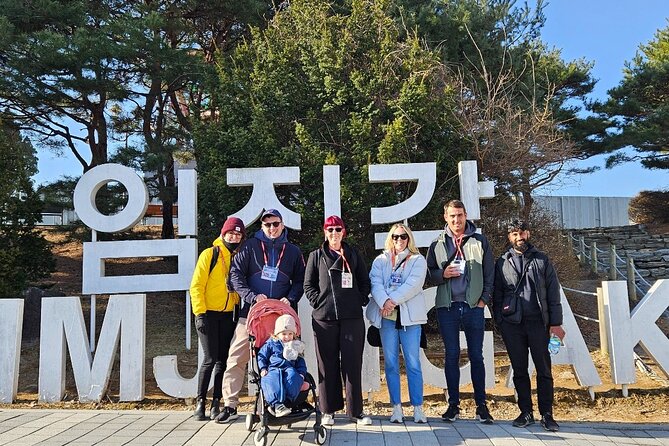
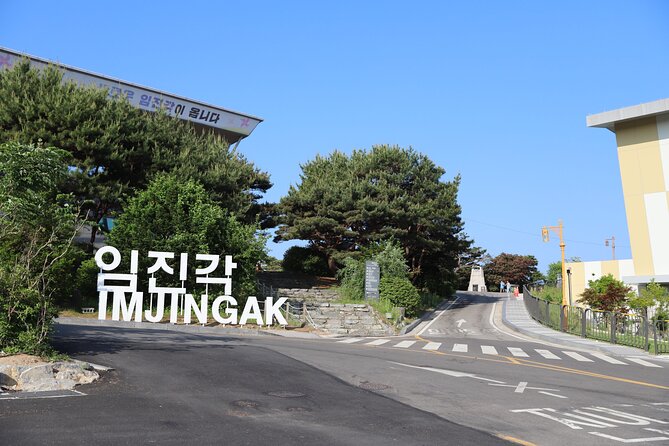
Imjingak Pyeonghoa-Nuri Park is about seven kilometers from the Military Demarcation Line. Imjingak was built in 1972 with hopes that reunification would one day be possible. Its three-story building is surrounded by monuments, Unification Park, and the North Korea Center.
This first stop helps you understand that the DMZ is not only a military attraction. It is also tied to families separated by the Korean War. Mangbaedan, visited for about 15 minutes, is where people with relatives in North Korea come on New Year’s Day to honor and remember family members they cannot visit.
You will also see the Bridge of Freedom, a powerful symbol of separation and return. Dokgae Bridge was destroyed during the war and later rebuilt, giving you a visible reminder that this border is shaped by both conflict and repair.
The stop at Imjingak lasts about 30 minutes, with admission included. It is also a practical place to use the restroom and pick up breakfast or a drink. Since the tour does not include meals, this is a good moment to buy something before the more strenuous sections begin.
Walking through the Third Tunnel
The Third Tunnel is the most demanding part of the day, but also one of the most memorable. South Korea discovered it in 1978, and the tunnel is 1,635 meters long, about two meters wide, and about two meters high. It was built under the border and is believed to have been intended for a military advance.
You do not walk the full tunnel. The visit involves a steep descent, a lower section where the ceiling is low, and a climb back to the surface. One detailed account described roughly 800 meters downhill, followed by a flatter section of around 180 meters where a person 176 centimeters tall repeatedly struck a helmet on the ceiling. That gives you a useful warning: the low ceiling is not a minor inconvenience.
Safety helmets are used, and you should expect to walk hunched over for several minutes. The return climb is the harder part for many people. The official advice to have moderate physical fitness is worth taking seriously.
Wear walking shoes with good support. Flip-flops, slippers, and heels are poor choices here. If you have knee trouble, breathing problems, balance concerns, or a sedentary routine, think carefully before booking. The tunnel is not suitable for anyone looking for a gentle sightseeing day.
The challenge is worthwhile because the place makes the military situation tangible. You are not just hearing that the border was fortified. You are moving through a narrow underground passage that was concealed beneath the ground, then walking back up toward the open air.
Dora Observatory and the view toward North Korea
After the tunnel, the tour continues to Dora Observatory. From here, you can look toward North Korea and, under favorable conditions, see places including Gaeseong, Songaksan, the Kim Il-sung statue, and the Geumamgol Cooperation Farm.
The view depends heavily on weather and visibility. On a clear day, you may see people living and working across the border. Haze or rain can reduce the experience to a distant outline, so keep your expectations sensible. The observatory is about seeing what you can, not receiving a guaranteed panorama.
The stop lasts around 30 minutes and admission is included. Your guide can help explain what you are looking at, which matters because the distant sites are not always obvious to the untrained eye.
This is also a quieter part of the day. After the physical effort of the tunnel, the observatory gives you time to pause and consider the strange contrast: ordinary farms and communities exist just beyond one of the world’s most heavily guarded boundaries.
More suspension bridge and cable car trips:
- Seoul: DMZ Tour with Optional Suspension Bridge
★ 4.8 · 5,277 reviews - Signature DMZ Tour: Exclusive Defector Talk & Suspension Bridge
★ 5.0 · 4,459 reviews - Ultimate Korea DMZ Tour from Seoul (Gondola & Suspension Bridge)
★ 5.0 · 2,396 reviews - DMZ; NK Defector, 3rd Tunnel, Suspension Bridge,Hotel pickup
★ 4.9 · 2,055 reviews
The red suspension bridge at Gamaksan
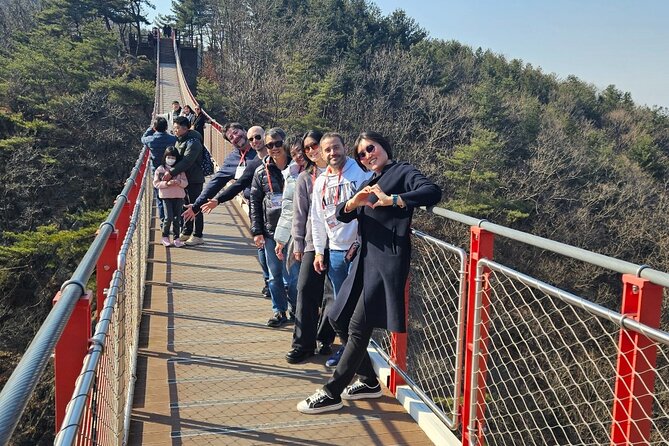
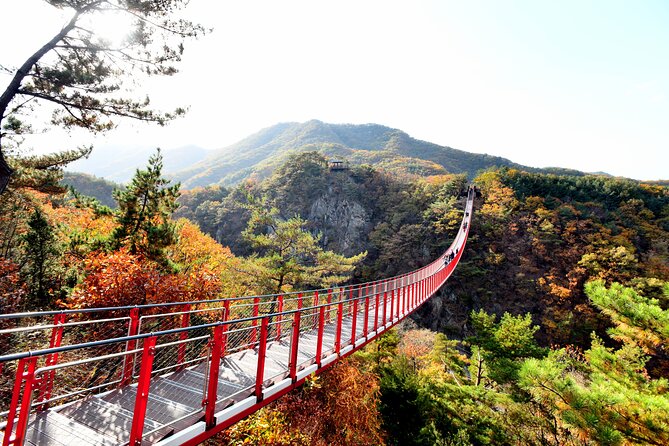
The Gamaksan Chulleong Bridge provides the tour’s outdoor finale. It is about 150 meters long and 1.5 meters wide, set in Solma-ri near the site of the 1951 Battle of Solma-ri, also called the Battle of Gloster Hill.
British troops fought and died in this area during the Korean War. That history gives the bridge more weight than a typical scenic walk. You get mountain views and a dramatic crossing, but you are also standing in a place connected to a costly defensive battle.
The bridge itself is free, but reaching it requires effort. The approach includes a steep climb, with one account estimating about 400 steps from the road to the bridge. The one-hour stop therefore includes more than crossing the suspension span. You will be walking uphill, standing, taking photographs, and then making your way back down.
The bridge can be especially appealing if you want a little nature alongside the military history. Still, do not mistake it for an easy scenic stroll. Combined with the tunnel, it can push the day to roughly 22,000 steps for some people.
Guides such as Winnie, Thomas, Kenny, Grace, Leo, Chloe, Stella, and Mama Winnie have been praised for keeping groups moving while adding stories, humor, and clear explanations. The strongest pattern is that the guide can make a major difference on a long day. A good guide helps you understand why the bridge matters rather than treating it as only a photo stop.
Guide quality and the rhythm of the day
This tour depends heavily on communication. You are visiting military-controlled sites with fixed schedules, so the guide needs to explain meeting times, walking routes, and site rules clearly.
The guides named above have been described as friendly, patient, organized, and good at answering questions. Grace has used photos and interactive videos on the bus, while other guides have helped with individual and group photographs. Winnie has been praised for combining humor with a serious explanation of Korean history. Thomas is noted for keeping the day on time and making difficult material easier to follow.
That personal touch matters because the itinerary is fast paced. Stops are short: about 30 minutes at Imjingak, 15 minutes at Mangbaedan, 40 minutes at the Third Tunnel, 30 minutes at Dora Observatory, and one hour at Gamaksan. You will not have unlimited time at any location.
The upside is efficiency. You see several important sites in one day without worrying about military access, local transport, or entrance arrangements. The downside is that you may wish for more time at Imjingak or the observatory, especially if you enjoy slow photography or reading every memorial.
Food, transport, and what to pack
An air-conditioned vehicle is included, which is important because the sites are spread out and the day involves substantial walking. The vehicle also gives you a chance to rest between stops.
Meals and beverages are not included, and there is no formal lunch break. You will have opportunities to buy snacks, coffee, and drinks, but you should bring something from Seoul so you are not relying on the timing of a roadside stop. A few small snacks can make the tunnel and bridge sections easier.
Bring:
- Your current valid passport
- Water and snacks
- Comfortable walking shoes
- Weather-appropriate clothing
- A phone with enough battery for photographs and mobile ticket access
Your passport is required on the day because the DMZ is operated by the military. The tour can also be canceled without notice if military operations affect access. That is a fact of visiting a controlled border zone, not something the operator can always prevent.
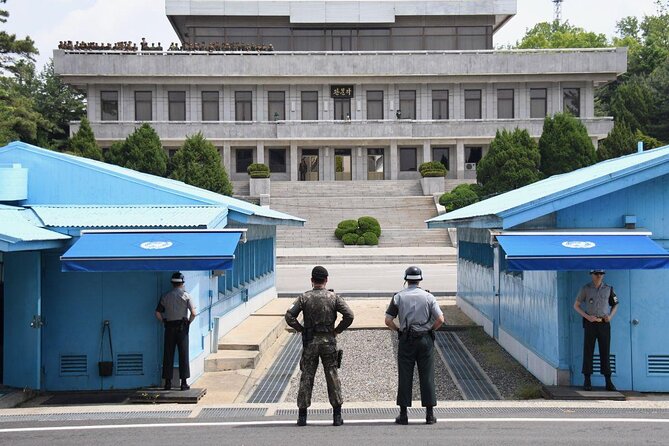
The tour does not include a visit to the Joint Security Area, also called the JSA. It also avoids shopping stops such as ginseng centers and amethyst factories. If you want a focused day about the Korean War and the border, this is a plus.
Is $45 a good value?
For $45, this is a strong-value day trip. The fee includes transportation in an air-conditioned vehicle, admission tickets, and a guide. You also get five distinct stops, including two sites that require special access and organized transport.
The price is especially good if you are visiting Seoul for only a few days. Reaching the DMZ independently would require more planning, and you would still need to understand site access, local transport, and timing.
The value depends on your tolerance for a large group and a full schedule. If you prefer private guiding, long meals, or flexible departure times, this will feel basic. If you want a practical introduction to the DMZ at a modest price, it is hard to argue with the amount included.
Free cancellation is available when you cancel at least 24 hours before the start time. Changes or cancellations made later are not accepted for a refund. A minimum number of participants is also required, and a cancellation for that reason leads to another date, another experience, or a full refund.
Who should book this DMZ day trip?
I would recommend it to first-time visitors who want clear historical context without spending days arranging transport. It works well for solo visitors, couples, families with teenagers, and anyone curious about the Korean War and the current border.
Families should judge the walking honestly. Teenagers may enjoy the tunnel and bridge, but young children or anyone unused to steep paths could struggle. The tour is also a good fit for people who prefer a later 9 a.m. start instead of the 6:30 a.m. departures offered by some DMZ excursions.
I would not choose it if you need a low-effort sightseeing day. The Third Tunnel is cramped, the return climb is strenuous, and the suspension bridge approach adds another major hill. The experience rewards preparation.
Should you book it?
Book this tour if you want the DMZ explained through real places: a memorial park, a family remembrance site, an underground tunnel, a border viewpoint, and a battlefield bridge. The strongest reasons to go are the guide-led history, the unusual access, and the solid $45 value.
Skip it if steep walking is a serious concern, if you require a guaranteed view of North Korea, or if you want to visit the JSA. For everyone else, pack snacks, wear proper shoes, carry your passport, and expect a long day that is both physically demanding and genuinely moving.
FAQ
How long does the Seoul DMZ tour last?
The tour lasts approximately eight hours. It begins around 9 a.m. and returns near the Myeong-dong meeting area.
Where does the tour begin and end?
The meeting and return area is in Myeong-dong, Jung District, Seoul, near Myeong-dong subway station. Hotel pickup and drop-off are not included.
Is a passport required?
Yes. You must bring a current valid passport on the day of the tour.
How difficult is the Third Tunnel?
The Third Tunnel requires a steep walk down and back up, plus time walking beneath a low ceiling. A moderate level of physical fitness is recommended.
Is food included?
No. Meals and beverages are not included. You are strongly encouraged to bring snacks and drinks, with opportunities to buy refreshments during the day.
Does the tour visit the Joint Security Area?
No. The Joint Security Area, or JSA, is not included in this experience.
Can I cancel for a full refund?
Yes, if you cancel at least 24 hours before the experience start time. Cancellations or changes made less than 24 hours before the start time are not accepted for a refund.
Just added around Seoul
- Seoraksan National Park & Nami Island★ 4.5 · 3 reviews
- Strawberry Picking, Winter Sled with Eobi Ice Valley from Seoul★ 4.5 · 3 reviews
- Seoul Full Day small group Tour★ 5.0 · 3 reviews
- Seoul Korean BBQ Dinner Experience with Secret Food Tours★ 5.0 · 3 reviews
- Rice Wine Tasting with Sommelier – Finest Makgeolli (& Soju)★ 5.0 · 3 reviews
- Majang Meat Market Experience: Private Tour with Han-woo Beef BBQ★ 5.0 · 3 reviews
- Seoul: Alpaca World and Nami Island (with Garden / Railbike)★ 5.0 · 3 reviews
- Max Out Seoul: Must Visit City Highlights Panoramic Day Tour★ 5.0 · 3 reviews
DMZ & Border Tours, compared.

Best DMZ Tour Korea from Seoul (Red Suspension Bridge Optional)
Read our review →
DMZ Tour: 3rd Tunnel, Option(Suspension Bridge, Boat) from Seoul
Read our review →
DMZ tour south Korea from Seoul (NK experience hall, defector)
Read our review →
DMZ Insider Tour: 3rd Tunnel, NK Defector Meet & Red Bridge
Read our review →

Signature DMZ Tour: Exclusive Defector Talk & Suspension Bridge
Read our review →
Thrilling Korean DMZ 3rd Tunnel Tour from Seoul + Red Bridge Rush
Read our review →DMZ Past and Present: Korean Demilitarized Zone Tour from Seoul
Read our review →Browse the lists this tour appears in