
Reviewed · MARKETS
Seoul History Tour: Dark Past & Market Street Flavors
Seoul’s past is not kept behind glass. This four-hour walk links Seodaemun Prison, independence movements, Deoksugung Palace, and Namdaemun’s food stalls in one thoughtful route. I like the strong contrast between political history and everyday eating, and I like that entrance fees, transport, and food tastings are included. The main caution is the pace: you will walk a lot, and one hour later it may feel rushed.
The tour is led in English by a professional guide, with guides praised for clear explanations and warm help. Kim, in particular, has been singled out for going out of the way to assist a participant. At $65, the package offers good value if you want historical context rather than a quick photo stop, but the maximum group size of 99 means the experience may not always feel intimate.
In This Review
- Key points at a glance
- Why this Seoul history route works
- Seodaemun Prison: the tour’s hardest hour
- Dilkusha and the role of Albert W. Taylor
- Deoksugung Palace and Korea’s uneasy modernization
- City Hall and Sungnyemun Gate
- Namdaemun Market and Kalguksu Alley
- What $65 really includes
- Pace, group size, and guide quality
- Booking details worth knowing
- Should you book this Seoul tour?
- FAQ
- How long is the Seoul History Tour?
- What time does the tour begin?
- Where does the tour start?
- Where does the tour end?
- Are entrance fees included?
- Is food included?
- Is transportation included?
- Is the tour offered in English?
- What happens if I need to cancel?
Key points at a glance
- Seodaemun Prison sets the tone: Expect a serious visit to a former Japanese colonial prison and a direct look at Korea’s independence struggle.
- Dilkusha adds an international angle: Albert W. Taylor’s house shows how an American journalist supported Korea’s independence.
- Deoksugung mixes old and new: Traditional palace buildings sit near modern Seoul, with Korean and Western styles side by side.
- Namdaemun turns history into lunch: Kalguksu Alley and market tastings bring you into Seoul’s daily food culture.
- The route ends near useful transport: You finish at Namdaemun Market, a practical place to continue sightseeing or shopping.
- Plan for four hours on foot: Moderate fitness is advised, and comfortable shoes matter more than fashionable ones.
Why this Seoul history route works
Many Seoul tours gather several palaces or markets into one hurried checklist. This one has a clearer idea behind it. You begin with repression, move through resistance and international support, see a royal court trying to adapt to modern times, and finish among food sellers and shoppers.
That progression gives the tour a human scale. Korea’s past is not treated as a string of dates. You see how power affected real people, how outside support mattered, and how ordinary food remains part of cultural memory.
I especially like the way the final market visit softens the mood without erasing what came before. After Seodaemun Prison, you may want time to process what you have seen. Namdaemun provides that change of pace. It is noisy, practical, and full of familiar local dishes rather than polished restaurant menus.
The tour lasts about four hours and begins at 2:30 pm. That timing places the palace and market visits later in the day, so light and crowd levels may change as the afternoon goes on. The route ends at Namdaemun Market, not back at the starting point, which is useful if you plan to continue in central Seoul.
More Historical Tours in Seoul
- Seoul: Evening Dark History, Folklore & Ghost Story Walking Tour
★ 5.0 · 593 reviews - Hanbok Photoshoot and History Tour at Gyeongbokgung Palace
★ 5.0 · 276 reviews - From Seoul: Dae Jang Geum Park Historic K-Drama Set Tour
★ 4.9 · 143 reviews
Seodaemun Prison: the tour’s hardest hour
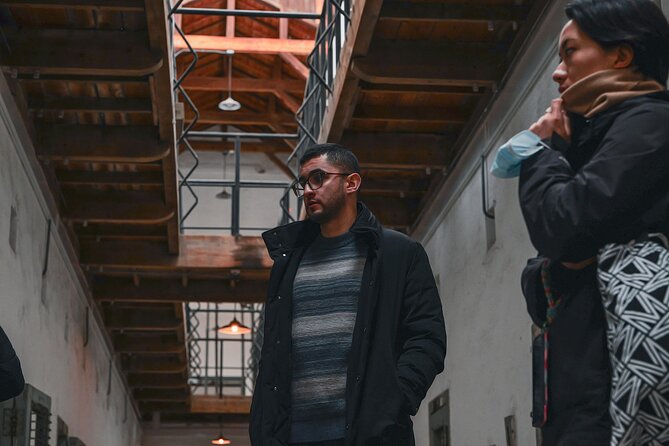
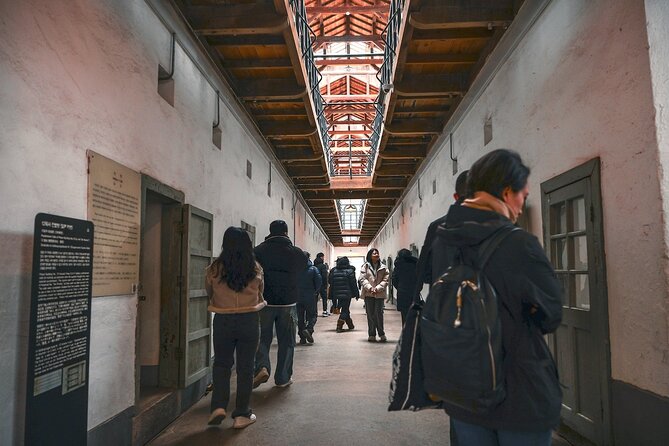
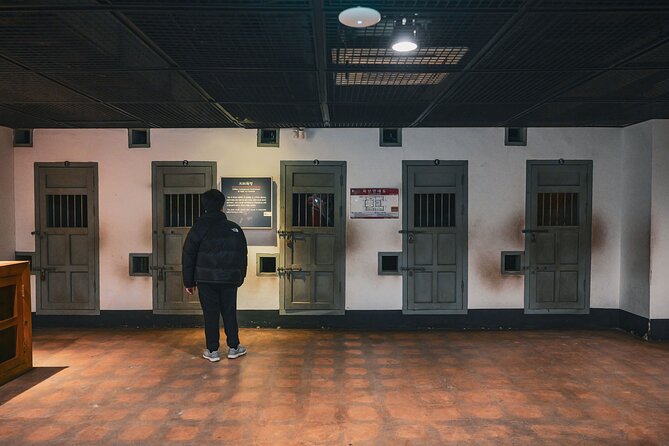
The Seodaemun Prison History Hall is the emotional center of the experience. This former Japanese colonial prison is presented as a place of confinement and resistance, with the guide explaining the lives of Korean independence fighters who endured imprisonment for the cause of freedom.
You should expect a somber visit rather than a light museum stop. The subject involves colonial rule, hardship, and political violence. A good guide helps connect the rooms and exhibits to the wider independence movement, which is important because the prison can otherwise feel like a series of grim spaces without enough context.
About 50 minutes is allotted here, and admission is included. That is enough time for a focused introduction, though not enough for every display if you prefer to read every panel carefully. If you are the kind of person who studies museum text at length, keep your expectations in check and listen closely to the guide.
This stop is particularly useful for anyone who knows little about Korea’s period under Japanese occupation. Even people who have lived in South Korea and already understand modern Korean society may find the prison adds a sharper sense of what independence meant on a personal level.
Wear shoes with good support. The tour is not described as strenuous, but the full route involves plenty of walking, and the prison visit is only the first major stop.
Dilkusha and the role of Albert W. Taylor
The next stop, Dilkusha, lasts around 30 minutes and has no separate admission charge. This historic house belonged to Albert W. Taylor, an American journalist who supported Korea’s independence.
Dilkusha means Heart’s Delight, but the value of the visit is not the name alone. The house gives the tour an international frame. Korea’s independence movement was not isolated from the wider world, and Taylor’s connection shows how foreign journalists and supporters could help bring Korean events to international attention.
This short stop also gives the route a change in scale. Seodaemun Prison confronts you with institutional power. Dilkusha focuses on a particular home and a particular foreign resident. That shift can make the larger political story easier to understand.
Thirty minutes is a sensible amount of time here. It allows the guide to explain the house and Taylor’s role without turning the stop into a long architectural inspection. If your main interest is palace design or market food, Dilkusha may feel brief, but its historical link is important.
Deoksugung Palace and Korea’s uneasy modernization
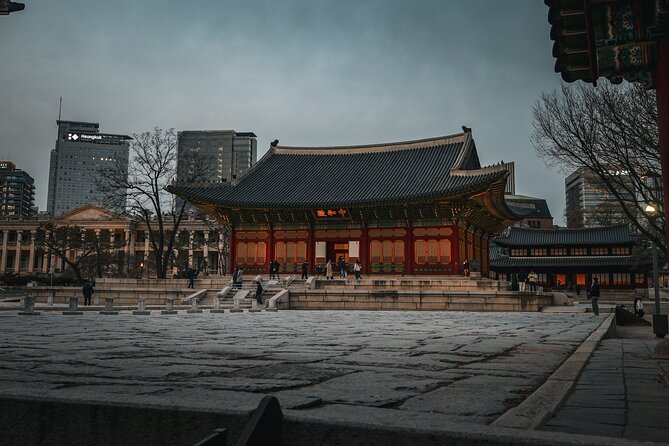
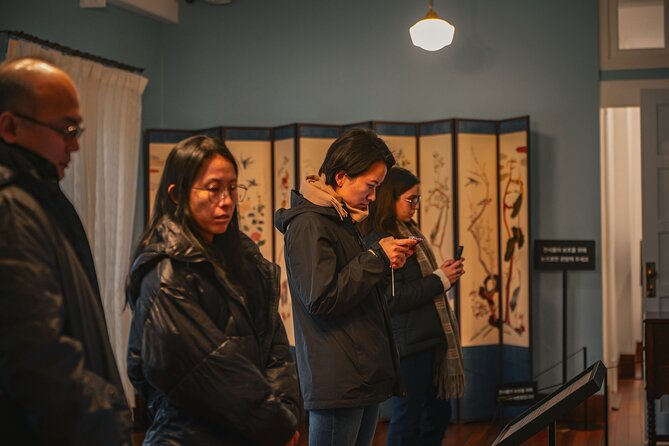
Deoksugung Palace offers a striking change after the prison and house. The palace is known for its combination of traditional Korean and Western architectural styles, reflecting a period when Korea faced political pressure and rapid change.
The tour allows about 40 minutes, with admission included. That is enough to understand the main idea and see the contrast between palace traditions and newer architectural influences. It is not a full palace study, so do not expect the same length or depth as a dedicated palace tour.
I like this stop because it avoids treating Korean royal sites as frozen relics. Deoksugung shows a court trying to respond to modernization while political conditions became more difficult. The nearby modern city makes the contrast even clearer. You are not viewing an isolated historical site. You are seeing old royal space surrounded by the capital that grew around it.
One useful point from the feedback is that the guide’s explanations can make the palace much more rewarding. The architecture is attractive on its own, but the political background gives it purpose. A guide who explains why Korean and Western forms appear together can turn a pretty stop into a meaningful one.
If you have visited other Seoul palaces, Deoksugung may still feel different. Its architectural mix gives it a distinct character, and the tour places it within Korea’s transition rather than presenting it as just another royal compound.
More Market Visits in Seoul
- Seoul Street Food Market Tour
★ 5.0 · 1,226 reviews - Local Home Korean Cooking Class & Market Adventure in Seoul
★ 5.0 · 1,024 reviews - Seoul: Night Market Food Tour with Local Guide
★ 4.9 · 943 reviews - Downtown Seoul Guided Food & Market Tour with 8+ Local Tastings
★ 5.0 · 580 reviews
City Hall and Sungnyemun Gate
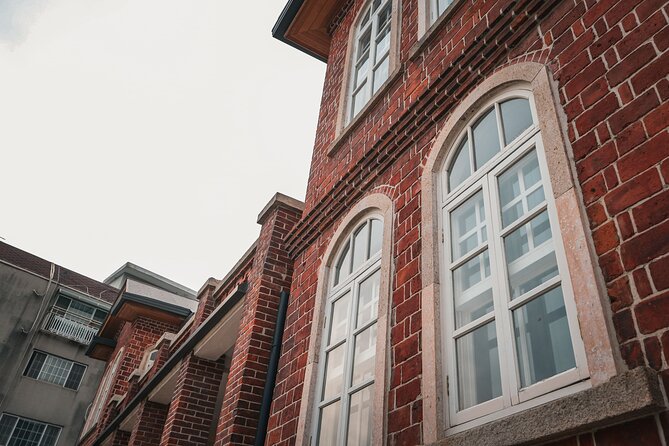
The route then passes Seoul City Hall and Sungnyemun Gate, also known as Namdaemun. This section takes about 20 minutes, and no separate admission fee is listed.
City Hall represents modern Seoul and the country’s change from colonial rule to a democratic state. Sungnyemun, one of the city’s historic gates, connects that modern setting to Seoul’s earlier defensive and urban structure.
The stop is relatively short, so treat it as a guided orientation rather than a full monument visit. The guide’s comments about defense systems and the gate’s place in Seoul’s development are the main value here. You will likely have time to take in the setting and hear the historical link, but not to linger over every detail.
This is also where the tour’s overall design becomes clear. The route moves from a prison associated with occupation, to a house linked with international support, to a palace shaped by modernization, then to a gate and city center shaped by both old and new Seoul.
Namdaemun Market and Kalguksu Alley
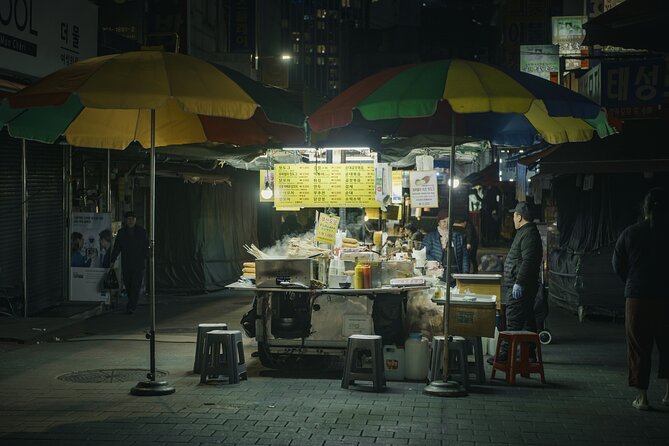
The final hour takes place at Namdaemun Market, described as Korea’s oldest and largest traditional market, with more than 600 years of trading history. It is a strong ending because the tour finishes with ordinary Seoul life rather than another formal monument.
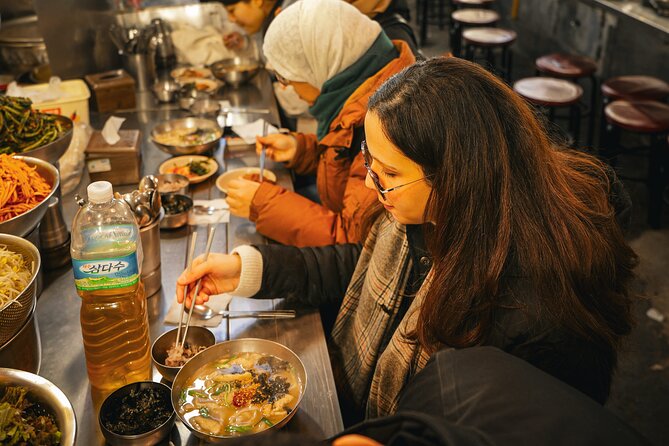
Food tastings are included, along with a meal at the famous Kalguksu Alley. Kalguksu is hand-cut noodle soup, a modest comfort food that fits the tour’s focus on daily life. The emphasis here is not on a formal tasting menu. You are being introduced to humble dishes and the market setting where food is part of the city’s routine.
This is the part where the tour becomes most practical and social. You can see how vendors work, how narrow market lanes function, and how a long-standing shopping district remains part of present-day Seoul. The meal also gives you a chance to ask the guide about dishes and customs while the earlier history is still fresh.
The market can be lively and crowded, so stay aware of the group and keep your belongings secure. The itinerary does not promise a particular number of tastings beyond food at the market, so think of this as a guided local meal and sampling experience, not a long food crawl.
Ending here is convenient. Namdaemun Market is in central Seoul, and the stated end point is 21 Namdaemunsijang 4-gil in Jung District. You can continue shopping, find another meal, or use public transport from the area.
What $65 really includes
The $65 price is reasonable if you plan to visit these places anyway and want one guide to connect them. The fee includes an English-speaking professional guide, transport costs, entrance fees, and food tastings at Namdaemun Market.
That matters because admission to Seodaemun Prison and Deoksugung Palace is already covered, and you do not have to work out transport between the western part of the route and central Seoul. The market meal adds practical value, too.
The price is less attractive if you prefer to explore slowly on your own. The schedule gives Seodaemun Prison 50 minutes, Deoksugung 40 minutes, and Namdaemun one hour. That is a good introduction, but it leaves limited time for quiet museum reading, extended photography, or independent browsing.
Tips are not included. You should also budget for any extra food or shopping you choose to buy at Namdaemun.
Pace, group size, and guide quality
The biggest practical issue is the pace. One participant found the tour rushed and suggested beginning an hour earlier. That is useful advice, especially if you dislike moving quickly between sites or want plenty of time at each historical building.
The tour recommends moderate physical fitness. You should be ready for a walking-heavy afternoon, standing during explanations, and moving through a market. Comfortable shoes and a small bag will make the day easier.
The listed maximum is 99 people, which is large. The actual group may be smaller, but you should not book this expecting a private or small-group outing. In a large group, it may be harder to hear every explanation or stay close to the guide in Namdaemun’s narrow lanes.
Guide quality appears to be a major strength. The best feedback praises clear historical explanations, friendly help, and guides who answer questions. Kim has been specifically praised for being attentive during a participant’s personal difficulties. Guide assignments can change, but the experience depends heavily on the person leading it, so bring questions and stay near the guide when possible.
The tour operates in rain or snow unless conditions make it impossible to proceed. The cancellation terms also describe the experience as weather-dependent, with a different date or full refund offered if the provider cancels for poor weather. Since those two notes are not perfectly consistent, check the provider’s latest instructions before departure.
Booking details worth knowing
The tour begins at 2:30 pm at 95-10 Hyeonjeo-dong, Seodaemun-gu, Seoul, and finishes at Namdaemun Market. It is near public transportation, but you should allow extra time to reach the starting point.
Confirmation arrives when you book. One day before the tour, the company sends detailed information and the guide’s contact through WhatsApp. Give them a phone number that works on WhatsApp if possible. If you do not use WhatsApp, the details are sent by email, but communication with the guide may be harder.
Free cancellation is available up to 24 hours before the start time for a full refund. Changes or cancellations inside that 24-hour window are not accepted for a refund.
The tour is recommended for visitors who want historical explanation, not just landmark photos. It suits first-time Seoul visitors, people curious about the Japanese occupation and independence movements, and anyone who enjoys pairing serious history with local food.
It may be less suitable for young children who find prison history upsetting, people with limited walking ability, or anyone who wants a slow, private palace visit. The food stop is also modest and local, so it will appeal more to curious eaters than to people seeking a polished restaurant meal.
Should you book this Seoul tour?
I would book it if you want one afternoon to explain how colonial rule, Korean resistance, foreign support, royal modernization, and daily market culture connect. Seodaemun Prison and Deoksugung Palace provide the strongest historical material, while Namdaemun gives the tour a warm and practical finish.
I would skip it if you prefer to set your own pace, read every museum panel, or avoid large groups. You can also visit the sites independently, but you would lose the thread that links them.
For the best experience, arrive early, wear walking shoes, keep your afternoon free after the scheduled start, and use WhatsApp for the guide’s updates. At $65, it is a solid choice for an informative introduction to Seoul’s difficult past and everyday culture, provided you are comfortable with a brisk four-hour route.
FAQ
How long is the Seoul History Tour?
The tour lasts approximately four hours.
What time does the tour begin?
The scheduled start time is 2:30 pm.
Where does the tour start?
It starts at 95-10 Hyeonjeo-dong, Seodaemun-gu, Seoul, South Korea.
Where does the tour end?
The tour ends at Namdaemun Market, at 21 Namdaemunsijang 4-gil, Jung District, Seoul.
Are entrance fees included?
Yes. Entrance fees for the included paid attractions are covered.
Is food included?
Yes. Food tastings at Namdaemun Market are included, along with a meal at Kalguksu Alley.
Is transportation included?
Yes. Transportation costs during the tour are included.
Is the tour offered in English?
Yes. An English-speaking professional guide leads the experience.
What happens if I need to cancel?
You can cancel up to 24 hours before the start time for a full refund. Cancellations or changes made less than 24 hours before the start time are not accepted for a refund.
More Shopping Trips
- Private DMZ Tour (No Shopping): 3rd Tunnel & Suspension Bridge
★ 5.0 · 607 reviews - Seoul: Nighttime Tour of Palace, Market, Naksan Park & More
★ 4.9 · 143 reviews - Fortress Night Hike & Snack at a Local Market
★ 5.0 · 112 reviews - Korean Cooking Class with Grocery Shopping at Seoul Local Market
★ 5.0 · 107 reviews
More Market Visits
- Seoul: Korean Cooking Class at a Local Home and Market Tour
★ 5.0 · 348 reviews - Seoul Night Palace & Market Food Tour with Vehicle
★ 5.0 · 275 reviews - Cook 3 Authentic Korean Dishes with Local Market Tour
★ 5.0 · 231 reviews - Korean Palace and Market Tour in Seoul Including Insadong and Gyeongbokgung Palace
★ 4.0 · 174 reviews
Just added around Seoul
- Seoraksan National Park & Nami Island★ 4.5 · 3 reviews
- Strawberry Picking, Winter Sled with Eobi Ice Valley from Seoul★ 4.5 · 3 reviews
- Seoul Full Day small group Tour★ 5.0 · 3 reviews
- Majang Meat Market Experience: Private Tour with Han-woo Beef BBQ★ 5.0 · 3 reviews
- Seoul Korean BBQ Dinner Experience with Secret Food Tours★ 5.0 · 3 reviews
- Rice Wine Tasting with Sommelier – Finest Makgeolli (& Soju)★ 5.0 · 3 reviews
- Max Out Seoul: Must Visit City Highlights Panoramic Day Tour★ 5.0 · 3 reviews
- Seongsu-dong Walking Tour: K-Pop, Culture, Cheer, Friends & Relax★ 4.5 · 3 reviews
Markets, compared.
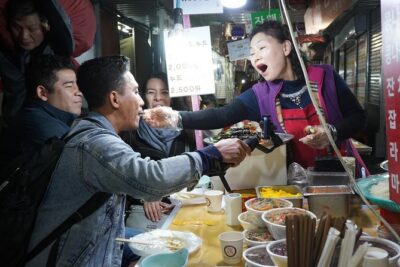

Local Home Korean Cooking Class & Market Adventure in Seoul
Read our review →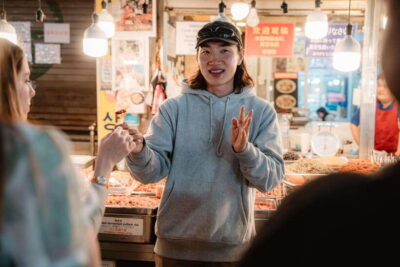
Downtown Seoul Guided Food & Market Tour with 8+ Local Tastings
Read our review →
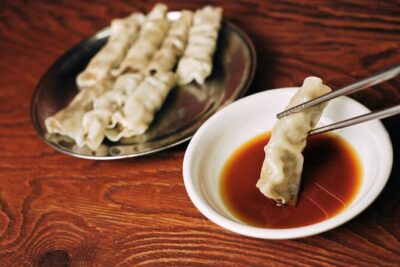
Korean Cooking Class at a Local Home and Market Tour
Read our review →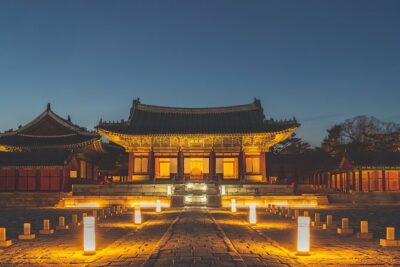
Seoul Night Palace & Market Food Tour with Vehicle
Read our review →
Cook 3 Authentic Korean Dishes with Local Market Tour
Read our review →
Korean Palace and Market Tour in Seoul Including Insadong and Gyeongbokgung Palace
Read our review →Browse the lists this tour appears in