
Reviewed · WALKING TOURS
Seoul History Walking Tour
History is hiding in plain sight. This 3.5-hour walk connects Seoul’s bells, palace walls, temples, protest sites, and public squares into one clear story, from the Joseon Dynasty to modern democracy. I like the small group of no more than eight, and I like the way the route links famous names such as King Sejong and Admiral Yi Sun-sin with less familiar places tied to Japanese rule and Korea’s democratic struggle.
The price is fair at $26.60 per person, especially with traditional Korean snacks and an informative souvenir included. The main drawback is the pace: fifteen stops in three and a half hours means some places receive only a quick look, and bottled water is not included. Wear comfortable shoes and bring your own drink.
In This Review
- Key points about this Seoul history walk
- Why this walk gives Seoul a clearer shape
- Bosingak and Cheonggyecheon: Seoul begins with sound and water
- City Hall, Seoul Plaza, and the view from Jeongdong
- Deoksugung wall and the forced end of Korean independence
- The Former Russian Legation and a king on the run
- Admiral Yi and King Sejong in the heart of Seoul
- Gwanghwamun Square and the price of democracy
- The Japanese Embassy and Jogyesa Temple
- What $26.60 gets you
- Who should book this walk?
- Should you book the Seoul History Walking Tour?
- FAQ
- How long does the Seoul History Walking Tour last?
- What time does the tour start?
- Where does the tour begin?
- Where does the tour end?
- How much does the tour cost?
- How many people can join the tour?
- Are admission tickets included?
- Are snacks included?
- Is bottled water included?
- Can I cancel for a full refund?
Key points about this Seoul history walk
- Fifteen stops, one connected story: The route moves from Joseon Seoul through Japanese occupation, war, monarchy, dictatorship, and democracy.
- A genuinely small group: With a maximum of eight people, you should have a good chance to ask questions and hear the guide clearly.
- An Australian guide adds an outsider’s clarity: The tour is designed for English-speaking visitors who want Korean history explained in a direct, approachable way.
- The route finishes close to where it begins: You start at Bosingak Bell Pavilion and finish near Jogyesa Temple, both in central Seoul.
- Free-cancellation terms offer useful flexibility: You can cancel up to 24 hours before the 2:30 pm start for a full refund.
- The strongest praise goes to the guide: Eric receives especially warm recognition for answering questions and making the afternoon useful from beginning to end.
Why this walk gives Seoul a clearer shape
Seoul can feel like several cities piled on top of one another. Glass towers, palace roofs, concrete roads, old temples, public art, and layers of political memory all share the same center. This walking tour helps you connect those pieces instead of seeing them as separate photo stops.
You begin with the Joseon Dynasty, founded more than six centuries ago, then move through the pressures of imperial Japan, the Korean War era, the growth of the modern city, and the fight for democracy. The route is not just a parade of monuments. It asks why each place mattered.
That approach is the main value here. You will not simply hear that Sejong was important. You will learn why his decisions still shape Korean life. You will not just photograph Admiral Yi Sun-sin. You will hear how his naval victories affected Korea and the wider course of history.
The tour starts at 2:30 pm, a useful time for a half-day activity. You can spend the morning at another Seoul sight, have lunch, then meet at Bosingak Bell Pavilion on Jong-ro. The route ends directly up the street from the starting area, so you will not be stranded in an unfamiliar part of the city.
More Historical Tours in Seoul
- Seoul: Evening Dark History, Folklore & Ghost Story Walking Tour
★ 5.0 · 593 reviews - Hanbok Photoshoot and History Tour at Gyeongbokgung Palace
★ 5.0 · 276 reviews - From Seoul: Dae Jang Geum Park Historic K-Drama Set Tour
★ 4.9 · 143 reviews
Bosingak and Cheonggyecheon: Seoul begins with sound and water
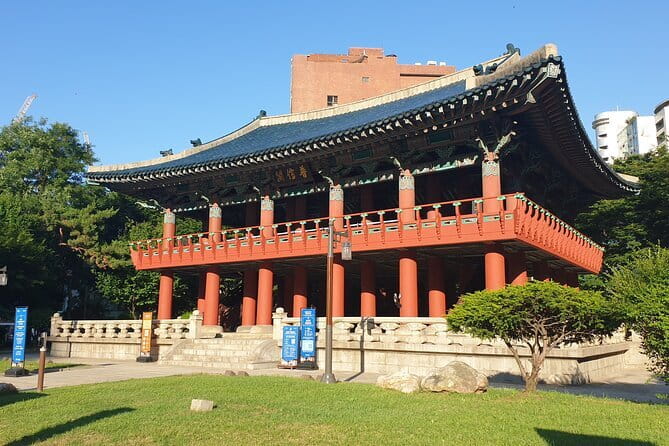
At Bosingak Bell Pavilion, the guide opens with a question: why did the city bell ring 28 times at night and 33 times in the morning? That is a fine beginning because it turns a simple structure into a clue about how Joseon Seoul organized daily life.
You spend about 15 minutes here. Admission is free, and the stop works best as an introduction rather than a long visit. The guide gives you a historical key, then the group moves on.
The next stop is Cheonggyecheon Stream, where you spend about 40 minutes. This is the longest single stop, and for good reason. The stream has served different purposes across Joseon rule, the Korean War period, and modern Seoul. Its changing role lets you see how the city adapted to population growth, conflict, and redevelopment.
I like this part of the route because it grounds large historical events in an ordinary urban feature. Water is practical. It affects where people live, how neighborhoods work, and how a capital presents itself. You get a sense of Seoul as a working city, not just a collection of royal buildings.
City Hall, Seoul Plaza, and the view from Jeongdong
The walking route then shifts toward Seoul City Hall and Seoul Plaza. The City Hall stop lasts only about five minutes, but the focus is useful: how can a government building work as architecture inside and outside?
You should not expect a long museum visit here. It is a brief look and an explanation of the building’s role in the city. Seoul Plaza receives about ten minutes and adds the public side of the capital. The guide explains how this open space reflects the feelings and actions of modern citizens.
That matters because Seoul Plaza is not treated as empty lawn or decoration. It is connected to public gatherings and the way citizens claim space in the center of their city. The tour uses the plaza to move from royal and governmental power toward public power.
At Jeongdong Observatory, you get about ten minutes for a view over the palace area and city. This is one of the route’s useful pauses. After walking at street level, you can look back across the buildings and understand how old and new Seoul occupy the same frame.
The view is a short stop, not a long sightseeing session. If you enjoy photography, keep your camera ready, but listen first. The point is not only what you can see from above. It is how the guide helps you identify the city’s historical layers.
Deoksugung wall and the forced end of Korean independence

Deoksugung Doldam-gil brings in one of Seoul’s favorite bits of folklore. Koreans sometimes say that if a married couple walks along this stone wall together, they will soon divorce.
The joke gives the stop an easy entry point, but the wall also sits beside serious political history. You spend about ten minutes here, enough time for the guide to explain the saying and connect the area with Deoksugung Palace.
At Jungmyeongjeon Hall, the tone becomes darker. The guide explains how Imperial Japan forced Korea to surrender its independence. The stop lasts around ten minutes, so this is an overview rather than a full study of the occupation.
That short timing is both strength and weakness. You get a clean outline of the event without losing the route’s momentum, but you may want to return later if this period matters most to you. The tour gives you the basic political setting and shows why this small building carries such weight.
The nearby Ewha Museum adds a different kind of change. Korea’s first school for girls helped challenge older ideas about women’s roles. You spend about ten minutes here, learning how education could alter society from the inside.
This is an important stop because the story is not limited to kings, generals, and presidents. Women’s education becomes part of the wider change from traditional Joseon society to modern Korea. The time is brief, but the subject broadens the tour in a useful way.
More Walking Tours in Seoul
- Seoul moonlight walking tour with local historian
★ 5.0 · 940 reviews - Seoul: Nighttime Hidden Gems Walking Tour
★ 5.0 · 775 reviews - Seoul: Dark Side of the City and Ghost Stories Walking Tour
★ 4.8 · 484 reviews - Gangnam Walking Tour on Youth and Society in Seoul Korea
★ 5.0 · 401 reviews
The Former Russian Legation and a king on the run
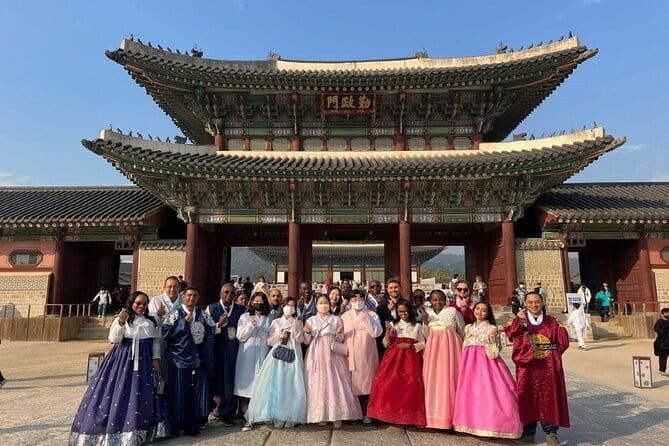
The Former Russian Legation receives about 20 minutes, making it one of the more substantial stops. Here you learn why Korea’s penultimate monarch fled his palace in the middle of the night and remained at this foreign mission for a year.
The story brings international pressure and royal weakness into view. It also shows that Korea’s struggle for control was not only fought in battlefields or official treaty rooms. A monarch’s refuge in a foreign building could affect the direction of the country.
I would pay close attention here. The stop connects the earlier discussion of Japanese pressure with the collapse of Korea’s independence. It also helps explain why the country’s late royal period was so unstable.
Because the tour is limited to eight people, this is a good place to ask for clarification. The subject can involve unfamiliar names and competing powers. An Australian guide may also help by explaining the story in terms that make sense to an English-speaking audience.
Admiral Yi and King Sejong in the heart of Seoul
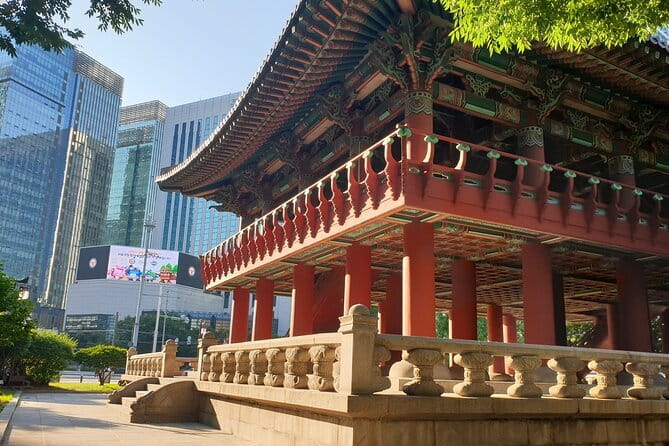
The statues of Admiral Yi Sun-sin and Sejong the Great sit along the central route, but the tour treats them as more than convenient landmarks. Each figure represents a different form of leadership.
At Admiral Yi’s statue, the guide asks how this general saved Korea and changed world history. The wording is bold, but the subject earns serious attention. Yi’s military leadership is tied to Korea’s survival during a major national crisis, and his story remains central to Korean identity.
You spend about ten minutes here. That is enough for the main story, though military-history fans may wish for more detail. The stop works well as a visual pause because the statue gives you a clear figure to remember after the larger political stories at Jungmyeongjeon Hall and the Former Russian Legation.
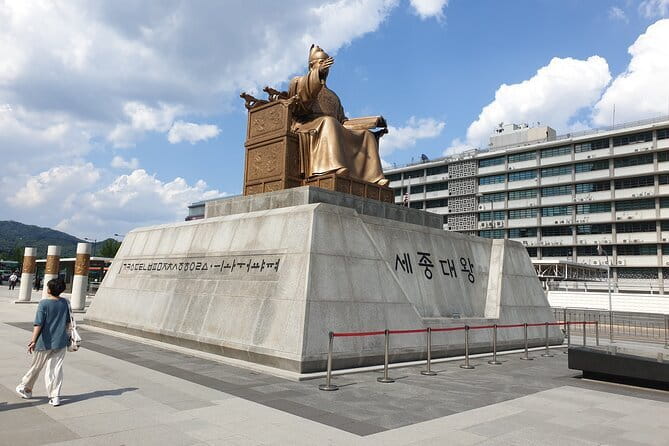
The next ten-minute stop is the statue of Sejong the Great. The guide explains why Sejong is often considered the greatest Joseon king. His reputation rests on more than royal status. He is linked with decisions and achievements that made government and learning more accessible to ordinary Koreans.
This pairing is smart. Yi represents defense and national survival. Sejong represents scholarship, leadership, and public benefit. Together, the statues show why Korean history is not only about dynasties changing hands. It is also about the people who shaped how the country communicates, governs, and protects itself.
Gwanghwamun Square and the price of democracy
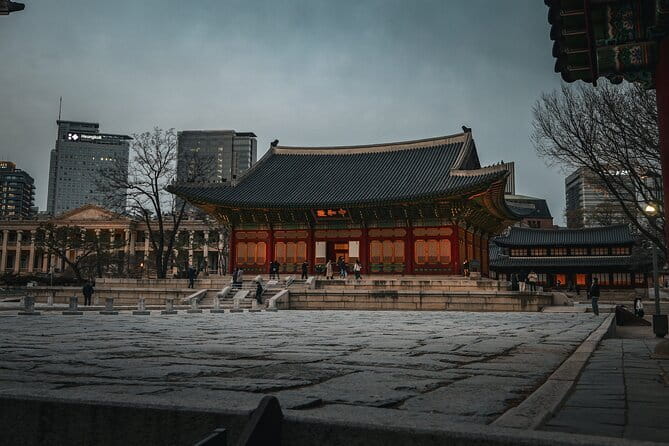
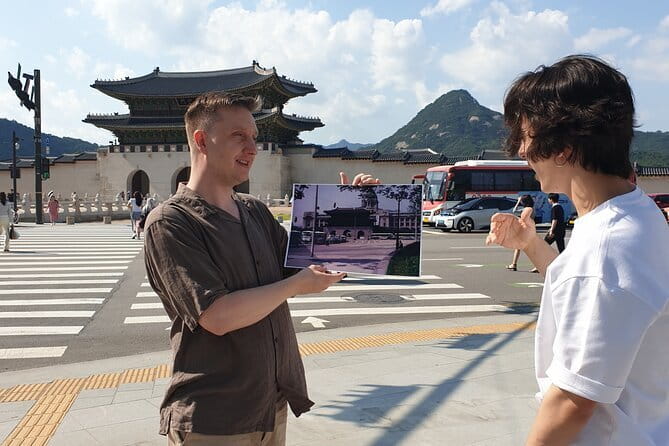
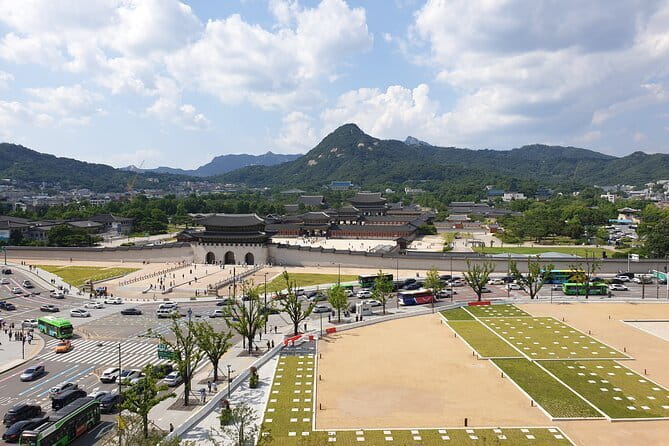
Gwanghwamun Square receives about 25 minutes, one of the longest stops after Cheonggyecheon Stream and the Former Russian Legation. Here the tour turns firmly toward modern politics.
The guiding question is simple but powerful: how many protests does it take to change a democracy? You learn about South Korea’s struggle against dictatorship and the public pressure that helped move the country toward greater democratic rule.
This stop gives the earlier statues a modern setting. Sejong and Yi represent older national ideals, while the square shows citizens acting in the present. Seoul’s political history is not sealed inside palaces. It continues in public places where people gather, argue, and demand change.
I like the balance here. A history walk can easily become a list of rulers and battles. Gwanghwamun Square forces the story to include ordinary citizens and political action. You may find this one of the most meaningful parts of the afternoon, especially if you want to understand South Korea beyond food, shopping, and pop culture.
The National Museum of Korean Contemporary History follows with a 15-minute stop. The guide focuses on how much of Seoul’s story can be seen from the rooftop. This is another chance to connect the city around you with the events just discussed.
Do not expect a full museum visit in that time. The stop is built around the view and the historical reading of the city. If you want to explore the museum’s exhibits, plan a separate visit.
The Japanese Embassy and Jogyesa Temple
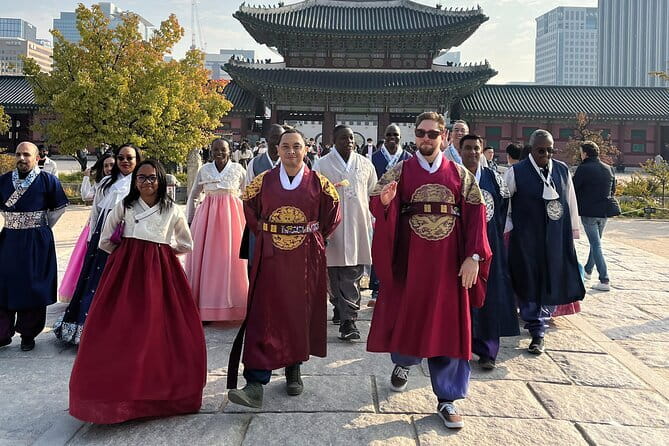
The Embassy of Japan is tied to the world’s longest-running protest. The visit lasts around ten minutes and returns the tour to unresolved historical memory.
This is a serious stop, and the guide’s job is to explain the issue without reducing it to a slogan. You see how past events can remain part of daily civic life long after the original political crisis has ended. The location adds force because the protest is connected directly to a diplomatic mission.
The tour closes at Jogyesa Temple, where you spend about ten minutes learning how the ringing of bells connects people with the universe. This ending changes the mood again. After royal power, occupation, protest, and democracy, the final stop offers a spiritual idea about sound, time, and connection.
Jogyesa Temple is also a practical ending point. The tour finishes directly up the street from where it began, and the guide will help with directions. You can continue exploring central Seoul, return toward the Bosingak area, or use nearby public transportation.
What $26.60 gets you
At $26.60, this is not a cheap walk in the sense of being casual or bare-bones. It is a good-value orientation to central Seoul because the price covers a long route, a small group, a guide, traditional Korean snacks, and an informative memento.
All listed stops have free admission, so you are paying mainly for interpretation and structure. That is exactly where this experience earns its keep. You could walk past Bosingak, City Hall, Gwanghwamun Square, and Jogyesa Temple on your own, but you would miss the connections between them.
The group limit matters. A maximum of eight people is far more manageable than a large city tour, especially at busy public sites. You can ask questions, hear the explanations, and keep moving without waiting for a crowd.
The tour does not include bottled water. Bring your own, since three and a half hours on foot can be tiring. Traditional snacks are included, which adds a pleasant local touch but should not be treated as a full meal.
The available score is a perfect five from nine ratings, and Eric receives especially strong praise for making the information useful throughout the afternoon and answering many questions. That suggests the guide is a major part of the value. The exact quality of your outing will depend on who leads it, but the small group gives the guide room to make the walk personal.
Who should book this walk?
I would choose this tour during a first visit to Seoul if I wanted a strong introduction to the historical center. It suits you best if you like walking, ask questions, and want political and social context rather than a sightseeing checklist.
It also works for anyone who has seen Seoul’s famous statues and plazas but wants to know why they matter. The route gives you useful background before later visits to palaces, museums, or historic neighborhoods.
You may want a different experience if you prefer long, quiet visits inside museums or palaces. Fifteen stops in 210 minutes is a brisk plan. Several stops last only five or ten minutes, so the tour favors breadth over detailed exploration.
The walk is open to most people, service animals are allowed, and it meets near public transportation. No special physical requirement is stated, but you should still be comfortable walking for most of an afternoon. If your interests center on one subject, such as Japanese occupation or Korean democracy, use the tour as an introduction and return to that subject on your own.
Should you book the Seoul History Walking Tour?
Book it if you want a compact, thoughtful introduction to Seoul’s past and present, especially with a small group and an English-speaking guide. The route covers an unusually broad span, and its best feature is the way it connects royal history with women’s education, foreign pressure, protest, and public life.
Skip it if you want a slow palace tour, a museum-heavy afternoon, or lots of time at each stop. For most first-time visitors who want to understand what they are seeing in central Seoul, $26.60 is a sensible price for three and a half hours of guided context. Bring water, wear good shoes, and arrive ready to listen as much as look.
FAQ
How long does the Seoul History Walking Tour last?
The tour lasts approximately 3 hours and 30 minutes.
What time does the tour start?
The tour starts at 2:30 pm.
Where does the tour begin?
The meeting point is Bosingak Bell Pavilion, 54 Jong-ro, Jongno District, Seoul, South Korea.
Where does the tour end?
The tour ends at Jogyesa Temple, directly up the street from the starting area. The guide will assist with directions.
How much does the tour cost?
The listed price is $26.60 per person.
How many people can join the tour?
The tour has a maximum group size of eight travelers.
Are admission tickets included?
All listed stops have free admission, and no separate admission charge is specified for the tour.
Are snacks included?
Yes. Traditional Korean snacks and an informative memento are included.
Is bottled water included?
No. Bottled water is not included, so you should bring your own.
Can I cancel for a full refund?
Yes. You can cancel at least 24 hours before the experience start time for a full refund. Cancellations or changes made less than 24 hours before the start time are not accepted for a refund.
More Walking Tours
- Seoul: Gyeongbok Palace and Bukchon Hanok Walking Tour
★ 4.8 · 157 reviews - Best Walking Tour to Gyeongbok Palace Bukchon Hanok Village
★ 5.0 · 138 reviews - Highlights & Hidden Gems With Locals: Best of Seoul Private Walking Tour
★ 4.5 · 83 reviews - Seoul Private Custom Walking Tour with A Guide (Private Tour)
★ 4.5 · 28 reviews
More Historical Tours
- Seoul: City Highlights and Historical Experience No Shopping
★ 5.0 · 74 reviews - Street photoshoot and Seoul Hidden gem History Walking Tour
★ 5.0 · 68 reviews - Discover Seoul: Local Life and History
★ 4.5 · 53 reviews - Korean History & Heritage Tour
★ 5.0 · 51 reviews
Just added around Seoul
- Seoraksan National Park & Nami Island★ 4.5 · 3 reviews
- Strawberry Picking, Winter Sled with Eobi Ice Valley from Seoul★ 4.5 · 3 reviews
- Seoul Full Day small group Tour★ 5.0 · 3 reviews
- Majang Meat Market Experience: Private Tour with Han-woo Beef BBQ★ 5.0 · 3 reviews
- Seoul Korean BBQ Dinner Experience with Secret Food Tours★ 5.0 · 3 reviews
- Rice Wine Tasting with Sommelier – Finest Makgeolli (& Soju)★ 5.0 · 3 reviews
- Max Out Seoul: Must Visit City Highlights Panoramic Day Tour★ 5.0 · 3 reviews
- Seongsu-dong Walking Tour: K-Pop, Culture, Cheer, Friends & Relax★ 4.5 · 3 reviews
Walking Tours, compared.
Seoul moonlight walking tour with local historian
Read our review →
Evening Dark History, Folklore & Ghost Story Walking Tour
Read our review →Dark Side of the City and Ghost Stories Walking Tour
Read our review →
Gangnam Walking Tour on Youth and Society in Seoul Korea
Read our review →
Gyeongbok Palace and Bukchon Hanok Walking Tour
Read our review →
Best Walking Tour to Gyeongbok Palace Bukchon Hanok Village
Read our review →
Highlights & Hidden Gems With Locals: Best of Seoul Private Walking Tour
Read our review →Browse the lists this tour appears in