
Reviewed · STREET FOOD & MARKET TOURS
Seoul Vegan & Vegetarian Gwangjang Market Food Tour (11 Tastings)
Korean market food is easier with a local guide. This two-hour evening walk through Seoul’s Gwangjang Market gives you at least 11 plant-based tastings, with every dish and drink included. I especially like the fully vegan menu and the small maximum of eight people, which makes ordering and asking questions far easier than it would be alone. I also like that guide Jungho handles translation and ingredient checks. The main catch is that Gwangjang is a busy working market, so cross-contact can occur, and the tour is not suitable for severe food allergies or strict gluten-free diets.
You meet at Jongno 5-ga Station at 5:30 pm and return there at the end. At $89 per person, this is not a cheap snack stop, but the price covers 11 or more tastings, drinks, bottled water, ordering, translation, and cultural explanation. For a vegan new to Seoul, that may be a fair trade for an evening without guesswork.
In This Review
- Key points to know before booking
- Why Gwangjang Market works so well for a vegan food tour
- Starting at Jongno 5-ga Station at 5:30 pm
- The first tastes: vegetable mandu and market textures
- Mung-bean pancakes and the value of careful ordering
- Drinks, sweets, and more than just vegetable dishes
- What Jungho adds beyond the food
- Is $89 a fair price for two hours?
- Important limits for allergies and gluten-free diets
- Who will get the most from this Seoul food walk?
- Should you book the Gwangjang Market vegan tour?
- FAQ
- Where does the tour begin?
- What time does the tour start?
- How long does the experience last?
- Where does the tour end?
- How many people can join the tour?
- Is all food and drink included?
- Is the food vegan?
- Is the tour suitable for severe allergies or gluten intolerance?
Key points to know before booking
- Every planned tasting is plant-based: The menu avoids meat, fish, egg, dairy, and honey.
- At least 11 tastes in two hours: Expect food, drinks, sweets, and several Korean market classics.
- Maximum of eight people: A small group helps the guide manage orders and keep the walk together.
- Jungho handles the language barrier: You do not need to explain your diet at every stall.
- Gwangjang Market is the setting: You eat in a real working market, not a private dining room.
- Food safety has limits: Cross-contact may happen, and gluten intolerance or severe allergies are reasons to choose another tour.
Why Gwangjang Market works so well for a vegan food tour
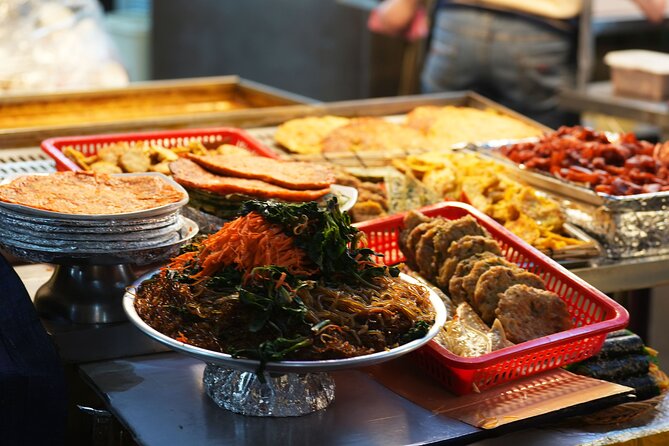
Gwangjang Market is a strong setting for this experience because it is built around quick, casual eating. Stalls sit close together, dishes are prepared in front of you, and the food comes in small portions that suit a tasting walk. You get the sense of how Seoul eats in public: standing or sitting near a counter, sharing dishes, and moving on when the next taste is ready.
The problem is obvious for anyone avoiding animal products. Korean market cooking often uses ingredients that are not easy to spot, including fish-based sauces, egg, dairy, or meat stock. A dish that looks like plain vegetables may not be plant-based at all. This is where the guide earns his fee.
Jungho created the route after spending more than a month checking ingredients and speaking with cooks in the market. He later kept testing and refining the stops. That preparation matters because you are not simply being pointed toward vegetable-shaped food. The goal is to visit stalls where the selected dishes have been checked as vegan.
I like the practical design. You do not need to memorize Korean food terms, read labels, or perform a careful ingredient interview at every counter. Jungho places the orders, translates, and explains what you are eating. You can focus on flavor, texture, and the market scene.
More Market Visits in Seoul
- Seoul Street Food Market Tour
★ 5.0 · 1,226 reviews - Local Home Korean Cooking Class & Market Adventure in Seoul
★ 5.0 · 1,024 reviews - Seoul: Night Market Food Tour with Local Guide
★ 4.9 · 943 reviews
Starting at Jongno 5-ga Station at 5:30 pm
The tour begins at Jongno 5-ga Station, a useful meeting point near Gwangjang Market. You should allow enough time to reach the station and find the meeting place, since the tour begins at 5:30 pm and runs for about two hours. The activity ends back at the starting point, which makes it easy to continue your evening from the same central area.
The evening timing is sensible. You can spend the afternoon sightseeing and then arrive hungry for a steady sequence of samples. It also places you in the market during a lively dinner period, when the stalls are doing their normal work rather than putting on a special show for a tour.
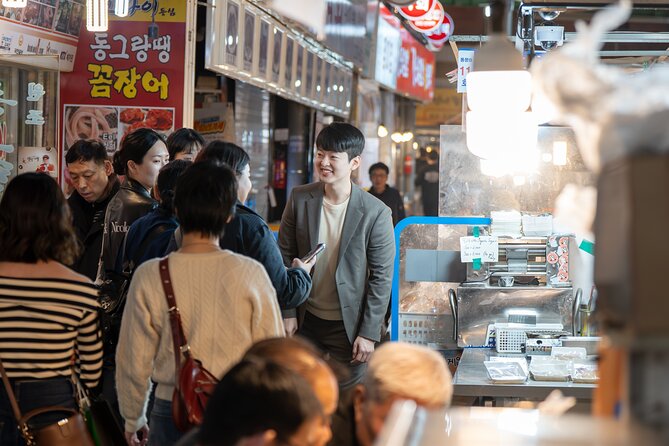
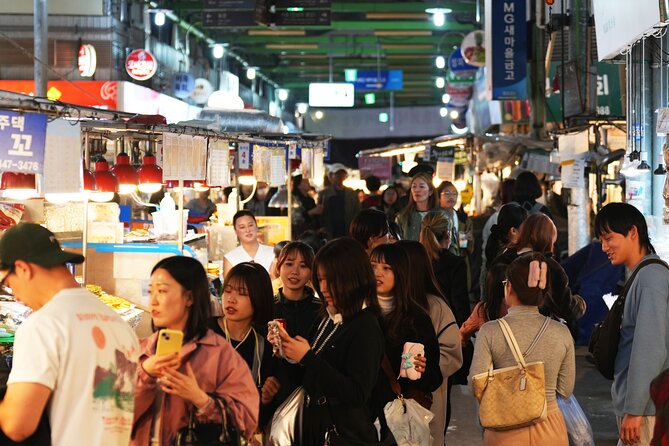
That has a benefit and a cost. You get a genuine working-market atmosphere, with movement, noise, and tight passageways. You should not expect a quiet, polished food hall or a long explanation at every stop. This is a moving meal in a busy public place.
The tour lasts roughly two hours. That is enough time for many tastes without turning the evening into a long march. The pace also helps prevent the food from becoming too heavy too soon, although 11 or more samples can still add up to a full dinner.
The first tastes: vegetable mandu and market textures
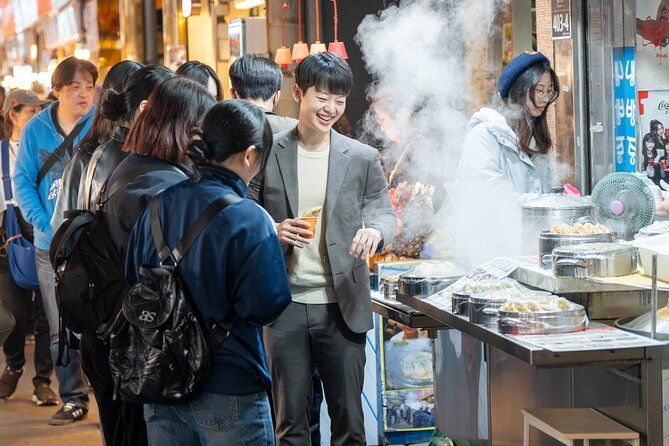
One early tasting is hand-steamed vegetable mandu. Korean mandu are dumplings, and the pleasure comes as much from the wrapper and filling as from the dipping sauce. In a plant-based version, the vegetables provide the main character rather than serving as decoration beside meat.
The cooking method is part of the appeal. You get to eat a familiar Korean comfort food in a form that works for vegans, while still seeing how it belongs to the market. Steamed dumplings are also a good opening taste because they are warm, soft, and easy to share.
From there, the route includes chewy tteokbokki. This is one of Korea’s most recognizable street foods, made with cylindrical rice cakes and a spicy sauce. The texture is the key: soft and springy, with enough chew to slow you down.
Tteokbokki is also a useful example of why ingredient checks matter. The red sauce can vary from stall to stall, and a vegan version needs more than the absence of visible meat. With Jungho ordering and translating, you can try this classic with less concern about what is hidden in the sauce.
If you have only eaten Korean food in restaurants outside Korea, market tteokbokki can feel more direct and casual. It is not a formal course. You take a few bites, compare the spice and texture with the previous dish, and keep moving.
Mung-bean pancakes and the value of careful ordering

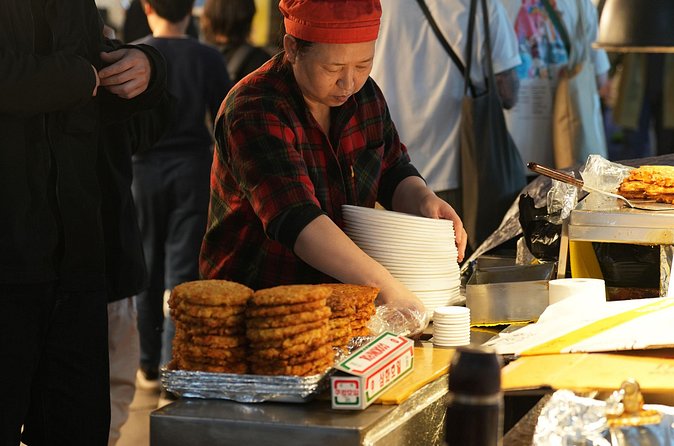
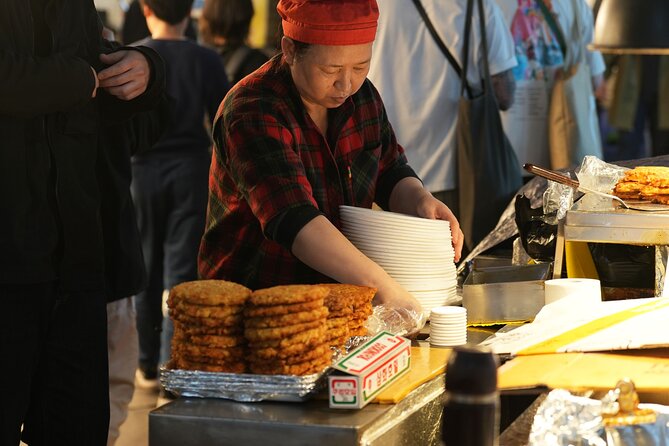
The tour also includes crispy mung-bean pancakes. These pancakes bring a different texture to the route: crisp at the edges, soft inside, and savory rather than sweet. Mung beans are a familiar Korean ingredient, but the market version gives you a better idea of how they are used in quick street cooking.
The word pancake can cause confusion for vegans because many pancake batters contain egg. Here, the selected version is checked as plant-based, but the wider market may use different recipes at nearby stalls. That distinction is important. You are not being told that every similar-looking pancake in Gwangjang Market is safe. You are being taken to a particular preparation.
This is one of the tour’s strongest points. The route turns the market from a place of uncertainty into a series of specific choices. You still need to tell the guide about your dietary needs, and you still need to understand the cross-contact warning, but you are not starting from zero.
The market setting also gives you context about Korean dining etiquette and food culture. Jungho explains how to approach the stalls and what you are eating, while stories about market life and royal-court recipes add meaning to dishes that might otherwise seem like quick snacks.
More street food tours:
- Seoul: Gyeongbok Palace, Bukchon Village, and Gwangjang Tour
★ 4.9 · 2,321 reviews - Seoul: Gyeongbok Palace, Bukchon Village, and Gwangjang Tour
★ 5.0 · 1,044 reviews - Small-Group Night Food Tour in Seoul with Korean BBQ
★ 5.0 · 304 reviews - Seoul Night Palace & Market Food Tour with Vehicle
★ 5.0 · 275 reviews
Drinks, sweets, and more than just vegetable dishes
The tour includes a shot of vegan-verified soju. Soju is closely linked with Korean social dining, so this tasting adds a cultural element that food alone cannot provide. It is a small serving, but it gives you a chance to try a familiar Korean drink in a setting where people traditionally eat, talk, and share.
You should keep the alcohol in mind when deciding what to eat beforehand. The tour includes many samples, but it is still a tasting experience rather than a guarantee of a large sit-down meal. If you arrive very hungry, the first few dishes will likely disappear quickly.
There is also a surprising sweet treat, along with other plant-based market foods. The exact lineup can change, since market stalls and ingredients are not completely fixed from one day to the next. The useful promise is the number and dietary standard of the tastings, not a rigid menu with every item guaranteed.
I like the range described here. You are not limited to tofu, plain vegetables, or one substitute dish. Dumplings, rice cakes, pancakes, drinks, and sweets give you different temperatures, textures, and levels of spice. That variety helps show Korean food as a broad cooking tradition rather than a problem to solve for a vegan.
What Jungho adds beyond the food
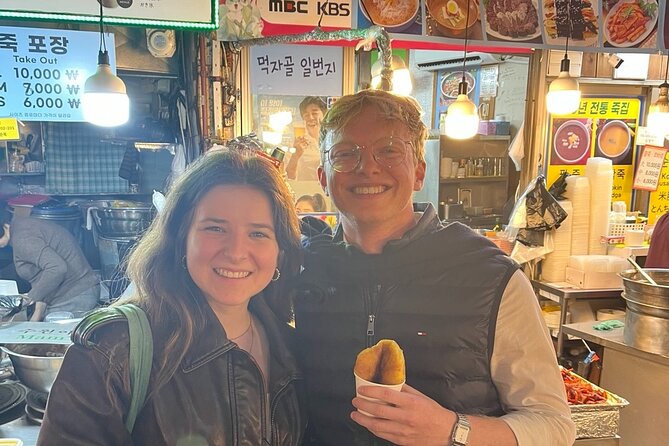
The food is the reason to book, but the guide is the part that makes the route possible. Jungho speaks English fluently, handles ordering, and explains how the dishes are prepared. He also shares market stories, dining etiquette, and background on royal-court recipes.
I would especially value this if you are new to Korean cuisine. Several people who joined the tour had little experience with Korean food, and the explanations helped them understand what they were tasting instead of simply labeling everything spicy or unfamiliar.
The communication before the tour also appears to be a strength. Jungho has been praised for prompt, concise contact before meeting, which is useful when you are managing dietary restrictions in a country where menus may not be easy to read.
The small group limit of eight matters here. In a large food tour, the guide may struggle to get everyone close to a stall or answer individual questions. With eight or fewer people, ordering is more controlled, and the guide can keep an eye on portions and dietary concerns.
The group can also include non-vegans. That is worth noting if you are traveling with family or friends who eat meat. The selected tastings are designed to be interesting in their own right, not merely replacements for meat dishes. The experience can work for a mixed group, provided everyone is happy to follow the plant-based menu.
Is $89 a fair price for two hours?
At $89 per person, this experience costs more than walking into Gwangjang Market and buying a few snacks yourself. If you already speak Korean, understand local ingredients, and feel comfortable checking sauces and cooking methods, you may find the price hard to justify.
For a vegan visiting Seoul for the first time, the comparison is different. The fee includes at least 11 tastings, drinks, bottled water, a guide, ordering, translation, and ingredient research. You are also paying for access to a route that took considerable time to develop.
The food quantity is another part of the value. Eleven or more tastes over two hours can function as a substantial evening meal, though the portions are designed for sampling rather than a single large plate. You will not be paying separately at each stall, which makes budgeting easier.
I would think of the price as a mix of dinner and specialist help. It is most useful during your first days in Seoul, when you want to try local food but do not yet know which ingredients to question. After the tour, you may feel more confident making your own market choices.
The free cancellation policy allows cancellation up to 24 hours before the start time for a full refund. Changes or cancellations made less than 24 hours before the tour are not accepted for a refund, so keep the local start time in mind when making plans.
Important limits for allergies and gluten-free diets
This tour is designed for vegans and vegetarians, but it is not suitable for every dietary restriction. The planned dishes contain no meat, fish, egg, dairy, or honey. That is a clear and useful standard.
Still, the market is a shared cooking environment. Cross-contact may happen, even when the selected dish itself contains no animal ingredients. If you have a severe allergy and need strict separation from other foods, I would not book this experience.
It is also not recommended for people with gluten intolerance. The tour includes tteokbokki and other market foods whose ingredients and preparation methods may not fit a strict gluten-free diet. The operator specifically warns against booking for this reason.
Service animals are allowed, and the activity is near public transportation. Most people can participate, but the setting is a working market with crowded walkways and food stalls. You should be comfortable moving through an active public market for about two hours.
Who will get the most from this Seoul food walk?
I would recommend this tour most strongly to a vegan or vegetarian who wants Korean food without spending the trip decoding menus. It is also a good choice for someone visiting Seoul with a plant-based partner, parent, or friend, since the route lets the whole group eat together.
It suits first-time visitors to Korean cuisine particularly well. You get explanations of preparation, food culture, and etiquette as you go, rather than receiving a long lecture away from the food.
It can also work for experienced vegans who want market dishes rather than restaurant meals. The benefit is less about learning what veganism means and more about gaining access to selected stalls and dishes that may be difficult to identify alone.
I would be less likely to recommend it to a strict gluten-free diner, anyone with severe food allergies, or someone who wants a quiet seated dinner. It is also not the best value for a confident Korean speaker who can independently verify ingredients and order at the market.
Should you book the Gwangjang Market vegan tour?
Book it if you want to eat Korean market food, not simply find a safe restaurant. The combination of 11 or more tastings, Jungho’s ingredient checks, English explanations, and a group capped at eight removes much of the stress that can make vegan eating abroad tiring.
The strongest reason to go is the access. Without help, Gwangjang Market can be difficult for a vegan to navigate safely. With this tour, you can try mandu, tteokbokki, mung-bean pancakes, soju, sweets, and other dishes while learning how the market works.
Skip it if $89 feels too high for a two-hour meal, or if cross-contact and gluten are serious concerns. For everyone else, especially a first-time vegan visitor to Seoul, this is a practical way to turn one of the city’s famous food markets into an evening you can actually enjoy.
FAQ
Where does the tour begin?
The tour begins at Jongno 5-ga Station in Seoul.
What time does the tour start?
The start time is 5:30 pm.
How long does the experience last?
The tour lasts approximately two hours.
Where does the tour end?
The activity ends back at the meeting point at Jongno 5-ga Station.
How many people can join the tour?
The maximum group size is eight people.
Is all food and drink included?
Yes. The price includes 11 or more plant-based food and drink tastings, plus bottled water.
Is the food vegan?
The selected foods and drinks are intended to contain no meat, fish, egg, dairy, or honey.
Is the tour suitable for severe allergies or gluten intolerance?
No. The experience is not recommended for severe food allergies or gluten intolerance, and some cross-contact may occur in the market.
More Shopping Trips
- Private DMZ Tour (No Shopping): 3rd Tunnel & Suspension Bridge
★ 5.0 · 607 reviews - Seoul: Nighttime Tour of Palace, Market, Naksan Park & More
★ 4.9 · 143 reviews - Fortress Night Hike & Snack at a Local Market
★ 5.0 · 112 reviews - Korean Cooking Class with Grocery Shopping at Seoul Local Market
★ 5.0 · 107 reviews
More Market Visits
- Downtown Seoul Guided Food & Market Tour with 8+ Local Tastings
★ 5.0 · 580 reviews - Seoul: Korean Cooking Class at a Local Home and Market Tour
★ 5.0 · 348 reviews - Cook 3 Authentic Korean Dishes with Local Market Tour
★ 5.0 · 231 reviews - Korean Palace and Market Tour in Seoul Including Insadong and Gyeongbokgung Palace
★ 4.0 · 174 reviews
Just added around Seoul
- Seoraksan National Park & Nami Island★ 4.5 · 3 reviews
- Strawberry Picking, Winter Sled with Eobi Ice Valley from Seoul★ 4.5 · 3 reviews
- Seoul Full Day small group Tour★ 5.0 · 3 reviews
- Seoul Korean BBQ Dinner Experience with Secret Food Tours★ 5.0 · 3 reviews
- Rice Wine Tasting with Sommelier – Finest Makgeolli (& Soju)★ 5.0 · 3 reviews
- Majang Meat Market Experience: Private Tour with Han-woo Beef BBQ★ 5.0 · 3 reviews
- Seongsu-dong Walking Tour: K-Pop, Culture, Cheer, Friends & Relax★ 4.5 · 3 reviews
- Seoul: Alpaca World and Nami Island (with Garden / Railbike)★ 5.0 · 3 reviews
Street Food & Market Tours, compared.

Gyeongbok Palace, Bukchon Village, and Gwangjang Tour
Read our review →
Gyeongbok Palace, Bukchon Village, and Gwangjang Tour
Read our review →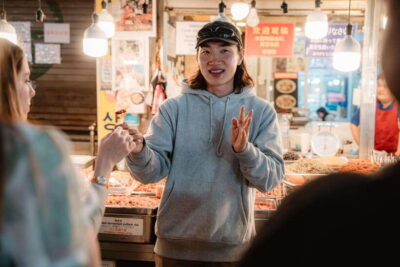
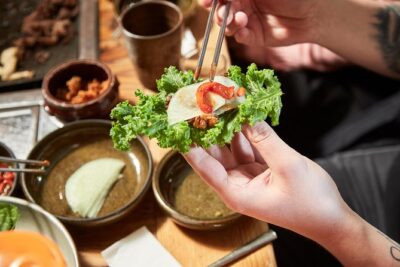
Small-Group Night Food Tour in Seoul with Korean BBQ
Read our review →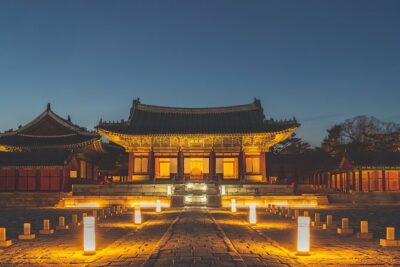
Seoul Night Palace & Market Food Tour with Vehicle
Read our review →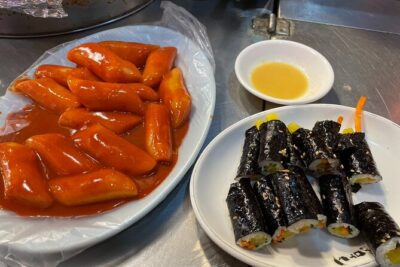
Seoul Fun Food Tour: 12 different food tastings
Read our review →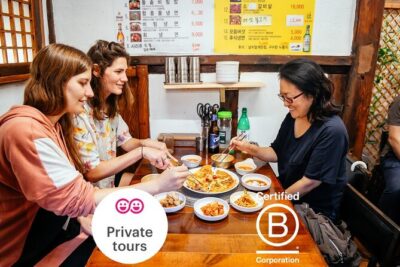
The Award-Winning PRIVATE Food Tour of Seoul: The 10 Tastings
Read our review →Browse the lists this tour appears in