
Reviewed · HANOK VILLAGE & FOLK CULTURE
Tour Seoul’s oldest district with a storyteller from Bukchon
Bukchon keeps its secrets well. This 2 to 3 hour walk makes the old district easier to understand, thanks to guide Dong, who grew up here and now works as a filmmaker and university screenwriting professor. I especially like the personal stories and the calm pace, which give you more than a quick look at hanok rooftops.
I also like the route’s wide historical range, from Joseon royalty and feng shui to Japanese colonial-era events, film locations, and modern Seoul. The main consideration is the walking itself: narrow lanes, hills, and uneven ground call for moderate fitness, and the storytelling may not suit children aged 12 and under.
In This Review
- Key points about the Bukchon walk
- Why Bukchon deserves more than a photo stop
- Starting at Unhyeongung with a royal succession story
- Cafe Onion Anguk and architecture across six centuries
- Bukchon Traditional Culture Center and the homes of the Yangban
- Seokjeong Boreum Well and the stories beneath the streets
- Choong Ang High School, from drama location to national history
- Samcheongdong and Bukchon, where feng shui meets political power
- Bukchon Hanok Village and the man who reshaped it
- What Dong adds to the experience
- Price, pace, and private-tour value
- Who should book this Bukchon tour?
- Final verdict: a smart choice for history-minded visitors
- FAQ
- How long does the Bukchon Storytelling Tour last?
- Where does the tour begin?
- What time does the tour start?
- Where does the tour end?
- Is this a private tour?
- What age is recommended for the tour?
- What is included in the tour?
- Are admission tickets included?
- Can I cancel for a refund?
Key points about the Bukchon walk
- A guide with local roots: Dong was born and raised in Bukchon, so his stories connect family memory with major events in Korean history.
- Seven stops with different themes: The route moves from a royal residence and traditional houses to a famous school, political power centers, and Bukchon Hanok Village.
- History beyond pretty houses: You hear about kings, politicians, business leaders, independence-era events, feng shui, wells, and the development of modern Seoul.
- A relaxed private experience: Only your own group takes part, with a stated start at 10:00 a.m. from Anguk Station Exit 4.
- Good value for a story-focused walk: At $39.20 per person, the price is reasonable if you want context and conversation rather than a simple photo stop.
- Optional traditional craft: The Plus Tour includes a Korean handicraft activity, including the chance to make a traditional Hopae tag.
Why Bukchon deserves more than a photo stop
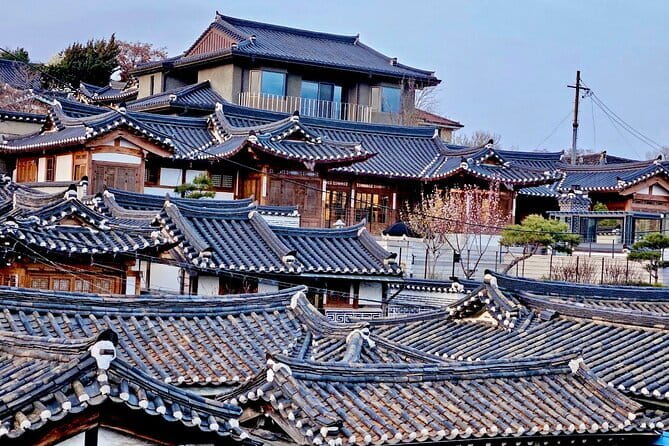
Bukchon is often treated as a scenic lane between Gyeongbokgung Palace and Changdeokgung Palace. You see tiled roofs, timber homes, steep alleys, and plenty of visitors taking photographs. But the district means far more than attractive architecture.
For centuries, Bukchon sat near the center of Korean royal and political life. The tour presents the area as a place where power gathered, changed hands, and sometimes disappeared. That gives the walk a clear purpose. You are not simply moving from one attractive lane to another. You are following how Seoul developed around royal families, ruling-class homes, schools, businesses, and government.
Dong’s background makes this approach especially useful. He did not just study Bukchon from a distance. He spent part of his life here, and he uses the neighborhood as a setting for personal memories and larger national stories. His work in film and screenwriting also helps explain why the tour is built around narrative rather than a long list of dates.
The result should suit you if you like asking why a place looks the way it does. If you mainly want a fast tour of the best photo angles, the pace may feel slower than necessary.
More hanok village visits:
- Seoul: Gyeongbok Palace, Bukchon Village, and Gwangjang Tour
★ 4.9 · 2,321 reviews - Seoul City Sightseeing Tour Including Gyeongbokgung Palace, N Seoul Tower, and Namsangol Hanok Village
★ 5.0 · 1,423 reviews - Seoul: Gyeongbok Palace, Bukchon Village, and Gwangjang Tour
★ 5.0 · 1,044 reviews
Starting at Unhyeongung with a royal succession story
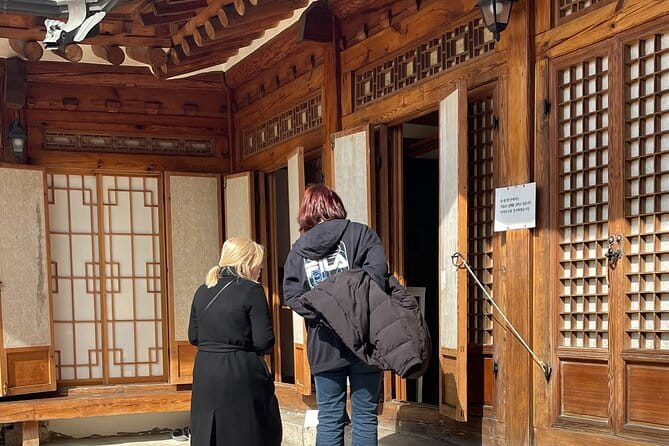
The meeting point is Anguk Station Exit 4, and the walk begins at Unhyeongung. This former royal residence introduces one of the tour’s main strengths: small places can carry enormous political meaning.
Here you hear about an 11-year-old royal boy who became the 26th king of Joseon after the previous king died without a crown prince. For the next decade, the boy’s father governed the country from this location. That story turns Unhyeongung from a quiet compound into a place tied to a major shift in royal rule.
The stop lasts about 20 minutes. That is long enough for a proper explanation without turning the opening into a formal lecture. Admission is listed as free, so you are paying for the guide’s interpretation rather than a site ticket.
I like beginning here because it gives you a question to carry through the rest of the walk: who really held power in Korea at different points in time? The answer changes as you pass through Bukchon.
Cafe Onion Anguk and architecture across six centuries
The next stop is Cafe Onion Anguk, where the focus shifts to architecture. In about 10 minutes, Dong points out buildings dating from roughly 600, 100, and 50 years ago.
That combination is more useful than looking only at restored hanoks. Bukchon is not a frozen historical set. Old royal-era patterns, later urban changes, and more recent commercial uses sit close together. A cafe may now attract a line for pastries, but the surrounding buildings still reveal earlier layers of Seoul.
This is also a practical moment to notice how quickly the district changes from one street to the next. A polished commercial space can sit beside a quiet residential lane. You may find yourself paying closer attention to rooflines, walls, gates, and building materials after Dong explains what you are seeing.
The stop is short, and coffee or tea is not included. If you want a drink, plan to pay separately. The cafe is part of the route for its architecture and setting, not as a scheduled refreshment break.
Bukchon Traditional Culture Center and the homes of the Yangban
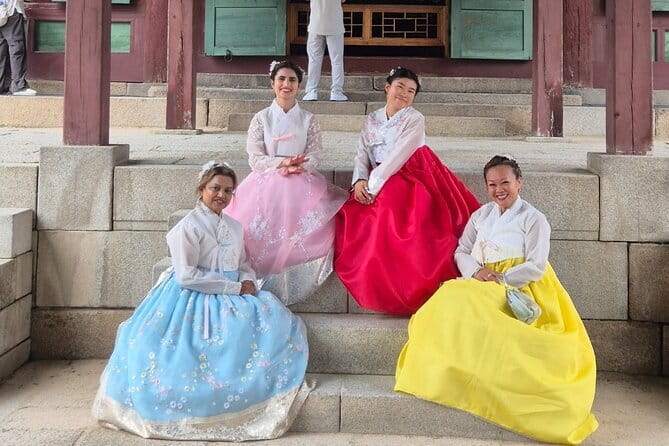
At the Bukchon Traditional Culture Center, the tour looks at hanoks associated with the Yangban, the ruling class that generally lived in Seoul. This stop helps explain that traditional Korean houses were not all built for the same people or the same purpose.
A hanok can look simple in a photograph, but its layout, position, and relationship to the street can tell you something about status and daily life. Dong’s explanation adds social context to the roof tiles and wooden frames. You begin to see Bukchon as a district shaped by people with influence, not just as a collection of old homes.
The planned time is about 10 minutes. That may feel brief if you want to enter several buildings or study architectural details at length. The value is in the explanation, especially if you are new to Korean architecture and want a basic framework before walking deeper into the neighborhood.
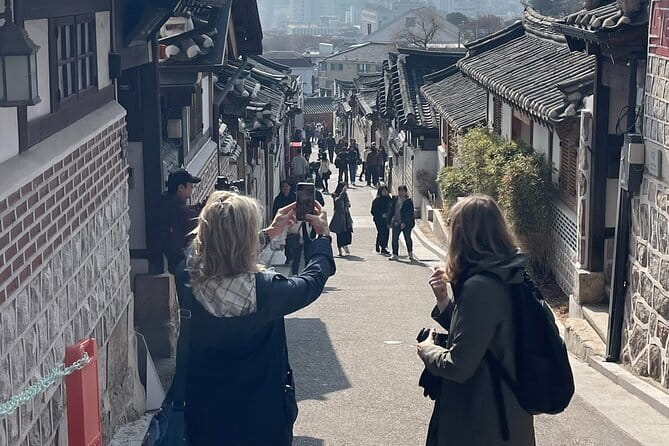
Because Bukchon remains a lived-in area, you should also treat the lanes as residential streets. Keep voices low near homes and avoid blocking narrow paths for photos.
A few more trips of this kind worth comparing:
- Best DMZ Tour Korea from Seoul (Red Suspension Bridge Optional)
★ 5.0 · 41,422 reviews - DMZ Tour: 3rd Tunnel, Option(Suspension Bridge, Boat) from Seoul
★ 5.0 · 21,373 reviews - DMZ tour south Korea from Seoul (NK experience hall, defector)
★ 5.0 · 20,599 reviews - Seoul: DMZ Tour with Optional Suspension Bridge
★ 4.8 · 5,277 reviews
Seokjeong Boreum Well and the stories beneath the streets
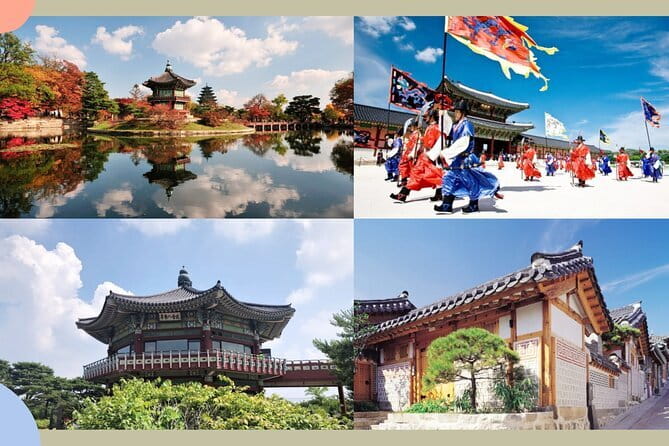
Seokjeong Boreum Well brings the tour down to a more ordinary part of neighborhood life. Instead of focusing on palaces or grand homes, Dong tells stories about wells and the tales you may have heard as a child.
This is exactly the kind of stop that can disappear if you explore Bukchon alone. A well may look like a minor feature, yet it can reveal how people obtained water, shared local stories, and remembered a place before modern systems changed daily routines.
The stop lasts about 10 minutes. Do not expect a major monument or a long visit. Its appeal comes from the way it broadens the definition of history. A district’s past is also found in water sources, children’s stories, street names, and common routines.
I appreciate this part of the route because it breaks up the royal and political material. It gives the walk a more human scale.
Choong Ang High School, from drama location to national history
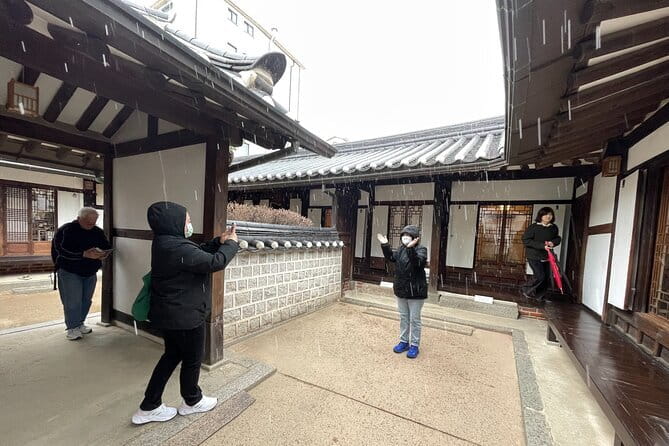
Choong Ang High School is known as a filming location for Winter Sonata, along with many other television dramas and music videos. That connection may be the first thing you notice, but the tour uses the school for a different reason.
Dong explains the site’s historical role and the way it helped shape Korea. The stop also includes traces connected to the country’s independence movement during the Japanese colonial period. That makes the school more than a backdrop for popular entertainment.
You spend about 10 minutes here. The contrast is effective: a place familiar from screen images becomes a site linked to serious national events. It is a reminder that modern Korean culture and painful political history often occupy the same streets.
If you are visiting Bukchon mainly for film locations, this stop gives you that connection. If you prefer political history, it provides a stronger reason to pause than a simple photo opportunity.
Samcheongdong and Bukchon, where feng shui meets political power
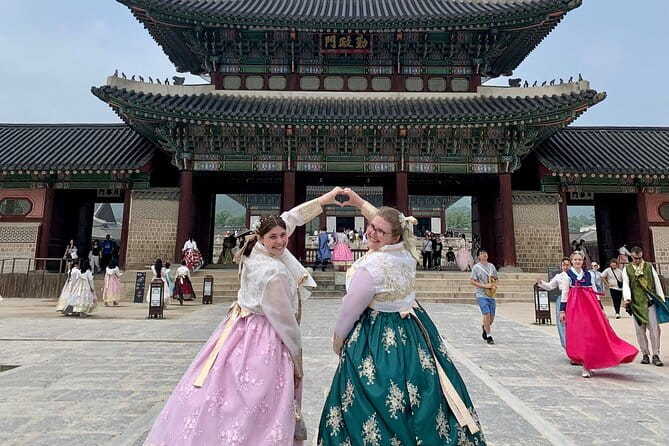
The Samcheongdong and Bukchon section lasts about 20 minutes and appears to be one of the tour’s most ambitious parts. Here the discussion turns to powerful politicians and business tycoons who once held land in the district.
You also learn why Bukchon was chosen as a capital area according to principles of feng shui. The district was viewed as an auspicious site, and the tour connects that belief to people who gained power, prospered, lost influence, or helped change the country.
You do not need prior knowledge of feng shui to follow this section. Dong presents it as a way to understand how geography, belief, status, and political ambition worked together. The idea is not simply that a hill or valley looks attractive. It is that the placement of a capital and the ownership of land can carry symbolic and practical power.
This is where Dong’s storytelling style matters most. A list of former politicians would be hard to remember. Stories about rise and fall are easier to follow, especially when you are standing in the setting where those ambitions played out.
The route may feel more demanding here if the lanes climb. Wear shoes with good support and allow yourself to walk at a steady pace rather than treating the outing like a race.
Bukchon Hanok Village and the man who reshaped it
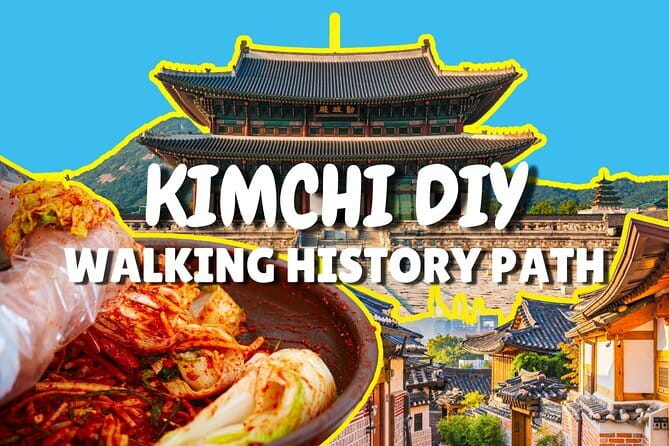
The final listed stop is Bukchon Hanok Village, with about 15 minutes devoted to the person who changed the face of Bukchon during the 1920s and 1930s.
That focus adds useful context to the village’s appearance. Many people assume the traditional neighborhood simply survived unchanged from the Joseon period. The story is more complicated. Bukchon’s present form also reflects later decisions, development, and the work of individuals who shaped how homes were built and arranged.
This stop should help you look at the village with more care. Instead of seeing every house as an untouched relic, you can consider which parts are old, which reflect later changes, and how the district became the place you see today.
The tour ends in a different location from the starting point. The exact end point should be confirmed when you book, but the route is designed as a one-way walk through the district rather than a return trip to the station.
What Dong adds to the experience
The strongest reason to book this walk is Dong himself. His personal connection to Bukchon comes through in the way he links past and present. He can discuss a neighborhood before it became one of Seoul’s best-known sightseeing areas, then explain how it has changed over time.
His storytelling also appears to extend beyond the fixed route. He has helped visitors with directions, offered suggestions for places to see elsewhere in Seoul, and even made a call to confirm an appointment for one group. Those touches are not formal inclusions, so you should not book expecting a personal concierge service. Still, they show the sort of practical conversation that can make a private walk more useful.
One particularly personal part of the experience is the traditional craft option. The Plus Tour includes a Korean handicraft activity, and one participant described making Hopae tags. A Hopae was a traditional identity tag, so this gives you something to do with your hands rather than only listen and take pictures.
Check the exact booking option before paying. The basic inclusion is a professional guide from Bukchon, while the craft activity is listed only with the Plus Tour.
Price, pace, and private-tour value
At $39.20 per person, this is fairly priced for a private, story-led walk lasting around two to three hours. You are not paying admission to a series of major monuments. You are paying for access to a local guide’s time, interpretation, and ability to connect several periods of history in one neighborhood.
The private format matters. Only your group participates, so you can ask questions about Korean history, architecture, film, or places to visit later in Seoul. A private walk can also feel less awkward when you need a slower pace or want to spend more time on one subject.
The price makes the most sense for two or more people who enjoy guided conversation. The tour may be canceled if fewer than two people join, so solo visitors should confirm the booking conditions before building their day around it. Group discounts are available, which may improve the value for families with older children or small groups.
The advertised start time is 10:00 a.m. The tour is near public transportation, with the meeting point at Anguk Station Exit 4. Coffee, tea, travel insurance, hotel pickup, and personal expenses are not included.
You can cancel up to 24 hours before the experience for a full refund. Confirmation is provided at booking.
Who should book this Bukchon tour?
I would choose this tour if you want Seoul explained through people and stories rather than a checklist of buildings. It suits first-time visitors who want historical context, as well as repeat visitors who have already walked through Bukchon but feel they missed its meaning.
It is also a good fit for anyone interested in Korean cinema, royal history, feng shui, architecture, or the changes brought by modern development. The route moves between all of these subjects without needing a separate museum visit.
The experience is recommended for ages 12 and above. Younger children may find the walking and extended storytelling difficult, particularly if they are expecting hands-on activities or frequent attractions.
You should also be comfortable walking for up to three hours. The tour has a relaxed pace, but relaxed does not mean effortless. Bukchon includes slopes, stairs, narrow lanes, and uneven surfaces.
Final verdict: a smart choice for history-minded visitors
Book this tour if you want to understand why Bukchon matters, not just photograph it. Dong’s childhood connection, screenwriting background, and personal way of telling stories give the walk a quality that a standard sightseeing route may miss.
Skip it if you want a short, highly visual visit with little explanation, or if steep streets and extended walking are a poor fit. For most visitors aged 12 and above who value local perspective, the $39.20 cost is a sound use of a morning in Seoul, especially when shared with a small group.
FAQ
How long does the Bukchon Storytelling Tour last?
The tour lasts approximately two to three hours.
Where does the tour begin?
It begins at Anguk Station Exit 4 in Unni-dong, Jongno District, Seoul.
What time does the tour start?
The stated start time is 10:00 a.m.
Where does the tour end?
The activity ends at a different location from the starting point. The supplied details advise checking the end point information when booking.
Is this a private tour?
Yes. Only your group participates in the activity.
What age is recommended for the tour?
The experience is strongly recommended for participants aged 12 and above. Children aged 12 and under may find the storytelling walk challenging.
What is included in the tour?
A professional guide from Bukchon is included. The Plus Tour also includes a traditional Korean handicraft experience.
Are admission tickets included?
The listed stops show no admission ticket charge. Coffee, tea, travel insurance, hotel pickup, and personal expenses are not included.
Can I cancel for a refund?
Yes. You can cancel up to 24 hours before the experience for a full refund.
Just added around Seoul
- Seoraksan National Park & Nami Island★ 4.5 · 3 reviews
- Strawberry Picking, Winter Sled with Eobi Ice Valley from Seoul★ 4.5 · 3 reviews
- Seoul Full Day small group Tour★ 5.0 · 3 reviews
- Majang Meat Market Experience: Private Tour with Han-woo Beef BBQ★ 5.0 · 3 reviews
- Seoul Korean BBQ Dinner Experience with Secret Food Tours★ 5.0 · 3 reviews
- Rice Wine Tasting with Sommelier – Finest Makgeolli (& Soju)★ 5.0 · 3 reviews
- Max Out Seoul: Must Visit City Highlights Panoramic Day Tour★ 5.0 · 3 reviews
- Seongsu-dong Walking Tour: K-Pop, Culture, Cheer, Friends & Relax★ 4.5 · 3 reviews
Hanok Village & Folk Culture, compared.

Gyeongbok Palace, Bukchon Village, and Gwangjang Tour
Read our review →
Seoul City Sightseeing Tour Including Gyeongbokgung Palace, N Seoul Tower, and Namsangol Hanok Village
Read our review →Gyeongbok Palace, Bukchon Village, and Gwangjang Tour
Read our review →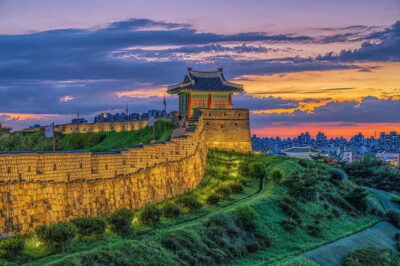
Suwon Hwaseong Fortress & Korean Folk Village Tour
Read our review →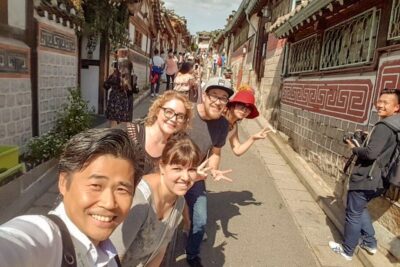
Gyeongbok Palace and Bukchon Hanok Walking Tour
Read our review →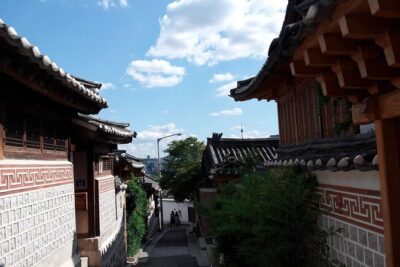
Best Walking Tour to Gyeongbok Palace Bukchon Hanok Village
Read our review →
Experience Korean Cooking in Modern Hanok Kitchen
Read our review →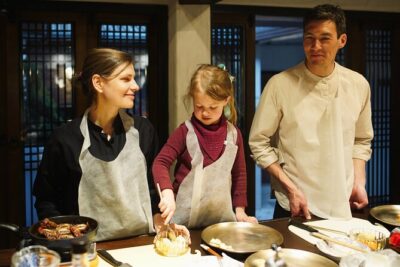
Royal Seoul Cooking Class in a 100-Year-Old Hanok
Read our review →Browse the lists this tour appears in