
Reviewed · WALKING TOURS
Busan: Haeundae 100-Minute Walking Tour
The beach is only the beginning. This compact walking tour gives Haeundae a past, linking its famous shoreline to a former railway station, a seaside hot spring, the Korean War, and the scholar Choi Chi-Won. I like the clear route and the way guide Kim Ingyu connects local details to the wider story of Busan and South Korea. I also like that the tour ends at peaceful Dongbaek Island, where the views give you time to take in what you have learned.
The main point to consider is the timing and terrain. The experience is described as 90 minutes in one place and 100 minutes in another, and the route covers about 2 kilometers with a hill roughly 50 meters high. It is listed as wheelchair accessible, but anyone who needs a fully level route should confirm the hill and walking conditions before booking. Sunny weather can be hard, so bring water and a sun umbrella.
In This Review
- Key points about the Haeundae history walk
- Why Haeundae makes a good history walk
- Starting at the former Haeundae Station
- Haeundae Beach in 20 minutes
- Gunam-ro and the seaside hot spring
- Returning to the old station area
- Dongbaek Island and the story of Choi Chi-Won
- What guide Kim Ingyu adds
- Walking effort, weather, and access
- Is $29 a fair price?
- Who should book this Haeundae walk?
- Should you book it?
- FAQ
- How long does the Haeundae walking tour last?
- How much does the tour cost?
- Where does the tour meet?
- How do I reach the meeting point?
- What language is the tour conducted in?
- Which places are included on the route?
- How much walking is involved?
- Is the tour suitable for wheelchair users?
- What should I bring?
Key points about the Haeundae history walk

- Haeundae Station sets the story: Begin at the former station and learn how the Donghae-Nambu railway helped turn a coastal settlement into a major destination.
- Gunam-ro has a surprising past: The busy street grew around Gunam Oncheon, described as Korea’s only seaside hot spring.
- The beach carries wartime history: Haeundae Beach is discussed not only as a resort but also in relation to the Korean War and a former U.S. military base.
- Kim Ingyu is the central strength: He is praised for clear English, humor, local insight, and an easy conversational style.
- Dongbaek Island provides a calm finish: The final stop brings in Choi Chi-Won, the scholar connected with Haeundae’s name, along with coastal views.
- The best value comes from context: At $29 per person, this is less about checking off sights and more about seeing familiar places with a better understanding of Busan.
Why Haeundae makes a good history walk

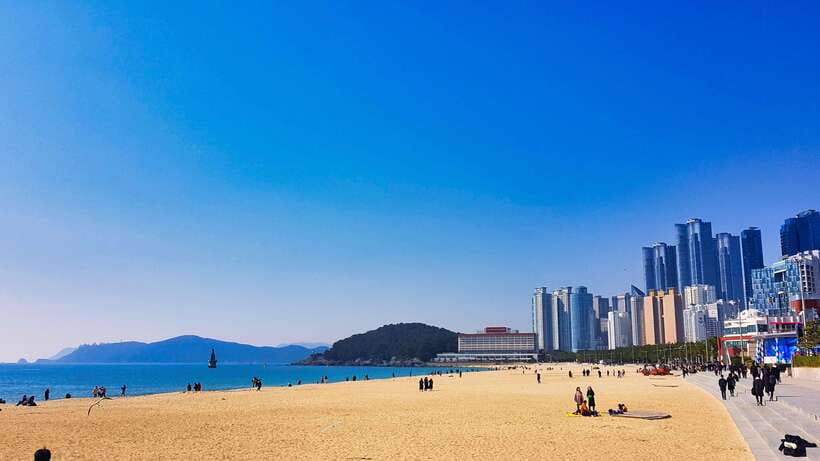
Haeundae is easy to reduce to one image: a long beach backed by hotels, restaurants, towers, and bright city lights. That picture is accurate, but incomplete. The district receives around 10 million visitors each year and has become one of South Korea’s best-known destinations.
This tour asks you to look behind that modern face. You follow the area’s change from a small fishing settlement and hot spring retreat to a major urban center. The story also reaches into Japanese colonial rule, the Korean War, the relationship between North and South Korea, and Busan’s rapid growth.
I find that approach useful early in a Busan visit. Instead of treating Haeundae as a pleasant place to walk beside the water, you begin to see why it developed as it did. A railway line, a hot spring, military events, tourism, and economic growth all played a part.
The tour is also a good reminder that Haeundae’s modern towers are relatively recent in the area’s long story. That contrast gives the walk its purpose. You are not simply admiring the skyline. You are learning what came before it.
More walking tours:
- Real Busan Walking Experience
★ 5.0 · 27 reviews - Busan Private Walking Tour with a Local
★ 4.5 · 11 reviews - Busan: Jagalchi Market & Gamcheon village Walking Tour
★ 5.0 · 7 reviews
Starting at the former Haeundae Station
The meeting point is at Haeundae Atelier Chik Chik Pok Pok, in the former Haeundae Station area at 621 Haeundae-daero. From Haeundae Station on Busan Metro Line 2, use Exit 4. A public square is on your right as you come out, and the guide should be holding a flag.
This is a smart starting point because the former station is more than a convenient landmark. The tour explains its role during the Japanese colonial period and its place on the old Donghae-Nambu Line. Railways often change a destination in ways that beaches alone cannot, and here the line helped bring Haeundae into wider contact with Busan and the rest of the region.
You will also hear how the old railway has been put to new use through attractions such as Blue Line Park. That gives the opening talk a modern payoff. The tracks are not simply a historical footnote. Their legacy still shapes how people experience Haeundae today.
The station area is also where the tour places Haeundae’s transformation into focus. You can think of the old rail connection as one of the links between a quiet coastal community and the city you see now.
Guide Kim Ingyu is a major part of the experience here. He has written a book about Busan, and his strength is explaining local history in plain, approachable English. I would expect plenty of questions to work well on this walk. Several people who took the tour privately with only one or two other participants found the conversation especially rewarding, since Ingyu could follow their interests rather than stick rigidly to a script.
Haeundae Beach in 20 minutes
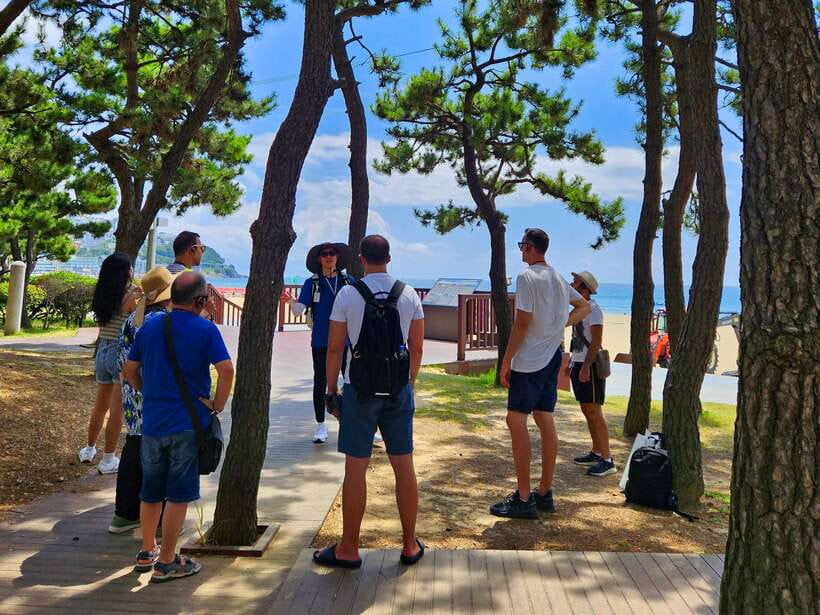
From the station area, the route reaches Haeundae Beach for a guided stop of about 20 minutes. You get the familiar postcard view, but the talk shifts attention from scenery to significance.
The beach is presented as a national symbol, not merely a strip of sand. Haeundae’s popularity reflects South Korea’s growth, its changing leisure culture, and Busan’s rise as the country’s second-largest city. The tour uses the shoreline to explain how a once-small coastal area became a major center of tourism and commerce.
The wartime section adds a different tone. After the Korean War, the beach became a U.S. military base, and the tour connects this fact to the larger relationship between South and North Korea. This is valuable because it places Haeundae inside Korean history rather than treating the district as separate from the country’s difficult past.
I would pay close attention here if you want a basic understanding of Busan’s modern development. Ingyu’s explanations are often praised for being concise but still substantial. He can move from a local spot to the broader story of Korea without turning the walk into a long classroom lecture.
The beach stop does have one practical limitation: it is an open, exposed setting. On a hot or sunny day, shade may be limited, so a sun umbrella and water are sensible. Comfortable shoes matter too, even though the walk is described as easy overall.
Gunam-ro and the seaside hot spring
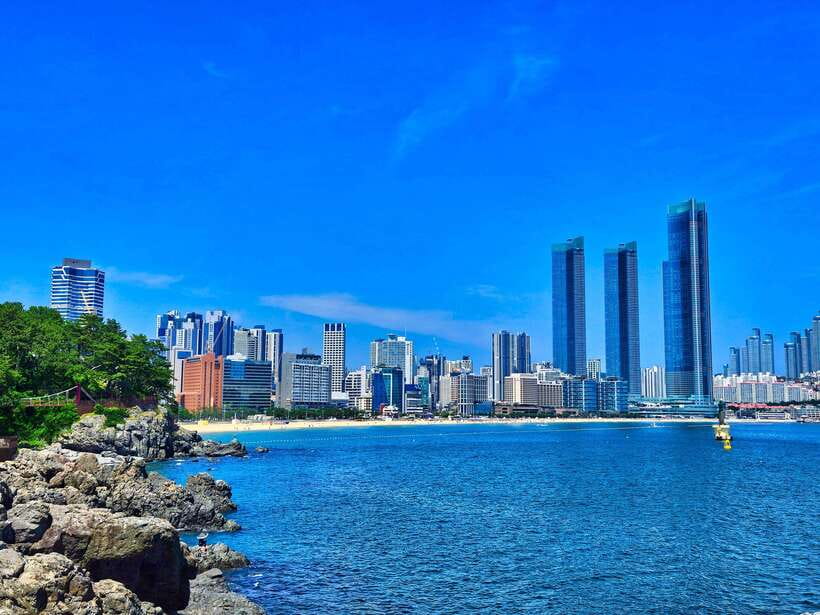
After the beach, the group walks for about five minutes to Gunam-ro. The guided stop lasts roughly eight minutes, so this is a shorter section, but it supplies one of the tour’s most unusual facts.
Gunam-ro developed around Gunam Oncheon, described as Korea’s only seaside hot spring. The spring was once favored by Korean royalty, and the tour explains how it helped shape Haeundae’s social and cultural life.
That detail changes how you read the street. Gunam-ro is now one of the area’s main activity zones, but its identity did not begin with today’s shops and restaurants. The hot spring helped establish Haeundae as a place people came to visit, rest, and spend time, long before the current era of high-rise tourism.
I like this stop because it shows how a destination can grow from a very specific local attraction. The beach alone does not explain Haeundae’s success. The hot spring, railway, and coastal setting worked together.
The short time here is probably enough for an introduction, but it is not a long historical examination of the spring. If you already know a great deal about Korean bath culture, you may want more detail. For most people, though, the stop works as a concise explanation of why Haeundae became a resort area in the first place.
More Busan trips:
- Busan: Gyeongju Guided Day Trip to Three Kingdoms Capital
★ 4.8 · 1,925 reviews - Small Group Full Day Busan Tour (Max 6 Pax)
★ 5.0 · 1,464 reviews - From Busan: Gyeongju UNESCO World Heritage Guided Day Tour
★ 4.8 · 1,250 reviews - Busan Private Tour with licensed tour guide + private vehicle
★ 5.0 · 1,143 reviews
Returning to the old station area
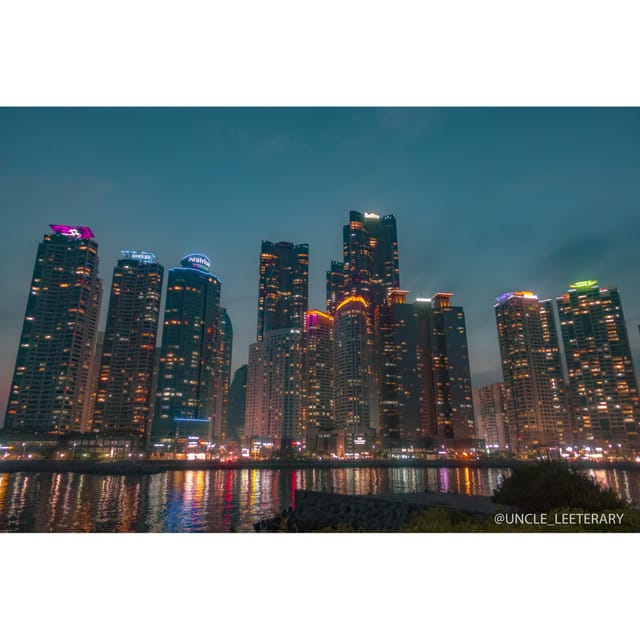
The route then includes a 12-minute walk back toward Haeundae Atelier Chik Chik Pok Pok and the old Haeundae Station area. This guided stop is scheduled for about 20 minutes.
The walking pattern matters. You are not being moved from one isolated attraction to another by vehicle. The streets themselves become part of the explanation, and the route lets you compare modern Haeundae with the traces of its earlier form.
This is also where the railway story can gain more meaning. You have already seen the beach and heard how tourism and wartime events shaped the district. Returning to the former station helps tie those threads together. The old transport link helped make the beach reachable, and easier access helped set the stage for the development that followed.
The tour’s structure gives you a useful balance between formal stops and walking time. You receive focused talks at the beach, Gunam-ro, the old station, and Dongbaek Island, but you also have time to observe the streets between them.
If you prefer a fast sightseeing tour with constant major sights, the route may feel modest. Its value lies in interpretation. You are walking through ordinary parts of Haeundae and learning why they matter.
Dongbaek Island and the story of Choi Chi-Won
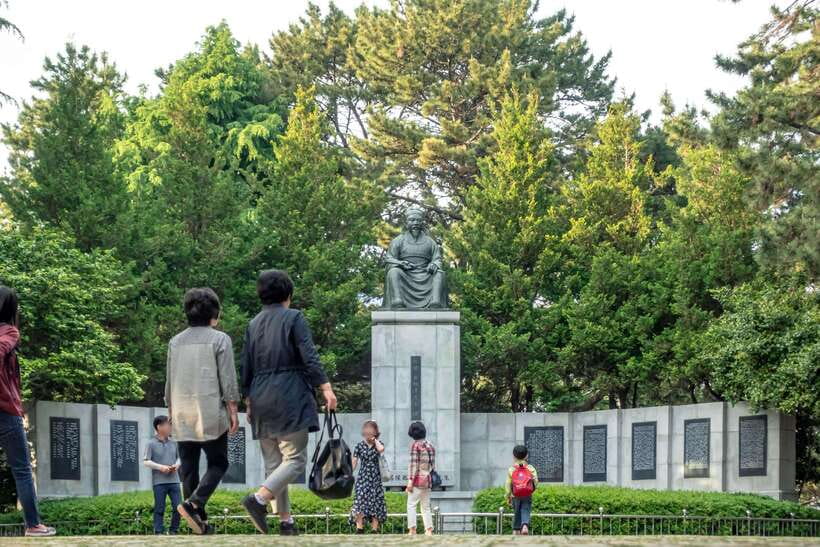
The final stretch takes about 18 minutes on foot before reaching Dongbaekseom, or Dongbaek Island. The guided stop lasts about 15 minutes and brings the tour to a quieter, more scenic close.
Here you learn about Choi Chi-Won, the scholar associated with the naming of Haeundae. The tour presents his connection to the area alongside the island’s historical importance and coastal setting.
Dongbaek Island is a fitting ending because the mood changes. The earlier parts of the walk focus on transport, streets, tourism, and war. Here, you get a calmer place to consider the older cultural story of the district while looking out toward the coast.
The views also make this the strongest photo stop. You should have time to enjoy the setting rather than simply pause for a quick picture. I would keep a little energy for this final section, since the hill and the 18-minute approach come before the closing talk.
The island is not treated as a separate nature excursion. It is the final chapter in a story about how Haeundae gained its name, identity, and fame. That makes the ending feel connected to the opening instead of tacked on.
What guide Kim Ingyu adds
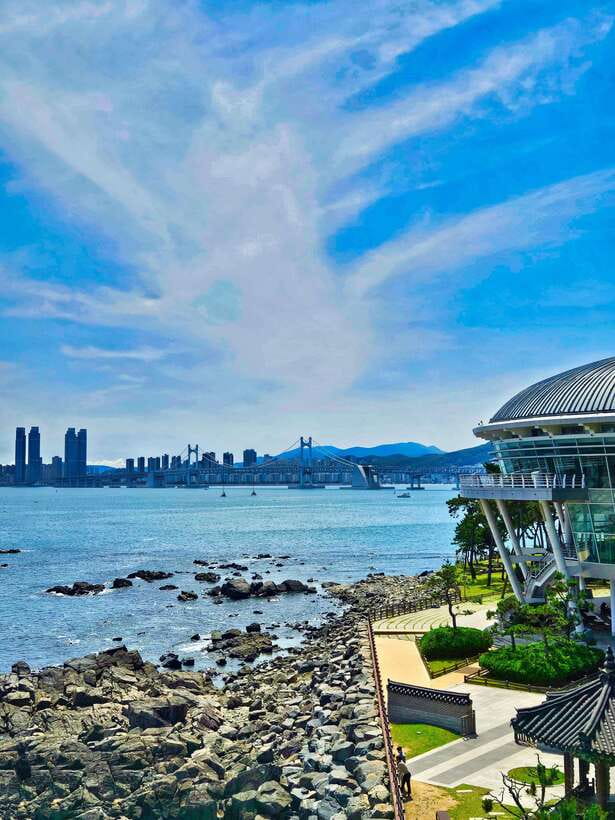
The strongest feature of this tour is the guide. Kim Ingyu is repeatedly praised for fluent English, clear explanations, humor, patience, and an engaging way of telling stories. He is also described as a local author who has written about Busan.
That background matters. Haeundae has plenty of attractive places, but a guide needs to explain why those places matter. Ingyu’s role is to connect small details to large events without losing the human side of the story.
I especially like the reported balance between prepared material and conversation. On small departures, the walk can feel almost like an outing with a local friend. You can ask about Haeundae, Busan, Korean history, or places to eat, and the guide has been praised for offering useful suggestions for further exploration.
His approach also seems well suited to visitors who do not want a dry chronology. The tour covers Japanese colonial rule, the railway, hot springs, the Korean War, North and South Korean relations, Choi Chi-Won, and Busan’s growth. That is a lot to fit into around 90 to 100 minutes, so a clear and lively speaker is essential.
Group size is not specified, and it can vary. Some departures may be small, which allows more questions and personal conversation. You should not assume every departure will be private, but the format appears designed to support interaction.
Walking effort, weather, and access
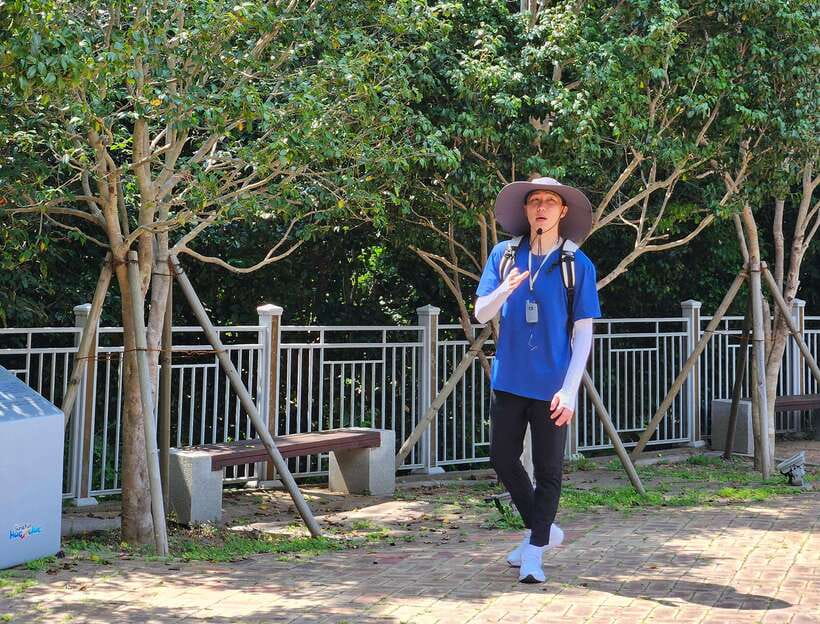
The route covers approximately 2 kilometers and is rated easy for all fitness levels, with no major challenges. Still, the information also notes a hill about 50 meters high. That is not a serious climb for most active walkers, but it is worth taking seriously if hills cause discomfort.
The experience is listed as wheelchair accessible. Because the route includes a hill and several outdoor walking sections, I would contact the provider before booking if you need specific assistance or a completely level path. Accessibility labels can be useful, but your own mobility needs are more specific than a general rating.
Bring comfortable shoes and your own drinking water. On bright days, take a sun umbrella for shade. The tour involves standing outdoors at the beach and walking between stops, so weather can affect comfort.
Rain does not necessarily end the experience. One wet-weather departure used a backup historical presentation, with time for conversation instead of following the full outdoor route. That gives the tour some flexibility, although you should still check the day’s arrangements if poor weather is expected.
The tour is not considered suitable for children under 10 or people over 70. That rule may exclude some families and older visitors who could manage the walk, so check the provider’s current conditions before paying.
Wireless transmitters and receivers are included, with complimentary earphones. Personal wired earphones with a 3.5 mm connection are recommended for hygiene reasons. Audio recording is not allowed.
Is $29 a fair price?
At $29 per person, this is not the cheapest way to see Haeundae. You can walk along the beach and through Gunam-ro without paying anything. If you only want photos, fresh air, and a short stroll, save your money.
The value appears when you want explanation. The price covers an English-speaking guide, the audio equipment, and a focused account of how Haeundae changed over time. You are paying for connections that would be easy to miss on your own: the old railway’s role, the hot spring’s influence, the beach’s wartime use, and Choi Chi-Won’s link to the district.
I think the tour offers particularly good value at the start of a Busan stay. It helps you understand the area before you spend time exploring it independently. The guide’s restaurant and sightseeing suggestions may also help you make better use of the rest of your day.
The tour offers free cancellation up to 24 hours before departure and a reserve-now, pay-later option. Those terms help if your Busan plans are still moving around, but the central question remains simple: do you want history and context, or only scenery?
Who should book this Haeundae walk?
I would recommend it to first-time visitors who are staying in or around Haeundae and want more than a beach visit. It suits people who enjoy local history, urban change, Korean culture, and questions about how Busan became a major city.
It is also a good choice if you have about 100 free minutes before lunch or between other plans. The route is short enough to fit into a busy day, yet it covers four distinct parts of Haeundae.
You may like it if you want an English tour with a relaxed pace. Ingyu’s style seems especially helpful for people who prefer a conversation to a formal lecture.
I would be less likely to recommend it if you dislike walking, need guaranteed flat ground, or only want major attractions with little explanation. The tour includes ordinary streets and historical discussion, not a long list of paid sights.
Should you book it?
Book this tour if you want Haeundae to make sense. The beach is beautiful, but the old station, Gunam-ro, and Dongbaek Island give the district a much fuller identity.
At $29, the experience is worth it for the guide’s local insight and the clear story linking Haeundae to Busan and Korea. Bring water, wear good shoes, allow close to 100 minutes, and be ready for a modest hill. If those conditions suit you, this is a smart way to get your bearings before exploring Haeundae on your own.
FAQ
How long does the Haeundae walking tour last?
The tour is listed as 90 minutes, while the description also refers to 1 hour and 40 minutes, or 100 minutes. Allow about 90 to 100 minutes.
How much does the tour cost?
The price is $29 per person.
Where does the tour meet?
Meet at Haeundae Atelier Chik Chik Pok Pok in the old Haeundae Station area, at 621 Haeundae-daero, Haeundae-gu, Busan.
How do I reach the meeting point?
Take Busan Metro Line 2 to Haeundae Station and leave through Exit 4. A public square is on your right as you exit. Walk to the square and look for the guide holding a flag.
What language is the tour conducted in?
The live tour is conducted in English.
Which places are included on the route?
The route includes Haeundae Beach, Gunam-ro, the former Haeundae Station area, and Dongbaekseom.
How much walking is involved?
You will walk approximately 2 kilometers, including a hill about 50 meters high.
Is the tour suitable for wheelchair users?
The tour is listed as wheelchair accessible. Since the route includes a hill and outdoor walking sections, confirm the exact conditions with the provider if you need specific assistance.
What should I bring?
Bring comfortable shoes and drinking water. A sun umbrella is recommended in sunny weather. Complimentary earphones are provided, but personal wired earphones with a 3.5 mm connection are recommended for hygiene reasons.
Just added around Busan
- Korean UNESCO World Heritage Tour including Gyeongju, Andong and Daegu(2N3D)★ 5.0 · 3 reviews
- Busan Bliss: Panoramic Yacht & Urban Exploration with Sky Capsule★ 5.0 · 3 reviews
- Busan day trip including Gamcheon culture village from Seoul by KTX train★ 5.0 · 3 reviews
- Busan Seafood Tour : Oyster village Tour with Oyster cuisines★ 5.0 · 3 reviews
- 1 Day Private Busan Guided Tour★ 4.5 · 3 reviews
- 2-DAYS Busan Customized and Included Night tour★ 5.0 · 3 reviews
- Full-Day Jinhae Cherry Blossom festival Private tour★ 5.0 · 3 reviews
- Busan Dialect Class with local snack★ 5.0 · 3 reviews
Walking Tours, compared.
Seoul moonlight walking tour with local historian
Read our review →
Evening Dark History, Folklore & Ghost Story Walking Tour
Read our review →Dark Side of the City and Ghost Stories Walking Tour
Read our review →
Gangnam Walking Tour on Youth and Society in Seoul Korea
Read our review →
Gyeongbok Palace and Bukchon Hanok Walking Tour
Read our review →
Best Walking Tour to Gyeongbok Palace Bukchon Hanok Village
Read our review →
Highlights & Hidden Gems With Locals: Best of Seoul Private Walking Tour
Read our review →Browse the lists this tour appears in