
Reviewed · WALKING TOURS
Real Busan Walking Experience
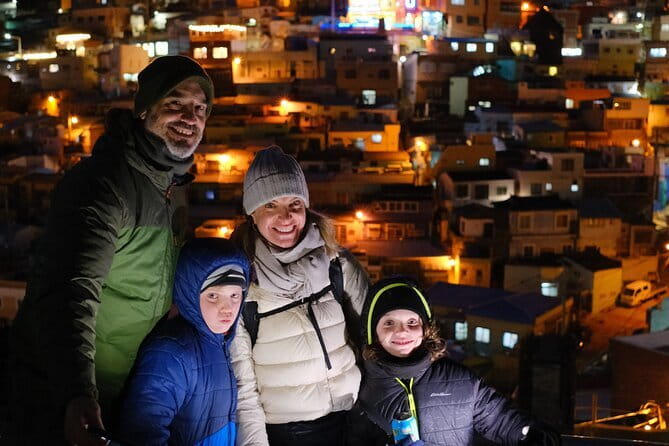
Busan rewards curious walkers. This five-hour private tour links Yeongdo’s wartime stories with Gamcheon Culture Village, Jagalchi Market, and local streets that are easy to miss on your own. Guide Joe adds personal insight, humor, photos, and plenty of chances to ask about Korean life.
I like the blend of famous sights and everyday Busan, and I like that Joe can adjust the plan for cruise passengers or replace places you have already seen. The main catch is physical: expect a lot of walking, stairs, a bus, and usually a taxi, with lunch and transport paid separately.
In This Review
- Key things to know before you go
- Why this Busan walking tour feels different
- Meeting at Jungang-daero at 11 a.m.
- Yeongdodaegyo Bridge: history with a harbor view
- Huin Yeoulgil: refugee homes and sea-diving traditions
- Gamcheon Culture Village: famous views with context
- Jagalchi Market: Busan on a plate
- Bupyeong Kkangtong Market: street food and wartime trade
- What the $75 price includes
- The walking level and who should book
- Photos, humor, and the guide’s personal touch
- Booking details and cancellation terms
- Should you book the Real Busan Walking Experience?
- FAQ
- How long is the Real Busan Walking Experience?
- Where does the tour start?
- What time does the tour begin?
- Where does the tour end?
- Is transportation included?
- Is lunch included?
- Is this a private tour?
- Can the route change if I have already visited these places?
- Can cruise passengers request a different schedule?
Key things to know before you go
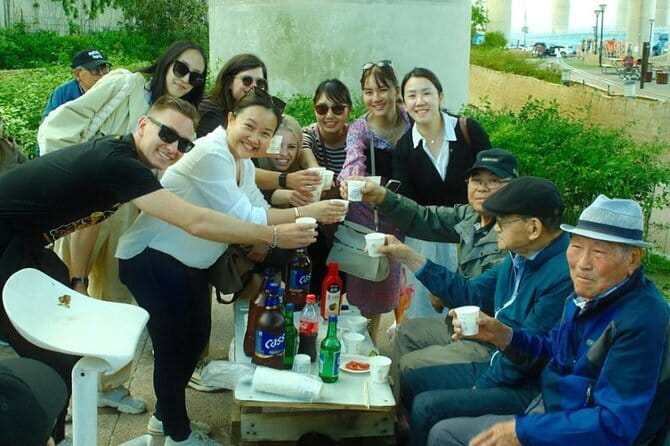
- Joe brings Busan to life: He explains the Japanese colonial period, the Korean War, refugee life, haenyeo traditions, and modern local culture in clear, conversational English.
- This is a real walking day: Five hours on foot, with stairs in the cultural villages, makes comfortable shoes essential.
- You eat at a local market: Lunch is not included, but Joe points you toward local food. Set aside about 10,000 Korean won in cash.
- The route mixes icons and ordinary life: Yeongdo, Huin Yeoulgil, Gamcheon, Jagalchi, and Bupyeong Kkangtong Market give you several sides of Busan.
- Your group stays private: Only your party takes part, making it easier to ask questions or request a different route.
- Photos are part of the service: Joe uses his camera and phone to take pictures and videos for you to keep.
Why this Busan walking tour feels different
Busan is not a city you understand from a quick viewpoint stop. Its identity comes from the port, its steep hills, its markets, its wartime refugee neighborhoods, and the people who made lives here under difficult conditions.
That is the strength of this experience. You are not simply taken from one photo stop to another. Joe connects places to stories. At Yeongdo, the view becomes a way to discuss colonial rule and the Korean War. At Huin Yeoulgil, brightly painted lanes lead into the lives of refugees and local women who worked as sea divers. At the markets, food and trade explain how Busan functions today.
Joe is a Busan native and speaks fluent English. His style is informal and funny. Several parts of the tour include jokes, including jokes about himself and his work as a stand-up comedian. That matters because history can feel heavy, especially when discussing war and displacement. A guide who can shift between serious facts and light humor keeps the day moving.
You should also expect a personal approach. Joe answers questions about Korean culture, customs, daily life, and history rather than giving only a fixed speech. If you are curious, this tour gives you room to ask.
More walking tours:
- Busan: Haeundae 100-Minute Walking Tour
★ 5.0 · 48 reviews - Busan Private Walking Tour with a Local
★ 4.5 · 11 reviews - Busan: Jagalchi Market & Gamcheon village Walking Tour
★ 5.0 · 7 reviews
Meeting at Jungang-daero at 11 a.m.
The stated starting point is 2 Jungang-daero, Jung-gu, Busan, at 11 a.m. The area is near public transportation, and the activity finishes back at the meeting point.
A private tour is useful here because Busan’s route involves more than walking in a straight line. Transportation costs are not included, and the usual plan uses one taxi and one bus. You should carry enough Korean won for those fares, along with lunch money.
The five-hour timing gives the group room to stop, talk, take photographs, and eat. It is not a rushed checklist. Still, you should keep an eye on your watch if you have a ship to catch or another fixed appointment.
Cruise passengers can ask for a schedule that matches their docking time. The route has also been adjusted for cruise groups in the past, including an earlier start. Arrange that in advance rather than assuming the standard 11 a.m. meeting will work for your ship.
Yeongdodaegyo Bridge: history with a harbor view
The first stop is Yeongdodaegyo Bridge, with about an hour set aside. Admission is free.
The bridge provides a strong opening because it places Busan’s port setting in front of you while Joe explains major events from the city’s past. His talk covers the Japanese colonial period and the Korean War, giving you a basic framework for the rest of the day.
The Korean War is especially important to Busan’s story. The city became a refuge for people forced to flee their homes, and the hills and neighborhoods you see later were shaped by that movement. This is not just background information. It helps you understand why some of Busan’s most photogenic areas also have difficult origins.
Joe also takes photographs here, using the bridge and harbor as a backdrop. If you want a record of your day, this is one of the more useful features of the tour. You are not left to balance your phone while trying to frame the view.
Huin Yeoulgil: refugee homes and sea-diving traditions
Next comes Huin Yeoulgil, also known as Huinyeoul Culture Village, with about an hour to explore.
The setting is associated with refugee life after the Korean War. Joe explains how people who had been forced to flee built everyday lives in Busan, and he points out details connected to local residents rather than treating the area as a simple photo backdrop.
You also learn about Yeongdo haenyeo, the female divers connected with the island and its waters. This adds a useful local angle. Many visitors know the word haenyeo through Jeju Island, but here the subject is tied to Busan and Yeongdo.
This stop rewards people who like human stories more than polished attractions. You can ask Joe about how locals lived, how the neighborhood changed, and what remains of older Busan. The exact balance between walking, photos, and conversation may depend on your group.
Be ready for stairs and uneven walking. The tour is designed as a walking experience, and one person specifically praised the amount of walking and stairs. That is good news if you want an active day, but a real consideration if you have limited mobility or prefer a vehicle-based tour.
More Busan trips:
- Busan: Gyeongju Guided Day Trip to Three Kingdoms Capital
★ 4.8 · 1,925 reviews - Small Group Full Day Busan Tour (Max 6 Pax)
★ 5.0 · 1,464 reviews - From Busan: Gyeongju UNESCO World Heritage Guided Day Tour
★ 4.8 · 1,250 reviews - Busan Private Tour with licensed tour guide + private vehicle
★ 5.0 · 1,143 reviews
Gamcheon Culture Village: famous views with context
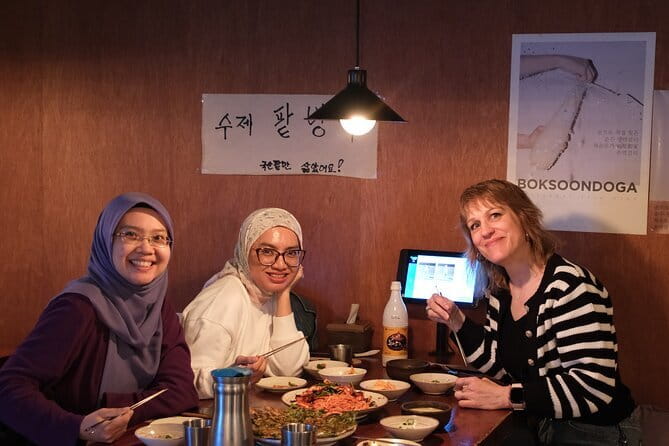
The route then reaches Gamcheon Culture Village for about 90 minutes. Admission is free.
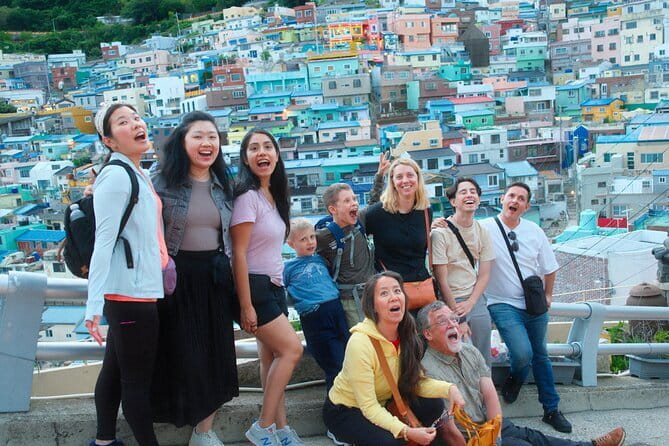
Gamcheon is one of Busan’s best-known sights, with colorful homes climbing the hills and broad views across the neighborhood. It is an obvious place for photographs, but the better reason to visit with Joe is context.
He explains the history held in the village and shares nostalgic stories about Busan. That helps you look beyond the painted walls and postcard views. The neighborhood is connected to the city’s refugee past, so its steep streets and tightly packed homes are part of a larger story about people making space for themselves.
Ninety minutes is enough for a useful walk and photographs without turning the stop into an all-day climb. You will still want sensible shoes and water. The tour description does not promise a specific number of stair sections, so you should expect a hilly visit rather than plan around a completely flat route.
Joe’s photography is particularly handy here. Gamcheon has many possible angles, and a local guide can help you spend less time searching for a picture and more time hearing what the place means.
If you have already visited Gamcheon, tell the operator before the day. The route can be changed to include other places instead. That flexibility is a real advantage for repeat visitors.
Jagalchi Market: Busan on a plate
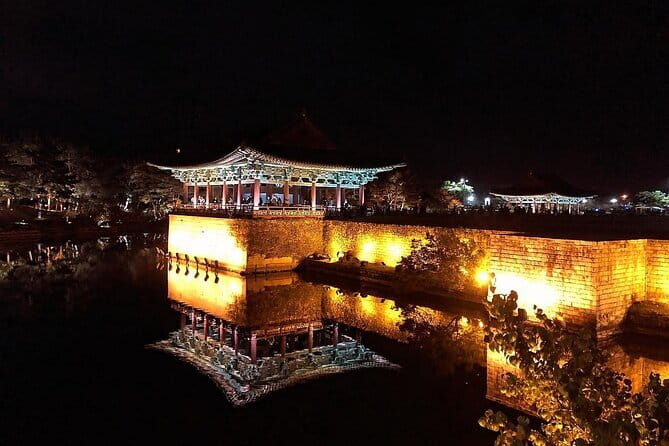
Jagalchi Market receives about an hour. It is Busan’s largest seafood market, known for fresh seafood, sellers, and food prepared on the spot.
This is where the tour shifts from history to daily commerce. You can look through seafood stalls, interact with vendors, and see how the market connects the port to the dinner table. Joe’s presence can make the experience less confusing, especially if you want to understand what you are seeing rather than simply walk through.
Lunch is not included. The plan is to show you local food at a market, with lunch costing about 10,000 won. Bring cash. The exact meal is not specified, so think of this as a chance to follow Joe’s suggestion rather than a fixed restaurant reservation.
That arrangement keeps the cost down and gives the meal a local feel, but it also means you should not expect a formal sit-down lunch included in the $75 price. If you have dietary restrictions, tell Joe ahead of time so he can take them into account when suggesting food.
Jagalchi can also be a sensory stop. Seafood markets are not quiet museum spaces, and some displays may be more direct than visitors expect. I would come ready for an active market visit, not a carefully arranged tasting.
Bupyeong Kkangtong Market: street food and wartime trade
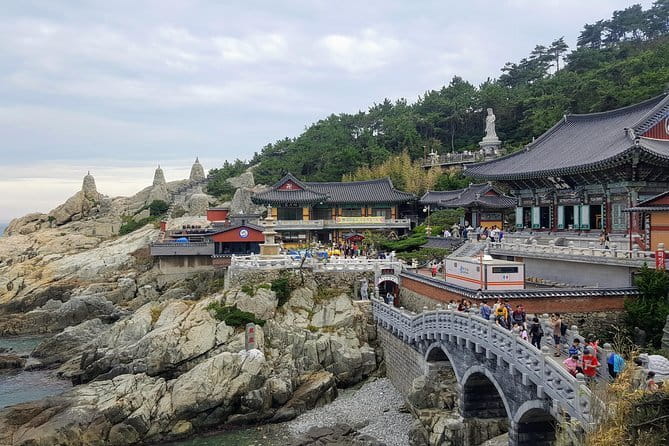
The final listed stop is Bupyeong Kkangtong Market, with about 30 minutes.
The market is also linked with Gukje Market and has roots in the Korean War era, when refugees sold imported canned goods. Its name and story reflect Busan’s role as a port city where goods, people, and ideas passed through during a difficult period.
Today, the market is known for varied goods and street food. Thirty minutes is a short visit, but that can be enough to sample the atmosphere, look at food stalls, and ask Joe how the market developed.
This stop pairs well with Jagalchi. Jagalchi shows Busan’s seafood trade, while Bupyeong Kkangtong gives you a broader look at street commerce and local eating. You get two markets without spending the entire afternoon in one place.
The short timing may feel limiting if you enjoy shopping or want to sample several dishes. Think of it as an introduction rather than a full market crawl.
What the $75 price includes
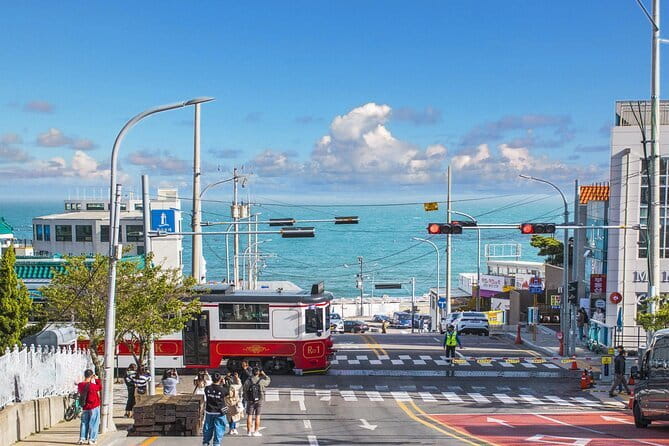
The price is $75 per person. For a five-hour private tour with a guide, that can be good value if you want interpretation rather than simple transportation.
You are paying for Joe’s time, route planning, English explanations, local knowledge of Busan, photography, and the ability to ask for changes. The guide also handles the storytelling that connects several different neighborhoods into one day.
The price does not include private transportation, bus and taxi fares, or lunch. Those extra costs are clearly manageable, but you should budget for them before booking. Lunch is estimated at about 10,000 won, and the usual route includes one taxi and one bus.
There are no admission charges listed for the stops, which helps keep the additional spending modest. The strongest value comes if you want a private guide and personal conversation. If you only need to see the main sights and are happy using public transit alone, the tour will cost more than exploring independently.
The private format is also important. Only your group participates, so you do not have to match the pace of a large party. That works well for families, couples, friends, and cruise passengers who want a flexible day.
The walking level and who should book
You should book this if you enjoy active sightseeing, local markets, history, and conversation. It suits people who want to understand Busan rather than simply collect photographs from its famous places.
It is also a good fit if you like asking questions. Joe’s answers cover Korean culture, history, daily life, and customs, and the private format gives you room to guide the conversation.
The tour may not suit you if you avoid hills, stairs, or public transportation. The day includes substantial walking and some stairs, plus a bus and usually a taxi. Most people can participate, but the physical demands are worth taking seriously.
Families should consider the ages and walking stamina of children. The humor and photo stops may keep older children engaged, while the long walking sections could test younger ones.
Repeat visitors have a clear reason to consider this experience: the route can be altered if you have already seen the listed places. Cruise passengers should also ask about a custom start time, since the standard schedule may not fit port calls.
The tour is often booked well ahead, with an average booking time of 54 days in advance. That suggests you should not leave it until the last minute if your Busan dates are fixed.
Photos, humor, and the guide’s personal touch
Joe’s role is more than pointing out monuments. He takes photos and videos with his camera and phone, shares them afterward, and uses humor throughout the day.
The combination of comedy and history is one of the clearest reasons this tour has earned such strong praise. Joe is described as open, fluent in English, and able to answer a wide range of questions. His passion for Busan comes through in the way he focuses on how people really live.
That style will suit you if you prefer an outgoing guide. If you want a quiet, formal lecture with little conversation, you may find his humor and personal approach less suitable.
I also like that the photography is built into the experience without turning the day into a photo shoot. You still get time to listen, walk, eat, and look around.
Booking details and cancellation terms
You receive confirmation at booking, and the ticket is mobile. The meeting point is near public transportation, and the activity ends where it begins.
Free cancellation is available up to 24 hours before the local start time for a full refund. Changes or cancellations made within 24 hours are not accepted and are not refunded, so cruise passengers should pay close attention to their ship schedule and port arrangements.
The experience is provided by MUSTVISITKOREA. The advertised start is 11 a.m., but cruise groups can request an adjusted schedule in advance.
Should you book the Real Busan Walking Experience?
Book it if you want Busan explained by a local, not simply displayed through a bus window. The route covers major sights, but its real strength is the connection between colonial history, wartime refugees, haenyeo culture, neighborhood life, markets, and Korean food.
The best match is an active visitor who enjoys stairs, public transport, market food, and plenty of questions. Bring comfortable shoes, cash for lunch and transport, and an appetite for both history and jokes.
Skip it if you need a flat, fully included, vehicle-based tour or if your schedule cannot handle a flexible five-hour walking day. For everyone else, Joe’s personal style, photo help, and ability to adjust the route make this a strong way to see Busan beyond its standard viewpoints.
FAQ
How long is the Real Busan Walking Experience?
The experience lasts approximately five hours.
Where does the tour start?
It starts at 2 Jungang-daero, Jung-gu, Busan, South Korea.
What time does the tour begin?
The standard start time is 11 a.m.
Where does the tour end?
The activity ends back at the meeting point.
Is transportation included?
No. Private transportation is not included. The usual plan includes one taxi and one bus, with those costs paid separately.
Is lunch included?
No. Lunch is not included. Joe will show you local food, and you should bring cash for a meal costing about 10,000 Korean won.
Is this a private tour?
Yes. Only your group participates in the activity.
Can the route change if I have already visited these places?
Yes. You can ask to explore other places if you have already visited the listed stops.
Can cruise passengers request a different schedule?
Yes. The schedule can be adjusted to match your docking time if you arrange it in advance.
Just added around Busan
- Korean UNESCO World Heritage Tour including Gyeongju, Andong and Daegu(2N3D)★ 5.0 · 3 reviews
- Busan Bliss: Panoramic Yacht & Urban Exploration with Sky Capsule★ 5.0 · 3 reviews
- Busan day trip including Gamcheon culture village from Seoul by KTX train★ 5.0 · 3 reviews
- Busan Seafood Tour : Oyster village Tour with Oyster cuisines★ 5.0 · 3 reviews
- 1 Day Private Busan Guided Tour★ 4.5 · 3 reviews
- 2-DAYS Busan Customized and Included Night tour★ 5.0 · 3 reviews
- Full-Day Jinhae Cherry Blossom festival Private tour★ 5.0 · 3 reviews
- Busan Dialect Class with local snack★ 5.0 · 3 reviews
Walking Tours, compared.
Seoul moonlight walking tour with local historian
Read our review →
Evening Dark History, Folklore & Ghost Story Walking Tour
Read our review →Dark Side of the City and Ghost Stories Walking Tour
Read our review →
Gangnam Walking Tour on Youth and Society in Seoul Korea
Read our review →
Gyeongbok Palace and Bukchon Hanok Walking Tour
Read our review →
Best Walking Tour to Gyeongbok Palace Bukchon Hanok Village
Read our review →
Highlights & Hidden Gems With Locals: Best of Seoul Private Walking Tour
Read our review →Browse the lists this tour appears in