
Reviewed · HANBOK & PALACE EXPERIENCES
Deoksugung & Jeongdong-gil: A Walk in Korea’s Rich Heritage
Seoul’s past unfolds one block at a time. This three-hour walk links Deoksugung Palace, old diplomatic and missionary sites, and Gwanghwamun Square, giving you a useful introduction to Korea’s changing capital. I like the mix of Korean and Western-style buildings, and I like that local guide Sam has earned praise for making the history fun and clear. The main drawback is the brisk schedule, with several stops lasting only 10 to 20 minutes.
At $48 per person, the tour is fairly priced if you want context rather than a simple palace visit. You get a professional English-speaking guide and a small group capped at 15 people. You should also expect to buy your own coffee or other drinks during the Jeongdong Theater stop, and the walk depends on suitable weather.
In This Review
- Key points at a glance
- Why this short Seoul walk works
- Starting at Deoksugung Palace at 9:30
- Gyeonghuigung adds a second palace viewpoint
- Appenzeller Noble Memorial Museum and the missionary connection
- A practical pause at Jeongdong Theater
- Jungmyeongjeon Hall and the Korean Empire
- Gwanghwamun Square brings the story into modern Seoul
- What $48 buys you
- Who should book this experience
- Booking and weather details to keep in mind
- Should you book the Deoksugung and Jeongdong-gil walk?
- FAQ
- How long does the Deoksugung and Jeongdong-gil tour last?
- What time does the tour begin?
- Where does the tour begin?
- Where does the tour end?
- What language is the tour conducted in?
- How many people can join the tour?
- Are admission tickets included?
- Is lunch included?
- Are drinks included at Jeongdong Theater?
- Can I cancel for a full refund?
- What happens if the weather is poor?
- What happens if the minimum group size is not reached?
Key points at a glance
- Deoksugung begins the story: Start beside one of Seoul’s most unusual palace compounds, where traditional Korean buildings meet later Western influences.
- Six stops cover a compact historic district: The route includes two palaces, a former missionary school, a theater, an imperial hall, and Gwanghwamun Square.
- Sam receives special praise: One review calls Sam a wonderful guide who made the walk both informative and enjoyable.
- A small group keeps the history personal: With a maximum of 15 people, you have a better chance of hearing explanations and asking questions.
- The $48 price includes guiding, not refreshments: Admissions are listed as free, but lunch and personal purchases are not included.
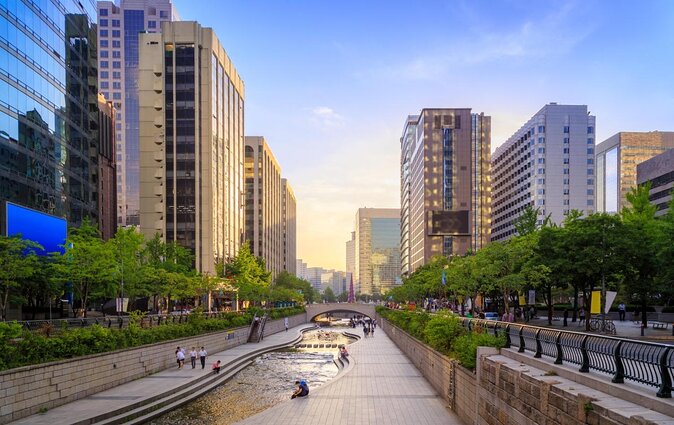
- The finish is near Cheonggyecheon Stream: The tour ends in central Seoul, giving you a convenient point for continuing your day.
Why this short Seoul walk works
Many first visits to Seoul begin with grand palaces, shopping streets, or busy modern districts. This route gives you something more useful: a compact explanation of how Korea moved from the Joseon Dynasty into the Korean Empire and then toward the modern city you see today.
I like the route because it does not treat Deoksugung as an isolated monument. Instead, you walk through the surrounding Jeongdong-gil area and connect royal buildings with schools, theaters, memorial sites, and public squares. The result is a broader picture of Seoul’s past.
The walk also suits you if you prefer history in small portions. No single stop dominates the entire morning. You see a palace, hear a short explanation, move to another site, and gradually build a sense of the district. That pace can make a complicated period easier to follow.
Still, this is not a leisurely day of palace exploration. The scheduled visits add up to less than two hours, leaving the remaining time for walking and interpretation. If you want detailed architectural study or long periods for photographs, you may find the route too quick.
More Historical Tours in Seoul
- Seoul: Evening Dark History, Folklore & Ghost Story Walking Tour
★ 5.0 · 593 reviews - Hanbok Photoshoot and History Tour at Gyeongbokgung Palace
★ 5.0 · 276 reviews - From Seoul: Dae Jang Geum Park Historic K-Drama Set Tour
★ 4.9 · 143 reviews
Starting at Deoksugung Palace at 9:30
The tour begins at Deoksugung Palace, also known as Gyeongun-gung, on Sejong-daero in Seoul’s Jung District. The start time is 9:30 a.m., which gives you a clear morning structure and leaves much of the afternoon free.
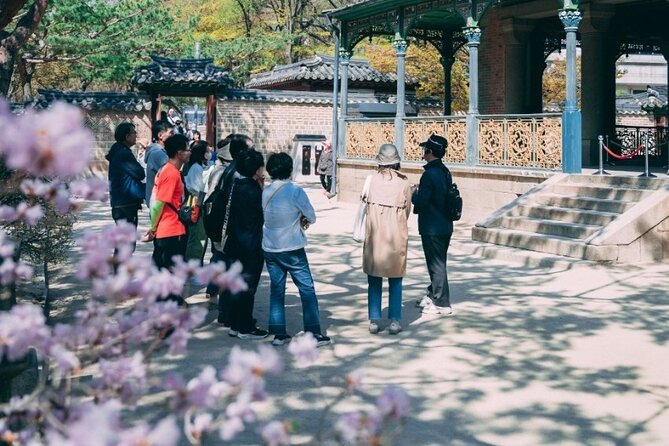
Deoksugung is a strong opening because it represents several layers of Korean history. It began as a Joseon Dynasty palace and later became closely linked with the Korean Empire. The palace’s location in central Seoul also makes the contrast immediate: royal grounds sit close to major roads and modern city buildings.
You have about 20 minutes here. That is enough for a guided introduction and a first look, but not enough for a slow, detailed visit to every part of the compound. I would arrive ready to listen rather than expecting free time to wander.
The listed admission for this stop is free. Your guide’s explanation is the main value here, especially if you do not already know the difference between a Joseon royal residence and the later imperial setting.
Gyeonghuigung adds a second palace viewpoint
The next palace stop is Gyeonghuigung, also called Gyeonghui Palace, in Seoul’s Jongno-gu district. It was built in 1623 during the Joseon Dynasty as a royal residence.
The value of visiting two palaces on one route is comparison. Deoksugung helps explain the later imperial period, while Gyeonghuigung brings you back to an earlier Joseon setting. A guide can help you connect those periods instead of leaving you with a string of names and dates.
You have 20 minutes at Gyeonghuigung, and admission is listed as free. That keeps the tour affordable, but the short stop means you should not expect an exhaustive tour of the grounds.
I like this kind of pairing for a first day in Seoul. You are not simply checking off famous buildings. You are seeing how royal spaces changed across time. The route makes the city’s political past easier to read.
Appenzeller Noble Memorial Museum and the missionary connection
The Appenzeller Noble Memorial Museum receives only 10 minutes, so this is a brief but meaningful pause. The site was formerly Baekjae Hakdang, a missionary school that later expanded into a university, now known as Pai Chai University in Daejeon.
The museum explains the school’s development and its Methodist background. This gives the walk a different angle. So far, the story centers on royal power and palace life. Here, you begin to see the role of education and foreign religious missions in Korea’s modern development.
Ten minutes is a tight schedule. You may get an introduction and a quick look rather than time for a full museum visit. That limitation matters if museums are your main reason for booking.
For me, the stop earns its place because it prevents the tour from becoming only a palace walk. It shows how outside ideas entered Korean society through institutions, schools, and religious work. That is an important part of the period covered by the experience.
More Walking Tours in Seoul
- Seoul moonlight walking tour with local historian
★ 5.0 · 940 reviews - Seoul: Nighttime Hidden Gems Walking Tour
★ 5.0 · 775 reviews - Seoul: Dark Side of the City and Ghost Stories Walking Tour
★ 4.8 · 484 reviews - Gangnam Walking Tour on Youth and Society in Seoul Korea
★ 5.0 · 401 reviews
A practical pause at Jeongdong Theater
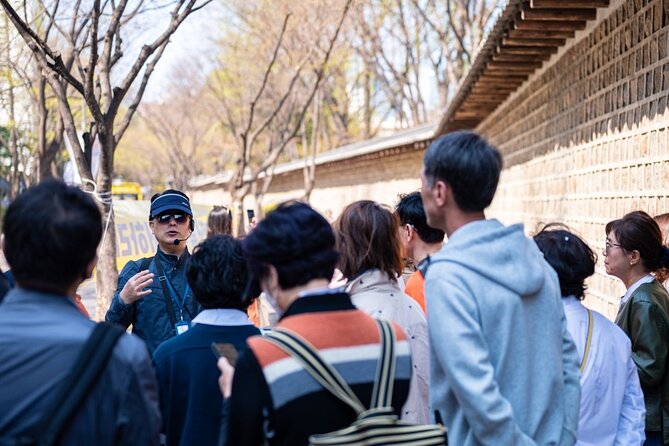
The walk continues to Jeongdong Theater, a venue known for concerts, plays, and musicals that use elements of traditional Korean culture. You spend about 25 minutes here.
This is partly a practical break. You can get coffee or another drink and use the restroom. Refreshments are not included, so bring money or a payment method for anything you choose to buy. Lunch is also outside the tour price.
The theater itself adds another cultural layer. It is not presented as a full performance visit, so you should not book this tour expecting a show. Instead, the stop gives you a pause in the middle of the walk and a chance to hear about a venue connected with Korean performance traditions.
I appreciate this kind of break on a three-hour walking tour. It keeps the morning manageable, especially if you are visiting in warm weather or covering Seoul on foot for several days. The tradeoff is that 25 minutes here leaves less time for extended sightseeing elsewhere.
Jungmyeongjeon Hall and the Korean Empire
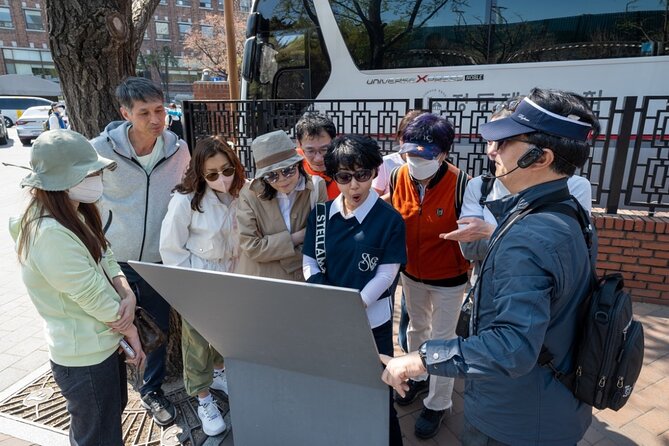
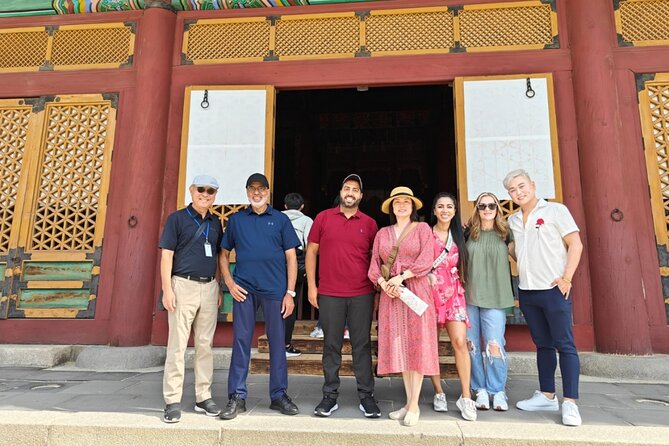
The most historically weighty stop may be Jungmyeongjeon Hall, built in 1899 as the imperial library of the Korean Empire. You have about 15 minutes here.
After Deoksugung Palace caught fire in 1904, Jungmyeongjeon became the temporary residence of Emperor Gojong. It was also the site of the Eulsa Treaty, a major event in Korea’s modern political history.
This stop gives the earlier palace visits a sharper focus. You are no longer looking only at royal buildings or ceremonial spaces. You are standing near events tied to the pressure placed on Korea during a difficult period of political change.
Fifteen minutes is enough for a focused explanation, but the subject deserves careful attention. If you already have an interest in Emperor Gojong, the Korean Empire, or the Eulsa Treaty, you may want to return independently for more time.
For a first introduction, though, the stop is well chosen. It gives you a reason to remember the dates and buildings rather than treating them as disconnected sights.
Gwanghwamun Square brings the story into modern Seoul
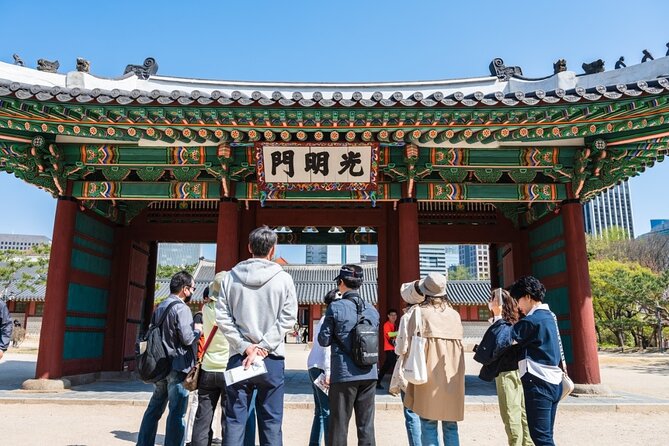
The final major stop is Gwanghwamun Square, a large public space in central Seoul created in 2009. The square includes a fountain, a statue of King Sejong the Great, and other public features.
This is a smart ending because it brings the tour into the present. After palaces, memorial buildings, and old institutions, you arrive at a modern gathering place used by local people and visitors alike.
The 20-minute stop lets you consider how Seoul presents its past in a contemporary public setting. King Sejong’s statue also points to an earlier part of Korean history, while the square itself belongs to the modern city.
The square can feel less intimate than the palace grounds, but that contrast is useful. Seoul is not a museum frozen in one period. It is a capital where old royal spaces, modern public planning, and busy civic life share the same center.
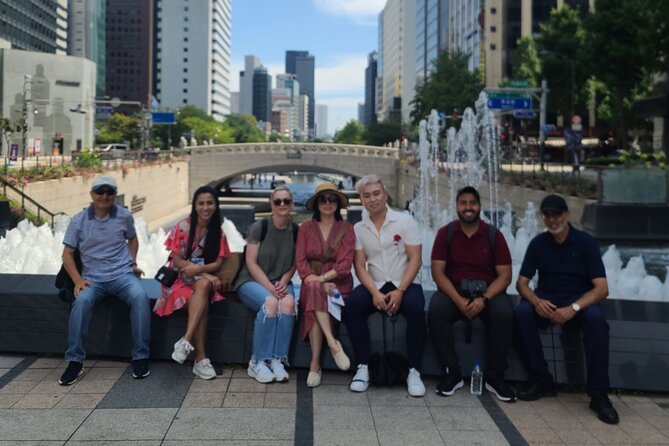
The tour ends at Cheonggyecheon Stream in Jongno District. That location is practical for continuing your sightseeing, though the supplied details do not specify the exact walking route from the square to the stream.
What $48 buys you
At $48 per person, the tour sits in the reasonable range for a three-hour guided walk in central Seoul. The price covers a professional English-speaking guide, while admission at the listed stops is free.
The value depends on how much background you want. If you are happy to read signs and walk between landmarks alone, you may prefer a self-guided visit. If you want the connections between the Joseon Dynasty, the Korean Empire, missionary education, and modern Seoul explained as you go, the guide is the main reason to pay.
A group limit of 15 is another positive. It is not a private tour, but it is small enough to feel more manageable than a large coach group. The experience has received a perfect rating from nine reviews, and Sam is specifically praised for giving a fun, informative introduction to Seoul.
You should budget separately for coffee, other drinks, lunch, and personal purchases. Since the route covers public and historic places rather than a ticketed performance, the price is mainly paying for interpretation, organization, and company during the walk.
Who should book this experience
I would recommend this walk to a first-time visitor who wants a clear introduction to Seoul’s historic center without spending a full day in museums and palaces. It is also a good fit if you like seeing how traditional and Western-style landmarks sit side by side.
You will get the most from it if you enjoy short stops and steady movement. The route asks you to pay attention to explanations, then move on before any one site becomes tiring.
The tour may be less suitable for you if you want extensive free time, a food-focused outing, or a formal palace architecture tour. The itinerary is tightly timed, and lunch is not included.
The experience is described as suitable for most people and is near public transportation. A maximum of 15 participants keeps the group relatively small, but you should still expect a shared walking tour rather than a private guide.
Booking and weather details to keep in mind
Your confirmation is sent within 48 hours of booking, subject to availability. The tour requires good weather, so poor conditions can lead to a different date or a full refund.
Free cancellation is available when you cancel at least 24 hours before the start time. Cancellations or changes made inside that window are not refunded or accepted, so check your plans before the deadline.
The tour also requires a minimum number of participants. If that minimum is not met, the provider offers another date or experience, or a full refund.
Because the route starts at Deoksugung Palace and ends near Cheonggyecheon Stream, you should plan your day around central Seoul rather than expecting transport back to your hotel. The mobile ticket makes access to your booking simple, but you still need to arrive at the stated meeting point by 9:30 a.m.
Should you book the Deoksugung and Jeongdong-gil walk?
Book it if you want a well-organized first look at Seoul’s political and cultural past, with a guide to connect the buildings. The combination of two palaces, a missionary school, Jungmyeongjeon Hall, Jeongdong Theater, and Gwanghwamun Square gives you more range than a standard palace visit.
The strongest reasons to choose it are the compact route, the small group size, and the clear focus on late 19th and early 20th century Korea. Sam’s praised guiding style is another encouraging detail, though guide assignments can vary.
Skip it if you prefer to explore slowly or want a full museum or palace tour. At $48, the experience makes sense when you value historical explanation and a thoughtful route. It is less compelling if you only want entrance tickets or plenty of unstructured time.
FAQ
How long does the Deoksugung and Jeongdong-gil tour last?
The tour lasts approximately three hours.
What time does the tour begin?
It starts at 9:30 a.m.
Where does the tour begin?
The meeting point is Deoksugung Palace, at 99 Sejong-daero in Seoul’s Jung District.
Where does the tour end?
The tour ends at Cheonggyecheon Stream in Seoul’s Jongno District.
What language is the tour conducted in?
The tour includes a professional English-speaking guide.
How many people can join the tour?
The maximum group size is 15 participants.
Are admission tickets included?
Admission at the listed stops is free. The tour includes the professional guide, but it does not list paid admission costs because the stops have free entry.
Is lunch included?
No. Lunch is not included in the price.
Are drinks included at Jeongdong Theater?
No. The stop allows time to buy coffee or other drinks, but personal consumption is not included.
Can I cancel for a full refund?
Yes, if you cancel at least 24 hours before the experience start time. Cancellations made less than 24 hours in advance are not refunded.
What happens if the weather is poor?
If the tour is canceled because of poor weather, you are offered a different date or a full refund.
What happens if the minimum group size is not reached?
You are offered a different date or experience, or a full refund.
More Historical Tours
- Seoul: City Highlights and Historical Experience No Shopping
★ 5.0 · 74 reviews - Street photoshoot and Seoul Hidden gem History Walking Tour
★ 5.0 · 68 reviews - Discover Seoul: Local Life and History
★ 4.5 · 53 reviews - Korean History & Heritage Tour
★ 5.0 · 51 reviews
More Hanbok and Palace Experiences
- Seoul: Gyeongbok Palace, Bukchon Village, and Gwangjang Tour
★ 4.9 · 2,321 reviews - Best Seoul City Tour (Gyeongbokgung Palace,Insadong,Namsan Tower)
★ 5.0 · 1,647 reviews - Small-Group Royal Palace and Seoul City Tour (hotel pick-up)
★ 5.0 · 1,474 reviews - Seoul City Sightseeing Tour Including Gyeongbokgung Palace, N Seoul Tower, and Namsangol Hanok Village
★ 5.0 · 1,423 reviews
Just added around Seoul
- Seoraksan National Park & Nami Island★ 4.5 · 3 reviews
- Strawberry Picking, Winter Sled with Eobi Ice Valley from Seoul★ 4.5 · 3 reviews
- Seoul Full Day small group Tour★ 5.0 · 3 reviews
- Rice Wine Tasting with Sommelier – Finest Makgeolli (& Soju)★ 5.0 · 3 reviews
- Majang Meat Market Experience: Private Tour with Han-woo Beef BBQ★ 5.0 · 3 reviews
- Seoul Korean BBQ Dinner Experience with Secret Food Tours★ 5.0 · 3 reviews
- Seoul: Alpaca World and Nami Island (with Garden / Railbike)★ 5.0 · 3 reviews
- Max Out Seoul: Must Visit City Highlights Panoramic Day Tour★ 5.0 · 3 reviews
Hanbok & Palace Experiences, compared.

Gyeongbok Palace, Bukchon Village, and Gwangjang Tour
Read our review →
Best Seoul City Tour (Gyeongbokgung Palace,Insadong,Namsan Tower)
Read our review →
Small-Group Royal Palace and Seoul City Tour (hotel pick-up)
Read our review →
Seoul City Sightseeing Tour Including Gyeongbokgung Palace, N Seoul Tower, and Namsangol Hanok Village
Read our review →Gyeongbok Palace, Bukchon Village, and Gwangjang Tour
Read our review →
Seoul Highlights: Gyeongbok Palace, Insadong & N Seoul Tower
Read our review →
Seoul City Half Day Tour-Gyeongbok Palace Guard Changing Ceremony
Read our review →Browse the lists this tour appears in