Reviewed · SEOUL TOURS
Discover Eastern Korea in 4days: All-Inclusive Experience
Eastern Korea packs a lot into a short trip. This four-day journey links Busan, Gyeongju, Andong, Pyeongchang, and Seoraksan, giving you seafood markets, royal tombs, village traditions, mountain scenery, and plenty of Korean food along the way. I especially like the no-shopping format, which keeps your time focused on places rather than sales stops.
I also like that the price includes three nights of hotels, seven meals, entrance fees, transport during the tour, and an English-speaking guide. That makes budgeting easier. The main concern is the first-day transport arrangement: some small groups have received KTX train tickets and made their own way from Seoul to Busan, so you should confirm exactly how your departure will work before setting out.
This is an active but manageable trip. You will change cities often, walk through historic sites, and spend time outdoors. The group can reach 35 people, though one past departure had only a small number of people on the four-day portion alongside a larger day-tour group.
In This Review
- Key points before you book
- What the $1,200 price really covers
- Day 1: Busan seafood and the Songdo coast
- Day 2: Busan’s coast before Silla-era Gyeongju
- Bulguksa Temple
- Daereungwon Tomb Complex
- Gyeongju National Museum
- Cheomseongdae Observatory
- Day 3: Traditional sweets and life in Andong
- Day 4: Seoraksan’s Jujeongol Valley
- Food, hotels, and the no-shopping promise
- Guides, vehicles, and the pace of the group
- Who will get the most from this trip
- Should you book the four-day Eastern Korea tour?
- FAQ
- Where does the tour begin?
- Where does the tour end?
- Is transport from Seoul to Busan included?
- What meals are included?
- Are hotel rooms included?
- How large can the group be?
- What happens if bad weather affects the tour?
Key points before you book

- Four regions in four days: Busan, Gyeongju, Andong, and the Seoraksan area give you a broad look at eastern South Korea.
- No shopping stops: Your schedule is built around food, culture, history, and scenery rather than compulsory retail visits.
- Meals are part of the experience: Four lunches, three breakfasts, and two dinners are included, with different traditional Korean foods included along the way.
- The KTX connection needs checking: The advertised meeting point is Seoul Station at 8:00 a.m., but some small groups have traveled independently to Busan by train.
- The cultural core is Gyeongju and Andong: Bulguksa Temple, Silla relics, and Hahoe Folk Village provide the strongest sense of old Korea.
- Good service can make the pace work: Guides such as Mr. Jay and Mark received particular praise for organization, care, and professionalism.
What the $1,200 price really covers
At $1,200 per person, this is not a bargain-priced bus outing. It is a packaged regional trip with several costly pieces already handled. Your fee covers three nights in twin or double accommodation, four lunches, three breakfasts, two dinners, all listed admission fees, an air-conditioned vehicle, and an English-speaking guide or driver-guide.
That matters in Korea, where moving between distant cities can take planning. You do not need to separately arrange hotels in several destinations, work out admission tickets, or decide where to eat every day. The tour also avoids the common shopping-stop pattern, which gives the package a cleaner purpose.
The value depends on how much independent planning you want to do. If you are comfortable booking KTX trains, hotels, long-distance buses, meals, and sightseeing on your own, you could build a less expensive trip. If you want one booking that brings together major eastern sights and includes most daily costs, the price is easier to justify.
You should still budget for drinks, tips, laundry, telephone charges, pay television, insurance, and other personal expenses. Hotel pickup on the first day and drop-off on the final day are not included, although the listed route begins at Seoul Station and ends at AMID Hotel Seoul.
A few more trips of this kind worth comparing:
- Discover Western Korea in 4days: All-Inclusive Experience
★ 5.0 · 6 reviews - Jeonju & Yeosu: 4-Day Foodie & Artist Journey
★ 5.0 · 3 reviews
Day 1: Busan seafood and the Songdo coast
The first major stop is Jagalchi Market, Busan’s famous seafood center. After meeting the guide and arranging lunch, you get about an hour to see one of the city’s best-known food markets.
Jagalchi is valuable because it connects daily life with Busan’s identity as a port city. Rows of stalls and fresh seafood give you a more direct look at local food culture than a standard restaurant meal. Since lunch is included, you can try the meal without having to sort out the bill or choose a restaurant for the group.
The short visit means you should keep moving and stay close to the guide. This is an introduction rather than a full market expedition. If you hope to spend a long time browsing every stall, the schedule may feel quick.
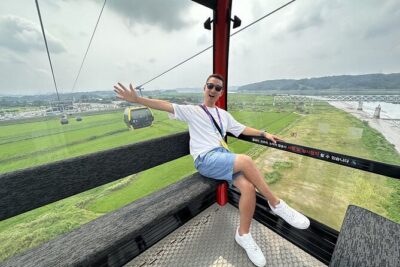
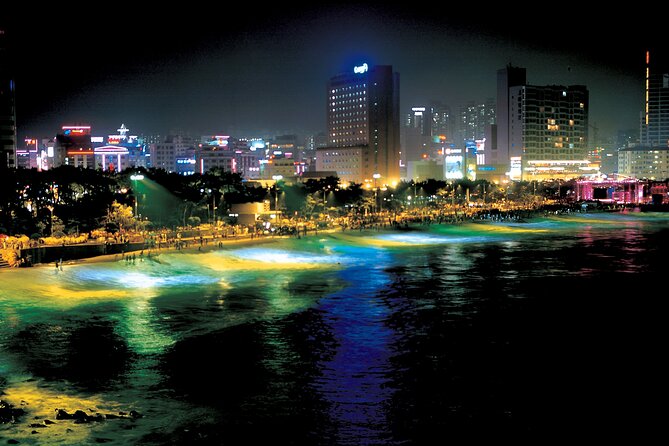
The afternoon highlight is the Songdo Sea Cable Car. The ride covers about 1.6 kilometers between Songdo Beach Station and Songdo Sky Park, with roughly two hours set aside for the stop. From the cabin, you get broad views along the coast and a different angle on Busan than you would from street level.
This is one of the tour’s more relaxed moments. After the market, you can sit back, look out over the water, and take photographs without a long history lecture or demanding walk. The cable car is included, so you do not need to pay an extra admission fee.
Your first day is therefore a useful mix: food, city life, and scenery. The practical issue is getting to Busan. The published meeting information lists Seoul Station at 8:00 a.m., while the day’s sightseeing begins with a guide meeting at Busan Station. On one departure, a small four-day group received free train tickets and made its own way to Busan on the KTX. Confirm this arrangement before booking your hotel around the start time.
Day 2: Busan’s coast before Silla-era Gyeongju
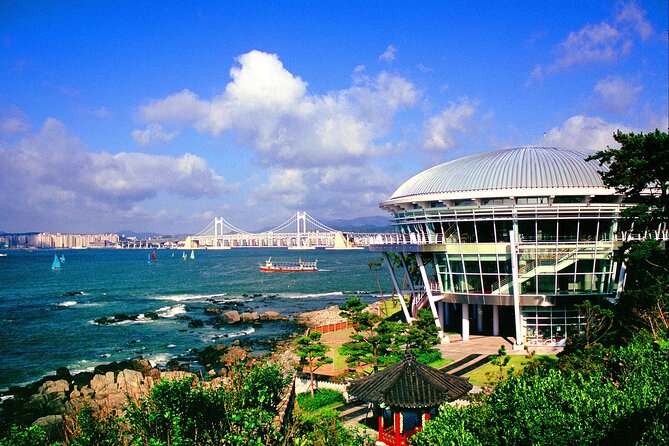
Day two begins at Dongbaekseom Island with Nurimaru APEC House. The building hosted the 2005 APEC Summit and has a modern glass-walled conference hall. You get about an hour here.
The stop adds a recent political chapter to a tour otherwise centered on ancient Korea. It is also a gentle morning visit, especially useful before a long day of temples, museums, and burial mounds. You can see how South Korea presents itself as a modern international meeting place.
From Busan, the route continues to Gyeongju, the ancient capital of the Silla kingdom. This change of setting is one of the trip’s strongest features. Within the same day, you move from a coastal metropolis to a city shaped by more than a thousand years of royal and religious history.
Bulguksa Temple
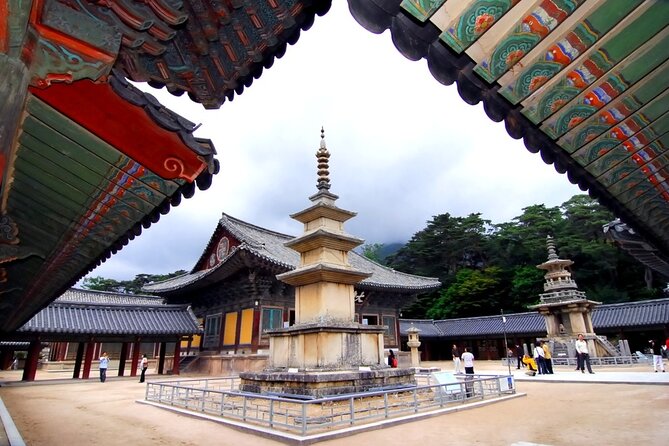
Bulguksa Temple receives about 90 minutes and includes admission. The UNESCO-listed site is one of Korea’s essential cultural stops, with temple buildings and stone features that show the skill and spiritual ambitions of the Silla period.
You should wear practical shoes and expect some walking around the temple grounds. Ninety minutes is enough to see the main areas with a guide, but not enough for a slow, solitary study of every detail. The benefit of joining a guide is that the stones and structures have context, rather than appearing as attractive but disconnected buildings.
A completely different kind of day out in Seoul:
- Best DMZ Tour Korea from Seoul (Red Suspension Bridge Optional)
★ 5.0 · 41,422 reviews - DMZ Tour: 3rd Tunnel, Option(Suspension Bridge, Boat) from Seoul
★ 5.0 · 21,373 reviews - DMZ tour south Korea from Seoul (NK experience hall, defector)
★ 5.0 · 20,599 reviews - Seoul: DMZ Tour with Optional Suspension Bridge
★ 4.8 · 5,277 reviews
Daereungwon Tomb Complex
At Daereungwon, large rounded burial mounds mark the resting places of Silla royalty. The visit lasts about an hour and includes admission.
The tombs are visually simple from the outside, but their scale hints at the power of the court that built them. The site also helps explain the gold crowns and other objects you see later at the museum. I like this order because the outdoor tombs give you a physical sense of Silla burial customs before you view the objects taken from them.
Gyeongju National Museum
The museum receives 90 minutes. Its displays include golden crowns and other major Silla artifacts, giving you the clearest look at the wealth and craft of the ancient kingdom.
This is a useful counterpoint to the outdoor sites. At Bulguksa, you see architecture and sacred space. At Daereungwon, you see royal burial mounds. At the museum, the objects themselves tell the story. The gift shop is also noted as part of the visit, but this is not presented as a compulsory shopping stop.
Cheomseongdae Observatory
The final stop takes about 20 minutes at Cheomseongdae, an ancient astronomical structure and one of Gyeongju’s familiar symbols. The stop is brief, so think of it as a photo and explanation break rather than a full attraction.
After a full day, the compact visit makes sense. You see the structure, hear why astronomy mattered to Silla society, and continue on. Day two is busy, but it gives you the strongest historical concentration of the entire trip.
Day 3: Traditional sweets and life in Andong
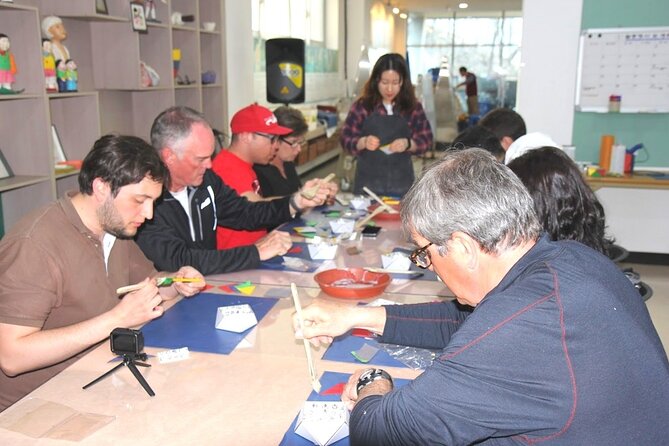
The third day begins with a Korean dessert-making session at Momyeongjae and the Korean Traditional Culture Center. The activity lasts about 90 minutes and includes admission.
This is a welcome change from looking at monuments. You learn from instructors and make traditional Korean sweets yourself. The activity gives you a practical connection to food culture, especially when paired with the included meals served throughout the tour.
The description does not specify the exact dessert, so you should not book this expecting one particular recipe. The broader appeal is the hands-on lesson and the chance to take part in a traditional food practice instead of only eating prepared dishes.
The afternoon is devoted to Andong Hahoe Folk Village, a UNESCO World Heritage Site with more than 600 years of history. About two hours are planned here.
Hahoe is important because it remains a living traditional village rather than a collection of reconstructed displays. Its old homes, village setting, and customs give you a sense of how community life developed outside royal capitals and large cities. This is one of the best stops for understanding Korea through ordinary homes and local traditions.
Two hours gives you time to walk around, listen to the guide, and take in the village at a reasonable pace. You should expect uneven walking and an outdoor setting, so comfortable footwear is wise. The visit is less about checking off individual buildings and more about seeing how the whole village fits together.
Day three may be the most personal part of the tour. The dessert class asks you to participate, while Hahoe shows a traditional community in place. If your main interest is modern nightlife or shopping, this day may feel quiet. If you want foodways and old village life, it is a highlight.
Day 4: Seoraksan’s Jujeongol Valley
The final day begins in the Pyeongchang area and continues to Jujeongol Valley in Seoraksan National Park. About two hours are scheduled for the stop.
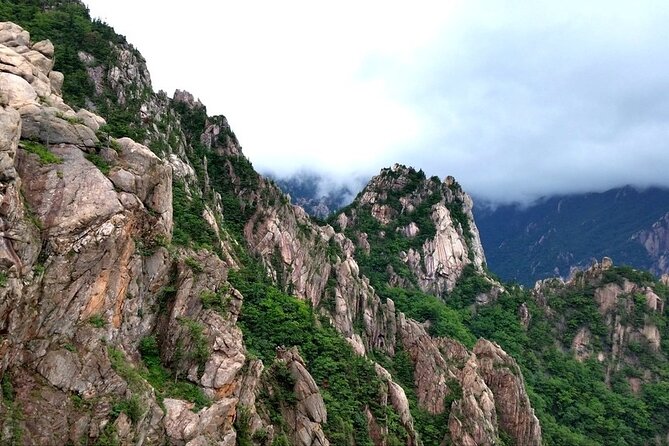
Seoraksan is known for dramatic rock formations, high peaks, and clear streams. The park brings a strong outdoor finish to a trip that has mostly focused on urban sites, temples, museums, and villages. You get fresh air, mountain views, and a chance to stretch your legs before returning to Seoul.
The tour requires a moderate level of physical fitness. The exact trail details are not provided, so you should ask the operator about walking distance, slopes, and the day’s transport plan if hiking is a concern. Good shoes are sensible, and weather matters. The operator says poor weather can lead to a different date or a full refund.
The short park visit cannot provide a full Seoraksan hiking trip. It is better understood as an introduction to the valley and surrounding scenery. If you want a serious mountain walk, four days with several cities will not offer enough time. If you want to add a major national park without arranging a separate excursion, the stop works well.
Food, hotels, and the no-shopping promise
The food plan is one of the more appealing parts of the package. Four lunches, three breakfasts, and two dinners are included, and the program promises different kinds of traditional Korean food. This reduces the daily decisions that can slow a group down and lets you sample local dishes as part of the route.
You should remember that only two dinners are covered, not three. Drinks and personal purchases cost extra. The tour does not provide a detailed restaurant list, so exact menus may vary.
Three nights of twin or double accommodation are included. The available comments praise the hotels, with one rating specifically calling them great. Room arrangements are shared unless you pay or arrange otherwise through the provider. You should confirm the exact hotels and whether a single-room supplement applies if you do not want to share.
The no-shopping policy is a real advantage. Many organized tours lose hours at shops that serve the itinerary more than the visitor. Here, the schedule puts that time into museums, temples, food activities, and outdoor sites instead.
Guides, vehicles, and the pace of the group
An English-speaking guide or driver-guide accompanies the tour. Vehicle size changes with the group, and the maximum group size is 35. That can feel fairly large at busy sites, though the vehicle and guide arrangement should adjust to the number booked.
The service comments give useful names to look for. Mr. Jay received strong praise for keeping people informed, managing expectations, helping with individual needs, and adding humor. Mark was described as professional, while the driver team was praised as top class. These are encouraging signs, though the guide assigned to your departure may be different.
One less positive experience involved confusion over the train connection to Busan. The food, hotels, driver, and guide were well received, but the traveler felt the train arrangement was not made clear enough. That is the single practical point I would settle before paying: ask if you will be escorted from Seoul to Busan or given KTX tickets to travel on your own.
The pace is steady. You visit five stops on day two, including a temple, tomb complex, museum, and observatory. You then move on to another city the next day and finish with a national park. This is not a slow retreat, despite the description’s emphasis on relaxation. It is a guided highlights trip with some restful moments between active sightseeing.
Who will get the most from this trip
I would recommend this tour to you if you want a broad introduction to eastern Korea without arranging multiple hotels and train journeys. It is especially suitable if you value history, local food, traditional culture, and scenic stops more than free time in one city.
It also suits families and mixed-age groups. The stated age range runs from 1 to 80 and above, although the moderate fitness requirement still matters. Older adults or families with young children should ask about walking distances and vehicle times before booking.
You may want a different plan if you prefer independent travel, long museum visits, late mornings, or a slow hiking holiday. The schedule is fixed, and the route covers a lot of ground. You will see more places, but you will have less control over how long you stay at each one.
The cancellation terms are fairly strict close to departure. Cancel at least six full days ahead for a full refund, two to six days ahead for a 50 percent refund, and less than two days ahead for no refund. Since the mountain portion depends on weather, check the date-change and refund terms before you commit.
Should you book the four-day Eastern Korea tour?
Book it if you want efficient regional coverage, included meals, comfortable hotels, and a guide who can connect Korea’s ancient sites with its living traditions. Bulguksa, Gyeongju’s royal remains, Hahoe Folk Village, and Seoraksan give the trip real variety. The no-shopping policy makes the $1,200 package more attractive than many standard coach tours.
Before booking, get clear instructions about the Seoul to Busan connection, confirm the hotel arrangements, and be honest about your walking ability. If those details suit you, this is a practical way to see a side of Korea that is easy to miss when you stay only in Seoul.
FAQ
Where does the tour begin?
The listed starting point is Seoul Station at 43-203 Dongja-dong in Yongsan District, with an 8:00 a.m. start.
Where does the tour end?
The listed ending point is AMID Hotel Seoul at 38 Insadong 5-gil in Jongno District.
Is transport from Seoul to Busan included?
The tour information lists an air-conditioned vehicle during the tour, but one small group was given KTX tickets and traveled independently from Seoul to Busan. Confirm the exact first-day arrangement before departure.
What meals are included?
The package includes four lunches, three breakfasts, and two dinners. Drinks and other personal expenses are not included.
Are hotel rooms included?
Yes. Three nights of accommodation in twin or double rooms are included.
How large can the group be?
The maximum group size is 35 people. The vehicle type varies according to group size.
What happens if bad weather affects the tour?
The experience requires good weather. If it is canceled because of poor weather, you will be offered another date or a full refund.
Just added around Seoul
- Seoraksan National Park & Nami Island★ 4.5 · 3 reviews
- Strawberry Picking, Winter Sled with Eobi Ice Valley from Seoul★ 4.5 · 3 reviews
- Seoul Full Day small group Tour★ 5.0 · 3 reviews
- Seoul Korean BBQ Dinner Experience with Secret Food Tours★ 5.0 · 3 reviews
- Rice Wine Tasting with Sommelier – Finest Makgeolli (& Soju)★ 5.0 · 3 reviews
- Majang Meat Market Experience: Private Tour with Han-woo Beef BBQ★ 5.0 · 3 reviews
- Seongsu-dong Walking Tour: K-Pop, Culture, Cheer, Friends & Relax★ 4.5 · 3 reviews
- Seoul: Alpaca World and Nami Island (with Garden / Railbike)★ 5.0 · 3 reviews
Seoul Tours, compared.

Best DMZ Tour Korea from Seoul (Red Suspension Bridge Optional)
Read our review →
DMZ Tour: 3rd Tunnel, Option(Suspension Bridge, Boat) from Seoul
Read our review →
DMZ tour south Korea from Seoul (NK experience hall, defector)
Read our review →

Signature DMZ Tour: Exclusive Defector Talk & Suspension Bridge
Read our review →
Thrilling Korean DMZ 3rd Tunnel Tour from Seoul + Red Bridge Rush
Read our review →DMZ Past and Present: Korean Demilitarized Zone Tour from Seoul
Read our review →