
Reviewed · HISTORICAL TOURS
Gwangju May 18 History Tour (Small group Max.5)
Gwangju remembers, and invites you to listen. This seven-hour tour follows the May 18 Democratic Uprising through the places where citizens gathered, resisted, suffered, and mourned. I like the small maximum of five people, which gives the guide room to explain difficult events without turning the day into a crowded lecture. I also like the mix of memorial sites, documentary evidence, and local food. The main consideration is emotional weight: this is serious history, not a light sightseeing outing.
Your guide, Veronica, was born and raised in Gwangju and brings local knowledge to the route. Her detailed explanations and personal connection helped make the experience feel meaningful and well organized. At $95 per person, the price is fair if you value private transportation, a tiny group, and seven hours of focused guiding, though lunch is extra and paid directly at the restaurant.
In This Review
- Key points to know before booking
- Why Gwangju’s May 18 story matters
- Starting at 10:00 at Democracy Square
- Reading the evidence at the May 18 Archives
- Seeing the 245 marks on Jeonil Building
- Taking a local-food break in Dongmyeong-dong
- Paying respects at the May 18 National Cemetery
- Confronting the military side at May 18 Liberty Park
- What the five-person limit adds
- Transportation, timing, and the end point
- Is $95 a fair price?
- Who should book this Gwangju experience?
- Final verdict: a thoughtful choice for serious history
- FAQ
- How long does the Gwangju May 18 History Tour last?
- Where does the tour begin?
- Where does the tour end?
- What is the maximum group size?
- Is lunch included in the price?
- Is transportation included?
- Can I cancel for a full refund?
Key points to know before booking
- The tour visits six important sites, including Democracy Square, the May 18 Archives, Jeonil Building 245, the National Cemetery, and Liberty Park.
- The group never exceeds five people, a useful advantage for questions and personal discussion.
- Jeonil Building 245 preserves 245 bullet marks, evidence connected to helicopter gunfire during the uprising.
- Lunch is local and flexible, with selected Gwangju dishes such as yukjeon, but you pay for your meal separately.
- The route ends near Kimdaejung Convention Center Metro Station, making it practical for continuing around Gwangju.
- The May 18 records entered UNESCO’s Memory of the World in 2011, showing the event’s importance beyond Korea.
Why Gwangju’s May 18 story matters
Gwangju is closely linked with South Korea’s movement toward democracy. In May 1980, citizens opposed military dictatorship and demanded democratic government. The uprising lasted ten historic days and ended with severe violence, arrests, and deaths.
This tour helps you see that history in real places rather than only reading about it in a museum. The former South Jeolla Provincial Office, the streets around Democracy Square, the military site at Liberty Park, and the cemetery all give different parts of the story.
The May 18 Democratic Uprising is also known as the May Spirit, a phrase connected with resistance, sacrifice, sharing, and solidarity. The tour presents those ideas through locations and preserved records. It is not only about political events. It is also about how ordinary citizens responded to fear and violence.
I find that approach especially valuable in Gwangju. The city is not presenting a distant national story. It is explaining something that shaped local families, streets, public buildings, and civic identity.
More historical tours:
- From Busan: Gyeongju UNESCO World Heritage Guided Day Tour
★ 4.8 · 1,250 reviews - Gyeongju UNESCO World Heritage Guided Day Tour from Busan
★ 5.0 · 660 reviews - Seoul: Evening Dark History, Folklore & Ghost Story Walking Tour
★ 5.0 · 593 reviews
Starting at 10:00 at Democracy Square
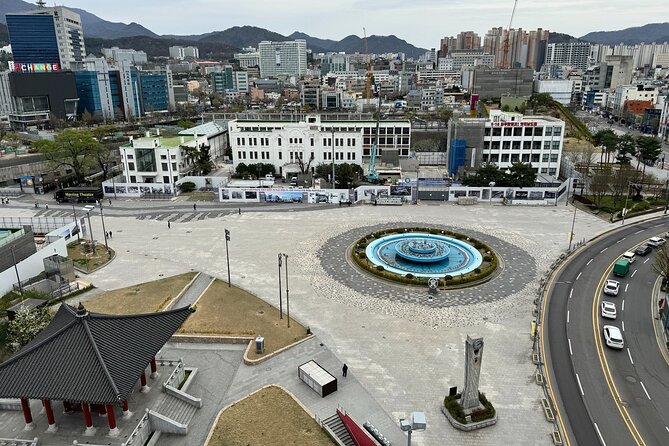
The day begins at 5.18 Democracy Square, at Geumnam-ro in central Gwangju. The meeting point is easy to understand: the square is in front of the former South Jeolla Provincial Office, beside the circular fountain and open plaza.
You spend about 30 minutes here. That may sound brief, but the square provides the setting for the rest of the day. It served as the final stronghold of the uprising, so the guide can explain why this particular public space became such a powerful symbol of Korean democracy.
I like beginning here because you get physical context before entering museums. You can see the size and shape of the plaza, then picture how it functioned as a gathering place during those ten days. The free admission also keeps the tour focused on guiding rather than ticket management.
Give yourself enough time to arrive before 10:00. The published meeting point is specific, but central city streets can still take a few minutes to sort out, especially if you are unfamiliar with Gwangju.
Reading the evidence at the May 18 Archives
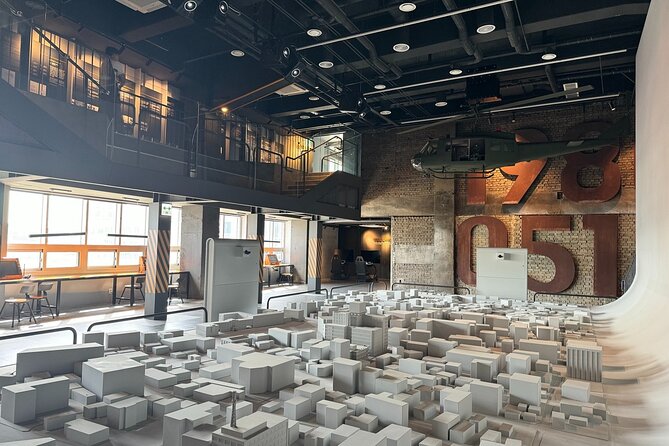
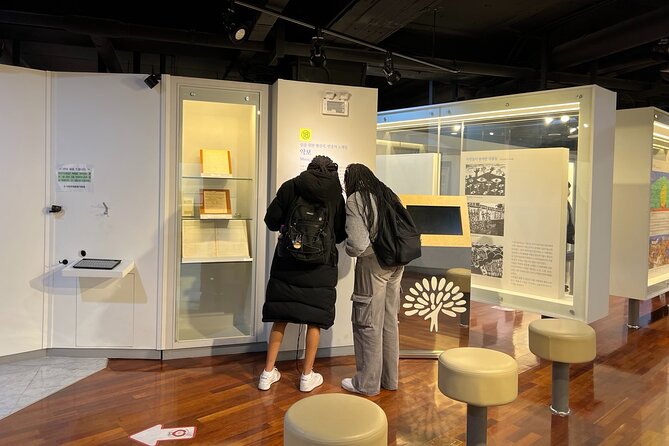
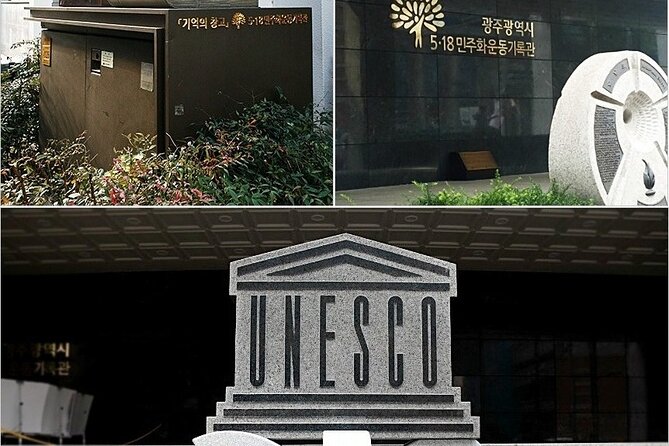
The next stop is the May 18 Archives, housed in the former Gwangju Catholic Center. The visit lasts about one hour, and admission is free.
This is the documentary heart of the tour. The archive was established in 2015 to collect, preserve, and share records from the May 18 Democratic Uprising. The event was added to UNESCO’s Memory of the World in 2011, so the material here has importance well beyond the city.
I would pay close attention to the guide’s explanations in this section. Archives can sometimes feel quiet and abstract, especially when you are visiting in a foreign language. A local guide helps connect the preserved documents to the places you have already seen and the locations coming later.
The May 18 Archives also gives the tour a useful balance. Democracy Square shows where people gathered. The archive shows how evidence and memory were preserved. Together, they help you understand why remembrance remains such a central part of Gwangju’s public life.
Seeing the 245 marks on Jeonil Building
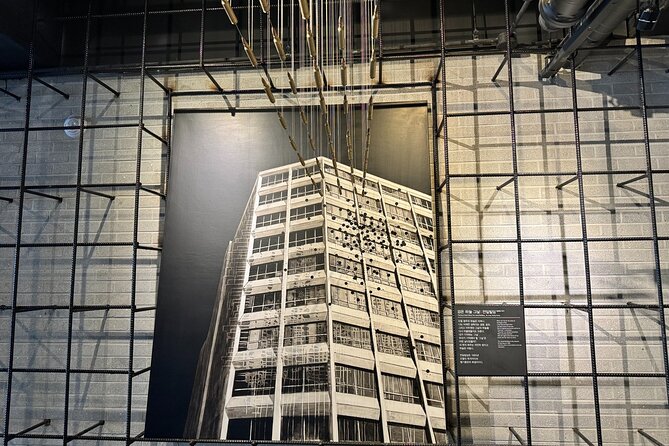
At Jeonil Building 245, you spend another hour examining one of the route’s most striking physical records. The building retains 245 bullet marks on its exterior, connected with scientific evidence of helicopter gunfire during the uprising.
This stop is different from the square and archive because the evidence is visible on the building itself. Instead of relying only on written accounts, you are looking at damage that has been preserved and studied.
The number in the building’s name gives the stop a memorable focus. It also makes the site easy to understand: 245 marks are not an abstract statistic. They are a visible reminder of what happened in the city.
Expect the mood to become heavier here. The tour asks you to confront violence directly, so this is not a place to rush through with a camera and move on. Listen carefully, ask questions, and give yourself space to think.
A completely different kind of day out in South Korea:
- Best DMZ Tour Korea from Seoul (Red Suspension Bridge Optional)
★ 5.0 · 41,422 reviews - DMZ Tour: 3rd Tunnel, Option(Suspension Bridge, Boat) from Seoul
★ 5.0 · 21,373 reviews - DMZ tour south Korea from Seoul (NK experience hall, defector)
★ 5.0 · 20,599 reviews - DMZ Insider Tour: 3rd Tunnel, NK Defector Meet & Red Bridge
★ 4.9 · 15,214 reviews
Taking a local-food break in Dongmyeong-dong
After the historical sites, the tour turns to food at Dongmyeong-dong Cafe Street. The meal stop lasts about 90 minutes and offers a change of pace without breaking the connection to Gwangju.
The guide has selected popular local dishes, and you choose what appeals to you. Options include yukjeon, thin slices of meat or other ingredients coated and cooked in egg, along with other local favorites. You pay for your food on the spot, so lunch is not included in the $95 tour price.
That separate payment is worth noting when you set your budget. It also gives you some freedom. You are not locked into a fixed meal or a preselected menu, and the guide can help you choose from dishes that locals enjoy.
I like this part because food can make a history tour feel more connected to daily life. Gwangju is known for generous portions, and a shared meal creates room for informal conversation with Veronica and the other members of your group.
Still, this is not a food tour. The main purpose remains the May 18 story. If you want a long, restaurant-focused tasting session, this experience will feel too history-centered. If you want a practical local meal between memorial visits, the timing works well.
Paying respects at the May 18 National Cemetery
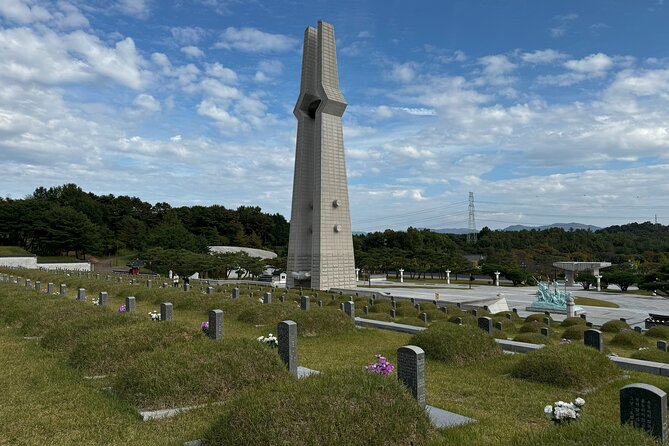
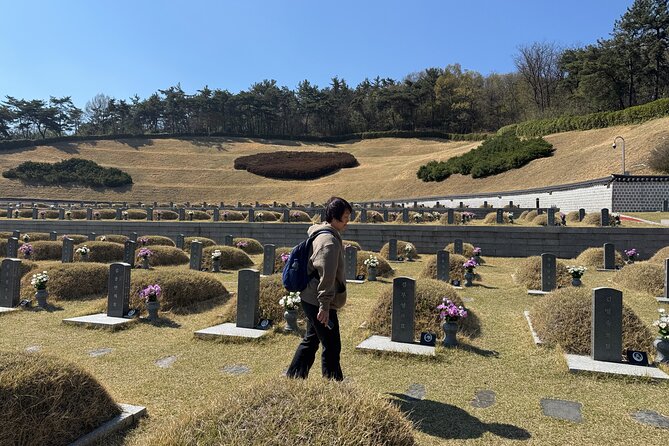
The May 18 National Cemetery receives about 90 minutes. Opened in May 1997, it honors people who died during the May 18 Democratic Uprising and serves as their final resting place.
This is one of the most solemn stops. After seeing public spaces, documents, and bullet marks, you reach a place dedicated to remembrance. The cemetery gives the tour a quieter rhythm and makes clear that the uprising was not simply a political episode. It involved real lives and lasting loss.
I would treat this visit with care. The subject is painful, and a cemetery is not a place for hurried sightseeing. The allotted time allows the guide to explain the site and gives you a chance to reflect.
The cemetery also helps complete the tour’s sequence. You begin with people gathering in a public square, examine records and physical evidence, then visit a place created to honor those who did not survive.
Confronting the military side at May 18 Liberty Park
The final historical stop is 5.18 Liberty Park, located on the former Sangmudae military base. You spend around 90 minutes here.
During the uprising, martial law troops held important meetings at this site. The park also relates to the detention and treatment of people during and after the uprising. That perspective matters because it adds the military setting to a route otherwise centered on civic spaces and memorial places.
I appreciate the way this stop broadens the story. A visit limited to plazas and cemeteries could leave you with only one side of the events. Liberty Park helps explain the role of the military structure and the machinery of martial law.
The stop can also be emotionally difficult. The tour does not smooth over the conflict or turn it into a simple feel-good story. You are asked to consider resistance, state violence, detention, and the cost of democracy.
With six stops across seven hours, the day has a deliberate pace. The schedule gives each major place enough time for explanation, but you should still expect a full day of concentrated history.
What the five-person limit adds
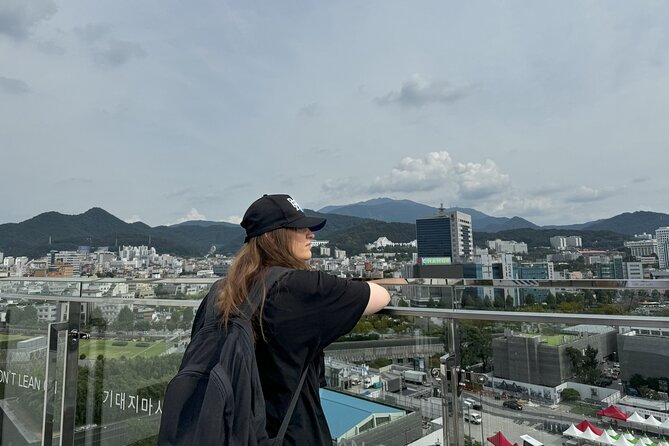
The maximum group size is five, one of the tour’s strongest practical features. A tiny group makes it easier to hear the guide, ask questions, and discuss sensitive subjects without speaking over a crowd.
The format also allows the day to feel more personal. Veronica can explain local details and respond to your interests rather than delivering one fixed speech to a large busload. One participant described learning about less obvious corners of Gwangju and finding food spots that would have been difficult to locate alone.
Small groups do not guarantee that every question will receive the same amount of time, but they give you a much better chance than a standard city tour. If you prefer a quiet, guided conversation, this setup suits you.
The group discount may make the price more attractive for people booking together. Since the listed rate is $95 per person, check the current price for your party before booking.
Transportation, timing, and the end point
Private transportation is included, which is useful because the route covers several parts of Gwangju. You do not need to arrange separate rides between the central sites, the National Cemetery, and Liberty Park.
The tour starts at 10:00 in the morning and lasts about seven hours. It ends at the north side of Kimdaejung Convention Center Metro Station, also identified as Kimdaejung Convention Center Mareuk Station.
That end point is helpful if you plan to continue your day by metro. It also means you should not assume that you will return to the starting square. Plan your evening from the convention center area or allow time to travel back to your accommodation.
Coffee or tea is included. Lunch is not, and personal travel insurance is also excluded. These are small details, but they matter when comparing the price with a do-it-yourself day built from transit, museum visits, and meals.
Is $95 a fair price?
I see the $95 price as reasonable for the right kind of visitor. You are paying for roughly seven hours, private transportation, a maximum group of five, a local guide, and access to a carefully connected set of sites.
The value is strongest if you want interpretation. You could visit public memorial sites independently, but the meaning of the square, archive, bullet marks, cemetery, and military base becomes clearer when one guide links them together.
The price is less attractive if you only want quick photo stops or casual sightseeing. Lunch costs extra, and the subject requires attention. This is a focused history experience, not a general introduction to every side of Gwangju.
At present, the tour carries a 5.0 rating from three published ratings. That is a small sample, so I would not treat it as proof that the tour suits everyone. Still, the available comments praise Veronica’s local insight, detailed explanations, organization, and ability to point out food places that are easy to miss alone.
Who should book this Gwangju experience?
I would recommend this tour to you if you have a serious interest in modern Korean history, democracy movements, human rights, or local memory. It also suits first-time visitors who want a strong introduction to Gwangju rather than a collection of unrelated attractions.
The small format is a good match if you enjoy asking questions. The private vehicle helps if you do not want to work out transportation between sites. The food stop adds a welcome local element without taking over the day.
I would think twice if you are seeking a cheerful sightseeing tour, dislike memorial sites, or have limited tolerance for emotionally difficult material. The day includes death, military violence, detention, and sacrifice. That is central to its value, but it is not easy subject matter.
Most people can participate, and service animals are allowed. The tour requires good weather, so a cancellation caused by poor conditions may lead to a different date or a full refund.
Final verdict: a thoughtful choice for serious history
Book the Gwangju May 18 History Tour if you want to understand why this city matters in South Korea’s democratic story. The route is well shaped: public square, archive, physical evidence, local meal, cemetery, and military site.
I especially like the combination of Veronica’s local perspective and the five-person limit. Those features give the tour a more personal feel than a large scheduled excursion. The main tradeoff is the subject itself. You should arrive ready to listen, reflect, and accept a day that may be moving and difficult.
For a visitor who wants authentic local context rather than a quick checklist of sights, $95 is a fair price. For casual sightseeing, choose something lighter.
FAQ
How long does the Gwangju May 18 History Tour last?
The tour lasts approximately seven hours, beginning at 10:00 am.
Where does the tour begin?
It begins at 5.18 Democracy Square on Geumnam-ro, Geumnamno 1(il)-ga, Dong-gu, Gwangju.
Where does the tour end?
It ends at the north side of Kimdaejung Convention Center Metro Station, also identified as Kimdaejung Convention Center Mareuk Station.
What is the maximum group size?
The tour accepts a maximum of five travelers.
Is lunch included in the price?
No. Lunch is not included. You choose from selected local dishes and pay for your meal directly at the restaurant.
Is transportation included?
Yes. Private transportation is included, along with coffee and/or tea.
Can I cancel for a full refund?
Yes. You can receive a full refund if you cancel at least 24 hours before the experience start time. Changes or cancellations made less than 24 hours beforehand are not accepted for a refund.
Just added around South Korea
- East of jeju tour for Seogwipo Gangjeong Cruise Customers★ 4.5 · 3 reviews
- Seoraksan National Park & Nami Island★ 4.5 · 3 reviews
- Strawberry Picking, Winter Sled with Eobi Ice Valley from Seoul★ 4.5 · 3 reviews
- Seoul: Seohaerang Cable Car, Gwangmyeong Cave, etc (EG Tour)★ 5.0 · 3 reviews
- Seoul Full Day small group Tour★ 5.0 · 3 reviews
- Seoul: Seorak Mountain, East DMZ, and Sokcho Tour★ 5.0 · 3 reviews
- Seoul Korean BBQ Dinner Experience with Secret Food Tours★ 5.0 · 3 reviews
- Rice Wine Tasting with Sommelier – Finest Makgeolli (& Soju)★ 5.0 · 3 reviews
Historical Tours, compared.

Gyeongju UNESCO World Heritage Guided Day Tour
Read our review →
Gyeongju UNESCO World Heritage Guided Day Tour from Busan
Read our review →
Evening Dark History, Folklore & Ghost Story Walking Tour
Read our review →
Old Korea Thousand History Tour of Gyeongju from Busan
Read our review →
Hanbok Photoshoot and History Tour at Gyeongbokgung Palace
Read our review →

UNESCO Heritage Tour Including Bulguksa Temple
Read our review →
Gyeongju UNESCO World Heritage Sites and History Full-Day Tour with Lunch
Read our review →Browse the lists this tour appears in