
Reviewed · HISTORICAL TOURS
Jeju Island UNESCO Heritage Bus Tour
Jeju rewards a full day of looking around. This experience links the island’s UNESCO sights, volcanic coast, old villages, forests, beaches, and tea fields into three regional routes, making it useful when you want to see a lot without arranging buses or taxis yourself. I like the strong mix of nature and local culture, especially Seongeup Folk Village and the women divers’ performance near Seongsan. I also like the low advertised price of $56 per person, which includes transport, fuel, parking, and a guide or English-speaking driver.
The main point to consider is the guide arrangement. Groups of up to four may ride with a regular taxi driver who speaks advanced English, while larger groups receive a professional English guide. That worked well for some people, including those who praised Lucas, Andy, Mr. Kim, and Mr. Lee, but one person expected a formal guide and found the experience closer to driver-assisted sightseeing.
In This Review
- Five things to know before booking
- Three routes, one busy view of Jeju
- Eastern Jeju: forest, stone villages, and the Seongsan coast
- Western Jeju: cliffs, camellias, and green tea
- South and Western Jeju: market food, waterfalls, and flowers
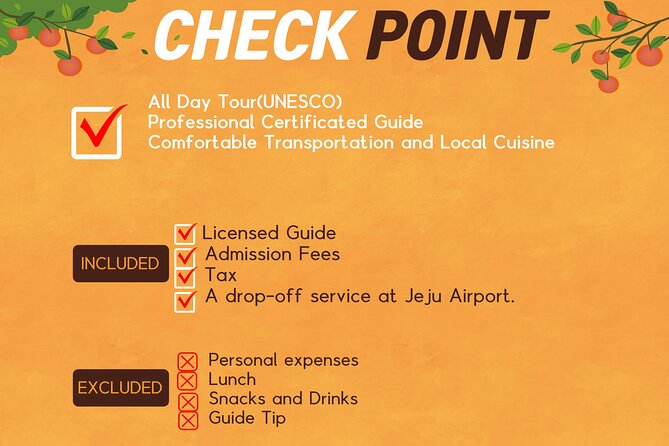
- What the $56 price really includes
- The pace, weather, and seasonal trade-offs
- Who will get the most from this tour
- Should you book it?
- FAQ
- How much does the Jeju Island UNESCO Heritage Bus Tour cost?
- How long does the experience last?
- Is transportation included?
- Is a guide included?
- Can I hike at Seongsan Ilchulbong?
- Does the women divers’ performance cost extra?
- Is tangerine picking included?
- What happens if the weather is bad?
- Is Manjang Cave part of the tour?
Five things to know before booking
- Three regional routes cover very different sides of Jeju: Eastern, Western, and South and Western.
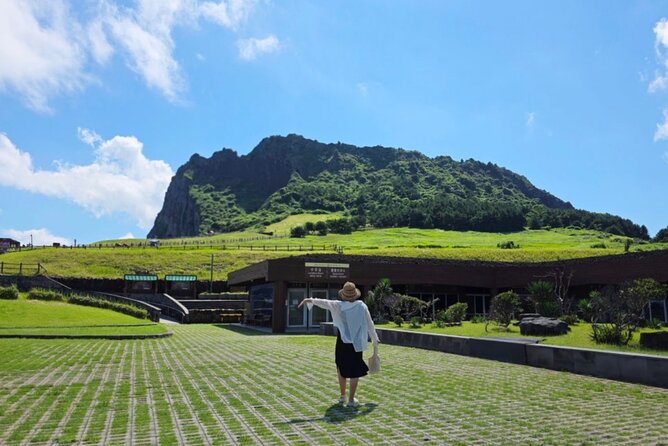
- Seongsan Ilchulbong is a photo stop only: hiking is not included, and the women divers’ performance costs KRW 5,000.
- The tour changes with weather and seasons: beaches, waterfalls, flower gardens, wetlands, and museums may be swapped.
- Small groups can mean a taxi-style experience: up to four people may travel with an English-speaking driver rather than a dedicated guide.
- Several stops are free or included: transport, parking, fuel, and airport drop-off add useful value to the $56 price.
Three routes, one busy view of Jeju

This is best understood as a choice of regional day tours rather than one simple sightseeing loop. The eastern route focuses on forests, village life, volcanic scenery, and the coast. The western route brings together Mount Halla, basalt cliffs, gardens, a temple, and green tea. The south and western route adds a market, a waterfall, and a countryside park.
The advertised duration is approximately three days, with Day 1, Day 2, and Day 3 schedules provided. Because the three days cover different combinations of attractions, you should check exactly which route or dates are included when you book. The schedule can also shift because of weather, road conditions, flower seasons, sea conditions, or site closures.
That flexibility matters on Jeju. A sunny day can make a coastal stop memorable, while heavy rain may turn a beach visit into a museum visit. You give up some control over the pace, but you gain a practical way to reach places that are spread across a large island.
More historical tours:
- Private Full Day Tour World Natural Heritage & UNESCO in jeju
★ 5.0 · 9 reviews - Jeju UNESCO Natural Heritage Private Tour by Certified Guide
★ 5.0 · 5 reviews - Jeju Day Tour – World Heritage & UNESCO
★ 5.0 · 4 reviews
Eastern Jeju: forest, stone villages, and the Seongsan coast
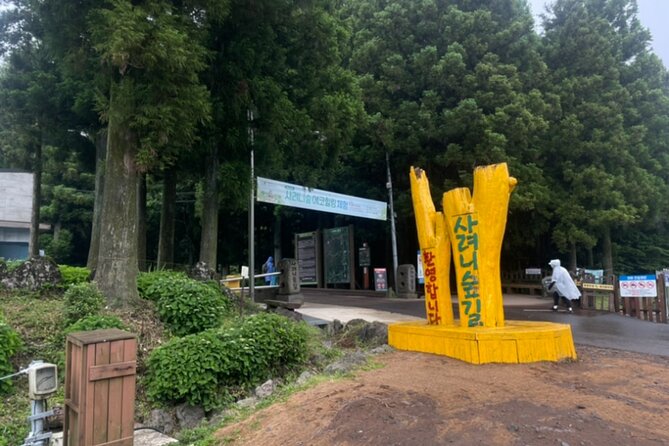
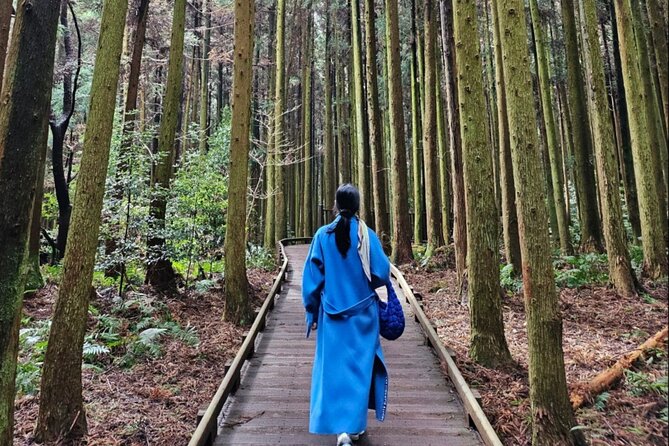
The eastern route opens at Saryeoni Forest Path, with about 50 minutes for an easy outdoor visit. The forest is protected and known as one of Jeju’s notable natural attractions. I would use this first stop to settle into the island’s quieter side, breathe clean air, and take a short walk rather than expect a major hike.
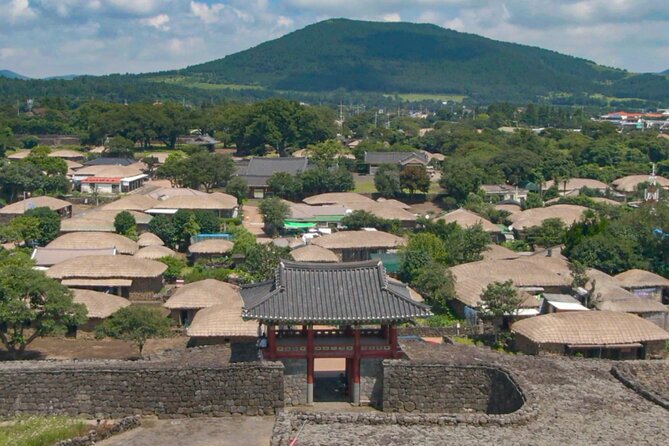
Next comes Seongeup Folk Village, where traditional stone construction explains a great deal about life on Jeju. The island is famous for strong winds, and the thick stone walls and carefully built roofs show how local homes were designed for that climate. You have about 50 minutes here, enough to see the village and understand its old building style, though not enough for a slow, detailed exploration.
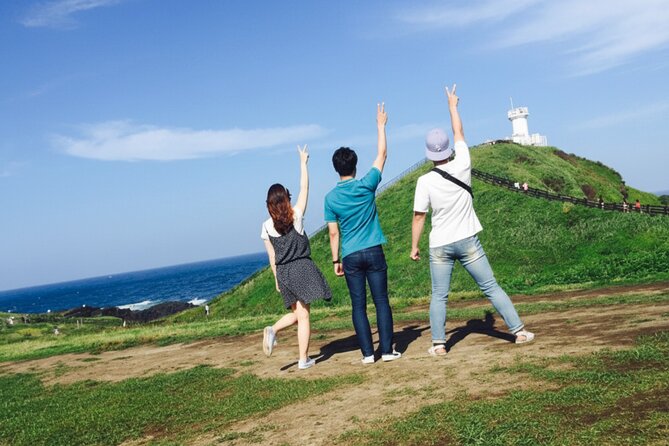
Seopjikoji follows with roughly 40 minutes. This eastern shoreline is especially attractive during the yellow canola flower season in April. The stop is mainly about open coastal views and photographs, so you should wear shoes that are comfortable on uneven paths and keep your expectations realistic. It is scenic, but the schedule does not leave time for a long coastal walk.
The headline stop is Seongsan Ilchulbong, also called Sunrise Peak. This volcanic formation is one of Jeju’s best-known UNESCO sites, but the arrangement here is important: you do not hike to the summit. The stop is for photographs and the women divers’ performance, scheduled for 2 p.m. Entry is not included, and the stated admission for the performance is KRW 5,000 per person.
The women divers, known as haenyeo, are one of Jeju’s most distinctive cultural traditions. They enter the sea without modern diving equipment, continuing a practice passed through generations. If the performance is your priority, pay close attention to the timing, because the eastern route includes several earlier stops and the show depends on sea and weather conditions.
Hamdeok Beach closes the eastern schedule, with about an hour. On a clear day, this is a pleasant change of pace after forests and stone buildings. You can enjoy the shore and take photographs, but the stop is still part of a tightly timed day. In rainy weather, Hamdeok may be replaced by the Haenyeo Museum, and another listed substitution mentions Jeju Stone Park. Manjang Cave is currently closed for anti-falling construction, so do not expect a cave visit.
Western Jeju: cliffs, camellias, and green tea
The western route begins at the Eoseungsaengak Trail on Mount Halla, with around 70 minutes at the main destination. This is the route for people who want a taste of Jeju’s central mountain environment without committing to a long summit hike. The visit may change to the 1100 Altitude Wetlands from April 11, 2026, so check the current plan if your trip is near that date.
Jusangjeolli Cliff gives you one of Jeju’s clearest examples of volcanic geology. Black hexagonal stone pillars line the coast, looking almost arranged by hand. Nature did the work, of course, and the regular shapes are the reason this stop feels more special than a standard seaside viewpoint. You have about 40 minutes, enough for the main view but not a long coastal outing.
The western route also includes an optional tangerine-picking activity in winter. It costs KRW 5,000 per person and is paid on site. Since it is seasonal and optional, treat it as a small extra rather than a guaranteed part of the base price.
Camellia Hill allows around 70 minutes in a large botanical garden with more than 500 species of camellia. Winter brings red camellia blooms, summer brings hydrangeas, and autumn brings golden reeds. The garden’s appeal depends heavily on the season, so your experience will differ greatly between a flower-heavy visit and a quieter period.
Bomunsa Temple provides a calmer pause, with ocean views, a cliffside setting, and historic Buddha carvings. You have approximately 40 minutes. That is enough to appreciate the setting and atmosphere, but not enough for a long temple visit. From April 11, 2026, this part of the course is scheduled to change to the Sinchang Windmill Coastal Road.
The final western stop is O’sulloc Tea Museum and the surrounding green tea fields. You can walk among the tea rows, look through exhibits, and sample tea-based drinks or desserts. The museum is free to enter, but food and drinks are personal expenses. From April 11, 2026, the route is scheduled to stop instead at Aewol Café Street, so the date of your visit matters.
South and Western Jeju: market food, waterfalls, and flowers
The third route repeats Mount Halla’s Eoseungsaengak Trail, with about 75 minutes at the main stop. Weather may send the group instead to the 1100 Wetland, Eorimok, or Saebyeol Oreum. This is a good example of the tour’s practical strength: you still get a mountain or highland setting, even when the planned trail cannot operate.
O’sulloc Tea Museum follows for about 50 minutes. If you enjoy Korean tea, this gives you time for the fields, exhibits, and tastings. If you visited the western route on another day, the repeat may feel unnecessary. If this is your only western stop, it is a pleasant and easy introduction to Jeju’s tea-growing region.
Seogwipo Maeil Olle Market is the most flexible meal stop in the program. You get about an hour to choose your own lunch, browse local products, and buy souvenirs. I prefer this kind of arrangement to a fixed group meal because you can spend your money on exactly what appeals to you, though you need to manage your own time and food budget.
Jeongbang Waterfall is one of the island’s unusual natural sights because the water flows directly into the sea. The visit lasts about 40 minutes, and admission is included. Access may be restricted in bad weather, in which case the stop changes to Cheonjiyeon Waterfall.
Hueree Natural Life Park finishes the route, with around 70 minutes for seasonal flowers, easy paths, and quiet countryside scenery. The park’s appearance changes with cherry blossoms, canola flowers, hydrangeas, pink muhly, silver grass, and camellias. You can also end the tour here, which may help if you want to finish away from the main city area.
More Jeju trips:
- Jeju: Eastern Jeju UNESCO Spots Day Tour
★ 4.9 · 1,148 reviews - Jeju: Western and Southern Sightseeing Day Tour
★ 4.8 · 972 reviews - East Jeju Essentials – Seongsan Ilchulbong (UNESCO) & Haenyeo
★ 5.0 · 939 reviews - Jeju: Southern Top UNESCO Spots Bus Tour
★ 4.9 · 648 reviews
What the $56 price really includes
At $56 per person, the value is strongest if you want a full day of geographically scattered sights. The fee includes an air-conditioned vehicle, round-trip transfers from the meeting location, parking, fuel, and airport drop-off services. Those included costs matter on Jeju, where separate taxi rides between east, west, south, and Mount Halla can quickly become expensive.
Meals, drinks, tips, the Seongsan performance, and winter tangerine picking are extra. The Seongsan admission is specifically listed at KRW 5,000 per person. You should also budget for food at a local restaurant or the Seogwipo market.
The group size can reach 40 people, but the experience may be much smaller depending on demand. The minimum is three people. For up to four individuals, the operator states that a regular taxi driver with advanced English may handle the trip. Groups of five to ten receive a professional English guide, according to the operating details.
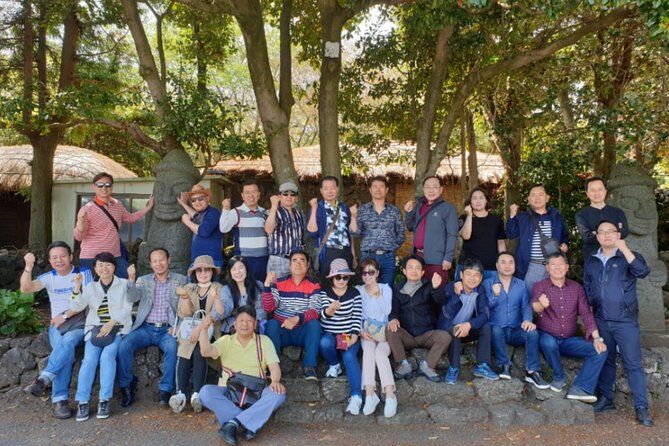
That distinction is worth taking seriously. Terry was praised for being patient and accommodating, while Lucas received especially warm comments for explaining Korean and Jeju history. Andy, Mr. Kim, and Mr. Lee were also singled out for attentive service. At the same time, one person found the driver-only format disappointing because they had expected a dedicated guide. If detailed commentary is central to your plans, confirm the guide setup before paying.
The pace, weather, and seasonal trade-offs
The schedules are full. Most stops last between 40 and 75 minutes, with the longer Seongsan visit running about 80 minutes. You will see many places, but you will rarely have time to linger, shop slowly, or take an extended walk.
That pace suits you if you have limited time or want an efficient first look at Jeju. It is less suitable if you prefer independent wandering, long hikes, or sitting beside the sea for half a day. The tour gives you access and structure, not complete freedom.
Weather is not a minor detail here. Hamdeok can become the Haenyeo Museum, Jeongbang can become Cheonjiyeon, and Mount Halla can switch to another highland site. The women divers’ performance may also be canceled because of sea conditions. If the tour is canceled because of poor weather, you can receive a different date or a full refund.
Flower timing also changes the feel of several stops. Canola and cherry blossoms bring color in spring, hydrangeas arrive in summer, pink muhly and silver grass appear later in the year, and camellias are strongest in winter. I would choose your route partly by season, not only by geography.
Who will get the most from this tour
I would recommend it to first-time Jeju visitors who want an organized introduction to the island’s main natural and cultural sights. It also fits people without a rental car, families who want transport arranged, and anyone with only a short stay.
The eastern route is the best choice if you care most about Seongeup Folk Village, Seopjikoji, Seongsan Ilchulbong, and the women divers. Choose the western route for cliffs, Camellia Hill, Mount Halla, Bomunsa Temple, and tea fields. Choose the south and western route if a market lunch, waterfall, and seasonal flower park sound more appealing.
I would be cautious if you need guaranteed hiking at Seongsan, a particular flower display, or a full-time professional guide. I would also avoid assuming that every stop will operate exactly as printed. Jeju’s weather and maintenance work can change the plan.
Should you book it?
Book this tour if coverage and convenience matter more than independence. For $56, the included vehicle, fuel, parking, and airport drop-off make the price attractive, especially when you want to connect distant parts of Jeju in a short visit.
Before booking, confirm the exact route, date, guide arrangement, and seasonal substitutions. If you accept the busy pace and the possibility of a driver-led format for a small group, this is a smart way to see Jeju’s forests, volcanic cliffs, tea fields, villages, beaches, and waterfalls without building the transport plan yourself.
FAQ
How much does the Jeju Island UNESCO Heritage Bus Tour cost?
The advertised price is $56 per person.
How long does the experience last?
The experience is listed as approximately three days, with separate Eastern, Western, and South and Western schedules.
Is transportation included?
Yes. An air-conditioned vehicle, round-trip transfers from the meeting location, parking fees, fuel fees, and airport drop-off services are included.
Is a guide included?
A licensed guide is included in the tour details. For groups of up to four, the operator states that a regular taxi driver with advanced English may conduct the tour. Groups of five to ten are offered a professional English guide.
Can I hike at Seongsan Ilchulbong?
No. The Seongsan Ilchulbong stop is for photographs only, and hiking is not included.
Does the women divers’ performance cost extra?
Yes. The performance at Seongsan Ilchulbong is listed at KRW 5,000 per person and is scheduled for 2 p.m.
Is tangerine picking included?
No. Tangerine picking is optional, available in the winter season, and costs KRW 5,000 per person paid on site.
What happens if the weather is bad?
Stops may be changed. Hamdeok Beach may be replaced by the Haenyeo Museum, Mount Halla may be replaced by another highland site, and Jeongbang Waterfall may be replaced by Cheonjiyeon Waterfall. If the whole tour is canceled because of poor weather, you may choose another date or receive a full refund.
Is Manjang Cave part of the tour?
Manjang Cave is currently closed for anti-falling construction, so you should not expect a visit there.
Just added around Jeju
- East of jeju tour for Seogwipo Gangjeong Cruise Customers★ 4.5 · 3 reviews
- Seogwipo(the southern city of Jeju) Art Museum Walking Tour★ 5.0 · 3 reviews
- Private Tour in South Jeju including Yacht Cruise★ 5.0 · 3 reviews
- Jeju Island, Seongsan Ilchulbong, Discover Scuba Diving★ 4.5 · 3 reviews
- Jeju: Western & Southern Jeju Hydrangea Festival Tour★ 5.0 · 3 reviews
- Jeju: Small Group Tour w/Pink Muhly & Tangerine Picking★ 5.0 · 3 reviews
- Jeju: Hiking Mt. Hallasan, South Korea’s Highest Mountain★ 5.0 · 3 reviews
- Jeju: BTS Are You Sure?! Filming Locations Private Taxi Tour★ 5.0 · 3 reviews
Historical Tours, compared.

Gyeongju UNESCO World Heritage Guided Day Tour
Read our review →
Gyeongju UNESCO World Heritage Guided Day Tour from Busan
Read our review →
Evening Dark History, Folklore & Ghost Story Walking Tour
Read our review →
Old Korea Thousand History Tour of Gyeongju from Busan
Read our review →
Hanbok Photoshoot and History Tour at Gyeongbokgung Palace
Read our review →

UNESCO Heritage Tour Including Bulguksa Temple
Read our review →
Gyeongju UNESCO World Heritage Sites and History Full-Day Tour with Lunch
Read our review →Browse the lists this tour appears in