
Reviewed · DMZ & BORDER TOURS
Missionary Memorial Hall and Goseong DMZ Observatory from sokcho
Korea’s modern story comes into focus here. This private half-day trip links Sherwood Hall’s medical mission with the Korean War, giving you two strong reasons to leave Sokcho: you get thoughtful English commentary from Tony, and you reach the Goseong DMZ area without arranging several separate visits. The main consideration is time. Four to five hours moves quickly, and the museum portion may feel demanding if you prefer a relaxed sightseeing day.
I especially like the gentle opening at Yeongnangho Lake, followed by the more serious history at Hwajinpo and the DMZ Museum. I also like the flexibility shown in the tour’s arrangements, including hotel pickup and schedule adjustments for cruise passengers. A Monday visit will not work, however, because the museum is closed.
In This Review
- Key points at a glance
- Why this Sokcho tour tells a bigger Korean story
- Yeongnangho Lake offers a quiet 30-minute beginning
- Hwajinpo remembers Sherwood Hall’s medical work
- The DMZ Museum explains the Korean War before you reach the border
- Goseong Unification Observatory brings the division into view
- Tony’s private format changes the pace
- Is $90 a fair price for four to five hours?
- Who will get the most from this experience?
- Should you book the Missionary Memorial Hall and Goseong DMZ Observatory tour?
- FAQ
- Is the tour available on Mondays?
- What time does the tour start?
- How long does the experience last?
- Are meals included?
- Is this a private tour?
- What is included in the $90 price?
Key points at a glance
- Two chapters of modern Korea: Learn how Christian missionaries shaped medicine and education, then examine the Korean War and the divided peninsula.
- A calm start at Yeongnangho Lake: Enjoy a short 20 to 30 minute walk before the heavier historical stops.
- Sherwood Hall’s medical mission: Visit a memorial to a family that spent two generations treating tuberculosis and educating ordinary Koreans.
- The DMZ Museum and Goseong Observatory: Get both historical context and a direct view toward the guarded border zone.
- Private touring with Tony: Your group travels alone, with pickup offered and English commentary available.
- Practical value at $90: Admission is included, meals are not, and the price covers a focused private outing from Sokcho.
Why this Sokcho tour tells a bigger Korean story
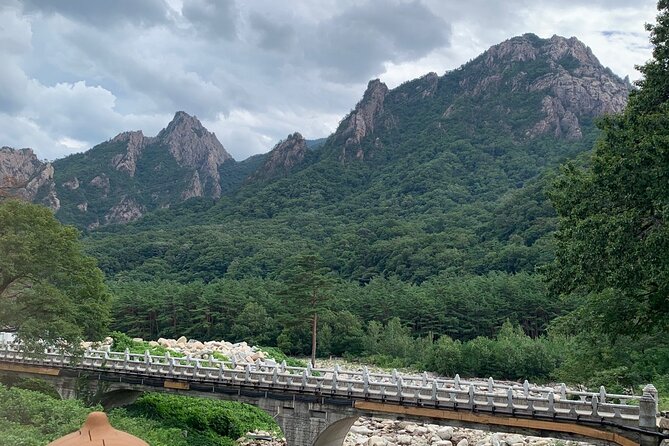
Many visitors come to Sokcho for Seoraksan National Park, seafood, and the coast. Those are good reasons to visit, but northern Gangwon Province also places you close to one of Korea’s most important modern boundaries.
This outing connects two forces that changed daily life in Korea. The first is the arrival of Christian missionaries in the late 19th century. At that time, Korea was poor, medical care was limited, and formal education was out of reach for much of the population. Missionaries established hospitals and schools, often offering treatment and education to people who had few other options.
The second force is the Korean War. The war left Korea divided and created the heavily guarded border that still shapes politics, families, travel, and national identity. By placing these subjects in one day, the tour gives you more than a border viewpoint. It helps you see how Korea moved from poverty and disease toward modern universities, hospitals, and rapid economic growth, while remaining divided.
I find that pairing useful because the two parts balance each other. The missionary memorial focuses on healing and education. The DMZ stops examine violence, separation, and military tension. Together, they offer a clear introduction to modern Korea without requiring a long multi-day history program.
More DMZ and border tours:
- Private DMZ Tour from Sokcho near Seoraksan Mt.
★ 5.0 · 35 reviews - DMZ Tour for Sokcho Cruise Travelers in South Korea
★ 5.0 · 16 reviews - Seoul: Seorak Mountain, East DMZ, and Sokcho Tour
★ 5.0 · 3 reviews
Yeongnangho Lake offers a quiet 30-minute beginning
The first stop is Yeongnangho Lake, a natural lagoon in Sokcho. The planned visit lasts about 30 minutes, enough for a short wellness walk and a few photographs rather than a full circuit of the lake.
This is a smart opening. You begin outdoors, with time to settle into the day before entering museums and memorial sites. The lake also gives you a different view of Sokcho. Instead of starting with traffic or a crowded attraction, you get a calm setting that connects the city with its natural surroundings.
You should keep your expectations in check. This is not a long nature hike or a full sightseeing stop. Its value comes from the pause. If you enjoy short walks and scenic photographs, you will appreciate it. If you want every minute devoted to military history, you may see it as extra time.
The tour requires a moderate level of physical fitness. Nothing in the supplied schedule suggests a strenuous walk at Yeongnangho, but you should still be comfortable walking outdoors and moving through several sites during the morning.
Hwajinpo remembers Sherwood Hall’s medical work
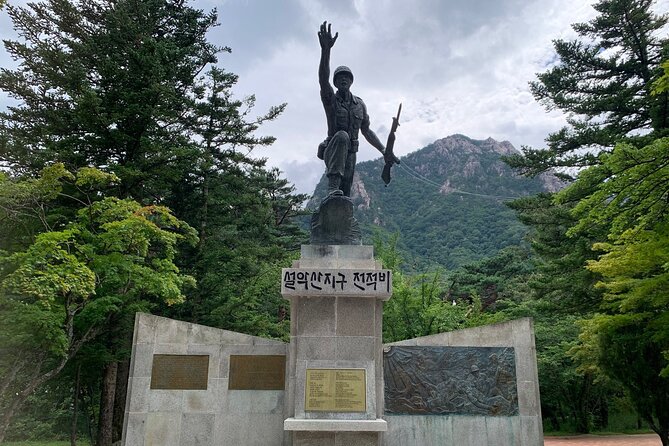
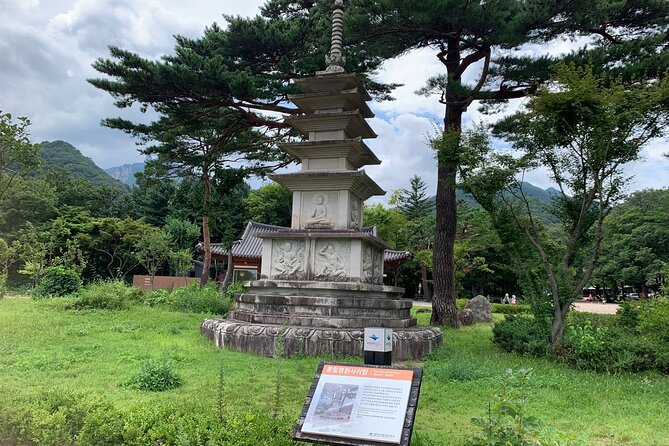
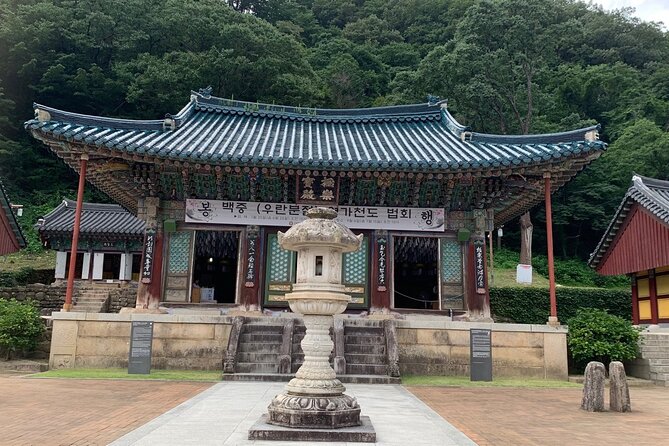
At Hwajinpo, the focus shifts from scenery to social history. The memorial is dedicated to the Sherwood Hall family, which spent two generations fighting tuberculosis and educating ordinary people during the impoverished Joseon era.
This stop gives a human face to the story of missionary work. Rather than treating the subject as a list of institutions, it centers on a family and the practical problems they faced. Tuberculosis was a major threat, and free medical treatment mattered enormously in a country with few modern medical resources.
The educational work matters just as much. The tour explains that missionary-founded institutions later developed into major Korean universities and hospitals, including Yonsei University and Catholic University hospitals. That connection helps you understand why missionary history is still visible in Korea’s present-day institutions.
Plan about an hour here. I would give this stop your full attention, since it provides the background needed for the rest of the day. The setting along Hwajinpo Pine Forest Road also gives the visit a more reflective feel than a standard city museum, though the tour description does not promise a large indoor exhibition or a long guided program.
This is likely the most distinctive part of the experience. Many DMZ excursions focus only on the Korean War. Here, you first consider the medical and educational changes that helped shape modern Korean society.
The DMZ Museum explains the Korean War before you reach the border
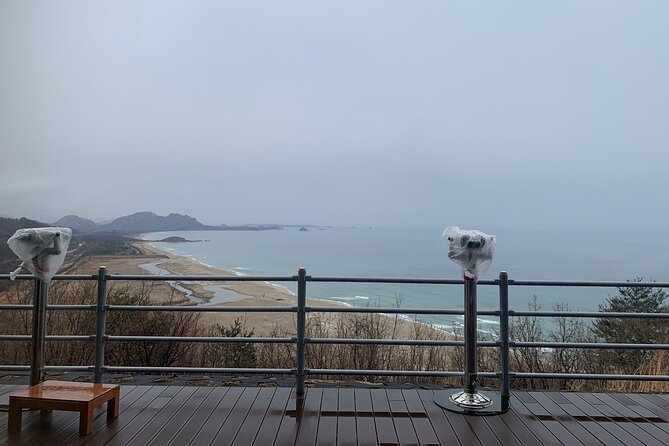
The DMZ Museum receives about two hours, making it the longest stop. That amount of time signals its importance. You are not simply being driven to a lookout for a quick photograph. You have time to learn about the Korean War and the events that produced the demilitarized zone.
The museum presents the war as one of the major conflicts of the 20th century and places it within the Cold War structure. That context is essential. Without it, the border can seem like an abstract line on a map. With it, you can better understand why Korea remains divided and why the DMZ continues to carry such political and emotional weight.
I like the order of these stops. The museum comes before the observatory, so you receive background before looking across the border. The view then has meaning instead of being only a distant panorama.
Two hours is useful for anyone who wants explanation, but it may feel long if your interest in history is limited. This is not a quick photo stop. You should expect a museum-centered portion of the day, with the guide’s commentary adding context as you move through the material.
The English guidance is an important part of the experience. Tony is described as speaking good English, and his commentary is one of the strongest reasons to choose a private tour rather than simply visiting a viewpoint independently. A private setting also lets your group spend more time on the parts that interest you, though the exact amount of flexibility will depend on the day’s schedule.
More Seoraksan and Sokcho trips:
- Mt. Seorak+Nami Island+Garden of Morning Calm Day Trip from Seoul
★ 5.0 · 959 reviews - Seoul: Mt.Seorak, Nami Island & Korean Garden, No Shopping
★ 4.8 · 614 reviews - Seoul: Mt Seorak + Naksansa Temple or Nami Island Group Tour
★ 4.7 · 422 reviews - Full-Day Tour in Mt. Seorak & Nami (+Rail Bike Option)
★ 5.0 · 186 reviews
Goseong Unification Observatory brings the division into view
The final main stop is Goseong Unification Observatory, with about an hour planned there. This is where the history becomes physical. You look toward the northern part of the peninsula from a designated observation point, seeing a border zone shaped by the war and its aftermath.
The observatory is especially valuable after the museum. You have already learned why the division exists, so the view becomes a chance to think about the human and political consequences. The tour presents the Korean War as the event that most strongly shaped modern Korea, while also noting the country’s rise from one of the world’s poorest societies after the war.
That contrast is central to the visit. Modern South Korea’s prosperity can make it easy to forget how recently the country faced devastation and poverty. From the observatory, you are asked to hold both facts together: Korea achieved remarkable economic growth, yet the division remains unresolved.
Weather can affect the experience. One account describes continuing on a rainy day after Tony offered cancellation and a refund. The group decided to proceed and still found the day worthwhile, but poor weather may reduce visibility at the observatory. If your main reason for booking is the view, check the forecast and ask about conditions before departure.
The observatory should also be approached with realistic expectations. This is a border viewpoint, not a place for free movement near the frontier. The experience is about observation, security, and historical context.
Tony’s private format changes the pace
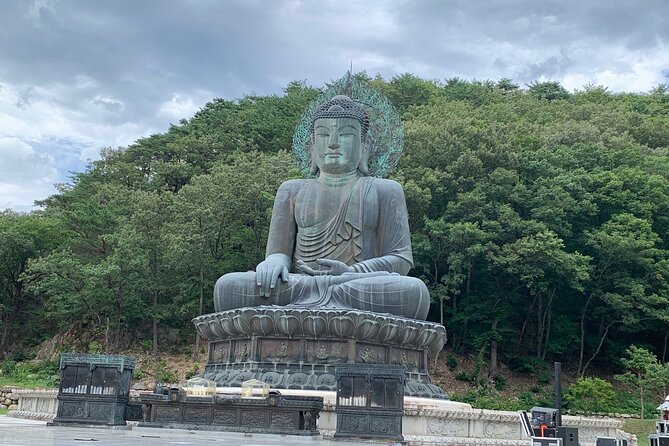
This is a private tour, so only your group participates. That matters in a region where the subject can generate many questions. You can ask Tony to explain terms, connect the sites, or spend more time on the missionary story and the war, rather than following a fixed large-group lecture.
Tony is the guide named in the available information. His English commentary, friendly manner, and willingness to adapt the day received particularly strong praise. One account describes a good vehicle and a rainy-day offer to cancel, while another describes direct hotel pickup and drop-off from Sokcho.
The stated start time is 8:30 a.m., and the total duration is about four to five hours. Cruise passengers can have the schedule adjusted, and arrangements may allow other start times in coordination with the guide. You should confirm your exact pickup and departure time when booking, especially if you have a ship, train, or other fixed commitment.
Pickup is offered, which simplifies the day considerably. You do not need to coordinate separate buses for a distant observatory and museum. The tour is also near public transportation, but the private vehicle remains the practical choice for covering several stops efficiently.
Is $90 a fair price for four to five hours?
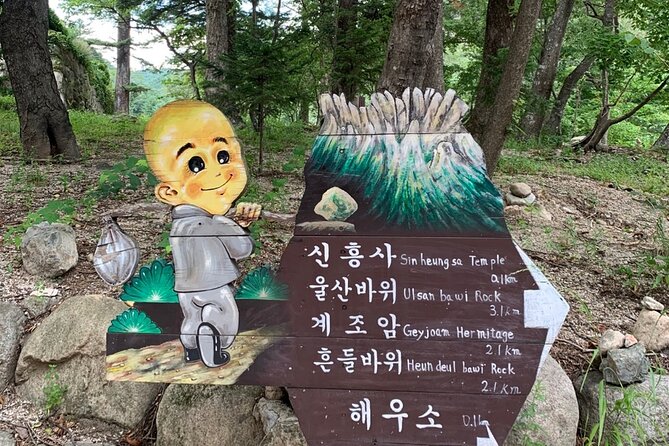
At $90 per person, this is not the cheapest way to spend a morning around Sokcho. It is also not simply an admission-ticket purchase. The price includes the private format, transportation arrangements, the guide’s English commentary, and admission fees for the included sites.
Meals are not included. The schedule provides free time for you to eat at your own convenience, so you should plan to buy food separately. Since the tour lasts only four to five hours, this is more likely to mean a flexible meal break than a full restaurant program.
I see the value most clearly for two or more people who want a focused history outing without handling the transport themselves. A private tour can also save time, especially when you want Yeongnangho, Hwajinpo, the DMZ Museum, and the observatory in one compact trip.
The value is less convincing if you want a slow day, a long nature walk, or a broad tour of northern Gangwon Province. You are paying for a specific theme and efficient access, not a general sightseeing loop.
Who will get the most from this experience?
I would recommend this tour to you if you want to understand Korea beyond palaces, shopping streets, and food. It suits history-minded visitors, first-time visitors to the DMZ area, and anyone curious about the links between missionary medicine, education, war, and modern Korean society.
It is also a good match for cruise passengers because the schedule can be adjusted. Direct pickup and drop-off can make the outing easier when your time in Sokcho is limited, though you should confirm the timing carefully.
Families with older children may find the combination useful, especially if they want a clear introduction to the Korean War. The museum and memorial may be more meaningful for adults and teenagers than for very young children.
You may want a different plan if you dislike museums, have limited mobility, or prefer a physically active day. The tour requires moderate fitness, includes outdoor walking, and gives two hours to the DMZ Museum. Monday is also unavailable because the museum is closed.
The cancellation terms are simple but strict near departure. You receive a full refund if you cancel at least 24 hours before the start time. Within 24 hours, the payment is not refunded, and late changes are not accepted. If the minimum number of people is not reached and the operator cancels, you are offered another date or experience, or a full refund.
Should you book the Missionary Memorial Hall and Goseong DMZ Observatory tour?
Book it if you want a private, well-organized introduction to two forces that shaped present-day Korea. The strongest reasons are Tony’s English commentary, the convenience of pickup, the unusual missionary-history stop, and the careful progression from lake to memorial, museum, and border viewpoint.
Think twice if you want a relaxed coastal morning or if the observatory view matters more to you than the history. Weather can affect visibility, Monday is unavailable, and the two-hour museum visit calls for genuine interest.
For most history-minded visitors staying in Sokcho, I consider $90 reasonable. You get a focused route that would be awkward to arrange independently, plus the chance to ask questions throughout the day. Check the weather, confirm your pickup time, and reserve at least 24 hours ahead if you want the option of a full refund.
FAQ
Is the tour available on Mondays?
No. The tour is not available on Mondays because the museum is closed.
What time does the tour start?
The stated start time is 8:30 a.m. Cruise passenger schedules can be adjusted, and other start arrangements may be possible through the provider.
How long does the experience last?
The tour lasts approximately four to five hours.
Are meals included?
No. Meals are not included, but free time is provided for you to eat at your own convenience.
Is this a private tour?
Yes. Only your group participates in the activity.
What is included in the $90 price?
Admission fees are included. Pickup is offered, and the tour includes transportation and guide service, while meals are not included.
More Tower and Observatory Tickets
- Best Seoul City Tour (Gyeongbokgung Palace,Insadong,Namsan Tower)
★ 5.0 · 1,647 reviews - Seoul City Sightseeing Tour Including Gyeongbokgung Palace, N Seoul Tower, and Namsangol Hanok Village
★ 5.0 · 1,423 reviews - Seoul Highlights: Gyeongbok Palace, Insadong & N Seoul Tower
★ 4.7 · 726 reviews - Closest Observatory to DMZ & Suspension Bridge Tour from Seoul
★ 5.0 · 664 reviews
Just added around Sokcho
- Seoraksan National Park & Nami Island★ 4.5 · 3 reviews
- Seoul: Seorak Mountain, East DMZ, and Sokcho Tour★ 5.0 · 3 reviews
- Seoul: Mt. Seorak & Nami Island & Eobi Ice Valley Day Tour★ 3.8 · 3 reviews
- Seoraksan and Cherry Blossom Lake 1 day trip from Seoul★ 5.0 · 4 reviews
- Seoul: Seorak Mountain+Nami Island+Eobi Ice Valley Tour★ 5.0 · 5 reviews
- Seoul: Sokcho beach, market, hot spring and Seorak Cable Car★ 4.8 · 5 reviews
- From Seoul: Seoraksan Mountain with Cable Car- Shuttle Bus★ 3.2 · 6 reviews
- Mt.Seorak & Naksan Temple Day Trip from Seoul★ 5.0 · 6 reviews
DMZ & Border Tours, compared.

Best DMZ Tour Korea from Seoul (Red Suspension Bridge Optional)
Read our review →
DMZ Tour: 3rd Tunnel, Option(Suspension Bridge, Boat) from Seoul
Read our review →
DMZ tour south Korea from Seoul (NK experience hall, defector)
Read our review →
DMZ Insider Tour: 3rd Tunnel, NK Defector Meet & Red Bridge
Read our review →

Signature DMZ Tour: Exclusive Defector Talk & Suspension Bridge
Read our review →
Thrilling Korean DMZ 3rd Tunnel Tour from Seoul + Red Bridge Rush
Read our review →DMZ Past and Present: Korean Demilitarized Zone Tour from Seoul
Read our review →Browse the lists this tour appears in