
Reviewed · DMZ & BORDER TOURS
Private DMZ Tour and Suspension Bridge + Korean BBQ
See the border, then walk through history. This full-day Seoul outing combines the Korean Demilitarized Zone with the Third Tunnel, Dora Observatory, a mountain suspension bridge, and a Korean lunch. I especially like the private air-conditioned vehicle and the chance to shape the day around your interests. I also like that guides such as Sophia, Wookie, Jones, Ka, and Christine are praised for clear explanations, good pacing, and thoughtful help.
The main catch is that the DMZ portion is not entirely private. You travel privately from Seoul, but you join a Paju government shuttle bus to enter the restricted zone. The day can also be physically demanding, especially inside the Third Tunnel and on the walk to Gamaksan Chulleong Bridge. At $250 per person, this is a serious day-trip expense, though lunch, transport, parking, and the DMZ entrance fee are included.
In This Review
- Key points to know before booking
- Why this DMZ day trip is worth your time
- Imjingak Pyeonghoa-Nuri Park starts the border story
- The Third Tunnel is memorable, but not an easy walk
- Dora Observatory brings North Korea into view
- Tongilchon-gil adds a local shopping stop
- Korean BBQ or ginseng chicken soup makes a welcome break
- Gamaksan Chulleong Bridge adds mountains to a serious day
- Optional Seoul stops let you tailor the return
- Transport, timing, and physical effort
- Is $250 per person good value?
- Who should book this private DMZ tour?
- Final verdict: book it for context, not just a photo
- FAQ
- How long does the tour last?
- Is hotel pickup available?
- Is the DMZ visit completely private?
- Is lunch included?
- Is the Third Tunnel difficult to walk through?
- Is the suspension bridge included?
- Are Gyeongbokgung Palace and Odusan Unification Observatory included?
- Can I cancel for a full refund?
Key points to know before booking
- The Third Tunnel is the tour’s most physical stop: The route slopes down, then back up, and the ceiling is low enough that taller people may need to stoop.
- Your private guide stays with you inside the group shuttle portion: Guides help explain the process and keep the restricted-area visit organized.
- Dora Observatory gives you a direct view toward North Korea: You may see the North Korean flagpole, propaganda village, Gaeseong City, and the industrial complex when visibility is good.
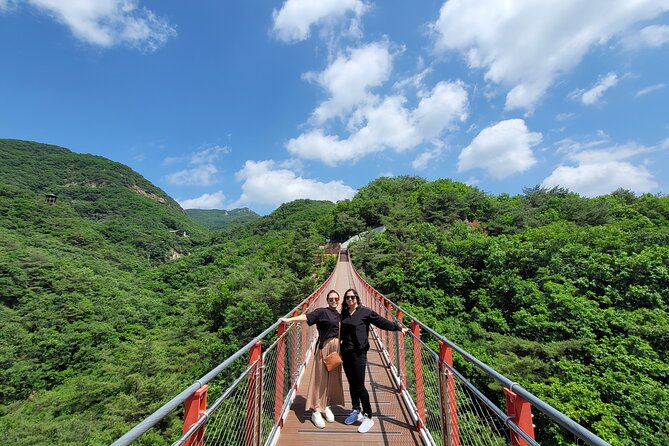
- Gamaksan Chulleong Bridge adds scenery and exercise: Reaching it involves roughly a 10-minute hike, followed by a suspension bridge crossing and mountain views.
- Lunch is part of the price: You choose Korean BBQ, bulgogi, or ginseng chicken soup, with vegetarian food available if requested in advance.
- The private format gives you useful flexibility: Pickup, pacing, and optional Seoul stops can be adjusted, but the border timetable still controls the DMZ portion.
Why this DMZ day trip is worth your time
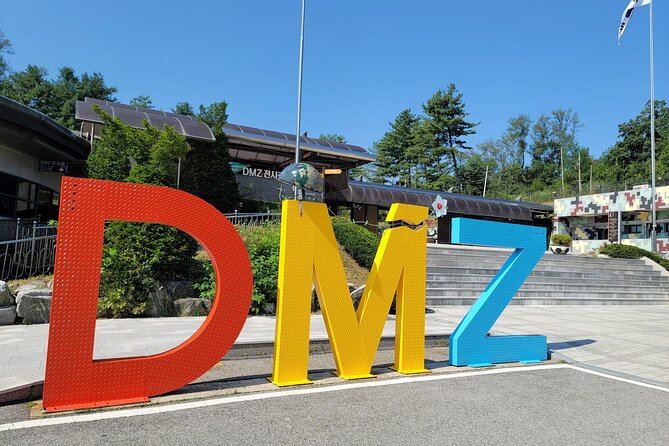
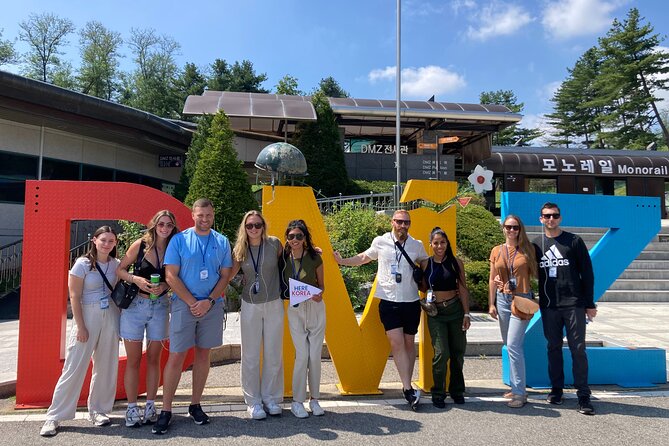
The DMZ is not a normal sightseeing stop. It is a live border zone shaped by the Korean War, the 1953 armistice, military restrictions, and the continuing division of the Korean Peninsula. You cannot simply drive up and wander in on your own. A registered guide is required, and this tour handles the formal entry process for you.
I like the way the day joins several kinds of experience. You get political and military history at the DMZ, a stark underground passage in the Third Tunnel, a distant view into North Korea, a local meal, and a short mountain outing at the suspension bridge. No single stop tells the whole story, but together they give you a fuller sense of the area.
The private vehicle matters more than it might on a standard sightseeing tour. The ride from Seoul to Paju takes time, and the total outing lasts about eight to ten hours. Having only your own group in the vehicle makes it easier to ask questions, pause for comfort, and request a different optional stop at the end of the day.
Guides are the real strength here. Sophia is praised for excellent English, historical explanations, photos, and practical help. Wookie is noted for his strong command of Korean history, patience, and ability to answer difficult questions. Jones, Ka, Christine, Jake, Jiwon, Ayann, and Jung also receive strong praise for being friendly, punctual, and well informed.
That personal guidance is valuable because the DMZ’s official displays may not explain every detail clearly. A good guide can connect the sights to the Korean War, the division of the peninsula, the lives of defectors, and present-day relations between North and South Korea. The quality of the day depends partly on the guide assigned to you, but the repeated praise for several guides is encouraging.
More Private Tours in Seoul
- Private DMZ Tour (No Shopping): 3rd Tunnel & Suspension Bridge
★ 5.0 · 607 reviews - Seoul City Private Full-Day Tour Including Lunch
★ 5.0 · 469 reviews - Private DMZ the 3rd Tunnel Tour from Seoul (optional Red Bridge)
★ 5.0 · 429 reviews
Imjingak Pyeonghoa-Nuri Park starts the border story
Your day begins with pickup in Seoul, generally around 9 a.m., followed by the drive north toward Paju. Imjingak Pyeonghoa-Nuri Park is the staging point for the restricted-area visit and gives you your first clear introduction to the border story.
Here you can see the Peace Bell and a derailed locomotive, reminders of the war and the railway links cut by division. The park is also where you transfer to the Paju government shuttle bus. This is an important practical detail: the private vehicle cannot simply carry you through the whole DMZ route.
The shuttle process is politically sensitive and governed by official instructions. You need to follow the local directions and return to the bus on time. Your guide handles the tickets and explains the sequence, but you still need to pay attention to departure times.
This arrangement slightly limits the private-tour feeling. You have a private guide and private transport for most of the day, but the actual entry route uses a shared government bus. In practice, that is a reasonable trade-off for visiting a restricted area.
The Third Tunnel is memorable, but not an easy walk
The Third Tunnel was found in 1978 and is described as a passage dug by North Korea after the Korean War, apparently intended for an invasion route into South Korea. Of the DMZ stops, this is often the most memorable because you are not only looking at history from behind glass. You walk into it.
The route descends into the tunnel, then requires a climb back to the surface. Hard hats are provided, and there are benches along the way. Still, the return climb can be demanding if you are not used to walking uphill.
The ceiling is low. If you are taller than about five feet, you may need to bend your head or shoulders in places. Bring water, wear comfortable shoes, and take your time. The tunnel is not the right stop for someone who cannot manage a sloped walk, though a guide can offer encouragement and help with pacing.
The guide’s advance explanation is useful. Sophia, for example, reportedly explained the tunnel layout before arrival so the group could begin promptly instead of trying to understand the route on the spot. That kind of preparation matters because the shuttle schedule is fixed.
I would treat the Third Tunnel as the main physical test of the day. It is also one of the strongest reasons to book a guided visit. Your guide can explain its construction, strategic purpose, discovery, and place in the wider conflict while you are seeing the passage itself.
Dora Observatory brings North Korea into view
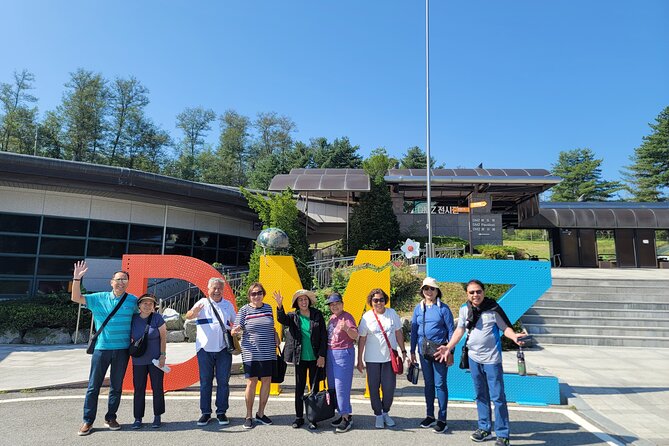
At Dora Observatory, you look across the DMZ toward North Korea. Depending on the weather and visibility, you may see the North Korean flagpole, propaganda village, Gaeseong City, the industrial complex, and the surrounding demilitarized area.
This is a viewing stop, not a close encounter. The details can be distant, and poor weather may soften the view. On a clear day, though, the observatory offers a powerful visual reminder that the border is not an abstract line on a map.
A guide can make the stop much more useful. Wookie reportedly carried binoculars so his group could inspect the area more closely. Sophia has taken guests to a café in the observatory building, where they could sit and continue discussing the area while looking out.
Allow about 30 minutes here, though the exact pace depends on official operations and the group schedule. You will likely have enough time to look, take photographs, and ask questions, but this is not a long museum visit.
More DMZ and border tours:
- Best DMZ Tour Korea from Seoul (Red Suspension Bridge Optional)
★ 5.0 · 41,422 reviews - DMZ Tour: 3rd Tunnel, Option(Suspension Bridge, Boat) from Seoul
★ 5.0 · 21,373 reviews - DMZ tour south Korea from Seoul (NK experience hall, defector)
★ 5.0 · 20,599 reviews - Seoul: DMZ Tour with Optional Suspension Bridge
★ 4.8 · 5,277 reviews
Tongilchon-gil adds a local shopping stop
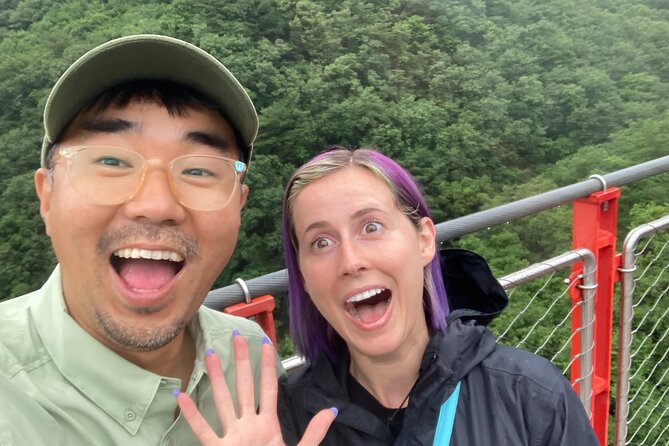
Tongilchon-gil, also called Unification Village in the tour description, is a brief stop near the DMZ. You can browse souvenirs connected to the border and buy Korean products, including food made by local farmers and villagers.
The stop lasts about 10 minutes, so keep expectations modest. This is not a full market visit. It works better as a quick chance to buy a small reminder of the area or sample local products before lunch.
Because the village is tied to the nearby border zone, the stop adds a local point of contact to a day otherwise focused on military sites and official viewpoints. Your guide can also help explain what you are seeing and suggest suitable purchases.
Korean BBQ or ginseng chicken soup makes a welcome break
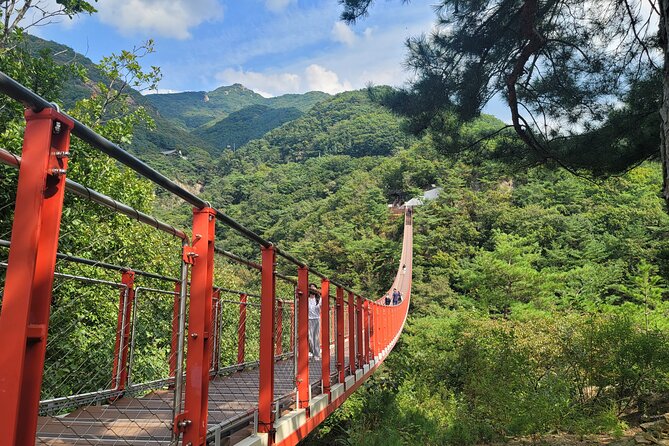
Lunch is included, with a choice of Korean BBQ, bulgogi, or ginseng chicken soup. Several reported meals were described as delicious, and the Korean BBQ was a particular highlight. One group chose ginseng chicken soup and found it especially satisfying after the morning’s walking.
This is more than a quick sandwich stop. A traditional Korean meal gives you a chance to slow down and ask your guide about the food, side dishes, and local customs. Sophia reportedly explained the dishes and their origins during lunch, which can make an unfamiliar meal easier to appreciate.
Vegetarian food is available, but you need to request it when booking. Dinner is not included, so plan to eat separately after you return to Seoul.
The lunch inclusion helps support the $250 price, especially since the package also covers the DMZ entrance fee, private vehicle, professional English-speaking guide, parking, and hotel pickup. Still, value depends on your group size. A solo guest pays far more per person than a family or group sharing the private vehicle.
Gamaksan Chulleong Bridge adds mountains to a serious day
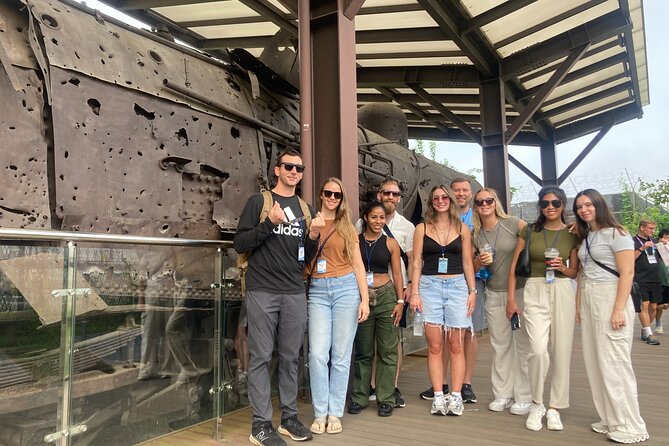
After the border sites and lunch, the tour can continue to Gamaksan Chulleong Bridge. The bridge sits in an area associated with fierce Korean War battles, yet the setting now offers mountain views and a more peaceful change of pace.
The walk to the bridge is short, roughly 10 minutes according to the tour details, but it is not completely flat sightseeing. You need to manage a brief hike before reaching the suspension bridge. The combination of steps, slopes, and the crossing can be difficult if you have mobility concerns.
The effort pays off with views of the surrounding mountains. This stop also changes the emotional rhythm of the day. After the Third Tunnel and the observation point, you get open air, trees, and a physical activity that helps you process the more serious material.
Weekend crowds can make the bridge busier. If your guide suggests an earlier start, take the advice seriously. Sophia reportedly proposed an earlier pickup to help avoid traffic and busy periods, while also making the return journey easier.
Optional Seoul stops let you tailor the return
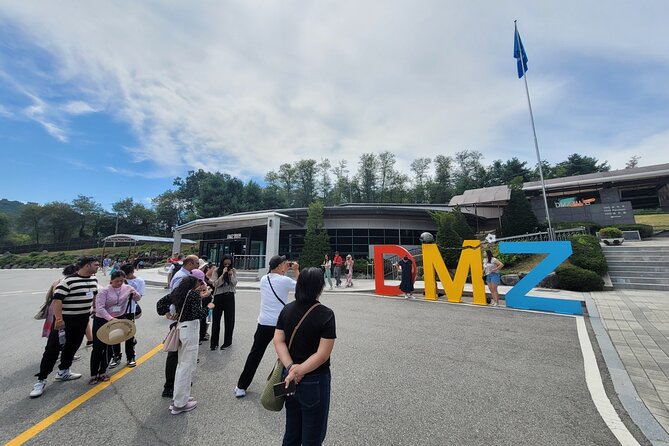
The tour includes several possible Seoul additions, but these are choices rather than a promise that you will visit every one. Since the experience is private, your guide can adjust the route around your interests, time, and energy.
Gyeongbokgung Palace is the clearest choice if you want more traditional Korean culture after the DMZ. Built in 1395, it is Seoul’s largest and most famous royal palace, and it provides a strong contrast with the border’s military history. Its entrance fee is not included.
The War Memorial of Korea is a natural choice if you want to continue studying the Korean War. Its exhibits preserve military materials and explain the conflict in a national educational setting. Admission is listed as free.
Gwangjang Market offers a more everyday Seoul experience. It was Korea’s first permanent market and remains a popular place to browse food and textiles. Admission is free, but food and purchases are extra.
Odusan Unification Observatory is another border-focused option. It sits near the western ceasefire line where the Han River and Imjin River meet and offers another view toward North Korea. Its entrance fee is not included.
You should not assume all these stops fit into one day. The DMZ segment alone takes about five hours, and the Third Tunnel, observatory, lunch, and bridge already create a full schedule. Discuss your priorities with the guide at the start.
Transport, timing, and physical effort
Pickup is offered from Seoul, and the private vehicle is air-conditioned. Water was provided on some outings, and the vehicles were described as clean and comfortable. That matters on a long day with a substantial drive in both directions.
The stated duration is approximately eight to ten hours. Traffic, official DMZ operations, weather, and your chosen stops can affect the final timing. If you have a flight, cruise departure, or another fixed appointment, tell the operator clearly and leave a wide margin. One booking involved concern about returning to a ship on time, so strict onward plans deserve extra care.
Most people can participate, but the Third Tunnel and Gamaksan bridge require walking. The guide may be patient and helpful, particularly for older adults or people with mobility concerns, but the tour is not fully step-free.
The DMZ may also close or change access under official conditions. The itinerary is flexible, but flexibility does not override government rules in a sensitive border zone.
Is $250 per person good value?
At $250 per person, this is expensive for a day trip from Seoul. The price makes more sense for couples, families, or small groups who value privacy and personal attention. You receive hotel pickup, private transportation, parking, a professional English-speaking guide, lunch, and the DMZ entrance fee.
The biggest value is not simply getting from Seoul to Paju. It is having someone explain the sites, manage the restricted-area procedure, answer questions, and adapt the day to your interests. A private guide can also help with photos, restaurant choices, and practical details that a large coach tour may rush past.
The price is less attractive if you mainly want a quick look at the border and do not care about private transport. Also note that other attraction fees, optional palace or observatory admission, and dinner are not included.
There was one reported problem involving an unexpected additional charge because a family group did not fit the assigned van. The operator said vehicle-size pricing had caused the issue and that it would not happen again. I would confirm the vehicle capacity and total cost for your exact group before paying, especially if you have children or a larger family.
Who should book this private DMZ tour?
I would recommend it to first-time visitors who want a serious look at the Korean War and the current division of the peninsula without organizing the border visit themselves. It suits families, couples, and small groups who want a quieter day than a large coach tour can provide.
It is also a good fit if you want a guide who can explain difficult political subjects in clear English. The strongest guide feedback centers on patience, historical depth, warmth, photography, and care for older family members.
You should think twice if you dislike fixed border procedures, shared shuttle transport, long drives, or physical walking. The Third Tunnel is cramped, the bridge requires a hike, and the day can run close to ten hours.
For the best experience, wear comfortable shoes, bring water, request vegetarian food in advance if needed, and ask about an early pickup. If you have limited mobility, tell the operator before booking so the guide can discuss the route with you.
Final verdict: book it for context, not just a photo
I would book this tour if the DMZ is a priority and you want the history explained rather than simply photographed. The combination of a private vehicle, thoughtful guides, Korean lunch, Third Tunnel access, Dora Observatory, and Gamaksan Chulleong Bridge gives you a full day with real variety.
I would not book it expecting a fully private DMZ entry or a relaxed, effortless outing. The government shuttle, fixed schedules, low tunnel, uphill walks, and possible weekend crowds are part of the deal.
For most people with one full day available, the experience offers strong value despite the high price. Choose it for the access, the guide, and the chance to connect the places you see with the story of Korea’s division.
FAQ
How long does the tour last?
The experience lasts approximately eight to ten hours, including pickup in Seoul, travel to Paju, the DMZ visit, lunch, the suspension bridge, and any selected Seoul stop.
Is hotel pickup available?
Yes. Pickup is offered from hotels in Seoul, with the itinerary showing a typical start around 9 a.m.
Is the DMZ visit completely private?
No. The tour uses a private vehicle and private guide, but you must join a Paju government shuttle bus to enter the DMZ.
Is lunch included?
Yes. Lunch is included, with Korean BBQ, bulgogi, or ginseng chicken soup available. Vegetarian food can be arranged if requested when booking.
Is the Third Tunnel difficult to walk through?
The tunnel requires a sloped walk down and back up. The ceiling is low in places, and the return climb can be tiring. Hard hats and benches are available.
Is the suspension bridge included?
Yes. Gamaksan Chulleong Bridge is included, along with the short hike needed to reach it.
Are Gyeongbokgung Palace and Odusan Unification Observatory included?
They are optional choices, but their entrance fees are not included. The private itinerary can be adjusted around selected stops.
Can I cancel for a full refund?
Yes, if you cancel at least 24 hours before the experience start time. Cancellations or changes made less than 24 hours before departure are not accepted for a refund.
More Suspension Bridge and Cable Car Trips
- Signature DMZ Tour: Exclusive Defector Talk & Suspension Bridge
★ 5.0 · 4,459 reviews - Ultimate Korea DMZ Tour from Seoul (Gondola & Suspension Bridge)
★ 5.0 · 2,396 reviews - DMZ; NK Defector, 3rd Tunnel, Suspension Bridge,Hotel pickup
★ 4.9 · 2,055 reviews - DMZ Tour from Seoul – Optional Suspension Bridge Experience
★ 5.0 · 1,918 reviews
Just added around Seoul
- Seoraksan National Park & Nami Island★ 4.5 · 3 reviews
- Strawberry Picking, Winter Sled with Eobi Ice Valley from Seoul★ 4.5 · 3 reviews
- Seoul Full Day small group Tour★ 5.0 · 3 reviews
- Majang Meat Market Experience: Private Tour with Han-woo Beef BBQ★ 5.0 · 3 reviews
- Seoul Korean BBQ Dinner Experience with Secret Food Tours★ 5.0 · 3 reviews
- Rice Wine Tasting with Sommelier – Finest Makgeolli (& Soju)★ 5.0 · 3 reviews
- Max Out Seoul: Must Visit City Highlights Panoramic Day Tour★ 5.0 · 3 reviews
- Seongsu-dong Walking Tour: K-Pop, Culture, Cheer, Friends & Relax★ 4.5 · 3 reviews
DMZ & Border Tours, compared.

Best DMZ Tour Korea from Seoul (Red Suspension Bridge Optional)
Read our review →
DMZ Tour: 3rd Tunnel, Option(Suspension Bridge, Boat) from Seoul
Read our review →
DMZ tour south Korea from Seoul (NK experience hall, defector)
Read our review →
DMZ Insider Tour: 3rd Tunnel, NK Defector Meet & Red Bridge
Read our review →

Signature DMZ Tour: Exclusive Defector Talk & Suspension Bridge
Read our review →
Thrilling Korean DMZ 3rd Tunnel Tour from Seoul + Red Bridge Rush
Read our review →DMZ Past and Present: Korean Demilitarized Zone Tour from Seoul
Read our review →Browse the lists this tour appears in