
Reviewed · GYEONGJU HERITAGE TOURS
From Busan to Gyeongju UNESCO Legacy Tour with National Museum
Ancient tombs, bamboo, and a glowing bridge. This full-day trip from Busan gives you a broad look at Korean culture in one long, carefully packed day, moving from the 400-year-old Ahopsan Bamboo Forest to the Silla-era monuments of Gyeongju. You visit Bulguksa Temple, traditional hanok homes, the Gyeongju National Museum, and Woljeonggyo Bridge, with seasonal changes during the spring blossom period.
I like the mix of quiet nature and major historic sights, and I like that guides such as DK, Yaho, Kang, Chris, and Yaya have earned praise for clear explanations, humor, safe driving, and personal care. The main consideration is pace: 12 hours is a serious day out, and some stops may feel short if you want to study every display or take your time with photographs.
The price, about $48.08 per person, is strong value when you add round-trip transport, fuel, tolls, parking, and a guide. You still need to pay for lunch and Ahopsan Forest admission, and optional entry to Donggung Palace and Wolji Pond is also extra.
In This Review
- Key points at a glance
- Why this day trip works from Busan
- Ahopsan Forest and the first walk
- Dalmaji Hill during cherry blossom season
- Gyochon Village and the Choi family home
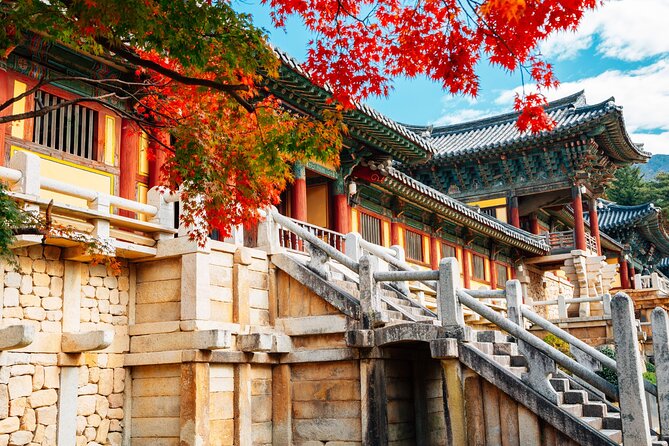
- Bulguksa Temple, the day’s major monument
- The National Museum and Silla treasures
- Daereungwon and the Silla royal tombs
- Woljeonggyo Bridge after daylight fades
- Donggung Palace and Wolji Pond as an alternative
- Guides, driving, and the human side of the tour
- Food, cost, and what to bring
- Who should book this Gyeongju day tour?
- Final decision: book or skip?
- FAQ
- How long does the tour last?
- What is included in the price?
- Is lunch included?
- Is admission to Ahopsan Forest included?
- Is entry to Bulguksa Temple included?
- What can replace Ahopsan Forest during cherry blossom season?
- Can I visit Daereungwon instead of the National Museum?
- Is Donggung Palace and Wolji Pond included?
Key points at a glance
- Ahopsan Forest adds something different: Walk among tall bamboo groves preserved for more than 400 years, though admission is not included and parts of the route are uphill.
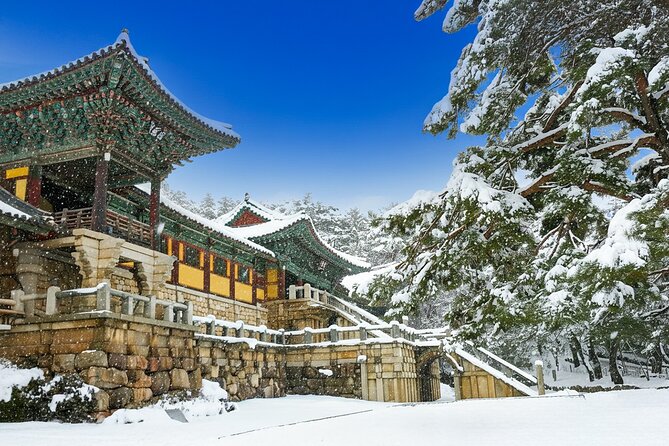
- Bulguksa Temple is the historical anchor: The UNESCO-listed temple offers two hours to see one of Korea’s major Buddhist sites.
- Gyeongju gives you several eras in one day: The route connects Silla royal tombs, Unified Silla architecture, Joseon-era homes, and museum collections.
- Spring brings itinerary choices: From March 24 to April 12, you may be offered Dalmaji Hill instead of Ahopsan Forest, or Daereungwon instead of the National Museum, depending on blossom conditions.
- Guides are a major strength: DK, Yaho, Kang, Chris, and Yaya are praised for history talks, flexible timing, humor, and careful driving.
- The route works well without a rental car: You can cover distant sites from Busan without arranging several separate buses or navigating Gyeongju on your own.
Why this day trip works from Busan
Gyeongju was the capital of the Silla Kingdom, and its historic center is spread across a wide area. That matters. You can visit one famous temple independently, but connecting the temple, museum, village, tombs, and bridge by public transport takes planning and time.
This tour handles that problem with an air-conditioned vehicle and round-trip transport from Busan. Toll fees, parking, and fuel are included, so the listed price reflects more than simple admission to a few monuments. I see it as a practical choice if your Busan stay is short and you want one full day devoted to older Korea.
The route is not a slow, single-site excursion. It is a sampler with enough time at the major stops to walk around, hear the background, and take photographs. Several people have praised the organization and time management, while one person wished for more time at individual locations. Both points are fair.
Group size can reach 99 people, although some outings have used comfortable vans and small groups. Your exact vehicle and group feel may vary. The guides speak English or Chinese, and the strongest comments focus on their ability to keep a large or mixed group moving while still answering questions.
A few more trips of this kind worth comparing:
- Busan: Gyeongju UNESCO Legacy Tour with National Museum
★ 5.0 · 172 reviews - Seoul: War Memorial of Korea Private Guided Museum Tour
★ 4.9 · 29 reviews - DMZ Tour + The War Memorial of Korea Museum
★ 5.0 · 28 reviews
Ahopsan Forest and the first walk
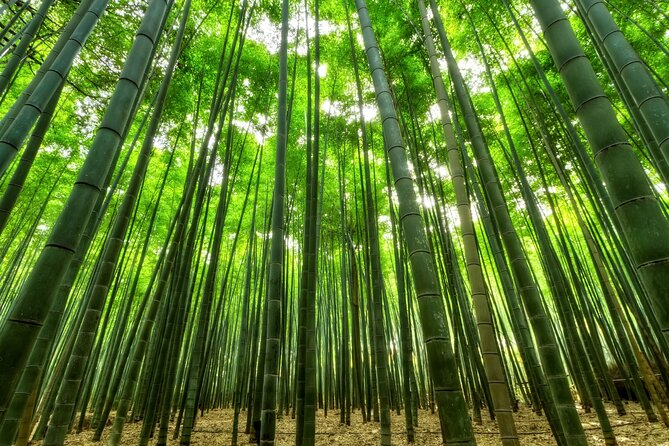
Ahopsan Forest is privately owned and has been preserved for more than four centuries. Its bamboo stands create a cool, hushed opening to the day, and the narrow paths offer a sharp contrast with the open temple courtyards later on.
The scheduled visit lasts about 90 minutes. That is enough for a proper walk rather than a quick photo stop, but you should wear practical shoes. One useful warning from the experience is that the forest can be muddy, so white sneakers are a poor choice. There is also some uphill walking, although a guide may keep the pace gentle for people who need more time.
Admission is not included. Check the current fee when you book or before departure, since the supplied details do not state the amount. This extra cost is modest in the context of the tour, but it is worth knowing before you set out.
Ahopsan is one reason this trip feels broader than a standard Gyeongju temple tour. If you care mainly about archaeology and museum displays, you might prefer every available minute in Gyeongju. If you like nature, photography, and a change of pace, the bamboo forest earns its place.
Dalmaji Hill during cherry blossom season
From March 24 through April 12, the forest may be replaced by Haeundae Dalmaji-gil Road. This seasonal choice depends on bloom conditions, and the alternative is not guaranteed.
Dalmaji Hill is a coastal road known for spring cherry blossoms. The scheduled stop is about 30 minutes, with a walk and time for photographs overlooking the sea. It is a shorter, lighter stop than Ahopsan, but spring views may make it a good trade if the blossoms are at their best.
You should not book this outing assuming one exact spring route. The operator may choose the forest or Dalmaji Hill according to conditions. That flexibility is sensible, but it means the final experience can change with the season.
Gyochon Village and the Choi family home
Gyeongju Gyochon Traditional Village brings the day closer to everyday Korean architecture. Hanok houses, tiled roofs, lanes, and historic sites make this a pleasant walking stop, with about an hour scheduled.
The village was connected with the Gyeongju Choi family, one of Korea’s respected noble families. Choe Jun’s House, also called the Gyeongju Choi Family House, was the former residence of a clan that maintained its position for more than 300 years.
I like this part of the route because it keeps the day from becoming a parade of grand monuments. At the village, you get a sense of domestic life and social tradition, not only royal power and Buddhist art. The walking is free, and you can expect the guide to explain how the homes and family history fit into the wider story of Gyeongju.
The stop is not designed as a long architectural study. If you want to linger inside every building, the one-hour schedule may feel brisk. Still, it adds useful context before the museum and ancient sites.
More Busan trips:
- Busan: Gyeongju Guided Day Trip to Three Kingdoms Capital
★ 4.8 · 1,925 reviews - Small Group Full Day Busan Tour (Max 6 Pax)
★ 5.0 · 1,464 reviews - From Busan: Gyeongju UNESCO World Heritage Guided Day Tour
★ 4.8 · 1,250 reviews - Busan Private Tour with licensed tour guide + private vehicle
★ 5.0 · 1,143 reviews
Bulguksa Temple, the day’s major monument

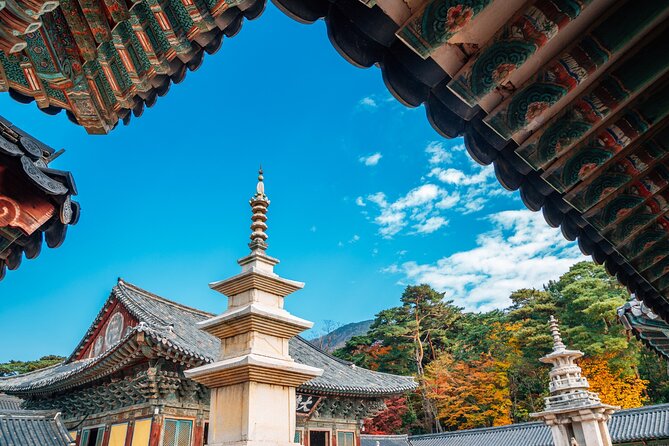
Bulguksa Temple is the biggest single historic stop on the route, with about two hours planned. It was first built in 528 during the Silla period and rebuilt in 774. The temple is UNESCO-listed and widely regarded as a major work of Korean Buddhist art.
The setting gives you a chance to see stone terraces, temple buildings, stairways, and carefully arranged courtyards. Your guide can help explain what you are seeing, which is valuable because the symbolism and layout are easy to miss if you simply walk through with a camera.
Bulguksa is also where the tour’s history becomes more than a list of dates. Silla rulers used Buddhist building projects to express faith, political strength, and cultural ambition. A good guide can connect the structure in front of you with that larger purpose.
Two hours is a reasonable amount of time for a first visit. You can walk through the principal areas, take photographs, and listen to an explanation without turning the stop into an all-day study. Entry is included here, unlike Ahopsan Forest and the optional palace and pond.
Bulguksa involves walking and some steps. The supplied information says most people can participate, but you should still expect a full day on your feet, especially when this temple is combined with the other stops.
The National Museum and Silla treasures
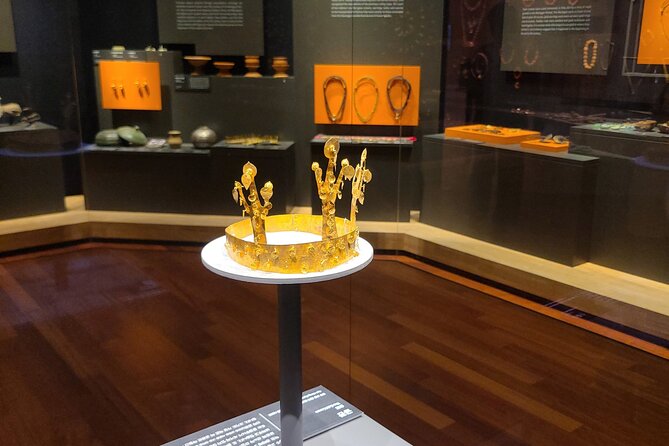
The Gyeongju National Museum normally receives about an hour. It is the best place on this route to gather the story of the Silla Kingdom through objects rather than buildings.
Displays cover the cultural heritage of ancient Silla, and the museum gives you a useful framework for the tombs, temples, and royal sites you see outdoors. I value this pause because it puts smaller objects, religious art, and archaeological finds into context.
An hour is enough for an introduction, not every gallery. You will need to choose what interests you most. Listen closely to the guide’s introduction, then use your free time for the sections that catch your eye.
During the March 24 to April 12 blossom period, the museum may be replaced by Daereungwon Tomb Complex if the flowers are in bloom. This choice is subject to conditions and is not guaranteed.
Daereungwon and the Silla royal tombs
Daereungwon is a broad complex of grassy burial mounds from the Silla Dynasty. The one-hour visit lets you walk beside the tombs and see how these large earthen forms shape the historic center of Gyeongju.
The tombs are simple in appearance compared with Bulguksa, but that is part of their power. The rounded mounds give you a strong sense of the scale and age of the kingdom. In spring, cherry blossoms can frame the grass and stone walls, creating some of the day’s best photographs.
If Daereungwon replaces the museum, you gain more outdoor scenery but lose the museum’s object-based explanation. I would choose according to your interests: history through artifacts favors the museum, while open-air monuments and spring photography favor Daereungwon.
Woljeonggyo Bridge after daylight fades
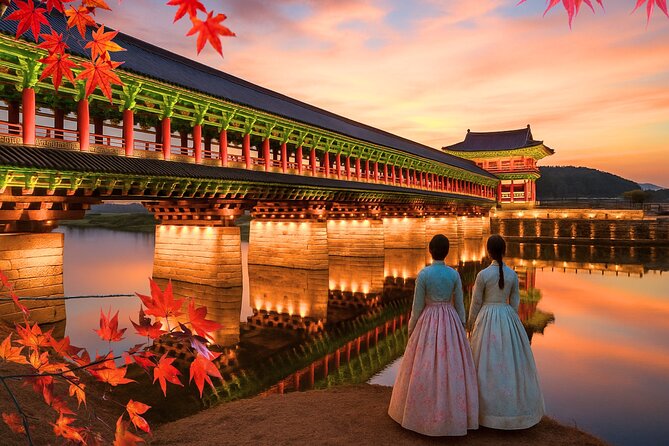
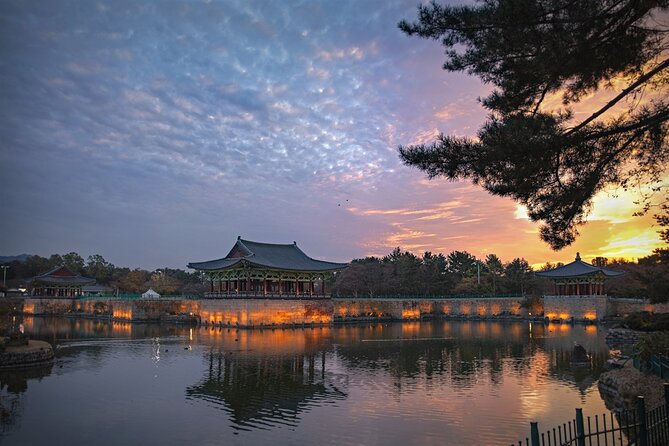
Woljeonggyo Bridge is a reconstructed royal bridge from the Unified Silla period. The original structure was built in 760 and connected the royal palace with the southern area of Gyeongju.
The tour allows up to two hours here, making it one of the more relaxed stops. The bridge is handsome in daylight, but its evening appearance is a major reason to stay. Several accounts describe the night views of the bridge as a favorite part of the day, especially when combined with the palace and pond area.
This is a good final stop because it changes the mood. After temples, homes, and tombs, you get a striking architectural scene that works especially well in photographs. Your guide may also help you find the best viewing angles, an ability praised repeatedly in the feedback.
The long stop does not mean every visit will have exactly two hours of darkness. Traffic, weather, and seasonal light affect the schedule. Still, the bridge gives the itinerary a memorable finish rather than ending at a museum door.
Donggung Palace and Wolji Pond as an alternative
Donggung Palace and Wolji Pond are offered as an alternative for people who prefer not to visit the National Museum. Entry is not included, and the planned visit lasts about 90 minutes.
The pond was associated with a palace complex and is especially attractive in the evening. Its reflections, reconstructed buildings, and lighting make it a natural companion to Woljeonggyo Bridge.
This option is worth considering if you prefer outdoor monuments and night photography to indoor collections. It does add an entrance fee, so include that in your spending plan. The information provided does not give the amount.
Because the route includes alternatives, read the final instructions carefully before departure. The exact combination can depend on season, bloom conditions, and the choice you make regarding the museum.
Guides, driving, and the human side of the tour
The most praised part of this experience is the guiding. DK is repeatedly described as energetic, funny, organized, and passionate about Korean history. Yaho receives similar praise for warmth, clear English, safe driving, personal attention, and the ability to adjust the route in rain.
Kang is praised for patience, practical help, history talks, and looking after everyone in the group. Chris is noted for strong organization, fluent English, and starting earlier during a holiday week to reduce traffic problems. Yaya is described as friendly, flexible, and helpful, including recommending a traditional Korean buffet lunch.
These details matter because a 12-hour outing can feel exhausting if the guide treats it like a conveyor belt. Here, the best accounts describe guides who joined guests at the sights, answered questions, remembered names, found photo spots, and changed the plan when weather caused trouble.
There is one serious warning in the feedback: one person reported missing the pickup and being unable to get clear help at the meeting point. The overall rating is 4.9 from 87 reviews, with 99 percent recommending the experience, but I would still confirm the pickup location and contact method carefully before departure. A WhatsApp check the day before helped one person avoid confusion.
Food, cost, and what to bring
At about $48.08, this is inexpensive for a full-day private vehicle route from Busan. Transport costs alone can add up when you combine a distant forest, Bulguksa, central Gyeongju, and an evening bridge. The included parking, tolls, fuel, and guide make the price easier to justify.
Lunch and dinner are not included. Plan for your own meal costs, and ask the guide about available food options. One outing included a traditional Korean buffet recommendation, but that should not be treated as a guaranteed part of every departure.
Bring:
- Comfortable shoes for temple paths and the uphill section at Ahopsan
- Clothes suitable for changing weather
- A camera or phone for the bamboo, tombs, bridge, and spring flowers
- Money for Ahopsan admission, optional palace entry, and meals
- An umbrella or rain layer if the forecast looks uncertain
The tour requires good weather and a minimum number of participants. If poor weather or low enrollment cancels it, you are offered another date, another experience, or a full refund. Free cancellation is available up to 24 hours before the start time. Changes or cancellations inside that window are not refunded.
Who should book this Gyeongju day tour?
I would recommend it to first-time visitors staying in Busan, especially if you have only one day for Gyeongju and do not want to organize several long transfers. It also suits solo visitors, couples, and small groups who value a guide’s stories as much as the sites themselves.
It is a good match for anyone who wants a balanced day: bamboo forest, Buddhist temple, hanok village, family residence, museum or tombs, and an illuminated bridge. The guide quality appears to be a major part of the value, and the repeated praise for DK, Yaho, Kang, Chris, and Yaya is encouraging.
I would hesitate if you dislike early starts, long vehicle days, fixed schedules, or frequent changes of scenery. You may also prefer an independent visit if you want several quiet hours at one temple or museum. This tour gives you breadth, not slow travel.
Final decision: book or skip?
Book this tour if you want to cover Gyeongju’s main sights from Busan in one practical day, with transport and a guide handling the difficult connections. The price is especially appealing when you count the included vehicle costs, and the combination of Ahopsan Forest, Bulguksa, Gyochon, Silla sites, and Woljeonggyo Bridge offers far more variety than a basic temple outing.
Skip it if you need a relaxed pace or dislike paying separately for lunch and some admissions. Before booking, confirm the pickup details, check which seasonal substitutions may apply, and wear shoes that can handle mud, slopes, and temple walking. For most short-stay visitors, this is a strong-value introduction to Gyeongju and one of the easier ways to add Korea’s ancient capital to a Busan itinerary.
FAQ
How long does the tour last?
The experience lasts approximately 12 hours, including the journey from Busan and the visits around Gyeongju.
What is included in the price?
The price includes an air-conditioned vehicle, an English or Chinese-speaking guide, professional guiding, toll fees, parking fees, and fuel fees. Round-trip transport from Busan is also included.
Is lunch included?
No. Lunch and dinner are not included, and personal expenses are also separate.
Is admission to Ahopsan Forest included?
No. Admission to Ahopsan Forest is not included in the tour price.
Is entry to Bulguksa Temple included?
Yes. Bulguksa Temple admission is included.
What can replace Ahopsan Forest during cherry blossom season?
From March 24 to April 12, you may be offered Haeundae Dalmaji-gil Road instead. The choice depends on blossom and site conditions and is not guaranteed.
Can I visit Daereungwon instead of the National Museum?
During the cherry blossom period from March 24 to April 12, Daereungwon Tomb Complex may replace the Gyeongju National Museum if the blossoms are in bloom. Availability is not guaranteed.
Is Donggung Palace and Wolji Pond included?
No. Donggung Palace and Wolji Pond are an optional alternative to the National Museum, and its entrance fee is not included.
More Gyeongju Trips
- Gyeongju UNESCO World Heritage Guided Day Tour from Busan
★ 5.0 · 660 reviews - Old Korea Thousand History Tour of Gyeongju from Busan
★ 5.0 · 518 reviews - From Busan: Echoes of Silla Gyeongju Historical Day Tour
★ 4.8 · 55 reviews - Gyeongju Small Group photo Tour (Max 6 Pax)
★ 5.0 · 38 reviews
Just added around Busan
- Korean UNESCO World Heritage Tour including Gyeongju, Andong and Daegu(2N3D)★ 5.0 · 3 reviews
- Busan Bliss: Panoramic Yacht & Urban Exploration with Sky Capsule★ 5.0 · 3 reviews
- Busan day trip including Gamcheon culture village from Seoul by KTX train★ 5.0 · 3 reviews
- Busan Seafood Tour : Oyster village Tour with Oyster cuisines★ 5.0 · 3 reviews
- 1 Day Private Busan Guided Tour★ 4.5 · 3 reviews
- 2-DAYS Busan Customized and Included Night tour★ 5.0 · 3 reviews
- Full-Day Jinhae Cherry Blossom festival Private tour★ 5.0 · 3 reviews
- Busan Dialect Class with local snack★ 5.0 · 3 reviews
Gyeongju Heritage Tours, compared.

Gyeongju Guided Day Trip to Three Kingdoms Capital
Read our review →
Gyeongju UNESCO World Heritage Guided Day Tour
Read our review →
Gyeongju UNESCO World Heritage Guided Day Tour from Busan
Read our review →
Old Korea Thousand History Tour of Gyeongju from Busan
Read our review →
Gyeongju UNESCO sites Private tour with licensed tour guide
Read our review →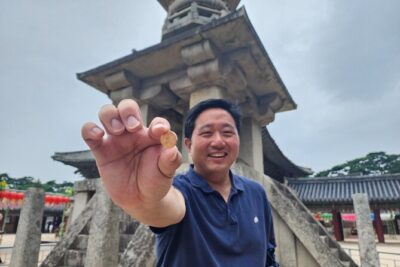
Private Gyeongju Tour – Explore Gyeongju UNESCO Sites
Read our review →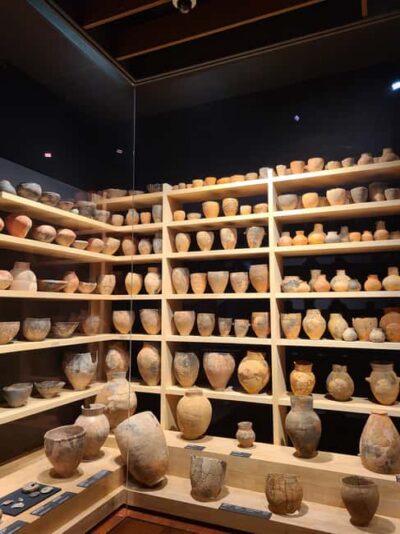
Gyeongju UNESCO Legacy Tour with National Museum
Read our review →
UNESCO Heritage Tour Including Bulguksa Temple
Read our review →Browse the lists this tour appears in