
Reviewed · GYEONGJU HERITAGE TOURS
Busan: Gyeongju UNESCO Legacy Tour with National Museum
History feels close in Gyeongju. This 12-hour day trip from Busan packs temples, royal tombs, a bamboo forest, traditional homes, and Silla treasures into one well-managed outing. I especially like the small-group van transport, which makes a long day more comfortable, and the way guides such as Kang, Yaho, DK, and Chris balance useful history with free time. You should know that lunch and some admission fees cost extra, and the full schedule can feel quite busy.
The tour is a strong choice if you want to see Gyeongju without arranging several buses, taxis, and timed entries yourself. I also like the seasonal flexibility: during the cherry blossom period, the route may shift toward Dalmaji-gil and Daereungwon Tomb Complex. The tradeoff is simple: this is a highlights tour, not a slow exploration of one historic district.
In This Review
- Key points to know before booking
- Why this day trip works from Busan
- Ahopsan Forest: a calm first stop
- Lunch and Dalmaji-gil: food is separate
- Bulguksa Temple: the tour’s essential stop
- Gyochon Village and Choe Jun’s House
- Gyeongju National Museum: putting the pieces together
- Donggung Palace and Wolji Pond after the main sights
- Daereungwon and Woljeonggyo Bridge
- What the guides add to the experience
- The main drawbacks to consider
- Who should book this Gyeongju tour?
- Should you book it?
- FAQ
- How long is the Gyeongju tour from Busan?
- Where can I join the tour in Busan?
- Is the pickup at Busan Station near the KTX gate?
- Is lunch included in the tour price?
- Is admission to Ahopsan Bamboo Forest included?
- Is admission to Donggung Palace and Wolji Pond included?
- Can I visit Donggung Palace and Wolji Pond instead of the museum?
- Can Ahopsan Forest be replaced by another location?
- Can the museum be replaced by Daereungwon Tomb Complex?
- What language does the guide speak?
- What does the price include?
- Can I cancel the booking?
Key points to know before booking
- A full day from Busan: Pickup begins at 8:10 in the city and drop-off comes after roughly 12 hours, so you see a lot without changing hotels.
- Bulguksa is the historical anchor: The UNESCO-listed temple provides the strongest sense of Silla-era art, faith, and architecture.
- Small groups make a difference: Past groups have included only two, three, or six people, though the exact size is not guaranteed.
- Ahopsan Forest adds quiet time: The 400-year-old bamboo grove offers a peaceful break from monuments and city streets, but its admission is extra.
- Spring can change the route: From March 24 to April 12, bloom conditions may bring Dalmaji-gil or Daereungwon into greater focus.
- The guides are the tour’s great strength: Friendly, careful leaders such as Kang and Yaho are repeatedly praised for clear explanations, safe driving, and personal attention.
Why this day trip works from Busan
Gyeongju was the capital of the Silla Kingdom for centuries, and its major sites are spread across a broad area. That geography is the main reason I would consider a guided day trip. Going independently is possible, but you would need to keep track of local buses, walking distances, opening conditions, and the order of several stops.
At $48 per person, the price is appealing for a 12-hour outing with round-trip transport, fuel, parking, tolls, and a professional English or Chinese-speaking guide. You still pay for lunch, personal purchases, and admission at Ahopsan Forest and Donggung Palace and Wolji Pond when those sites are included. Even with those extras, the tour offers good value if you want convenience and historical context more than complete independence.
Pickup points are in useful parts of Busan:
- Busan Subway Station Exit 4 at 8:10
- Seomyeon Subway Station Exit 4 at 8:30
- Haeundae Subway Station Exit 5 at 9:10
Take care with the Busan Station meeting point. It is at Subway Station Exit 4, not the KTX gate. Accurate WhatsApp contact details matter because the operator uses WhatsApp for tour communication.
The vehicle is generally a clean, comfortable van rather than a large coach. That matters on a long day. Past groups have sometimes been very small, with one group of six using a mini van and another consisting of just two people. A small group can make it easier to ask questions, move through crowded areas, and adjust the pace, but you should not assume every departure will feel like a private tour.
A few more trips of this kind worth comparing:
- From Busan to Gyeongju UNESCO Legacy Tour with National Museum
★ 5.0 · 87 reviews - Gyeongju UNESCO Sites Tour by KTX train; The Museum Without walls
★ 4.5 · 11 reviews - Seoul: War Memorial of Korea Private Guided Museum Tour
★ 4.9 · 29 reviews
Ahopsan Forest: a calm first stop
The day begins at Ahopsan Bamboo Forest, a 400-year-old grove known for its quiet paths and cinematic appearance. You get about an hour here, enough for a walk and photographs without turning the stop into a strenuous hike.
I like this opening because it gives the day a softer start. After leaving Busan, you are not immediately asked to absorb royal chronology or Buddhist symbolism. Instead, you get cool shade, tall bamboo, and a chance to settle into the group.
Admission is not included. If you prefer not to enter, you can relax at a nearby café with scenic views. That choice is useful for anyone who would rather save the extra fee or take a slower morning break.
Spring brings a possible change. From March 24 through April 12, depending on bloom conditions, the tour may visit Haeundae Dalmaji Hill instead of Ahopsan Forest. Dalmaji-gil is known for coastal views and cherry blossoms, so the substitution changes the mood rather than simply removing a stop. Still, if the bamboo grove is your main reason for booking, check the seasonal plan before committing.
Lunch and Dalmaji-gil: food is separate
Lunch takes about an hour at a local restaurant, and the meal is not included in the $48 price. The useful part is that the guide can help the group choose or navigate a local meal rather than leaving you to find food during a tight schedule.
One especially practical detail comes from a past outing where the group ate a Korean buffet for about 9,900 KRW. That is an example, not a guaranteed menu or price, but it suggests lunch can remain inexpensive. Another group enjoyed bibimbap in Gyochon Village, including both bulgogi and vegetarian versions.
Tell the operator about allergies or dietary restrictions in advance. You should not assume every restaurant can handle last-minute requests.
Dalmaji-gil Road appears in the route and may receive extra attention during spring. Depending on traffic, weather, and the seasonal schedule, this may be a brief scenic stop rather than a long walk. The road is most useful as a change of pace, giving you coastal or hillside scenery before the heritage sites begin.
Bulguksa Temple: the tour’s essential stop
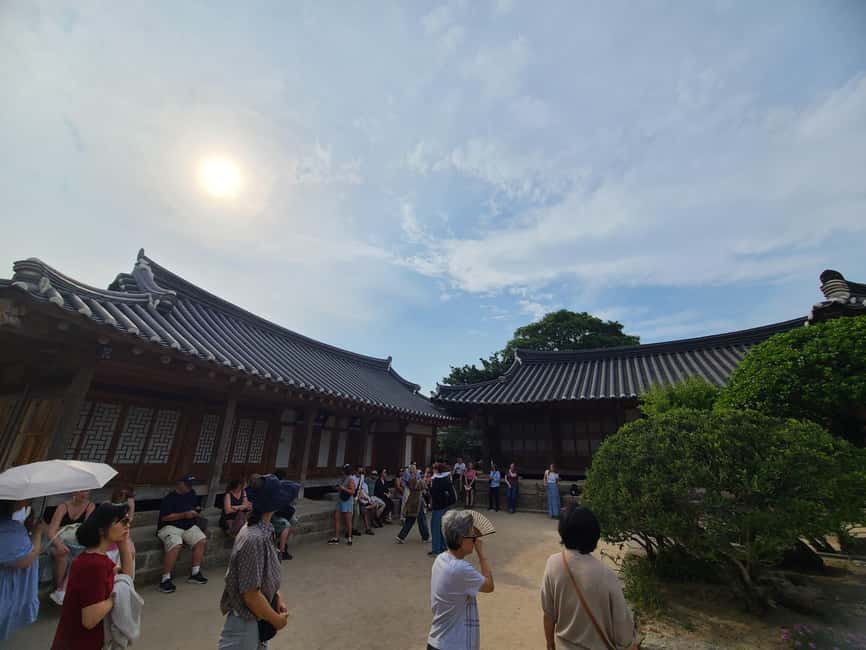
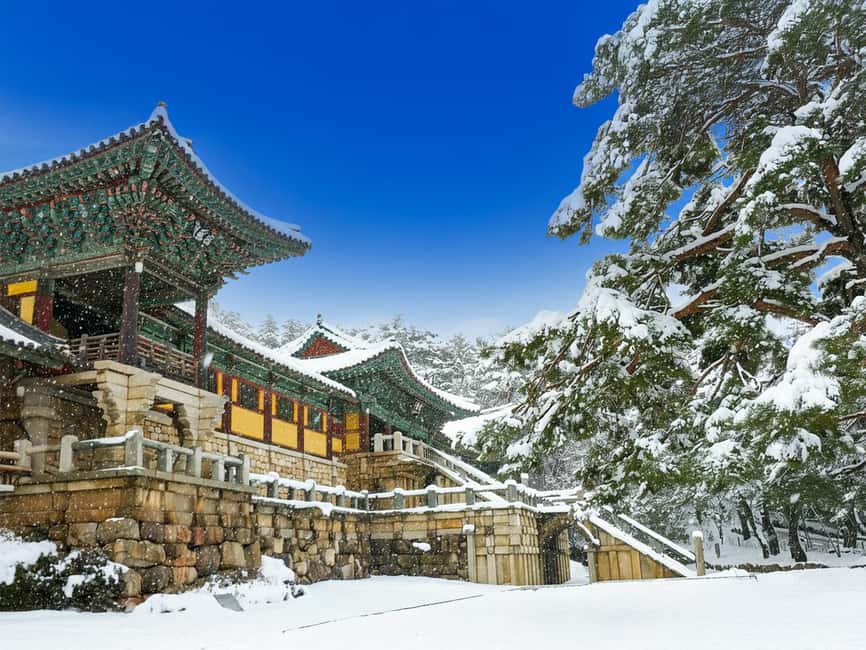
Bulguksa Temple is the heart of the outing. As a UNESCO World Heritage Site, it brings together stone pagodas, temple halls, courtyards, and wooded surroundings in a setting that rewards both explanation and quiet looking.
You have about an hour here. That is enough to see the main architectural features and hear the basic Silla story, but not enough for a leisurely study of every corner. I would stay close during the guide’s introduction, then use the remaining time for your own photographs and details.
The stonework is the reason to pay attention. The pagodas and stairways are not just attractive objects; they show how Buddhist belief, royal power, and skilled masonry came together in Silla Korea. Guides have been praised for explaining the meaning behind the stones and pagodas in a way that makes the site easier to understand.
Kang is often singled out for being warm, patient, and clear. Yaho has also received praise for his explanations of Korean and Buddhist culture, while Andrew was noted for keeping the group moving smoothly on a rainy day. The individual guide affects the experience, but the general pattern is encouraging: the leaders do more than point out buildings.
Wear shoes you can walk in comfortably. The day includes several outdoor stops, temple grounds, village streets, and paths. Weather can change the order or duration of the sites, so bring layers and rain protection when needed.
More Busan trips:
- Busan: Gyeongju Guided Day Trip to Three Kingdoms Capital
★ 4.8 · 1,925 reviews - From Busan: Gyeongju UNESCO World Heritage Guided Day Tour
★ 4.8 · 1,250 reviews - Gyeongju UNESCO World Heritage Guided Day Tour from Busan
★ 5.0 · 660 reviews - Old Korea Thousand History Tour of Gyeongju from Busan
★ 5.0 · 518 reviews
Gyochon Village and Choe Jun’s House
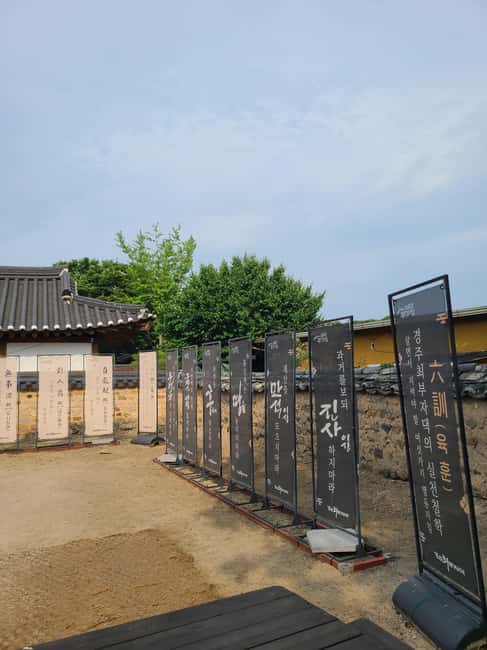
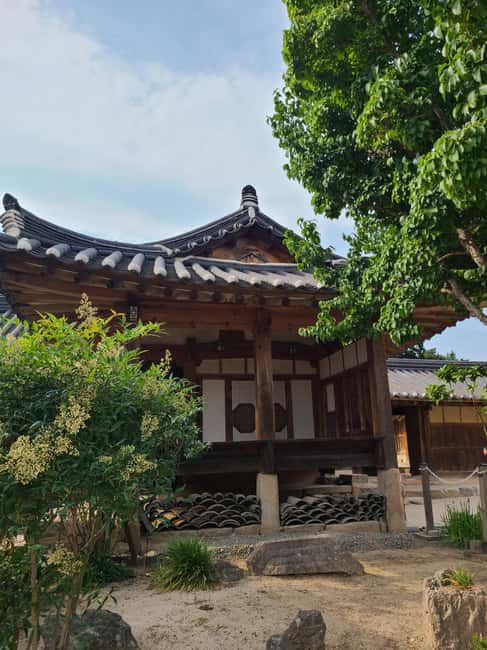
After Bulguksa, the tour shifts from royal and religious monuments to traditional residential culture. Gyeongju Gyochon Traditional Village has hanok homes, historic sites, craft shops, snacks, and places to eat.
The scheduled time is split between Gyochon Village and Choe Jun’s House, about 30 minutes at each stop. That is brief, so think of this as an introduction rather than a full village visit. You can look at the traditional houses, hear about past daily life, and take a few photographs, but you may not have time to browse every shop.
Choe Jun’s House adds a social and domestic angle to the day. After hearing about kings, temples, and tombs, you get a glimpse of how an influential Korean household was organized. This contrast is valuable. Gyeongju is not only a collection of ancient monuments; it also preserves the texture of ordinary streets and homes.
If lunch takes place here, the setting becomes even more useful. A bibimbap meal in a traditional village can be one of the more grounded parts of the trip. It gives you a taste of present-day Korea in a historic setting, without turning the whole day into a museum circuit.
Gyeongju National Museum: putting the pieces together
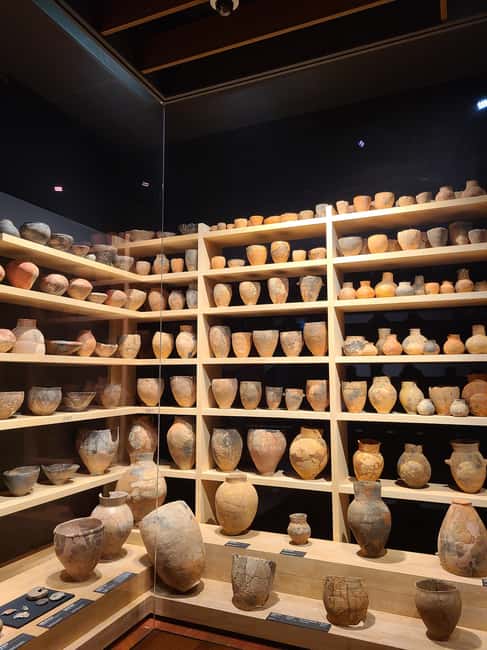
The Gyeongju National Museum normally receives about an hour. Its collection includes Silla relics and national treasures, making it the place where the scattered stories from Bulguksa, the tombs, and the royal sites begin to connect.
A guided introduction helps here. Museums can be difficult when labels are limited or when you do not yet know which objects matter. Your guide can point out the pieces that best explain Silla metalwork, Buddhism, royal culture, and burial customs, then give you time to look independently.
An hour is enough for the main galleries, but not for every display. If you are a serious museum visitor, you may wish the schedule allowed longer. For most people, the museum works well as a focused stop that adds context rather than overwhelming you.
The museum may be replaced by Daereungwon Tomb Complex during the March 24 to April 12 cherry blossom period. That seasonal choice favors outdoor scenery and large royal burial mounds over indoor artifacts. It is a meaningful tradeoff: choose the museum for objects and historical detail, or Daereungwon for open space, tomb architecture, and spring flowers.
There has also been an occasion when a museum closure led to a visit to Donggung Palace and Wolji Pond instead. This is a reminder to expect reasonable substitutions when local conditions change.
Donggung Palace and Wolji Pond after the main sights
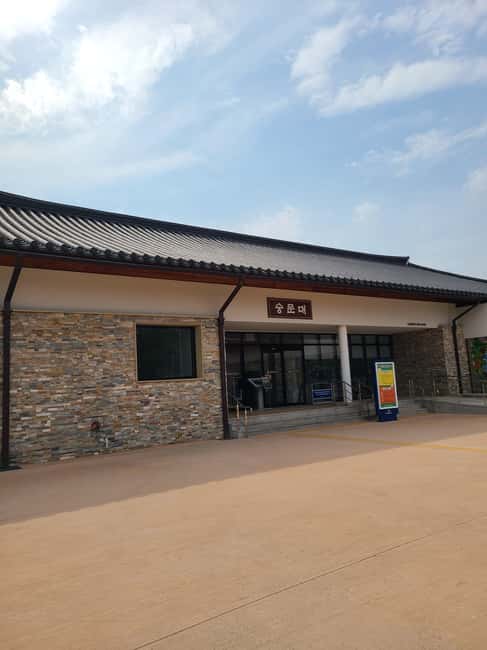
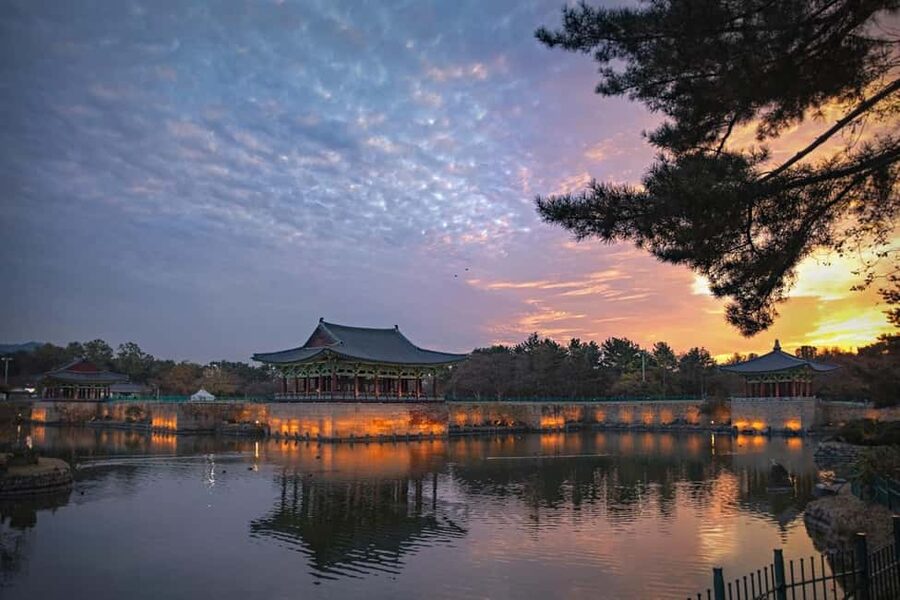
Donggung Palace and Wolji Pond is listed as a short, roughly 30-minute visit, and it may be offered instead of the museum. Admission is not included.
This stop adds a more atmospheric side to the day. The palace grounds and pond are especially appealing around dusk, when colored lights can reflect on the water. One past visit reached the site at dawn or early evening conditions and found the lighting particularly memorable.
Because the stop is short, do not expect a full palace complex visit. The value lies in the setting and the photographs, especially if the timing lines up with sunset or evening illumination. The guide may also adjust the order to fit traffic and daylight.
Daereungwon and Woljeonggyo Bridge
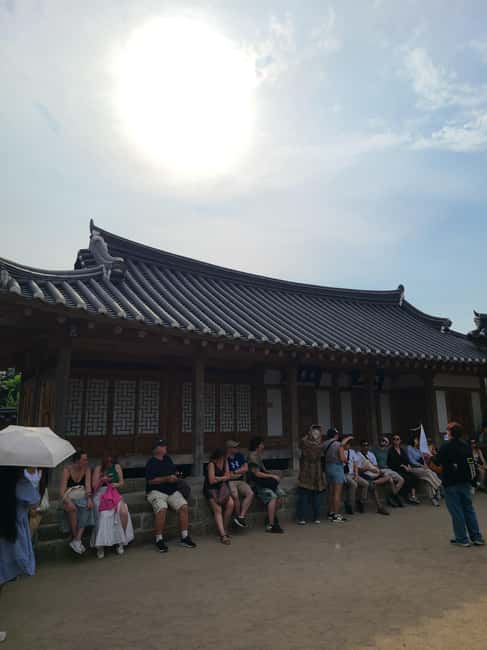
Daereungwon Tomb Complex brings you close to the large grass-covered burial mounds associated with Silla royalty. The scale is striking, and the site helps explain why Gyeongju is often called an open-air museum.
The amount of time here can vary, especially during spring when Daereungwon may replace the museum. Cherry blossoms framing the tomb walls can make this one of the prettiest parts of the route, but bloom dates are never guaranteed. Weather, crowds, and traffic also affect the visit.
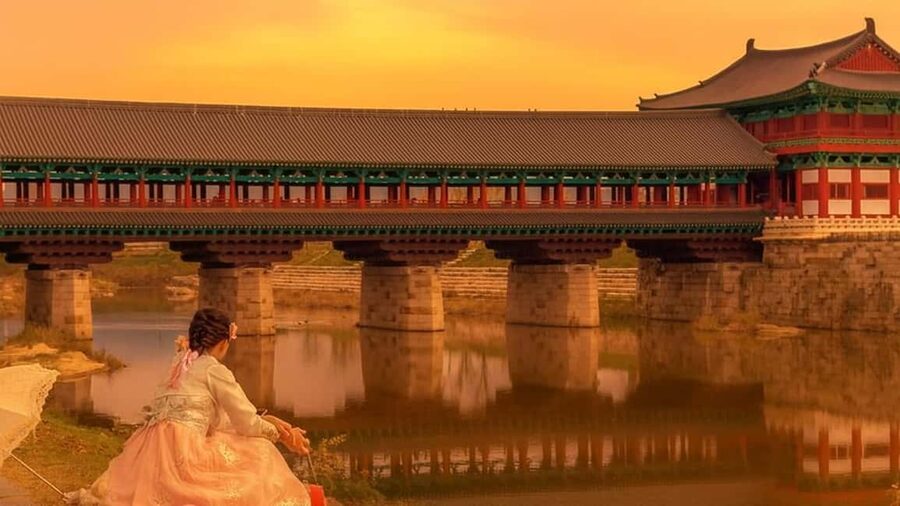
The final major stop is Woljeonggyo Bridge, a reconstruction of a Silla-era bridge. It offers a strong visual ending, with timber architecture, water, and changing light. Some departures reach it near sunset, and the illuminated structure can be especially attractive after dark.
I like ending here because the bridge gives you a final scenic pause after a day of information. Guides have also helped with group photographs, which is useful for solo visitors. One solo participant described the social atmosphere as welcoming, and that fits the small-group format: the guide often checks that everyone is comfortable and included.
What the guides add to the experience
The strongest part of this tour is the human element. Kang is repeatedly praised for patience, humor, cultural explanations, and giving people enough time to explore. Yaho is described as both a careful driver and a caring guide who checked on safety, answered questions, and helped the group at each stop.
Other guides, including DK, Chris, Drake, Erica, Andrew, and Ciro, have also been praised for clear English, friendliness, and good group management. Ciro was described as both an excellent guide and driver, while Erica was appreciated for her enthusiasm and strong English.
This matters because Gyeongju can feel confusing without context. A pagoda is attractive on its own, but the story behind its design makes it memorable. The best guides let you listen, ask questions, and then wander without hovering over you.
The tour is advertised with English and Chinese-speaking guide support, while the activity details specify a live English guide. If language is important to your booking, confirm the language available on your departure.
The main drawbacks to consider
The first drawback is time. Twelve hours is a long day, and the route covers many sites. You will spend part of the day in the van, especially between Busan and Gyeongju, and several stops last only 30 minutes to an hour.
The second is flexibility. You can get free time at many locations, but you cannot linger for half a day at Bulguksa, the museum, or the village. Independent visitors may prefer choosing fewer sites and exploring them slowly.
The third is variable admission and scheduling. Ahopsan Forest and Donggung Palace and Wolji Pond are optional or extra-cost stops, and the museum or forest may be replaced depending on season, closures, weather, or traffic. Read the final schedule carefully so you know which sites are likely to be included.
The fourth is lunch cost. The meal is not part of the advertised price, although examples of inexpensive Korean buffet and bibimbap meals suggest you do not need a large food budget.
Who should book this Gyeongju tour?
I would recommend it to first-time visitors staying in Busan, solo visitors who prefer company, families who want history explained in manageable pieces, and anyone who does not want to work out Gyeongju’s transport system.
It is also a good fit for people who enjoy variety. You move from bamboo forest to temple, restaurant, village, museum, tombs, palace grounds, and bridge. The mix keeps the day from feeling like one long museum visit.
I would hesitate if you want a slow, deeply focused archaeological tour, lots of shopping time, or complete control over the route. You may also prefer an independent visit if you already know Gyeongju well.
The cancellation policy is forgiving: you can cancel up to 24 hours ahead for a full refund, and reserve now while paying later. That is useful when your Busan plans depend on weather.
Should you book it?
At $48, this is a strong-value introduction to Gyeongju. The price covers transport costs that can add up quickly, and the guides provide the historical framework that makes Bulguksa, the tombs, and the museum more than isolated photo stops.
Book it if you want maximum coverage with minimum planning, especially if Kang, Yaho, DK, or another well-rated guide is assigned to your departure. Skip it if you would rather spend a full day at two or three sites. For most first-time visitors with only one day available from Busan, this tour makes the ancient capital practical, varied, and pleasantly human.
FAQ
How long is the Gyeongju tour from Busan?
The tour lasts about 12 hours, including transportation, sightseeing, lunch time, and return transfer to Busan.
Where can I join the tour in Busan?
Pickup is available at Busan Subway Station Exit 4 at 8:10, Seomyeon Subway Station Exit 4 at 8:30, or Haeundae Subway Station Exit 5 at 9:10.
Is the pickup at Busan Station near the KTX gate?
No. The meeting point is Busan Subway Station Exit 4, not the KTX gate.
Is lunch included in the tour price?
No. Lunch fees are paid separately. You should also tell the operator about dietary restrictions or allergies in advance.
Is admission to Ahopsan Bamboo Forest included?
No. Admission to Ahopsan Forest is not included. You may choose to relax at a nearby café instead of entering the forest.
Is admission to Donggung Palace and Wolji Pond included?
No. Admission to Donggung Palace and Wolji Pond is not included when that stop is part of the route.
Can I visit Donggung Palace and Wolji Pond instead of the museum?
Yes. The tour information allows you to choose Donggung Palace and Wolji Pond instead of the Gyeongju National Museum.
Can Ahopsan Forest be replaced by another location?
Yes. During the cherry blossom season from March 24 to April 12, you may visit Haeundae Dalmaji Hill instead, depending on seasonal conditions.
Can the museum be replaced by Daereungwon Tomb Complex?
Yes. During the same spring period, Daereungwon may replace the Gyeongju National Museum, depending on bloom conditions.
What language does the guide speak?
The activity information specifies a live English guide. The tour description also refers to English and Chinese-speaking guide support, so confirm the language available for your specific departure if needed.
What does the price include?
The $48 price includes a professional guide, English or Chinese guide support as available, round-trip transfers from the meeting point, toll fees, parking fees, and fuel fees.
Can I cancel the booking?
Yes. You can cancel up to 24 hours in advance for a full refund. You can also reserve now and pay later.
More Gyeongju Trips
- Gyeongju UNESCO sites Private tour with licensed tour guide
★ 5.0 · 275 reviews - Private Gyeongju Tour – Explore Gyeongju UNESCO Sites
★ 5.0 · 272 reviews - Gyeongju UNESCO World Heritage Sites and History Full-Day Tour with Lunch
★ 5.0 · 104 reviews - Gyeongju: UNESCO Heritage Tour Including Bulguksa Temple
★ 4.8 · 104 reviews
Just added around Gyeongju
- 7 Day Essential Korea Tour(Seoul, Nami, DMZ, Andong, Gyeongju, Busan_Meal Incl.)★ 5.0 · 3 reviews
- Korean UNESCO World Heritage Tour including Gyeongju, Andong and Daegu(2N3D)★ 5.0 · 3 reviews
- From Busan: Gyeongju Small Group Photo Tour & Hotel Pick-up★ 5.0 · 3 reviews
- Full Day Busan and Gyeongju Guided Tour★ 5.0 · 4 reviews
- Gyeongju private tour with an official tour guide (Unesco)★ 4.5 · 4 reviews
- UNESCO Listed Historic Sites in Gyeongju National Park★ 5.0 · 5 reviews
- Full Day Private car tour to UNESCO Gyeongju&Yangdong village★ 5.0 · 5 reviews
- From Daegu: Gyeongju UNESCO Tour 7 Highlights with Bulguksa★ 4.6 · 5 reviews
Gyeongju Heritage Tours, compared.

Gyeongju Guided Day Trip to Three Kingdoms Capital
Read our review →
Gyeongju UNESCO World Heritage Guided Day Tour
Read our review →
Gyeongju UNESCO World Heritage Guided Day Tour from Busan
Read our review →
Old Korea Thousand History Tour of Gyeongju from Busan
Read our review →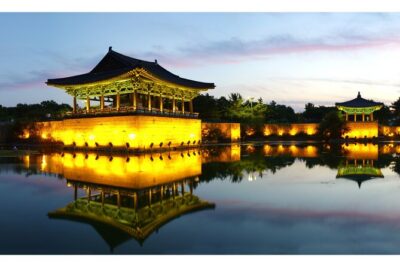
Gyeongju UNESCO sites Private tour with licensed tour guide
Read our review →
Private Gyeongju Tour – Explore Gyeongju UNESCO Sites
Read our review →
UNESCO Heritage Tour Including Bulguksa Temple
Read our review →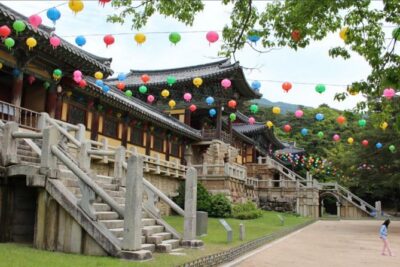
Gyeongju UNESCO World Heritage Sites and History Full-Day Tour with Lunch
Read our review →Browse the lists this tour appears in