
Reviewed · GYEONGJU HERITAGE TOURS
Echoes of Silla Gyeongju Historical Guided Day Tour from Busan
Gyeongju brings ancient Korea to life. This full-day trip from Busan links Bulguksa Temple and Silla-era tombs with hanok lanes, cafés, and evening views at Donggung Palace and Wolji Pond. I like the strong mix of major sights and everyday culture, and I like that guides such as Lucy, Sophie, Bobby Kim, Amy, and Juna are praised for making the past clear and entertaining. The main catch is the long 10 to 11-hour day, with meals and most admission fees extra.
You get air-conditioned transport, English or Chinese-speaking staff, and a carefully packed route that would be difficult to cover as smoothly on your own. I especially like the late-day pairing of Wolji Pond and Woljeonggyo Bridge, when the visit shifts from stones and tombs to reflections and lights. Still, traffic, weather, and a group of up to 43 people can affect the pace.
In This Review
- Key points to know before booking
- Why Gyeongju makes a worthwhile day from Busan
- Bulguksa Temple sets the tone for the morning
- Gyochon Village shows Gyeongju’s quieter side
- Daereungwon turns grassy mounds into royal stories
- Hwangnidan-gil adds coffee, food, and modern Gyeongju
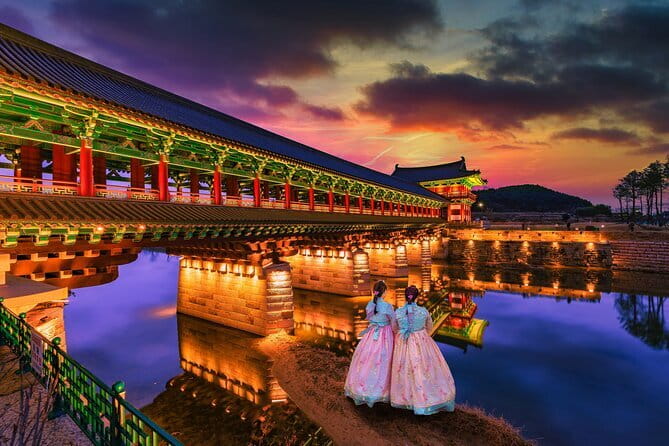
- Donggung Palace and Wolji Pond are the evening highlight
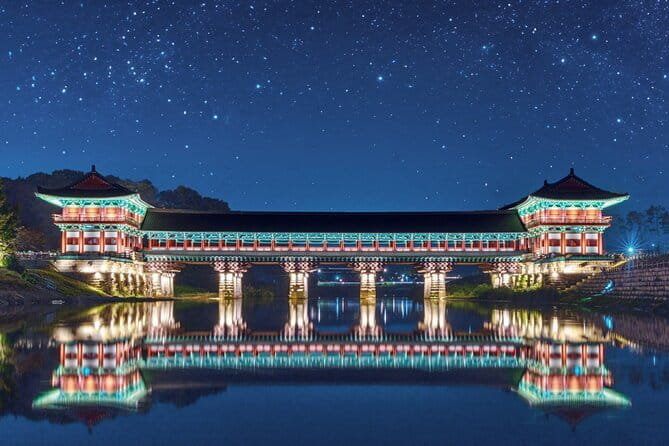
- Woljeonggyo Bridge ends the day with lights
- The guides are a major part of the value
- How the long schedule works in practice
- What the $64 price includes and leaves out
- Who should choose this Gyeongju day tour
- Should you book it?
- FAQ
- How long does the Gyeongju tour from Busan last?
- What places does the tour visit?
- Is transportation included?
- Is admission to Donggung Palace and Wolji Pond included?
- Are meals included in the price?
- What languages are supported?
- How large can the tour group be?
- Can most people participate?
- What is the cancellation policy?
Key points to know before booking
- Six major Gyeongju stops in one day: The route covers Bulguksa Temple, Gyochon Village, Daereungwon, Hwangnidan-gil, Donggung Palace and Wolji Pond, plus Woljeonggyo Bridge.
- Strong guide element: Lucy, Sophie, Bobby Kim, Amy, Juna, and Kelvin are praised for clear explanations, humor, and real pride in Korean history.
- Evening sights are part of the plan: Donggung Palace and Wolji Pond come late, followed by an illuminated walk across Woljeonggyo Bridge.
- Good value at $64: Transport and the Donggung and Wolji admission fee are included, while meals and personal spending are not.
- A full day, not a casual outing: The advertised duration is about 10 to 11 hours, and travel between stops is included.
- A mixed-language group is possible: English and Chinese-speaking staff are available, with a maximum group size of 43.
Why Gyeongju makes a worthwhile day from Busan
Gyeongju was the capital of Silla, a Korean kingdom that lasted for roughly 1,500 years of peninsula history. That past is not confined to one museum. It appears in Buddhist gates, grassy royal tombs, restored village houses, palace foundations, and a bridge lit after sunset.
That spread is what makes this trip useful. You are not only looking at old stones. You move between religious architecture, royal burial grounds, traditional homes, modern cafés, and nighttime heritage sites. The result gives you a broad picture of Gyeongju rather than one isolated monument.
The route also solves a practical problem. Gyeongju’s sights are spread across the city, and a first-time visitor may spend much of the day working out transport and connections. Here, the air-conditioned van or coach handles the movement. The trade is less independence and a fixed schedule.
At $64 per person, the price is sensible if you want transport, guiding, and a full day of sightseeing. The value is strongest for anyone based in Busan who wants to see Gyeongju without arranging several separate transfers. Remember to budget for lunch, snacks, drinks, and any purchases on Hwangnidan-gil.
More Historical Tours in Busan
- From Busan: Gyeongju UNESCO World Heritage Guided Day Tour
★ 4.8 · 1,250 reviews - Gyeongju UNESCO World Heritage Guided Day Tour from Busan
★ 5.0 · 660 reviews - Old Korea Thousand History Tour of Gyeongju from Busan
★ 5.0 · 518 reviews
Bulguksa Temple sets the tone for the morning
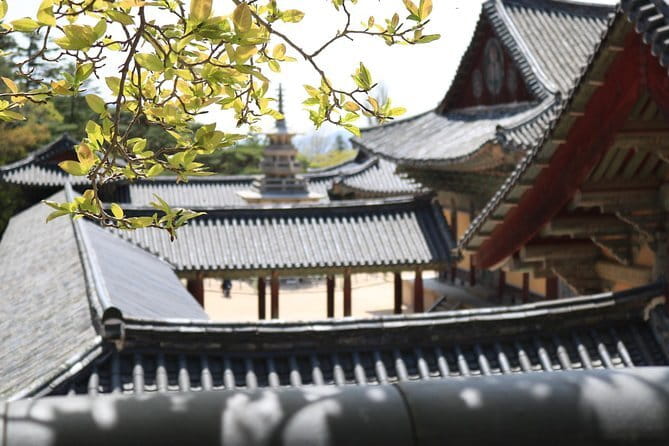
The first major stop is Bulguksa Temple, a UNESCO World Cultural Heritage site and one of Korea’s best-known Buddhist complexes. It was originally built in the eighth century, during the Silla period, and its design gives you an immediate sense of the kingdom’s artistic and religious ambition.
You have about 2 hours and 20 minutes here, which is a useful amount of time for a temple visit. You can look closely at the gates, stone terraces, pagodas, and decorative details instead of rushing through for a quick photograph. The free admission also helps keep the day’s overall cost reasonable.
A guide adds real value at Bulguksa. Without context, a temple can become a pleasant sequence of roofs and stairways. With an explanation of Silla Buddhism and the purpose of the complex, the architecture becomes easier to read.
Expect some walking and uneven surfaces at a historic temple site. Comfortable shoes will serve you well throughout the day, not just here. The long first stop is a strength for people who care about art and history, but anyone hoping for a light sightseeing day may find the pace demanding.
Gyochon Village shows Gyeongju’s quieter side
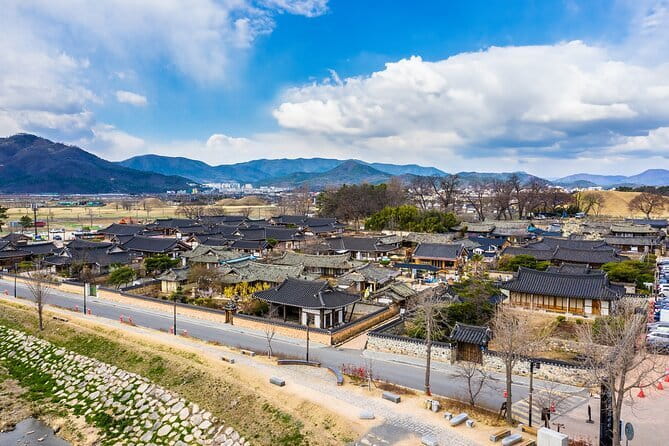
After Bulguksa, the route turns to Gyochon Traditional Village for about 1 hour and 40 minutes. The village is associated with the Gyeongju Choi Clan, a family known for preserving its wealth over 12 generations and producing influential figures.
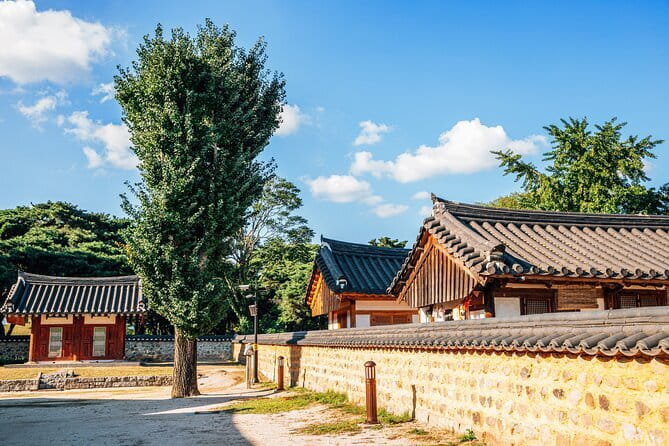
This stop changes the rhythm. Instead of a large religious complex, you explore hanok houses, traditional lanes, and a setting tied to family life and local customs. The focus is less on one grand monument and more on how an established Korean household and community were organized.
I like this part of the route because it gives the day some breathing room. You are still learning about the past, but the setting feels more intimate than Bulguksa. The village also gives you a chance to appreciate the traditional style of Korean homes, with their tiled roofs and restrained lines.
The stop is paired with lunch time, but lunch is not included. That distinction matters. You will need to pay for your own meal, and the schedule may shape how much time you have to choose where to eat. Take the guide’s timing seriously so you do not turn a pleasant meal into a hurried dash to the vehicle.
Daereungwon turns grassy mounds into royal stories
Daereungwon Tomb Complex contains 23 tombs from the Silla Dynasty. The rounded burial mounds give the area an unusual appearance, with large grassy forms spread across an open setting rather than conventional headstones or visible mausoleums.
You have about 50 minutes here. That is enough to walk through the complex and understand the scale of the royal burial grounds, though it is not a long independent archaeological visit. The guide’s storytelling matters because the mounds can look similar at first glance.
One tomb with special importance is Cheonmachong, often called the Heavenly Horse Tomb. The description of the stop identifies it as a significant tomb within the complex. Your guide can help explain why it matters and how the Silla burial tradition differed from what you may have seen elsewhere in Korea.
This is one of the day’s best stops for visual contrast. After temple roofs and village houses, you see broad burial mounds with a simple, almost pastoral appearance. The setting is easy to photograph, but do not expect a large amount of free time. The schedule gives you an introduction rather than a slow archaeological study.
More Historical Tours in Gyeongju
- From Busan: Echoes of Silla Gyeongju Historical Day Tour
★ 4.8 · 55 reviews - Gyeongju Historic Areas Day Tour with Sky Capsule from Busan
★ 5.0 · 18 reviews - From Busan: Gyeongju Historical Day Tour with Sky Capsule
★ 4.7 · 17 reviews - Gyeongju The UNESCO World heritage sites tour(Private tour)
★ 5.0 · 17 reviews
Hwangnidan-gil adds coffee, food, and modern Gyeongju
Right beside Daereungwon, Hwangnidan-gil Street brings a modern pulse to the route. The street blends older hanok buildings with specialty cafés, gourmet street food, shops, and other contemporary businesses.
You have about an hour here. That is enough for a drink, a snack, a quick look through the shops, or a short walk among the restored traditional buildings. It is not enough for a relaxed meal, extended shopping, and careful exploration all at once, so decide what matters most to you.
This stop is valuable because it prevents the tour from becoming a sequence of formal monuments. You see how Gyeongju’s traditional appearance is being used in present-day city life. The contrast can be charming, though anyone seeking a purely ancient setting may find the commercial side less appealing.
Bring a little spending money. Personal expenses are not included, and this is the most obvious place in the day to buy food or drinks. Since lunch is also separate, you may prefer to use this hour for a coffee and small snack rather than a full meal, depending on the day’s schedule.
Donggung Palace and Wolji Pond are the evening highlight
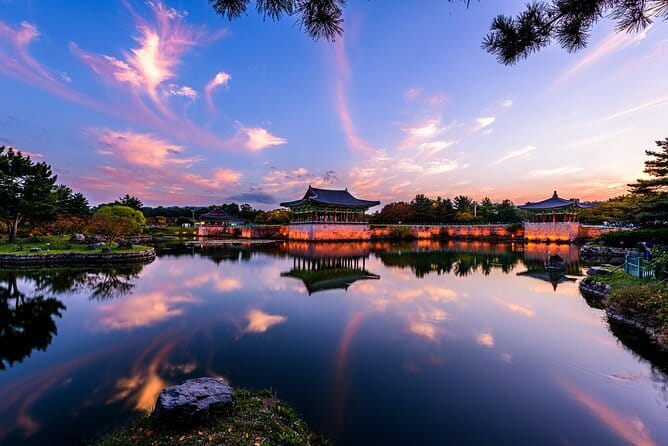
Donggung Palace and Wolji Pond is the only listed stop with an admission fee included in the tour. The pond was first constructed in 674 and formed part of a royal complex. It was artificially made, and a major drainage project in 1972 revealed thousands of Silla artifacts that had fallen into the water.
The visit lasts about 40 minutes. That may sound brief, but the setting is especially effective later in the day, when the palace grounds and pond take on a quieter, more reflective mood. The water, reconstructed buildings, and evening light make this one of the most memorable photo stops.
Here, the guide can connect the site to royal banquets, court life, and the practical work of recovering objects from the drained pond. Those details turn a pretty view into a place with a story.
The short duration is the chief limitation. You will not have unlimited time to walk every edge of the pond or linger at each viewpoint. Still, including the admission fee and scheduling this stop toward evening make good sense. It is a fine transition from daytime sightseeing to the final bridge walk.
Woljeonggyo Bridge ends the day with lights
The last stop is Woljeonggyo Bridge, with about 20 minutes set aside for a walk and photographs. The bridge crosses Woljeongcheon Stream and is presented as an example of ancient engineering, with sturdy stone arches and a long historical connection to Gyeongju.
The evening illumination gives the stop its appeal. After a day spent examining temples, tombs, and village architecture, you finish with a simple walk across a bridge reflected in the water. It is a short visit, so think of it as a final scenic pause rather than a full site tour.
Twenty minutes should be enough for the bridge itself, but not for an extended stroll along the stream. Keep your camera ready and stay aware of the group’s meeting time. The bridge is free to visit, so it adds a strong visual finish without another ticket charge.
The guides are a major part of the value
The strongest praise focuses on the people leading the tour. Lucy and Kelvin are described as warm, proud of Korea, and eager to share what they know. Bobby Kim is praised for being talkative and passionate when explaining the places along the route.
Sophie receives particular praise for her English, friendliness, organization, and clear facts. Amy is described as helpful and pleasant, while Juna is credited with keeping the day informative and fun. These details matter because a historical day can become tiring if explanations are dry or difficult to follow.
Guide quality can vary from departure to departure, and the specific guide is not guaranteed. Still, the repeated praise for several named guides suggests that storytelling is not an afterthought here. You are likely to get more from Gyeongju if you enjoy asking questions and listening to explanations rather than simply moving from one photo stop to the next.
The maximum group size is 43. That is not a small private outing, and you should expect a larger group feel if the vehicle is full. The upside is a lower price and organized transport. The downside is that regrouping can take time, especially at popular sites.
How the long schedule works in practice
The tour lasts approximately 10 to 11 hours, including travel between the sights. That is a good amount of ground to cover from Busan, but it requires energy. You are moving through six stops, with the longest visits at Bulguksa and Gyochon and shorter stops later in the day.
The itinerary is subject to traffic and weather. That is worth keeping in mind when planning anything immediately after the tour. Do not schedule a tight evening reservation or an important connection unless you have plenty of extra time.
The air-conditioned vehicle is a practical advantage. Gyeongju sightseeing involves outdoor walking, and a comfortable ride between locations gives you a chance to rest. The vehicle also protects you from some of the strain of arranging separate public transport connections.
The tour is near public transportation, and most people can participate. No special access details are provided, so you should ask the operator directly if you have mobility concerns or need specific assistance. Good walking shoes, water, and weather-appropriate clothing are sensible choices.
What the $64 price includes and leaves out
The $64 price covers transport by air-conditioned van or coach, English or Chinese-speaking staff, and admission to Donggung Palace and Wolji Pond. Bulguksa Temple and the other listed stops have no admission charge according to the tour details.
That makes the price easier to assess. You are mainly paying for the long-distance organization, vehicle, guide, and time saved. If you tried to connect all these sites independently, the transport planning alone could take a large part of your day.
Meals are not included. Neither are personal expenses or travel insurance. Plan for lunch and perhaps a drink or snack at Hwangnidan-gil, where cafés and street food are part of the appeal.
Free cancellation is available if you cancel at least 24 hours before the experience start time. A cancellation or change made less than 24 hours in advance is not accepted for a refund, and the cut-off follows local time.
Who should choose this Gyeongju day tour
I would choose this trip if you are staying in Busan, want a strong introduction to Silla history, and prefer having the transport and route handled for you. It suits first-time visitors who want a varied day rather than a single temple or museum.
It is also a good fit if you enjoy guides who tell stories and connect details across several sites. The repeated praise for Lucy, Sophie, Bobby Kim, Amy, Juna, and Kelvin gives the guiding a particularly strong reputation.
You may want a different arrangement if you prefer slow photography, long café stops, or complete control over every visit. The 10 to 11-hour schedule is efficient, but it is not leisurely. A group of up to 43 can also feel less personal than a small-group or private tour.
Should you book it?
Book this tour if you want to see the major sides of Gyeongju in one organized day: Buddhist architecture at Bulguksa, royal tombs at Daereungwon, traditional homes at Gyochon, modern street life on Hwangnidan-gil, and illuminated evening sites by the water.
At $64, it offers good value for a full day from Busan, especially with transport and the Donggung and Wolji admission fee included. Go in ready for a long schedule, bring money for meals, and leave room for traffic delays. If those conditions suit you, this is a well-rounded and highly praised way to meet Gyeongju.
FAQ
How long does the Gyeongju tour from Busan last?
The tour lasts approximately 10 to 11 hours. Travel time between the stops is included in the total duration.
What places does the tour visit?
The route includes Bulguksa Temple, Gyochon Traditional Village, Daereungwon Tomb Complex, Hwangnidan-gil Street, Donggung Palace and Wolji Pond, and Woljeonggyo Bridge.
Is transportation included?
Yes. Transport by air-conditioned van or coach is included.
Is admission to Donggung Palace and Wolji Pond included?
Yes. The admission fee for Donggung Palace and Wolji Pond is included.
Are meals included in the price?
No. Meals are not included, so you should budget separately for lunch and any drinks or snacks.
What languages are supported?
English and Chinese-speaking staff are available.
How large can the tour group be?
The tour can have a maximum of 43 participants.
Can most people participate?
The tour information says most people can participate. Specific accessibility details are not provided, so contact the operator if you need particular assistance.
What is the cancellation policy?
You can cancel at least 24 hours before the experience start time for a full refund. Cancellations or changes made less than 24 hours before the start time are not accepted for a refund.
More Busan Trips
- Busan: Gyeongju Guided Day Trip to Three Kingdoms Capital
★ 4.8 · 1,925 reviews - Small Group Full Day Busan Tour (Max 6 Pax)
★ 5.0 · 1,464 reviews - Busan Private Tour with licensed tour guide + private vehicle
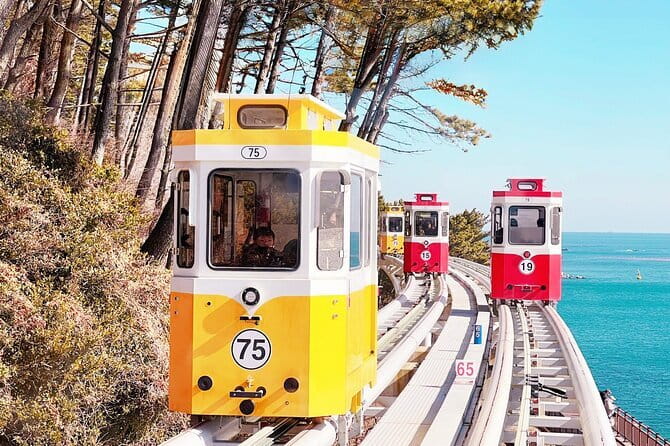
★ 5.0 · 1,143 reviews - Busan: Coastal Treasures Beach Train, Culture Village & More
★ 4.7 · 832 reviews
More Historical Tours
- Busan history and market food tour with local chef
★ 5.0 · 58 reviews - UNESCO World Heritage Gyeongju & Busan Two-city Private Tour.
★ 5.0 · 7 reviews - From Busan: Gyeongju Full-Day Historical Tour
★ 4.1 · 6 reviews - Korean UNESCO World Heritage Tour including Gyeongju, Andong and Daegu(2N3D)
★ 5.0 · 3 reviews
Just added around Busan
- Korean UNESCO World Heritage Tour including Gyeongju, Andong and Daegu(2N3D)★ 5.0 · 3 reviews
- Busan Bliss: Panoramic Yacht & Urban Exploration with Sky Capsule★ 5.0 · 3 reviews
- Busan day trip including Gamcheon culture village from Seoul by KTX train★ 5.0 · 3 reviews
- Busan Seafood Tour : Oyster village Tour with Oyster cuisines★ 5.0 · 3 reviews
- 1 Day Private Busan Guided Tour★ 4.5 · 3 reviews
- 2-DAYS Busan Customized and Included Night tour★ 5.0 · 3 reviews
- Full-Day Jinhae Cherry Blossom festival Private tour★ 5.0 · 3 reviews
- Busan Dialect Class with local snack★ 5.0 · 3 reviews
Gyeongju Heritage Tours, compared.

Gyeongju Guided Day Trip to Three Kingdoms Capital
Read our review →
Gyeongju UNESCO World Heritage Guided Day Tour
Read our review →
Gyeongju UNESCO World Heritage Guided Day Tour from Busan
Read our review →
Old Korea Thousand History Tour of Gyeongju from Busan
Read our review →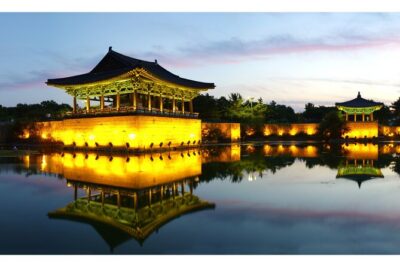
Gyeongju UNESCO sites Private tour with licensed tour guide
Read our review →
Private Gyeongju Tour – Explore Gyeongju UNESCO Sites
Read our review →
Gyeongju UNESCO Legacy Tour with National Museum
Read our review →
UNESCO Heritage Tour Including Bulguksa Temple
Read our review →Browse the lists this tour appears in