
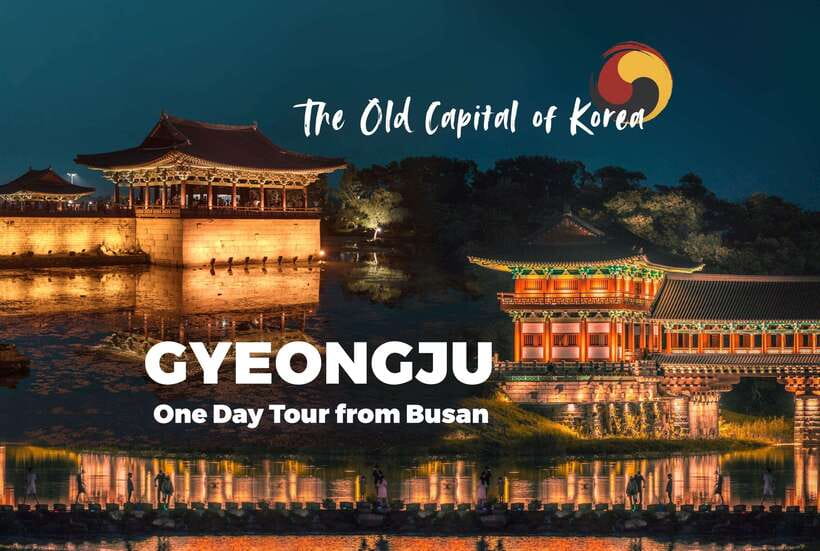
Reviewed · GYEONGJU HERITAGE TOURS
From Busan: Gyeongju Full-Day Historical Tour
Gyeongju makes Korea’s past feel close. This 10-hour trip from Busan links Bulguksa Temple, royal tombs, old village homes, and the moonlit-looking waters of Donggung Palace and Wolji Pond. I like the range of places covered in one day, and I like having transport, entrance fees, and an English guide handled for you. The main drawback is the length: with driving, sightseeing, and several stops, you may return to Busan tired.
The guides are a major part of the experience. Bada earned praise for being informative and entertaining, and another booking describes two friendly guides who gave plenty of explanations. I would bring good walking shoes, sunscreen, and patience for busy sights, since crowds can make it harder to enjoy some locations at an easy pace.
In This Review
- Key points before you book
- Why Gyeongju is worth a full day from Busan
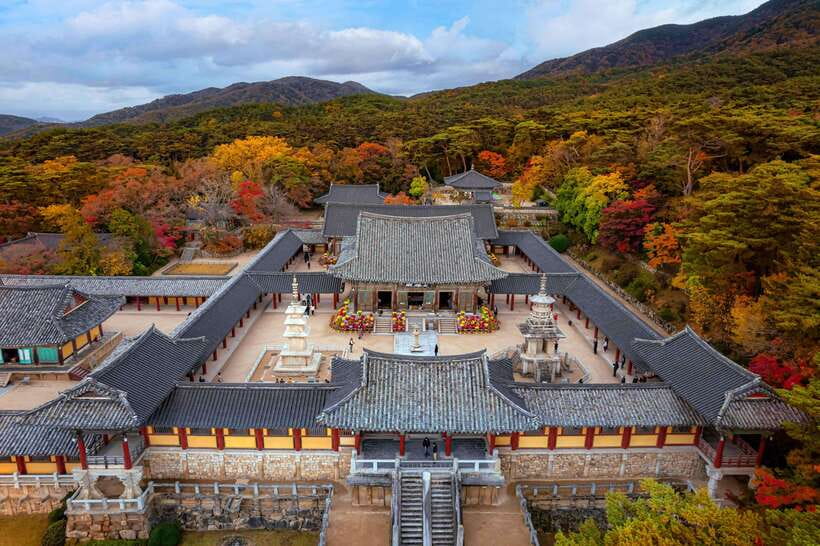
- Bulguksa Temple: 70 minutes among Silla stonework
- Lunch and the practical rhythm of the day
- Yangdong Folk Village and the feel of old Korea
- Daereungwon Tomb Complex: royal mounds in the city
- Hwangridan-gil: a newer old street
- Cheomseongdae: a short look at an ancient observatory
- Donggung Palace and Wolji Pond: the day’s best finish
- Transport, guides, and the value of $60
- Who will enjoy this Gyeongju day trip?
- Useful planning advice for the 10-hour schedule
- Should you book this Gyeongju tour?
- FAQ
- How long does the Gyeongju tour last?
- Where does the tour begin?
- Where does the tour end?
- Is transportation included?
- Is food included in the price?
- What language is the guide?
- Is Bulguksa Temple included?
- Is the tour suitable for wheelchair users?
- What should I bring?
Key points before you book
- Bulguksa sets the historical tone: Spend about 70 minutes at the UNESCO-listed temple, where stonework, buildings, and mountain scenery come together.
- The route covers several sides of Gyeongju: You visit a temple, a traditional village, royal tombs, an ancient observatory, and a palace pond.
- Daereungwon puts Silla royalty underfoot: The grassy tomb mounds are among Gyeongju’s clearest reminders of the ancient kingdom.
- Hwangridan-gil adds a more recent layer: Preserved 1960s buildings bring a nostalgic street scene between the major historic sites.
- The day runs on a firm schedule: You get roughly 70 minutes at Bulguksa, one hour for lunch, and shorter stops at several other sites.
- The $60 price includes useful basics: Transport from a Busan meeting point, attraction entry, and a guide are included, while food and drinks are not.
Why Gyeongju is worth a full day from Busan
Busan is a modern port city with plenty to keep you busy, but Gyeongju offers a very different Korea. It was the center of the Silla kingdom and later the Unified Silla period, so ancient temples, tombs, and royal sites are part of the town rather than isolated museum pieces.
I like this tour because it gives you a broad introduction without asking you to solve the transport puzzle yourself. Gyeongju’s attractions are spread across the area, and arranging Bulguksa, Yangdong Village, Daereungwon, Cheomseongdae, and Donggung Palace on your own takes planning. Here, you board a van or bus at one of three designated Busan meeting points, ride through the Korean countryside, and return to one of the same general pickup areas.
That convenience comes with a tradeoff. Ten hours is a long outing, and one detailed account describes being in the van from roughly 11 a.m. until 9:30 p.m. You should view this as a full historical day, not a relaxed side trip with long café breaks.
More Full-Day Tours in Busan
- Small Group Full Day Busan Tour (Max 6 Pax)
★ 5.0 · 1,464 reviews - Authentic Busan Full-Day City Highlights Tour
★ 5.0 · 272 reviews - Full-Day Tour Unmissable things to do in Busan
★ 5.0 · 195 reviews
Bulguksa Temple: 70 minutes among Silla stonework
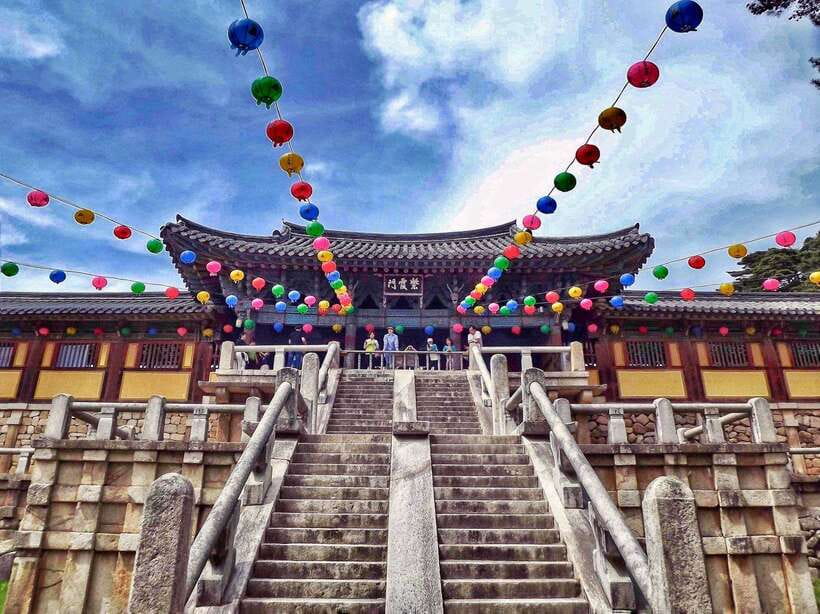
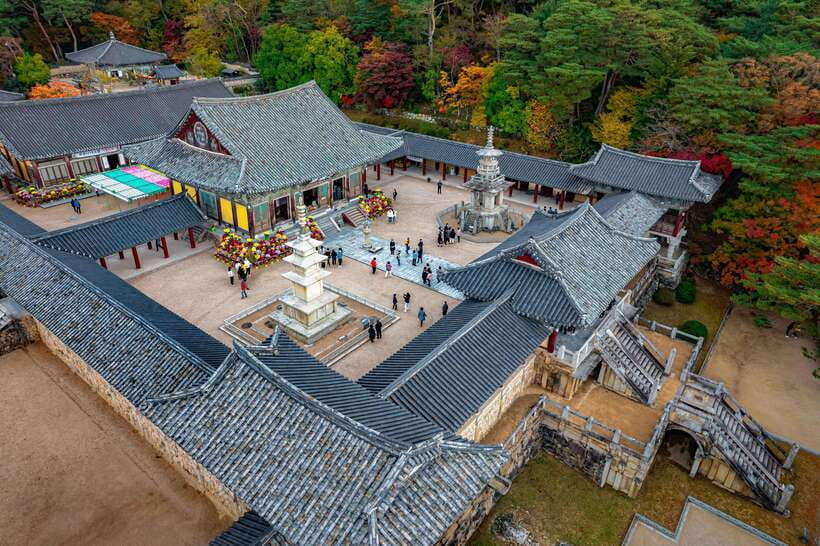
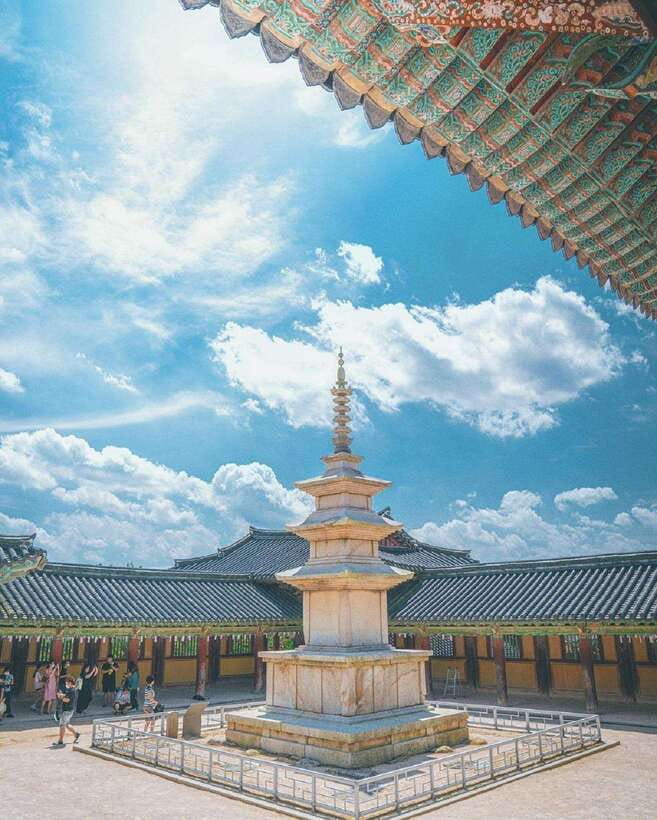
Bulguksa is the strongest opening stop. The UNESCO-listed temple is famous for the way its buildings sit within the surrounding hills and trees. Your guide leads you through the complex and explains how the architecture relates to the natural setting.
The scheduled visit lasts about 70 minutes. That gives you enough time for a guided introduction and photographs, though it is not an invitation to inspect every corner at a slow pace. Pay attention to the stone terraces and the overall arrangement of the temple grounds. The appeal is not just one building. It is the balance between masonry, wooden structures, and the setting.
This is also where a guide adds real value. Without context, a temple visit can become a parade of roofs and courtyards. With explanations about Silla and the period of Korean unification, you have a clearer sense of why Bulguksa matters.
Wear shoes with a good grip. The tour specifically recommends comfortable footwear, and the day includes several walking stops. Since the tour runs rain or shine, a wet visit may make stone paths less pleasant.
Lunch and the practical rhythm of the day
A local restaurant stop lasts about one hour, but food and drinks are not included in the $60 price. That is useful to know before you set out. You have a scheduled chance to eat, but you pay for your own meal and should not treat lunch as part of the tour cost.
The one-hour break also gives your feet a rest before the afternoon stops. Since the itinerary is packed, this is likely your main proper pause. I would keep lunch simple and watch the time. A late return to the van can affect the rest of the group and may reduce time at a later sight.
Yangdong Folk Village and the feel of old Korea
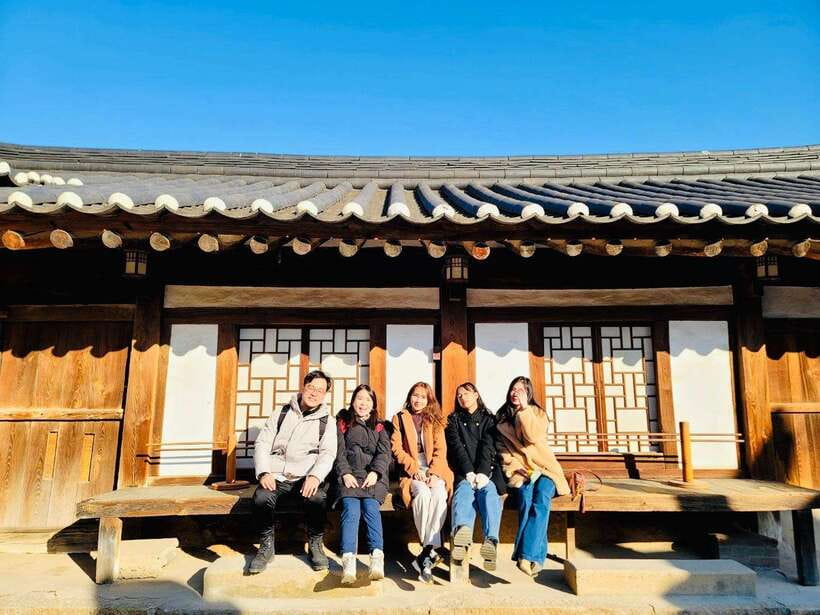
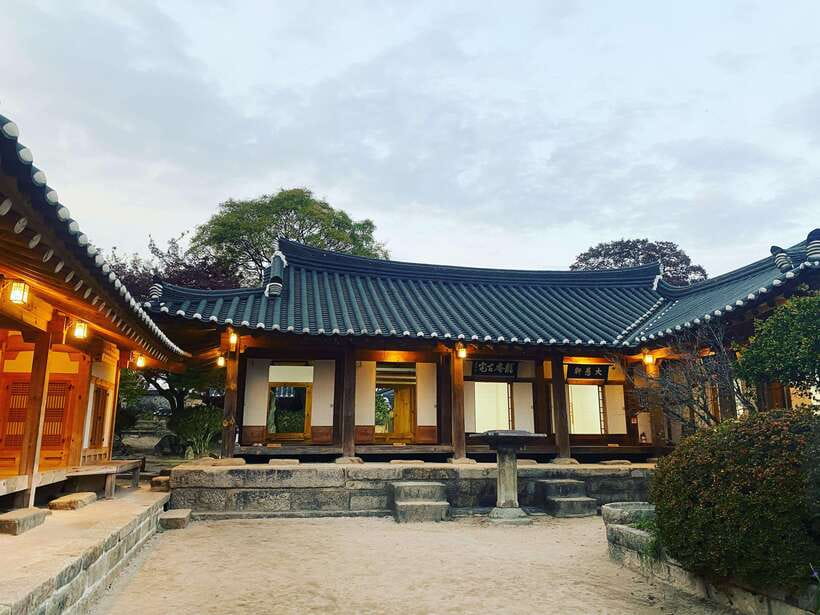
Yangdong Traditional Village provides a welcome change from the grand scale of Bulguksa. Here, you see traditional hanok houses and a village setting that preserves older Korean domestic architecture. The visit lasts about one hour and includes a guided walk and time for photographs.
The value of Yangdong is its everyday quality. A temple shows formal religious architecture. A royal tomb shows the power of a ruling family. A village lets you think about how homes, courtyards, and community life were arranged.
Do not expect a long period of independent wandering. The schedule calls this a visit and photo stop with a guide, so the hour will pass quickly. The village is best approached as a concise look at traditional housing rather than a full-day rural visit.
More Historical Tours in Busan
- From Busan: Gyeongju UNESCO World Heritage Guided Day Tour
★ 4.8 · 1,250 reviews - Gyeongju UNESCO World Heritage Guided Day Tour from Busan
★ 5.0 · 660 reviews - Old Korea Thousand History Tour of Gyeongju from Busan
★ 5.0 · 518 reviews - Busan history and market food tour with local chef
★ 5.0 · 58 reviews
Daereungwon Tomb Complex: royal mounds in the city
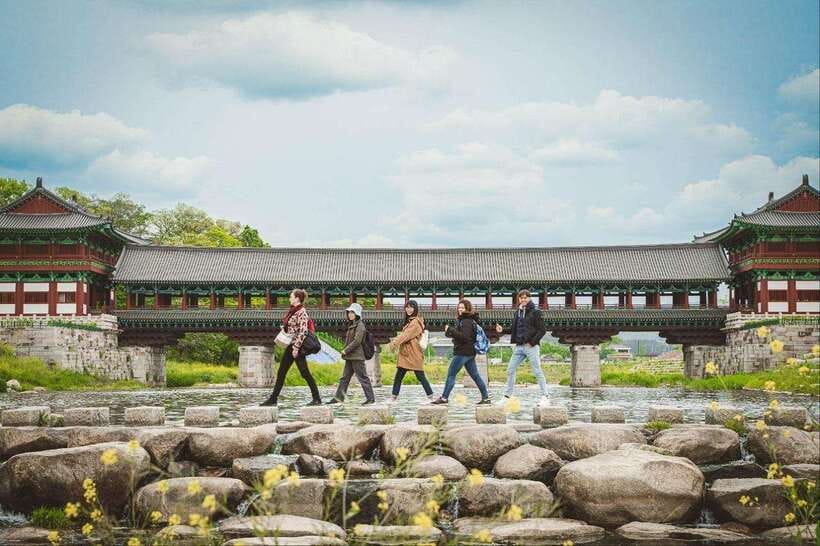
Daereungwon is one of the most memorable stops because the tombs are large, visible, and woven into Gyeongju’s present-day setting. The complex contains grand burial mounds associated with ancient Silla monarchs, queens, and important aristocrats.
You get about one hour here with a guide. The grassy mounds may look simple at first, but that simplicity is part of their power. They are not small markers lined up in a cemetery. They are broad earthworks that change the shape of the space around them.
Your guide can explain the political and cultural meaning behind the tombs, helping you connect the site to the Three Kingdoms period and the later unification under Silla. I find this kind of stop especially useful for visitors who want more than attractive photographs. It shows how burial customs expressed rank and memory.
There is also a short break and photo opportunity of about 30 minutes elsewhere in the day. The exact flow can vary, so you should expect some free time but not a long unplanned pause.
Hwangridan-gil: a newer old street
The walk through Hwangridan-gil adds an unusual note to the program. Instead of ancient stonework or traditional hanok houses, you stroll along a street lined with carefully preserved buildings from the 1960s.
This is a good reminder that Gyeongju’s past is not limited to royal Silla sites. The old-world mood here comes from more recent buildings and street details. It gives the day a change of pace before the palace and pond.
The schedule does not give Hwangridan-gil a separate timed block, so it appears to be part of the route between major stops. If you want a long independent browse, keep your expectations modest. The main purpose is to enjoy the atmosphere and see another layer of the city.
Cheomseongdae: a short look at an ancient observatory
Cheomseongdae receives about 30 minutes as a photo stop. The visit is brief, but the site matters because it is associated with Silla-era astronomy and scientific work.
This is a stop where a guide’s explanation helps. The structure itself may not take long to see, but its purpose gives it meaning. You can take photographs, listen to the historical background, and use the remaining time to get your bearings before continuing.
Do not judge the stop by its short duration. The tour is designed to show you many key places, and Cheomseongdae works as a compact piece of that larger picture.
Donggung Palace and Wolji Pond: the day’s best finish
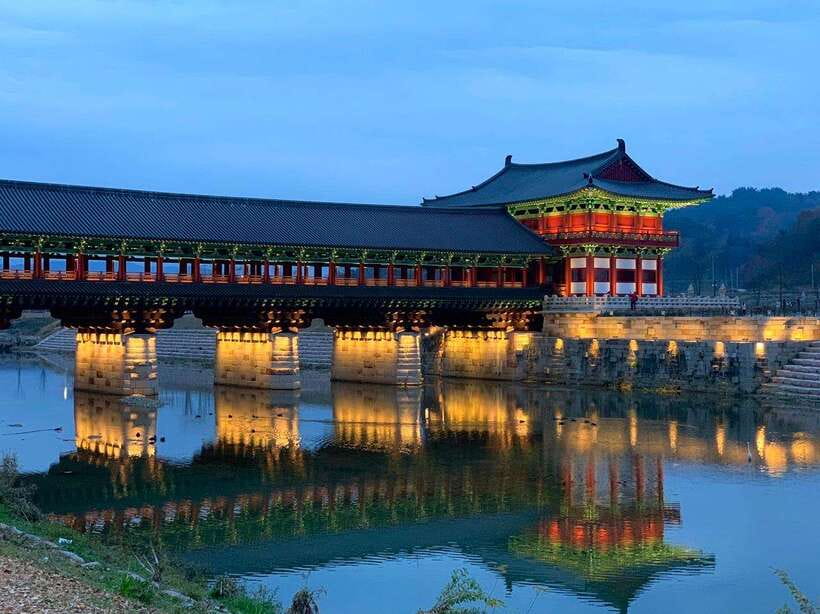
The final major sight is Donggung Palace and Wolji Pond, also known as Anapji Pond. You spend about one hour sightseeing and taking photographs around the palace grounds.
The appeal comes from reflection. Palace buildings and trees appear in the calm water, creating one of Gyeongju’s most polished views. Your guide explains that the palace was built during the Unified Silla period, when Gyeongju served as the center of a united Korean kingdom.
This stop often feels more atmospheric than instructional. After a day of temples, tombs, and village homes, the pond gives you a composed final image of Silla court life. The name Donggung refers to an eastern palace, and the pond was part of a royal complex used for court gatherings and entertainment.
The one-hour visit is long enough to appreciate the grounds, but crowds can affect the experience. One booking specifically noted that busy conditions made it difficult to enjoy the sites fully. Go in expecting attractive views and a shared public space, not quiet solitude.
Transport, guides, and the value of $60
At $60 per person, the tour offers solid value if you want to cover several Gyeongju sights in one day. The price includes transport from a designated Busan meeting point, entry to the attractions visited, and a live English guide. Food, drinks, travel insurance, and personal spending are extra.
The value rests mainly in the route. Bulguksa is not simply next door to every other stop, and the long day includes a fair amount of road time. A comfortable, spacious van or bus makes the transfer easier than piecing together separate taxis or public transport connections.
The guide quality appears important to the experience. Bada is praised for an informative, entertaining style, while another booking highlights two friendly guides who explained the sites generously. That kind of commentary can turn a day of monuments into a connected story about the Three Kingdoms and Unified Silla.
There is one caution. A booking also mentions getting turned around during the drive. That did not erase the positive impression of the guides, but it shows why you should allow for a flexible day. Road time and route changes can make the return later than you hoped.
The overall rating is 4.1 from six reviews, which suggests a generally positive but not flawless experience. The recurring strengths are friendly guides, useful explanations, variety, and free time at some stops. The recurring concerns are crowds, a long day, and the possibility that some sights may feel less impressive if you prefer Busan’s urban energy.
Who will enjoy this Gyeongju day trip?
I would recommend it to a first-time visitor who wants a clear introduction to Gyeongju without renting a car or managing multiple connections. It also suits anyone who values historical explanation and prefers a guide to connect the sites.
You will likely enjoy it if you want:
- A broad overview of Silla and Unified Silla history
- Major attractions in one organized day
- Transport from and back to Busan
- A mix of temples, tombs, village homes, streets, and palace grounds
- Some free time without giving up a guided structure
I would hesitate if you dislike long coach days, crowded attractions, or fixed schedules. If you want to study Bulguksa in detail, linger at Daereungwon, or spend hours exploring Hwangridan-gil, an independent visit may give you more control.
The tour is not suitable for wheelchair users or people with mobility impairments. The combination of walking, historic grounds, and a full-day schedule makes that limitation important, not a footnote.
Useful planning advice for the 10-hour schedule
Confirm your exact meeting point because the pickup option can vary. The three listed locations are identified by map codes, and your booking choice determines which one applies. Arrive early enough to avoid starting the day in a rush.
Bring comfortable shoes and sunscreen. The tour runs in all weather, so rain protection is also sensible even though it is not specifically listed among the required items.
Keep cash or another payment method available for lunch, drinks, and personal expenses. Since the restaurant break is not prepaid, the $60 does not cover everything you will spend during the day.
Crowds are another reason to keep your expectations practical. Bulguksa, Daereungwon, and Donggung Palace are major sights, not private discoveries. The guide can help you understand what you are seeing, but no guide can remove the people from the photographs.
Free cancellation is available up to 24 hours before departure, and you can reserve now and pay later. Those terms help if your Busan plans are still shifting, but they do not change the basic commitment: this is a long day away from the city.
Should you book this Gyeongju tour?
Book it if you want the efficient version of Gyeongju: the main historical sights, a guide’s explanations, included admission, and transport from Busan. The best parts are the variety of the route and the friendly, entertaining guidance, especially if you are new to Korean history.
Skip it if your priority is a slow pace or deep time at one site. The day can run from late morning into the evening, and the final return may leave you worn out. At $60, it is a fair deal for coverage and convenience, but you are paying with time and flexibility.
For most first visits, I think the trade is worthwhile. You will see why Gyeongju is so closely tied to Korea’s ancient kingdoms, then return to Busan with a useful framework for understanding the country’s past.
FAQ
How long does the Gyeongju tour last?
The tour lasts 10 hours, including transportation between Busan and the Gyeongju attractions.
Where does the tour begin?
There are three designated starting locations in Busan. The meeting point can vary according to the option you book.
Where does the tour end?
Drop-off is provided at three Busan locations, identified as 5575+78, 427Q+GM, and 5356+G3. Your exact drop-off depends on the booked option.
Is transportation included?
Yes. Transportation from the designated Busan meeting point and return transportation are included.
Is food included in the price?
No. The tour includes a one-hour restaurant break, but food and drinks are not included.
What language is the guide?
The activity information confirms a live English-speaking guide. The inclusions also mention English and Chinese tour guide service, so check the selected option if Chinese guiding is important to you.
Is Bulguksa Temple included?
Yes. You spend about 70 minutes at Bulguksa Temple with a guided visit.
Is the tour suitable for wheelchair users?
No. The tour is listed as unsuitable for wheelchair users and people with mobility impairments.
What should I bring?
Bring comfortable shoes and sunscreen. The tour operates rain or shine, so you should also prepare for the weather.
More Historical Tours
- Echoes of Silla Gyeongju Historical Guided Day Tour from Busan
★ 5.0 · 14 reviews - UNESCO World Heritage Gyeongju & Busan Two-city Private Tour.
★ 5.0 · 7 reviews - Korean UNESCO World Heritage Tour including Gyeongju, Andong and Daegu(2N3D)
★ 5.0 · 3 reviews - Seoul: Evening Dark History, Folklore & Ghost Story Walking Tour
★ 5.0 · 593 reviews
More Historical Tours in Gyeongju
- From Busan: Echoes of Silla Gyeongju Historical Day Tour
★ 4.8 · 55 reviews - Gyeongju Historic Areas Day Tour with Sky Capsule from Busan
★ 5.0 · 18 reviews - From Busan: Gyeongju Historical Day Tour with Sky Capsule
★ 4.7 · 17 reviews - Gyeongju The UNESCO World heritage sites tour(Private tour)
★ 5.0 · 17 reviews
Just added around Busan
- Korean UNESCO World Heritage Tour including Gyeongju, Andong and Daegu(2N3D)★ 5.0 · 3 reviews
- Busan Bliss: Panoramic Yacht & Urban Exploration with Sky Capsule★ 5.0 · 3 reviews
- Busan day trip including Gamcheon culture village from Seoul by KTX train★ 5.0 · 3 reviews
- Busan Seafood Tour : Oyster village Tour with Oyster cuisines★ 5.0 · 3 reviews
- 1 Day Private Busan Guided Tour★ 4.5 · 3 reviews
- 2-DAYS Busan Customized and Included Night tour★ 5.0 · 3 reviews
- Full-Day Jinhae Cherry Blossom festival Private tour★ 5.0 · 3 reviews
- Busan Dialect Class with local snack★ 5.0 · 3 reviews
Gyeongju Heritage Tours, compared.

Gyeongju Guided Day Trip to Three Kingdoms Capital
Read our review →
Gyeongju UNESCO World Heritage Guided Day Tour
Read our review →
Gyeongju UNESCO World Heritage Guided Day Tour from Busan
Read our review →
Old Korea Thousand History Tour of Gyeongju from Busan
Read our review →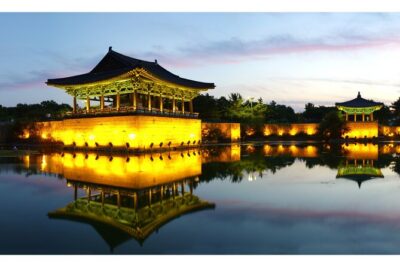
Gyeongju UNESCO sites Private tour with licensed tour guide
Read our review →
Private Gyeongju Tour – Explore Gyeongju UNESCO Sites
Read our review →
Gyeongju UNESCO Legacy Tour with National Museum
Read our review →
UNESCO Heritage Tour Including Bulguksa Temple
Read our review →Browse the lists this tour appears in