
Reviewed · TEMPLE & BUDDHIST HERITAGE
From Daegu: Gyeongju UNESCO Tour 7 Highlights with Bulguksa
Ancient Korea fits surprisingly well into one day. This 10-hour Gyeongju tour links Bulguksa Temple, royal tombs, palace ruins, old bridges, and a traditional neighborhood without making you plan a complicated route. I like the thoughtful mix of major sights and the option to finish in Busan. I also like that entrance fees and transport from Daegu are included. The main consideration is guide quality: one English-speaking guide received criticism for limited fluency and thin explanations, while the driver was praised for being punctual and caring.
You begin with pickup in Daegu between 10:30 and 11:00 AM, then follow a full circuit through Gyeongju before returning to Daegu or continuing to Busan. The day is well suited to you if time is short, but the schedule is full. Lunch is not included, and the food stop can feel less organized when several groups arrive together.
In This Review
- Key points at a glance
- Why Gyeongju works so well as a day trip from Daegu
- Pickup in Daegu and the value of a planned route
- Bulguksa Temple: the essential first stop
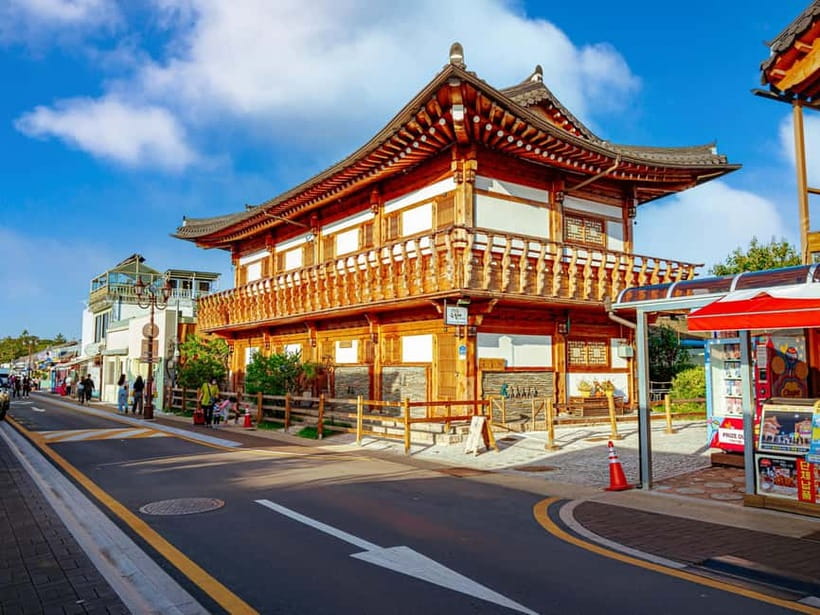
- Gyeongju Gyochon Traditional Village and Woljeonggyo Bridge
- Daereungwon Tomb Complex and the grassy royal mounds
- Hwangnidan-gil: the evening food stop
- Donggung Palace and Wolji Pond after dark
- Returning to Daegu or continuing to Busan
- English, Chinese, and guide quality
- Is $80 a fair price?
- Who should book this Gyeongju day tour?
- Should you book it?
- FAQ
- How long does the Gyeongju tour last?
- Where can I be picked up in Daegu?
- What time is pickup?
- Which languages are available?
- Is Bulguksa Temple included?
- Are meals included in the price?
- Can I finish the tour in Busan?
- Which other places are visited?
- Is the tour private or shared?
- Can I cancel for a full refund?
Key points at a glance
- Bulguksa sets the tone: Spend about 80 minutes at Korea’s famous UNESCO-listed Buddhist temple.
- Seven major stops fit into one route: You visit Bulguksa, Gyeongju Gyochon, Woljeonggyo Bridge, Daereungwon, Hwangnidan-gil, and Donggung Palace with Wolji Pond.
- The Busan drop-off adds real value: You can avoid returning to Daegu if Busan is your next stop.
- The schedule mixes monuments and street life: Hwangnidan-gil gives you time for dinner and a change of pace.
- Transport is the practical strength: Pickup and drop-off are arranged, with private and small-group choices available.
- English service may vary: Communication through WhatsApp, KakaoTalk, WeChat, or Viber helps, but detailed guiding is not guaranteed.
Why Gyeongju works so well as a day trip from Daegu
Gyeongju was the ancient capital of the Silla kingdom, and this route gives you a useful introduction to its most important sights. You are not spending the whole day at one archaeological site. Instead, you move between temples, tombs, palace grounds, a traditional village, a historic bridge, and a modern dining street.
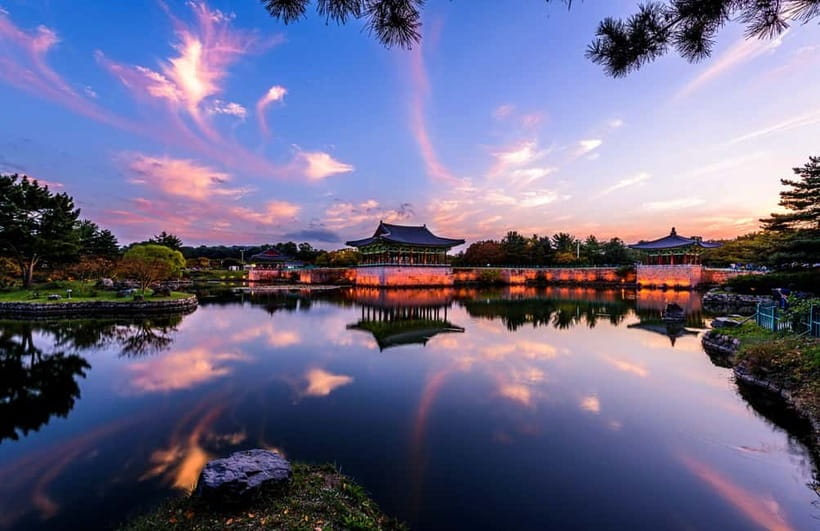
That variety matters. Bulguksa shows the religious and artistic side of old Korea. Daereungwon brings you close to royal burial customs. Donggung Palace and Wolji Pond offer a more polished royal setting, especially when the pond reflects the buildings. Hwangnidan-gil then brings the day into the present with restaurants and shops.
I see this as a strong choice if you are based in Daegu and do not want to arrange several local buses, taxi rides, and admission tickets. The $80 price is not simply paying for a vehicle. It also covers entrance fees, a guide, route planning, and the possibility of a one-way finish in Busan.
Still, you should know what this is not. It is not a slow, scholarly tour with long talks at every monument. The schedule gives each stop a set amount of time, and the quality of explanation may depend on the guide assigned to your group.
More temple visits:
- Gyeongju: UNESCO Heritage Tour Including Bulguksa Temple
★ 4.8 · 104 reviews - Seoul: Mt Seorak + Naksansa Temple or Nami Island Group Tour
★ 4.7 · 422 reviews - Best Things to Do – Half Day Seoul Trip (Seoul Palace & Temple)
★ 5.0 · 190 reviews
Pickup in Daegu and the value of a planned route
There are three listed pickup choices: Banwoldang Station, the first parking area at Dongdaegu, and Daegu. Your exact meeting point and drop-off choice need to be specified during booking. Pickup is scheduled between 10:30 and 11:00 AM, and the guide contacts you the day before.
That message is important. Check your preferred messaging app, including KakaoTalk, WhatsApp, WeChat, or Viber, so you do not miss the meeting details. A past booking found WhatsApp contact especially useful.
The transport arrangement is one of the tour’s best features. Gyeongju’s sights are spread out, so a private vehicle or small-group vehicle saves time and removes much of the guesswork. The driver also received especially strong praise for arriving on time and taking good care of passengers.
You can choose a shared or private format. The supplied information does not give a fixed maximum group size, so ask about the exact group arrangement if personal space matters to you. A private tour should give you more control, but the shared option is likely the better value if you mainly want efficient sightseeing.
Bulguksa Temple: the essential first stop
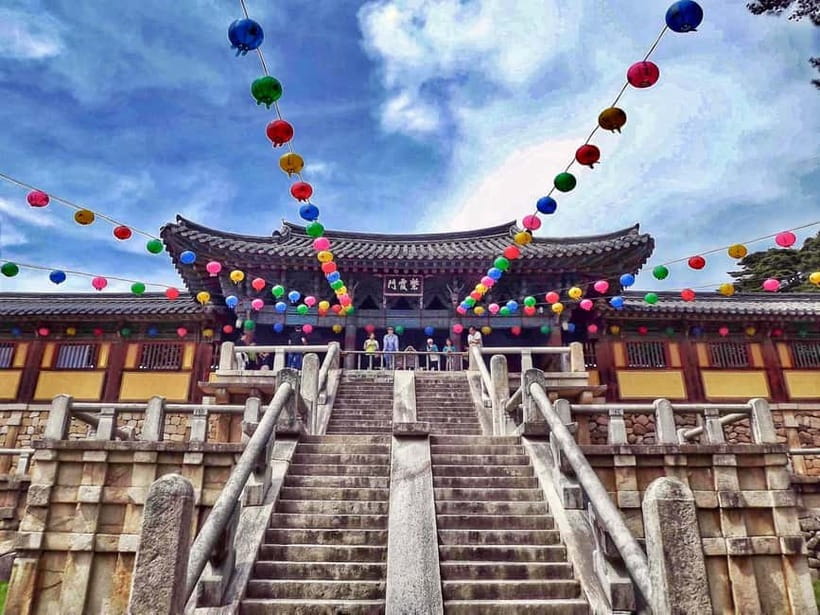
The day begins at Bulguksa Temple, with about 80 minutes for guided sightseeing. This is the most obvious headline stop, and rightly so. The temple is UNESCO listed and known as a major work of Korean Buddhist architecture and art.
I would use your time here to look closely rather than simply take a few photographs and move on. Notice the stone steps, gateways, wooden buildings, and the way the temple grounds are arranged across the hillside. Even if your guide gives only a short explanation, the site has enough visual detail to reward careful attention.
Eighty minutes is a sensible but limited allowance. You should have time to see the main areas and take photographs, but not to study every corner. Wear shoes you can walk in comfortably, since the visit involves moving around temple grounds rather than remaining in one flat indoor space.
The temple is also a good test of the guide service. A strong guide can explain why the architecture matters and connect the site to Korea’s Buddhist past. If the explanation is brief or difficult to follow in English, you may need to rely more on the signs or your own preparation.
Gyeongju Gyochon Traditional Village and Woljeonggyo Bridge
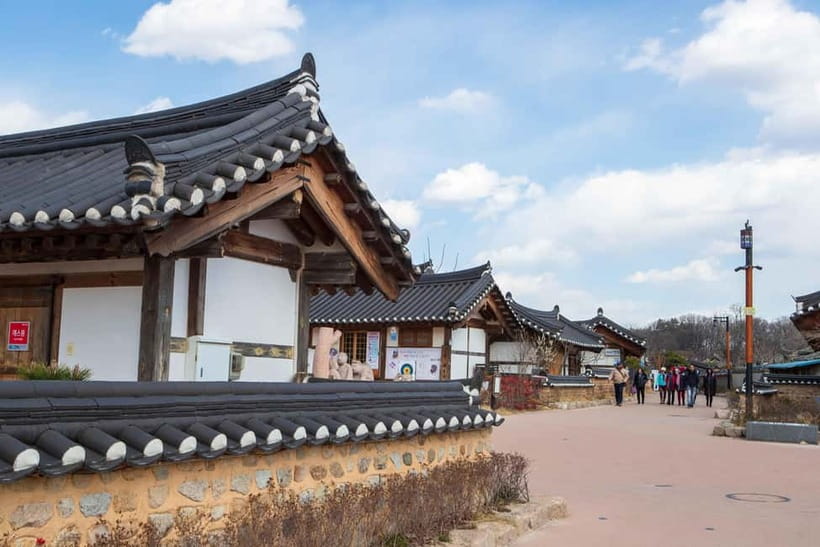
The next part of the route moves to Gyeongju Gyochon Traditional Village for about an hour. This changes the mood after Bulguksa. Instead of a major religious monument, you get a closer look at traditional Korean village scenery and the setting around old Gyeongju.
The hour gives you enough time to walk, look around, and take photographs without rushing through in a few minutes. I like this inclusion because it helps connect the grand sites with everyday traditional architecture. It is a calmer stop and may be especially welcome before the more crowded parts of the day.
From there, you visit Woljeonggyo Bridge for another hour. The bridge is one of the most photogenic parts of the route, with traditional Korean styling and a strong visual presence. You can expect this stop to focus on views and photographs, though the guide may also explain its place in Gyeongju’s old royal setting.
The one-hour allocation is generous for a bridge visit, which gives you room to see it from different angles. It also keeps the day from becoming a frantic checklist. Bring a camera, but do not expect every stop to function as a long formal lesson.
More Gyeongju trips:
- Busan: Gyeongju Guided Day Trip to Three Kingdoms Capital
★ 4.8 · 1,925 reviews - From Busan: Gyeongju UNESCO World Heritage Guided Day Tour
★ 4.8 · 1,250 reviews - Gyeongju UNESCO World Heritage Guided Day Tour from Busan
★ 5.0 · 660 reviews - Old Korea Thousand History Tour of Gyeongju from Busan
★ 5.0 · 518 reviews
Daereungwon Tomb Complex and the grassy royal mounds
Daereungwon Tomb Complex is scheduled for about an hour. Here, large grassy burial mounds rise across open ground, marking the resting places of ancient kings and queens.
The tombs look simple at first. Their smooth, rounded shapes do not resemble the stone mausoleums you may know from other countries. That simplicity is part of the appeal. You can walk among the mounds and see how burial sites shape the modern city’s sense of place.
This stop gives the tour a useful change in scale. Bulguksa is detailed and architectural, while Daereungwon is spacious and quiet in appearance. The tombs also help you picture Gyeongju as an ancient capital, not just a collection of separate attractions.
An hour should be enough for a clear visit. If you want a long museum stop or detailed archaeological study, the timed tour may feel short. For a first introduction, though, it offers a solid look at one of Gyeongju’s most recognizable settings.
Hwangnidan-gil: the evening food stop
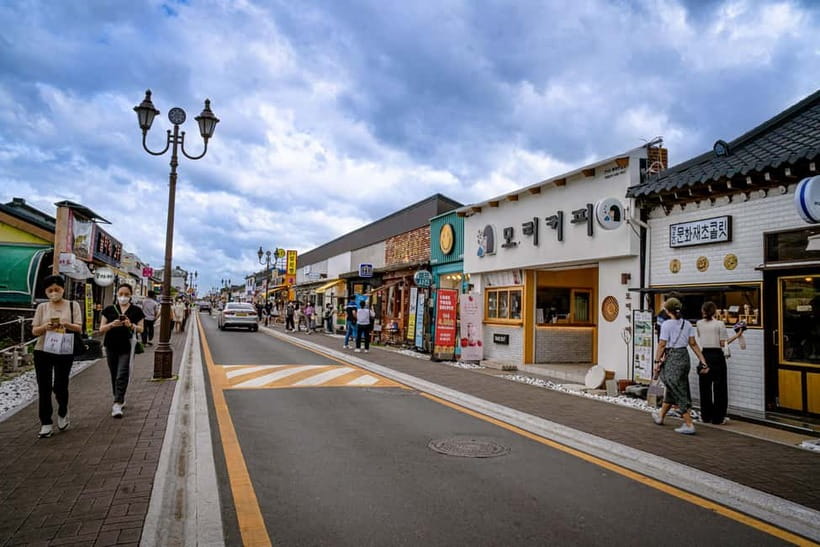
The route then reaches Hwangnidan-gil for about 90 minutes, including dinner time and guided sightseeing. This is where the tour shifts from royal remains to present-day Gyeongju.
Your meal is not included in the $80 price, so plan to pay for food separately. The food portion is a genuine cultural chance, not just a break between monuments. You might find Korean dishes that are unfamiliar, and it is reasonable to ask your guide for help choosing or preparing them.
One useful warning comes from the organization of this stop. When several groups share the same dining arrangement, seating or service can feel uneven, even if you arrive early. The food experience may require patience, and you should not assume the guide will provide detailed help with every dish.
The 90 minutes also needs to cover sightseeing, so this is not a long restaurant evening. If you want a relaxed dinner, keep your expectations modest. If you see the stop as a chance to eat something local and sample the street atmosphere, it fits the day well.
I would ask directly about the restaurant plan once the guide contacts you. That can help you understand whether you will choose your own meal or join a group arrangement. The information provided confirms dinner time but does not include a meal or promise a specific restaurant.
Donggung Palace and Wolji Pond after dark
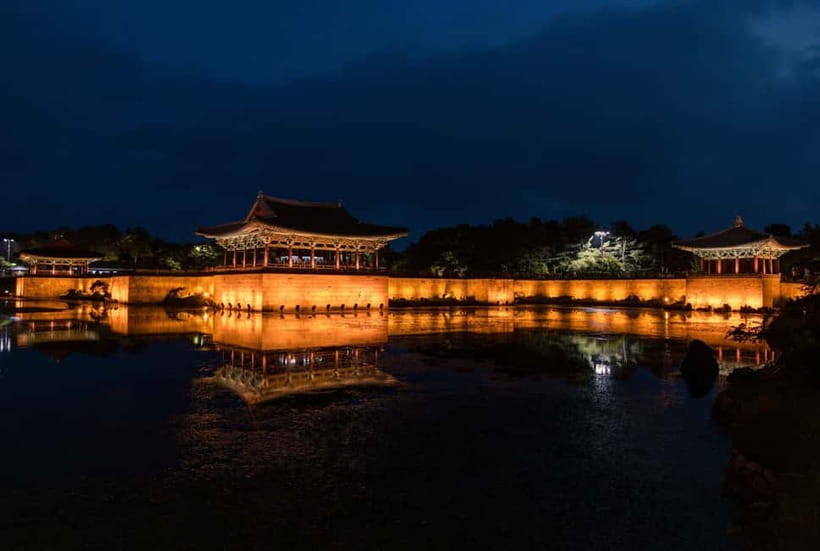
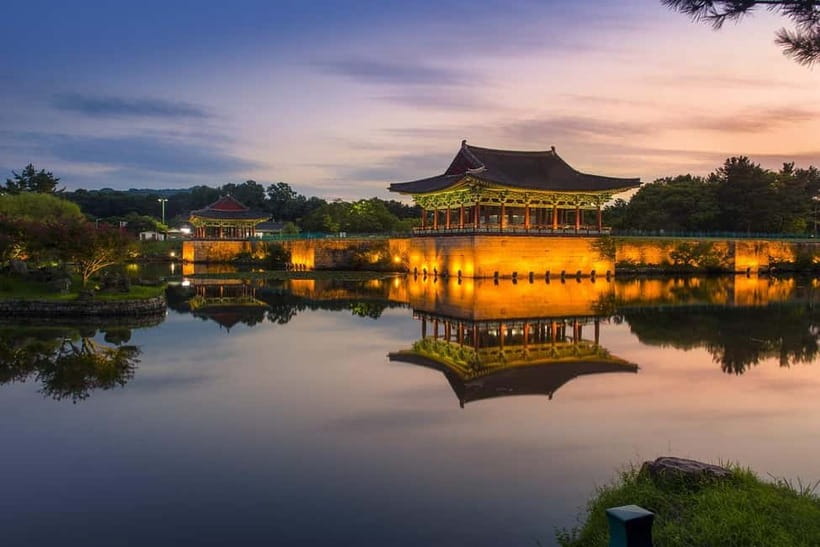
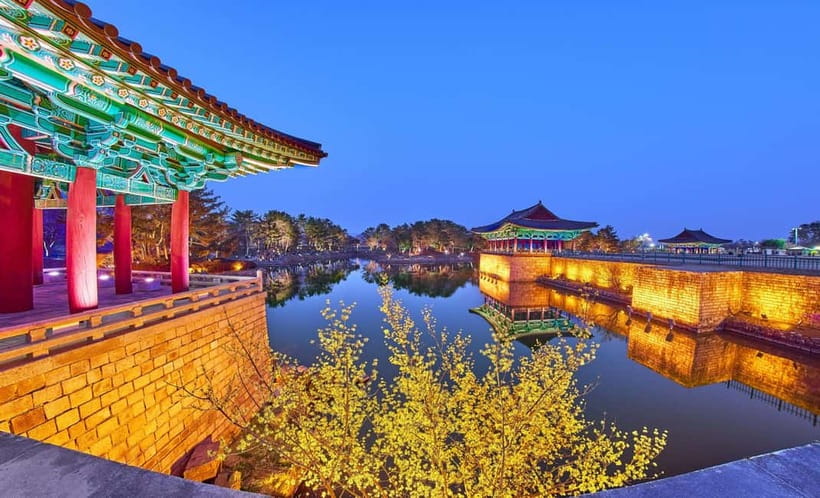
The final major sightseeing stop is Donggung Palace and Wolji Pond, with about 40 minutes. This site once served as a royal villa, and the pond gives the grounds their strongest visual feature.
The shorter visit makes sense because the site is compact compared with the broader temple and tomb areas. You can focus on the palace buildings, their reflections, and the atmosphere around the water. Depending on the exact timing of the day, the setting may be especially attractive as daylight fades, though the tour information does not guarantee a particular lighting condition.
Forty minutes is enough for a focused visit, but you will need to keep moving. If you enjoy photography, prepare your camera before arrival rather than spending the first part of the stop adjusting settings.
This is a pleasing final sight because it feels different from Bulguksa and Daereungwon. The temple introduces Buddhist architecture, the tombs show royal burial tradition, and Wolji Pond presents a refined palace setting. Together, they give you three distinct views of old Korea in one day.
Returning to Daegu or continuing to Busan
At the end of the tour, you can choose among five listed drop-off locations: Banwoldang Station, Busan, Daegu, Busan Station, and the first parking area at Dongdaegu.
The Busan option may be the tour’s biggest practical advantage. If your trip is moving south, you can turn a sightseeing day into a transfer day and avoid paying for a separate return journey to Daegu. Make sure you clearly state your preferred drop-off place and time when booking.
The information does not specify the exact arrival time, and traffic can affect a 10-hour route. I would avoid scheduling a tight Busan reservation immediately after the tour. A flexible evening plan is safer.
If you are returning to Daegu, the tour still works well as a full-day outing. The several pickup and drop-off points make it easier to match the tour with your accommodation or onward transport, although you must select the correct point in advance.
English, Chinese, and guide quality
The tour offers live guiding in English and Chinese. That is helpful for a route built around historical sites, since the setting alone cannot explain every monument.
Guide performance may vary. One English-language booking praised the driver but found the guide’s English less fluent and the explanations too limited. That is the clearest weakness in the experience. You should book this tour for access and structure first, and treat the guiding as an important benefit that may not be equally strong every time.
If historical explanation is your main reason for booking, prepare a little before departure. Knowing the basic story of Bulguksa, Silla-era Gyeongju, royal tombs, and Donggung Palace will help you get more from the sites even if the commentary is brief.
The driver service appears to be more reliable than the interpretation service. Punctual pickup and caring transport matter on a long day, especially when you are moving between several locations. The day is easier when you do not have to worry about finding the next bus or negotiating each transfer.
Is $80 a fair price?
At $80 per person, the tour offers reasonable value if you want to see the major Gyeongju sights from Daegu in one day. Entrance fees are included, along with transport from Daegu and the guided visits. You are also paying for a route that would take more effort to arrange independently.
The Busan drop-off improves the value for people continuing south. It can save both time and the cost of returning to Daegu before taking another train or bus.
The price is less attractive if you want a slow visit, a substantial included meal, or detailed academic commentary. Meals and personal expenses are extra, and the schedule gives you a broad introduction rather than long stays at every location.
Private and small-group formats are available, but the supplied information does not state their exact prices. Check the selected option carefully before paying. The shared tour should suit budget-minded visitors, while a private option may be worth considering if you care about flexibility or have a very specific transport plan.
Who should book this Gyeongju day tour?
I would recommend it to you if you are staying in Daegu, have only one day for Gyeongju, and want the main sights handled in one organized route. It is also a smart fit if Busan is your next base and you can use the final drop-off.
You will probably enjoy it most if you like variety. The day includes temple architecture, royal tombs, palace scenery, a traditional village, a bridge, and time for local food. You get a broad picture of Gyeongju rather than one narrow theme.
It may not suit you if you dislike fixed schedules or want to spend half a day at Bulguksa alone. It is also not the best match if you require highly detailed English interpretation at every stop. The tour has a good structure, but the guide’s language ability can affect how much history you receive.
Free cancellation is available up to 24 hours before departure, and you can reserve now and pay later. Those terms help if your Daegu or Busan plans are still changing. Still, confirm the pickup, drop-off, language, and tour type before booking.
Should you book it?
Book this tour if convenience matters and you want a strong first look at Gyeongju without building the route yourself. Bulguksa, Daereungwon, Wolji Pond, and Woljeonggyo Bridge give you the essential visual highlights, while Gyochon Village and Hwangnidan-gil add variety.
I would be more cautious if your priority is expert historical commentary or a relaxed meal. In that case, ask about the guide language and dining arrangements before committing. For most visitors based in Daegu, though, the combination of included transport, entrance fees, seven major stops, and a possible Busan finish makes this a useful and fairly priced day out.
FAQ
How long does the Gyeongju tour last?
The tour lasts 10 hours.
Where can I be picked up in Daegu?
Pickup choices include Banwoldang Station, the first parking area at Dongdaegu, and Daegu.
What time is pickup?
Pickup is scheduled between 10:30 AM and 11:00 AM.
Which languages are available?
Live guiding is available in English and Chinese.
Is Bulguksa Temple included?
Yes. The tour includes admission and a visit to Bulguksa Temple, with about 80 minutes for guided sightseeing.
Are meals included in the price?
No. Meals are not included, and personal expenses are also excluded.
Can I finish the tour in Busan?
Yes. You can choose a Busan drop-off, including Busan Station, if you specify it during booking.
Which other places are visited?
The route includes Gyeongju Gyochon Traditional Village, Woljeonggyo Bridge, Daereungwon Tomb Complex, Hwangnidan-gil, and Donggung Palace with Wolji Pond.
Is the tour private or shared?
You can choose a private or small-group option, with shared tour choices also available.
Can I cancel for a full refund?
Yes. You can cancel up to 24 hours in advance for a full refund.
Just added around Gyeongju
- 7 Day Essential Korea Tour(Seoul, Nami, DMZ, Andong, Gyeongju, Busan_Meal Incl.)★ 5.0 · 3 reviews
- Korean UNESCO World Heritage Tour including Gyeongju, Andong and Daegu(2N3D)★ 5.0 · 3 reviews
- From Busan: Gyeongju Small Group Photo Tour & Hotel Pick-up★ 5.0 · 3 reviews
- Full Day Busan and Gyeongju Guided Tour★ 5.0 · 4 reviews
- Gyeongju private tour with an official tour guide (Unesco)★ 4.5 · 4 reviews
- UNESCO Listed Historic Sites in Gyeongju National Park★ 5.0 · 5 reviews
- Full Day Private car tour to UNESCO Gyeongju&Yangdong village★ 5.0 · 5 reviews
- From Busan: Busan & Gyeongju One Day Tour★ 5.0 · 5 reviews
Temple & Buddhist Heritage, compared.
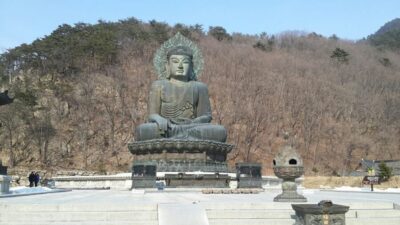
Mt Seorak + Naksansa Temple or Nami Island Group Tour
Read our review →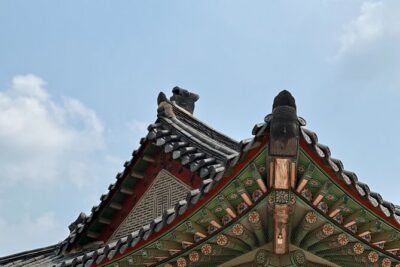
Best Things to Do – Half Day Seoul Trip (Seoul Palace & Temple)
Read our review →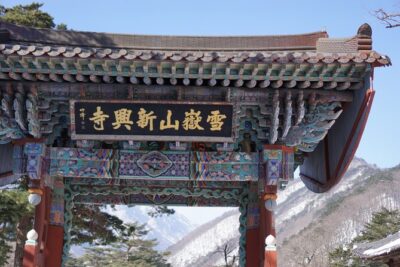
Mount Seorak and Naksansa Temple One Day Tour from Seoul
Read our review →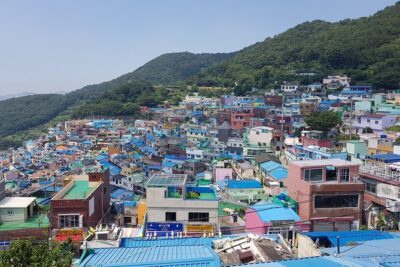
Busan Tour: Gamcheon Village & Haedong Yonggungsa Temple + Lunch
Read our review →
UNESCO Heritage Tour Including Bulguksa Temple
Read our review →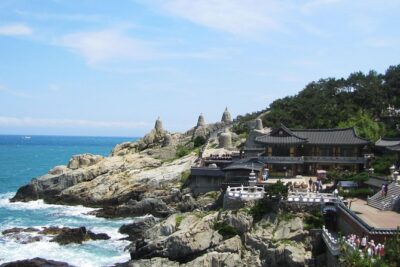
Full Day Busan Tour Including Haedong Yonggungsa Temple
Read our review →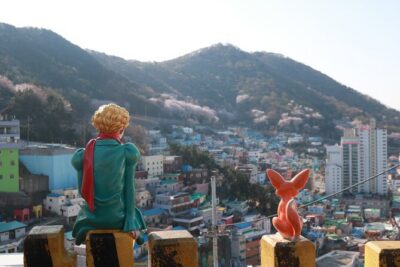
Private Busan tour with gamcheon culture village and the temple (Customizable)
Read our review →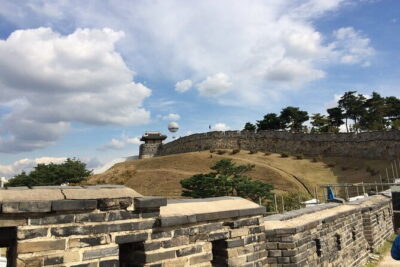
Day Tour of Suwon Hwaseong Fortress Starfield Waujeongsa Temple
Read our review →Browse the lists this tour appears in