
Reviewed · GYEONGJU HERITAGE TOURS
From Busan: Busan & Gyeongju One Day Tour
Two cities, one very full day. This Busan and Gyeongju tour links colorful Gamcheon Culture Village, ancient Silla sites, and the Cheongsapo coast in one well-packed outing. I like the small group of no more than eight people, and I like the mix of famous sights with time to walk, browse, and take photos. The drawback is clear: ten to eleven hours is a long day, with several hours spent in the van.
The strongest praise goes to the guides. Zoe was warm, funny, and attentive, while Bada, also written as Pada in one review, earned special praise for clear explanations and taking excellent couple photos. The tour requires at least four people to run, and it is not suitable for people with mobility impairments.
In This Review
- What makes this Busan and Gyeongju day worthwhile
- Why this route works for a first visit
- Gamcheon Culture Village and Busan’s wartime story
- The long ride to Gyeongju
- Daereungwon and the royal tombs of Silla
- Hwangnidan-gil for food, shops, and a modern Gyeongju
- Cheomseongdae and the Silla capital
- Woljeonggyo Bridge after dark-era Gyeongju
- Gyochon Traditional Village and the quieter side of the city
- Cheongsapo and the Haeundae Blue Line scenery
- What the $84 price really covers
- Guide quality and the small-group advantage
- Who should book this tour
- Should you book it?
- FAQ
- How long does the Busan and Gyeongju tour last?
- Where does the tour start?
- Where does the tour finish?
- Is transportation included?
- Is an English-speaking guide included?
- How large is the group?
- Is lunch included?
- Can people with mobility impairments join?
- What happens if the tour does not have enough participants?
What makes this Busan and Gyeongju day worthwhile
- Gamcheon begins the day with color and context: Learn how a Korean War refugee settlement became one of Busan’s best-known cultural areas.
- Gyeongju packs Silla-era landmarks into one walking route: See Daereungwon, Cheomseongdae, Hwangnidan-gil, Woljeonggyo Bridge, and Gyochon Village.
- Hwangnidan-gil gives you lunch and local browsing time: This is the least formal part of the day, with room to eat and explore at your own pace.
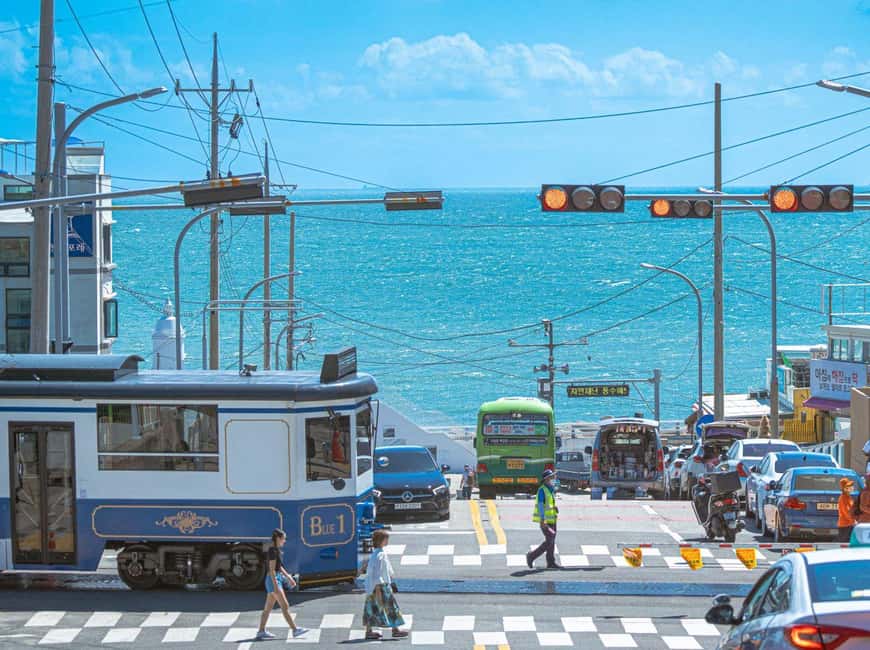
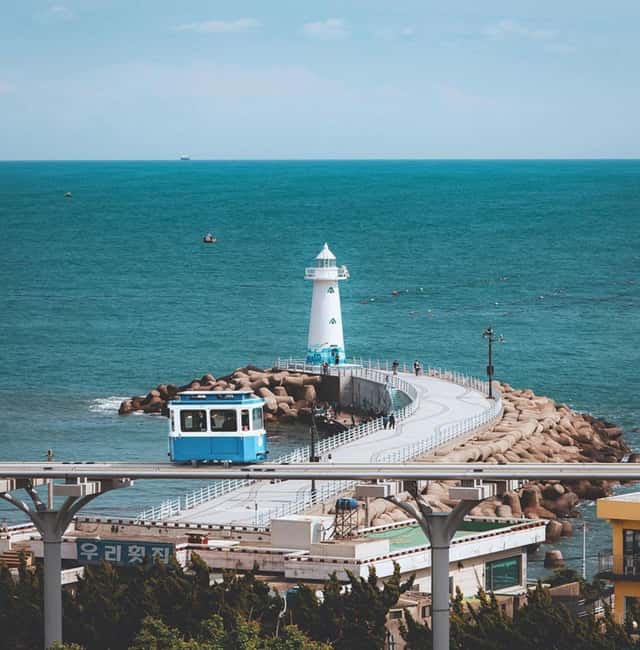
- Cheongsapo adds a coastal finish: At Haeundae Blue Line Park, you can photograph the railway, sea, Sky Capsule, and nearby buildings together.
- A small van group keeps the day manageable: With a maximum of eight people, the guide can offer more personal help than on a large coach tour.
- The $84 price covers the main practical pieces: Admission, an English-speaking guide, and round-trip transport from Busan are included, while food and drinks are extra.
Why this route works for a first visit
Busan and Gyeongju feel quite different. Busan is a modern port city with steep neighborhoods, beaches, rail lines, and creative districts. Gyeongju was the capital of the Silla kingdom, and its central sights are spread through a calmer city of tombs, traditional homes, bridges, and archaeological remains.
Doing both in one day is not slow travel. You will not have time to study every museum or linger at each site for hours. But if your Busan schedule is tight, this route gives you a useful first look at two major sides of southeastern Korea.
The small-group format matters here. A van can move between the stops more easily than a large bus, and eight people is a workable number for a guide handling questions, photos, and timing. You still need to accept a brisk pace, especially because the trip includes long transfers between Busan and Gyeongju.
The day starts at either KTX Busan Station Exit 1 or Seomyeon Station Exit 12. The exact meeting point depends on the option you choose, so check it carefully before leaving your accommodation.
More Day Trips in Busan
- Busan: Gyeongju Guided Day Trip to Three Kingdoms Capital
★ 4.8 · 1,925 reviews - 7 Highlights Gyeongju City One Day Small Group Tour from Busan
★ 5.0 · 24 reviews - Busan: 7 Highlights Gyeongju City One Day Tour
★ 4.9 · 10 reviews
Gamcheon Culture Village and Busan’s wartime story
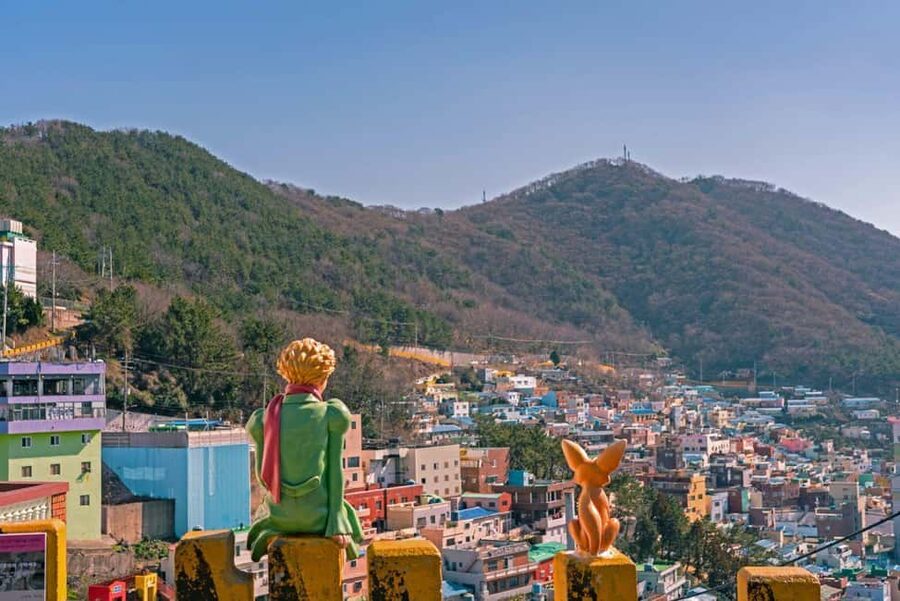
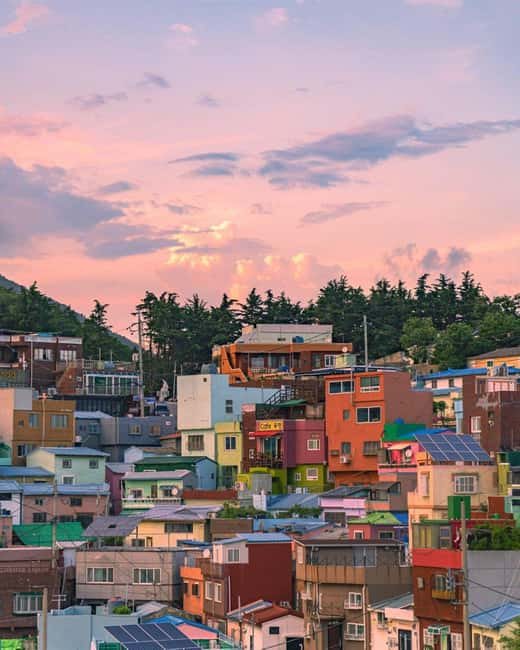
The first sightseeing stop is Gamcheon Culture Village, about 30 minutes from the meeting point. Its painted buildings, murals, sculptures, and hillside lanes make it one of the easiest places in Busan to recognize in photographs.
The nickname Santorini of Korea points to the stacked, colorful appearance, but the more important story is its origin. Refugees lived here during the Korean War, and the area was later decorated and developed as a tourist destination while preserving the old town.
That background gives the visit more weight than a simple photo stop. I like that the guide can connect the bright colors and public art to Busan’s difficult modern past. Without that context, it is easy to see only a pretty hillside and miss why the village matters.
You get about an hour here for a guided visit, photographs, walking, free time, and some shopping. That is enough for a useful introduction, though not enough for a slow exploration of every lane. Wear shoes that feel secure, since this is an old hillside neighborhood and the tour is not designed for people with mobility impairments.
The long ride to Gyeongju
After Gamcheon, the van travels for roughly 90 minutes to Gyeongju. This is one of the tour’s practical tradeoffs. You gain the convenience of door-to-door group transport, but the day includes around three hours of driving in total, depending on traffic and the exact route.
The transfer is worthwhile if you want to see Gyeongju without arranging a separate train or local transport plan. It is less appealing if you dislike long day trips or prefer to spend a whole day in one city.
A small group can make the ride more comfortable than a large coach, but the schedule remains full. Bring water, keep lunch expectations flexible, and use each stop well. Meals and beverages are not included.
Daereungwon and the royal tombs of Silla
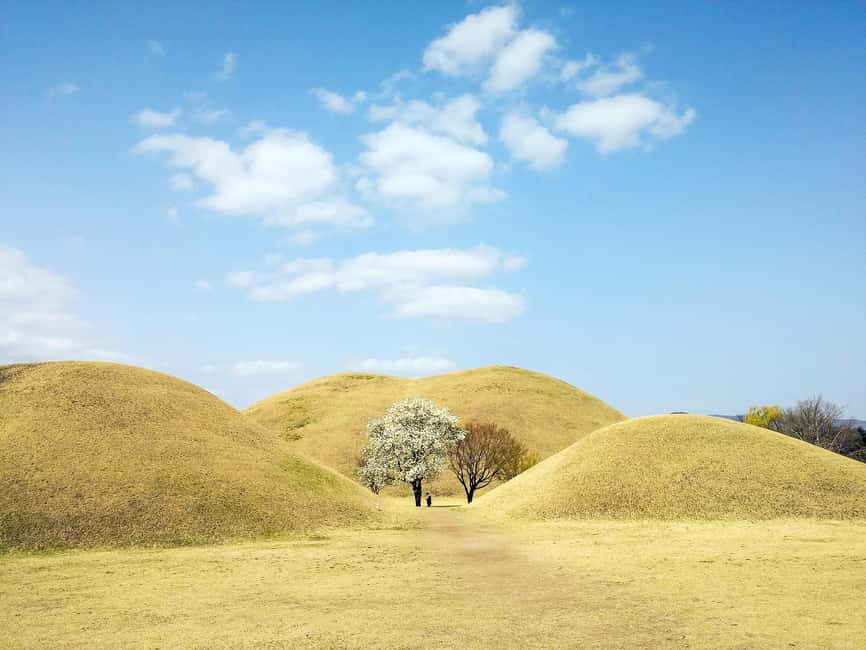
Gyeongju begins with Daereungwon Tomb Complex, where rounded royal burial mounds rise above open grass. You get about an hour for a guided visit, photographs, walking, and free time.
These tombs are a strong introduction to Silla because the remains are easy to understand at a glance. You are not looking at a reconstructed palace or a modern museum display. The large earth mounds show how royal burial traditions shaped the city’s appearance.
The stop is also a welcome change after the van ride. The grounds offer space to walk and take in the scale of the tombs, while the guide can explain the period that made Gyeongju the capital of one of Korea’s Three Kingdoms.
You should not expect a long archaeological presentation. The time is limited, and the tour continues through several other major sites. Still, Daereungwon gives you a clear sense of why Gyeongju is often treated as an outdoor history center.
More day trips:
- Busan: Winter Healing Park and (Gyeongju/Daegu) One Day Tour
★ 5.0 · 5 reviews - Mt. Seorak+Nami Island+Garden of Morning Calm Day Trip from Seoul
★ 5.0 · 959 reviews - Seoul: Gangwon-do Day Trip with Alpaca World & Nami Island
★ 4.7 · 581 reviews - Day Trip to Nami Island with Rail bike and The Garden of Morning Calm
★ 4.5 · 459 reviews
Hwangnidan-gil for food, shops, and a modern Gyeongju
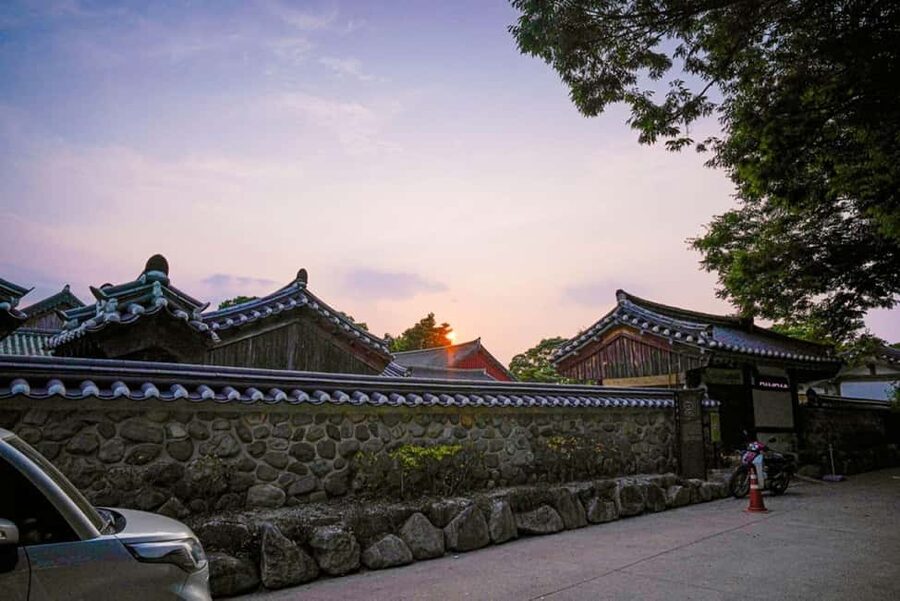
Next comes Hwangnidan-gil, with about 100 minutes listed for sightseeing, walking, shopping, photographs, and a guided visit. A 30-minute lunch break is also scheduled here, making this the main chance to buy your own meal.
Hwangnidan-gil is useful because it keeps the day from becoming a string of ancient sites. The area brings traditional-style streets, food, cafés, and shops into the route, giving you a look at how Gyeongju presents its past in a modern setting.
The lunch period is short, so do not plan an elaborate meal. You will need to choose something efficiently, especially if you want time to browse. Since food is not included, the cost of lunch comes on top of the $84 tour price.
I like this part of the schedule because you get some freedom. The guide provides structure, but you are not required to spend every minute listening. You can use the break to eat, shop, or simply slow down before the next cluster of landmarks.
Cheomseongdae and the Silla capital
Cheomseongdae is included among the Gyeongju sights visited during the day. This ancient astronomical observatory is one of the city’s best-known landmarks and fits naturally with the tour’s focus on Silla’s capital.
The stop helps explain that Silla was not simply a kingdom of tombs and temples. Its rulers also supported science, administration, and organized urban life. You will have time for photographs and a guided explanation, but the exact amount of time at Cheomseongdae is folded into the Gyeongju sightseeing schedule rather than presented as a separate long stop.
This is a good place to listen closely to the guide. A skilled explanation can turn a compact stone structure into a useful clue about how Silla society worked. Guides Zoe, Bada, and Pada received especially warm praise for making historical information easy to follow and keeping the mood relaxed.
Woljeonggyo Bridge after dark-era Gyeongju
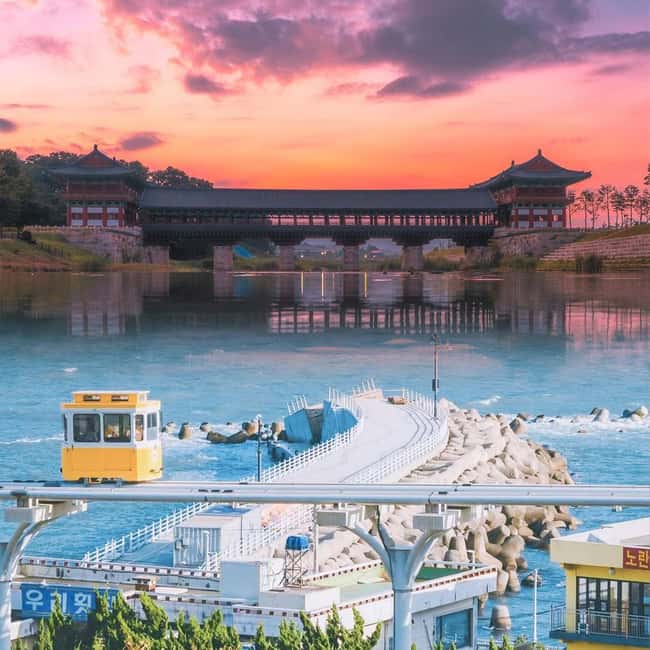
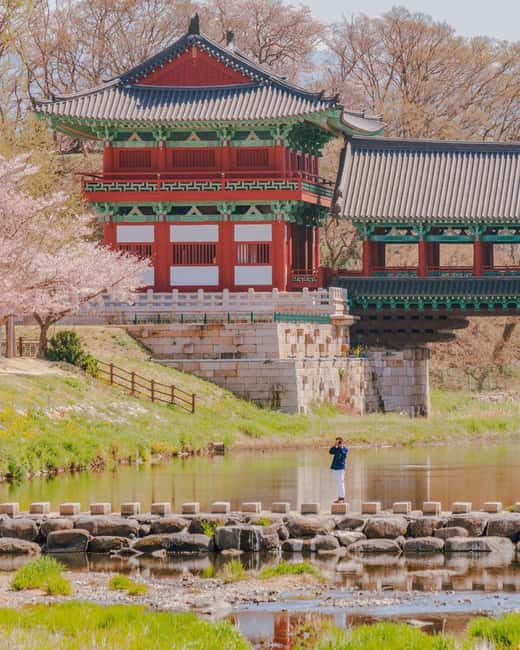
The route continues to Woljeonggyo Bridge, with about 40 minutes for a visit, photos, walking, and free time. The bridge is a reconstructed wooden crossing associated with the Silla period, and its layered rooflines make it one of the most photogenic stops in Gyeongju.
This visit works best as a visual pause. After the tombs and historical explanations, the bridge gives you a strong architectural image of old Gyeongju. Forty minutes should allow time to see it without turning the stop into a rushed dash.
The tour does not promise a particular lighting condition or special evening program, so treat it as a planned sightseeing stop rather than a night photography outing. Your guide’s explanation helps connect the bridge to the city’s former capital, while free time lets you choose your own photos.
Gyochon Traditional Village and the quieter side of the city
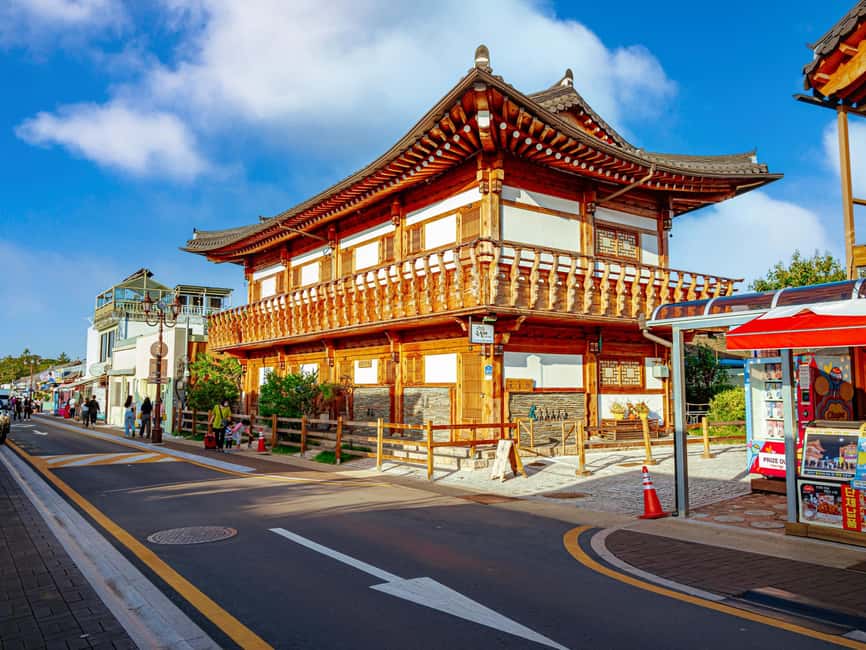
Gyeongju Gyochon Traditional Village follows Woljeonggyo Bridge, with another 40 minutes for walking, photographs, guided sightseeing, and free time. This area offers traditional homes and a more residential, village-like setting than Hwangnidan-gil.
The value here is contrast. Daereungwon shows royal burial grounds, Hwangnidan-gil shows the current visitor scene, and Gyochon Village gives you a closer look at traditional Korean architecture and neighborhood scale.
Forty minutes is enough for an introduction, not a complete study of every building. If you enjoy historic homes and quieter streets, this may be one of your favorite stops. If you want more time inside individual houses, you may find the schedule too tight.
Together, the Gyeongju portion covers a lot: royal tombs, an ancient observatory, traditional homes, a historic bridge, a modern food and shopping street, and the broader story of the Three Kingdoms period. That range is the main reason to choose this tour instead of a simple point-to-point transfer.
Cheongsapo and the Haeundae Blue Line scenery
After roughly 90 minutes back toward Busan, the final major stop is Haeundae Blue Line Park at Cheongsapo Station. You get about an hour for photographs, walking, free time, shopping, and a guided visit.
Cheongsapo is known for a particularly busy-looking Busan view: the sea, railway tracks, the Sky Capsule, buildings, and sometimes a passing train can all fit into one photograph. The appeal is not only the coast. It is the way modern transport and seaside scenery share the same frame.
The tour description says you can see the train passing with Haeundae Beach behind it. A passing train is never guaranteed at the exact moment you arrive, so keep expectations practical. You are visiting a scenic transport area, not booking a dedicated train-watching session.
This is a smart final stop because it shifts the mood back to present-day Busan. After a day centered on Silla-era monuments, you finish with sea air, rail lines, and the city’s newer attractions.
What the $84 price really covers
At $84 per person, the tour is priced as a convenience package rather than a bare sightseeing ticket. You receive admission to the attractions, an English-speaking guide, and round-trip transfers from Busan.
That matters because arranging Busan, Gyeongju, and Cheongsapo independently would require more planning. You would need to coordinate transport, identify the historic sites, manage the long distance between cities, and keep track of opening or meeting times. Here, the route is organized for you.
The price does not include lunch, drinks, or personal purchases. The 30-minute lunch break at Hwangnidan-gil gives you a chance to control your food spending, but you should budget for it separately.
Value depends on your travel style. I consider it good value if you want an overview, prefer an English-speaking guide, and have only one open day. It is less compelling if you already know Gyeongju well, want museum time, or dislike a schedule that keeps moving.
Guide quality and the small-group advantage
The most consistent praise concerns the human side of the experience. Zoe was described as funny, warm, attentive, and able to make the day feel personal. Bada was praised for taking many photos, speaking clearly, and helping explain difficult points through Japanese when useful.
That kind of support can change a long day. A guide who watches the clock, helps with photos, and explains cultural details in plain English is especially valuable when the group is moving through several unfamiliar sites.
The group is limited to eight participants. That does not guarantee the same guide on every departure, but it does mean the format is designed to remain small. If you want a private tour, this is not one, but it should feel more personal than a full-size bus excursion.
The tour requires a minimum of four participants. If the minimum is not reached, the provider may not run the departure. Flowering conditions can also affect suggested dates when seasonal scenery is part of the plan.
Who should book this tour
I would choose this tour if you are staying in Busan and want a broad introduction to Gyeongju without handling the transport yourself. It suits first-time visitors, couples who want plenty of shared photos, and anyone who values a guide’s explanations more than long periods of independent exploration.
It also works for people who want both old and new Korea in one day. Gamcheon and Cheongsapo show Busan’s modern character, while Gyeongju supplies royal tombs, traditional homes, bridges, and Silla-era context.
You should think twice if you have limited stamina, difficulty walking, or a strong preference for slow sightseeing. The tour is specifically not suitable for people with mobility impairments, and the full day includes walking, several stops, and long van transfers.
Should you book it?
Book it if your Busan visit is short and you want to see Gyeongju’s main sights in one organized day. The combination of a small group, English-speaking guide, included transport, and a broad route makes the $84 fee reasonable.
Skip it if you want to spend a full day in Gyeongju alone, linger at each site, or avoid a ten to eleven-hour schedule. For the right visitor, this is an efficient first look at two important Korean destinations, with guides such as Zoe and Bada adding the personal touch that can make a packed itinerary enjoyable.
FAQ
How long does the Busan and Gyeongju tour last?
The tour lasts about 11 hours, and the full round trip may take 10 to 11 hours depending on the schedule and road conditions.
Where does the tour start?
There are two possible starting points: KTX Busan Station Exit 1 and Seomyeon Station Exit 12. The meeting point depends on the option booked.
Where does the tour finish?
Drop-off is available at Seomyeon Station Exit 12 or KTX Busan Station Exit 1.
Is transportation included?
Yes. Round-trip transfers from Busan in a van are included.
Is an English-speaking guide included?
Yes. The tour includes a live English-speaking guide.
How large is the group?
The tour is limited to eight participants, making it a small-group experience.
Is lunch included?
No. Meals and beverages are not included. A 30-minute lunch break is scheduled at Hwangnidan-gil, where you can choose and purchase your own food.
Can people with mobility impairments join?
The tour is not suitable for people with mobility impairments.
What happens if the tour does not have enough participants?
The tour requires at least four participants to proceed. Seasonal flowering conditions may also lead the provider to suggest a different date.
More Gyeongju Trips
- Gyeongju UNESCO sites Private tour with licensed tour guide
★ 5.0 · 275 reviews - Private Gyeongju Tour – Explore Gyeongju UNESCO Sites
★ 5.0 · 272 reviews - Gyeongju UNESCO World Heritage Sites and History Full-Day Tour with Lunch
★ 5.0 · 104 reviews - Gyeongju: UNESCO Heritage Tour Including Bulguksa Temple
★ 4.8 · 104 reviews
More Busan Trips
- From Busan: Gyeongju UNESCO World Heritage Guided Day Tour
★ 4.8 · 1,250 reviews - Gyeongju UNESCO World Heritage Guided Day Tour from Busan
★ 5.0 · 660 reviews - Old Korea Thousand History Tour of Gyeongju from Busan
★ 5.0 · 518 reviews - Busan: Gyeongju UNESCO Legacy Tour with National Museum
★ 5.0 · 172 reviews
Just added around Gyeongju
- 7 Day Essential Korea Tour(Seoul, Nami, DMZ, Andong, Gyeongju, Busan_Meal Incl.)★ 5.0 · 3 reviews
- Korean UNESCO World Heritage Tour including Gyeongju, Andong and Daegu(2N3D)★ 5.0 · 3 reviews
- From Busan: Gyeongju Small Group Photo Tour & Hotel Pick-up★ 5.0 · 3 reviews
- Full Day Busan and Gyeongju Guided Tour★ 5.0 · 4 reviews
- Gyeongju private tour with an official tour guide (Unesco)★ 4.5 · 4 reviews
- UNESCO Listed Historic Sites in Gyeongju National Park★ 5.0 · 5 reviews
- Full Day Private car tour to UNESCO Gyeongju&Yangdong village★ 5.0 · 5 reviews
- From Daegu: Gyeongju UNESCO Tour 7 Highlights with Bulguksa★ 4.6 · 5 reviews
Gyeongju Heritage Tours, compared.

Gyeongju Guided Day Trip to Three Kingdoms Capital
Read our review →
Gyeongju UNESCO World Heritage Guided Day Tour
Read our review →
Gyeongju UNESCO World Heritage Guided Day Tour from Busan
Read our review →
Old Korea Thousand History Tour of Gyeongju from Busan
Read our review →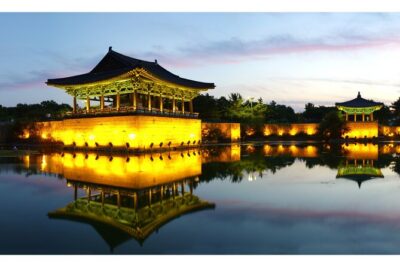
Gyeongju UNESCO sites Private tour with licensed tour guide
Read our review →
Private Gyeongju Tour – Explore Gyeongju UNESCO Sites
Read our review →
Gyeongju UNESCO Legacy Tour with National Museum
Read our review →
UNESCO Heritage Tour Including Bulguksa Temple
Read our review →Browse the lists this tour appears in