
Reviewed · GYEONGJU HERITAGE TOURS
Gyeongju private tour with an official tour guide (Unesco)
Silla’s ancient capital is a full-day reward. This private Gyeongju tour gives you a practical way to reach Korea’s great historic center from Busan, with an official English, Chinese, or Korean-speaking guide and private air-conditioned transport. I like the well-chosen route, which covers Bulguksa Temple, royal tombs, an old village, an elegant bridge, an ancient observatory, and Wolji Pond in one day.
I also like the flexibility of hotel, port, or Busan Station pickup, plus the fact that only your own group takes part. The main caution is communication: one published 4-star review praised the sightseeing but found the guide’s English difficult to understand. If clear spoken English is essential, confirm the guide arrangement before departure.
In This Review
- Key points to know before booking
- Why Gyeongju makes a good day trip from Busan
- Bulguksa Temple begins the day with Silla craftsmanship
- Woljeonggyo Bridge connects history with a local legend
- Gyochon Village shows a quieter side of Gyeongju
- Daereungwon reveals the scale of Silla royalty
- Cheomseongdae turns ancient astronomy into something tangible
- Donggung Palace and Wolji Pond close the day beautifully
- How the private vehicle changes the day
- The guide makes the difference
- Who will get the most from this Gyeongju tour
- Should you book this private Gyeongju tour?
- FAQ
- How long does the Gyeongju tour last?
- Where can pickup and drop-off take place?
- Is the tour private?
- What kind of vehicle is used?
- Which languages can the guide speak?
- Is lunch included?
- How much are the extra entrance fees?
- Can I cancel for a full refund?
Key points to know before booking
- Six major Silla sites in one day: The route covers Bulguksa Temple, Woljeonggyo Bridge, Gyochon Village, Daereungwon, Cheomseongdae, and Donggung Palace with Wolji Pond.
- Private transport saves time: Your group travels in an air-conditioned vehicle, with tolls, parking, and fuel included.
- A licensed official guide leads the day: English, Chinese, or Korean guiding is offered, though English fluency may vary.
- Two small entrance fees are extra: Cheonmachong inside Daereungwon costs 3,000 won, and Donggung Palace and Wolji Pond costs 3,000 won.
- The schedule runs long: Expect about 8 to 9 hours, with roughly 6 hours of planned sightseeing before driving and meal time.
- The group limit is 15 people: It is private for your party, but the maximum is not designed for a large coach group.
Why Gyeongju makes a good day trip from Busan
Gyeongju was the capital of the Silla dynasty from the fifth through seventh centuries. That gives the city a different feel from Busan, where the main draw is the coast, port, markets, and modern city life. In Gyeongju, royal tombs and ancient religious sites are part of the everyday setting.
The tour is useful because Gyeongju’s key sights are spread across several areas. Public transport can work, but it takes planning and patience. A private vehicle lets you move from Bulguksa in the east to the central historic sites without spending much of your day changing buses or figuring out local routes.
At $225 per person, the price is not low. Its value depends heavily on group size. For two people, the cost is substantial, but you receive private transportation, a guide, pickup and drop-off, parking, tolls, fuel, and a long day of sightseeing. For a family or group of several people, the per-person price may feel more reasonable, especially compared with arranging separate transport and a private guide.
Lunch is not included, and neither are the two paid admissions. Plan for the two 3,000-won tickets, plus food and any gratuity. The tour does not include tourist insurance.
More Private Tours in Busan
- Busan Private Tour with licensed tour guide + private vehicle
★ 5.0 · 1,143 reviews - Private Busan Tour -Explore Cultural Landmarks with a Local Guide
★ 5.0 · 552 reviews - Busan Hidden Gems Private Tour and Car Service
★ 5.0 · 113 reviews
Bulguksa Temple begins the day with Silla craftsmanship
The first stop is Bulguksa Temple, a UNESCO cultural heritage site and Historic Site No. 502. You have about 1 hour and 10 minutes here, enough for a focused visit rather than a slow, detailed temple study.
Construction is said to have begun in 751 under King Gyeongdeok of Silla, with Prime Minister Kim Daeseong connected to the project. The temple was completed by the government, and its surviving stonework gives you a clear sense of the skill and religious ambition of the period.
This is the tour’s strongest stop for visitors who want Korea’s major historic sites. The guide can add context about the Silla dynasty and explain what you are seeing, which is especially useful if temple architecture is unfamiliar to you.
The time limit is worth noting. Bulguksa is not a quick photo stop, but 70 minutes can pass quickly if you want to examine every structure. Comfortable shoes will help, and you should expect some walking around the temple grounds. Admission is included in the tour schedule, so there is no separate ticket charge listed for this stop.
Woljeonggyo Bridge connects history with a local legend
The restored Woljeonggyo Bridge is the next stop, with about 40 minutes to look around. The bridge was first built during the Silla dynasty and was traditionally reserved for noble and high-ranking people. The present structure was restored in 2008.
The bridge is also tied to a love story involving a monk and Princess Yosuk. That tale gives the visit a human touch, especially after the formal religious setting of Bulguksa. Ask your guide to explain the story and point out the parts of the bridge that reflect its older design.
Forty minutes is a sensible amount of time here. You can see the bridge, take photographs, and hear its background without turning the stop into a long architectural visit. Admission is listed as free.
The bridge works best as part of the wider route. On its own, it would not justify a full day from Busan. Paired with Gyochon Village and the central Silla sites, it becomes a pleasant link between major attractions.
Gyochon Village shows a quieter side of Gyeongju
Gyeongju Gyochon Traditional Village receives about 1 hour and 20 minutes. The village recalls the old Silla setting and is connected with a university that once existed there during the dynasty. One key place to see is the house of Mr. Chui.
This stop helps break up the sequence of temples, tombs, and archaeological sites. You get a more residential and traditional setting, rather than viewing history only through monuments. I like that balance because it gives the day a little breathing room.
The guide’s role matters here. A village can be pleasant to walk through, but its significance is easy to miss without an explanation of the old house and the area’s place in Gyeongju’s past. If your guide’s English is hard to follow, this is one of the stops where the experience may feel thinner.
There is no admission fee listed for Gyochon Village. The 80-minute visit should allow time to walk at an easy pace and pause at the traditional house. Since the route contains several walking stops, use footwear you can manage for most of a day.
More Private Tours in Gyeongju
- Gyeongju The UNESCO World heritage sites tour(Private tour)
★ 5.0 · 17 reviews - 3-Days 2-Nights Gyeongju UNESCO Sites & Busan City [Private Tour from Seoul]
★ 4.5 · 11 reviews - Gyeongju Private Tour with hidden gem by local tour guide
★ 5.0 · 8 reviews - UNESCO World Heritage Gyeongju & Busan Two-city Private Tour.
★ 5.0 · 7 reviews
Daereungwon reveals the scale of Silla royalty
Daereungwon Tomb Complex is one of the most memorable parts of the day. The park contains 23 ancient tombs associated with Silla kings, queens, and nobles. These rounded burial mounds are not isolated museum objects. They sit together in a broad historic area, making the scale of the royal cemetery easy to grasp.
You have around 1 hour and 20 minutes here. The tour describes the tombs as museums, and Cheonmachong is the part with a separate admission fee of 3,000 won. If you want to enter the tomb, bring enough Korean won or confirm accepted payment arrangements before the visit.
The power of Daereungwon is visual. You can see how many royal burials were concentrated in one place, then connect that setting with the Silla capital you have been learning about. The site also gives you a useful pause from enclosed interiors and temple buildings.
There is a small practical tradeoff. The tour includes a fixed amount of time, so you may need to choose between walking around the complex, entering Cheonmachong, and listening closely to the guide. If ancient burial customs are a major interest, tell your guide early so the stop can be used well.
Cheomseongdae turns ancient astronomy into something tangible
Cheomseongdae Observatory is scheduled for about 50 minutes. It is National Treasure No. 31 and dates from the seventh century. Silla astronomers used the observatory to watch the stars, making it an early example of the close connection between government, agriculture, religion, and the sky.
This is a short stop, but it adds variety. After the royal tombs, you move from burial traditions to scientific observation. The structure itself is compact, so 50 minutes gives you time to see it, take photographs, and hear the explanation without rushing.
The stop is free according to the tour details. Its value depends on interpretation, so this is another point where the guide’s language skills matter. A clear explanation of why the observatory mattered will make the visit much more meaningful than a quick look at an old stone structure.
Donggung Palace and Wolji Pond close the day beautifully
The final major stop is Donggung Palace and Wolji Pond, formerly associated with a secondary palace complex. After Silla unified the Three Kingdoms, a large pond was dug here, with flowers, trees, and palace buildings around it.
You have about 1 hour and 30 minutes, the longest stop in the listed route. That extra time makes sense. The pond area is meant to be viewed from different points, and the relationship between the water, palace site, and surrounding gardens is central to the visit.
Admission costs 3,000 won and is not included. The price is modest, but it is easy to overlook when budgeting for the day. Keep this ticket, the Cheonmachong ticket, lunch, and a tip in mind when comparing the tour cost.
The closing stop also has a different mood from Bulguksa and Daereungwon. The temple introduces Silla religion, the tombs show royal power, and Wolji Pond presents court life and design. It is a fitting final chapter, especially if you enjoy historic sites that are attractive as well as informative.
How the private vehicle changes the day
The private air-conditioned vehicle is one of the tour’s most useful features. The day lasts about 8 to 9 hours, and the route includes sites that are not all next to one another. Having the same vehicle for the full journey cuts down on transfers and gives your group a place to rest between walks.
Pickup and drop-off are offered at hotels, the port, and Busan Station. That makes the tour particularly useful if you are arriving by ship, staying in Busan, or using the city as your base. Toll fees, parking fees, and fuel are included, so you do not need to negotiate those costs during the day.
The schedule is full. The listed sightseeing times add up to about 6 hours and 50 minutes, before driving and lunch. That leaves little room for major delays or long unscheduled shopping stops. I would treat the tour as a focused history day rather than a relaxed outing with lots of free time.
Lunch is not provided. The supplied details do not specify a restaurant or exact lunch timing, so ask the guide at the start of the day how the meal will fit into the route. This matters because a long day of walking is harder if you wait too long to eat.
The guide makes the difference
An official tour guide with a license leads the experience, with English, Chinese, or Korean available. Good guiding can turn each stop from an attractive ruin into a connected story about Silla religion, royal power, engineering, astronomy, and court culture.
Still, you should pay attention to the language concern. A 4-star review specifically praised the coverage of the main attractions but said the English was difficult to understand. The provider apologized and said it would work to improve the service, but that response does not guarantee a particular guide or level of fluency.
If you book in English, send a short message in advance to confirm the guiding language and ask who will lead the tour if that information is available. You can also prepare a few questions about Bulguksa, the royal tombs, and Wolji Pond. A private format gives you a better chance to ask for clarification than a large public group would.
The overall rating is 4.5 from four published reviews. That is encouraging, but the sample is small. I would place more weight on the strong route and private transport than on the rating alone.
Who will get the most from this Gyeongju tour
This tour suits you best if you want to see Gyeongju’s principal Silla sites in one day without arranging transport yourself. It is also a good fit for families, couples, or small groups who value hotel, port, or station pickup and prefer not to share a vehicle with strangers.
History-focused visitors will appreciate the range. You see a UNESCO temple, a restored bridge, a traditional village, royal tombs, an ancient observatory, and a palace pond. The route gives you a broad introduction rather than concentrating on one type of monument.
It is less suitable if you want a slow photography day, long meals, or extensive time at every site. The schedule is tightly packed, and the distance from Busan means much of the day is committed to transport and structured sightseeing.
Free cancellation is available up to 24 hours before the start time. Changes or cancellations made later are not accepted for a refund, so keep that cutoff in mind when making plans.
Should you book this private Gyeongju tour?
I would book this tour if your priority is efficient access to Gyeongju’s main UNESCO and Silla-era sights from Busan. The private vehicle, included transport costs, broad route, and pickup choices provide real value, especially for a group sharing the price.
I would pause before booking if you need highly polished English commentary or want a relaxed pace. Confirm the guide’s language ability first, budget for lunch and the two 3,000-won admissions, and expect a full day rather than a leisurely excursion. With those points understood, this is a strong practical choice for seeing the essential Gyeongju sights in one organized trip.
FAQ
How long does the Gyeongju tour last?
The tour lasts approximately 8 to 9 hours.
Where can pickup and drop-off take place?
Pickup and drop-off are offered at hotels, the port, and Busan Station.
Is the tour private?
Yes. Only your own group participates, with a maximum group size of 15 people.
What kind of vehicle is used?
Transportation is provided in an air-conditioned private vehicle.
Which languages can the guide speak?
The tour offers an official guide who speaks English, Chinese, or Korean.
Is lunch included?
No. Lunch is not included in the tour price.
How much are the extra entrance fees?
Cheonmachong in Daereungwon costs 3,000 won, and Donggung Palace and Wolji Pond costs 3,000 won.
Can I cancel for a full refund?
Yes. You can cancel at least 24 hours before the experience start time for a full refund. Cancellations made less than 24 hours before the start time are not refunded.
More Gyeongju Trips
- Gyeongju UNESCO World Heritage Guided Day Tour from Busan
★ 5.0 · 660 reviews - Old Korea Thousand History Tour of Gyeongju from Busan
★ 5.0 · 518 reviews - Busan: Gyeongju UNESCO Legacy Tour with National Museum
★ 5.0 · 172 reviews - From Busan to Gyeongju UNESCO Legacy Tour with National Museum
★ 5.0 · 87 reviews
More Busan Trips
- Busan: Gyeongju Guided Day Trip to Three Kingdoms Capital
★ 4.8 · 1,925 reviews - Small Group Full Day Busan Tour (Max 6 Pax)
★ 5.0 · 1,464 reviews - From Busan: Gyeongju UNESCO World Heritage Guided Day Tour
★ 4.8 · 1,250 reviews - Busan: Coastal Treasures Beach Train, Culture Village & More
★ 4.7 · 832 reviews
Just added around Busan
- Korean UNESCO World Heritage Tour including Gyeongju, Andong and Daegu(2N3D)★ 5.0 · 3 reviews
- Busan Bliss: Panoramic Yacht & Urban Exploration with Sky Capsule★ 5.0 · 3 reviews
- Busan day trip including Gamcheon culture village from Seoul by KTX train★ 5.0 · 3 reviews
- Busan Seafood Tour : Oyster village Tour with Oyster cuisines★ 5.0 · 3 reviews
- 1 Day Private Busan Guided Tour★ 4.5 · 3 reviews
- 2-DAYS Busan Customized and Included Night tour★ 5.0 · 3 reviews
- Full-Day Jinhae Cherry Blossom festival Private tour★ 5.0 · 3 reviews
- Busan Dialect Class with local snack★ 5.0 · 3 reviews
Gyeongju Heritage Tours, compared.

Gyeongju Guided Day Trip to Three Kingdoms Capital
Read our review →
Gyeongju UNESCO World Heritage Guided Day Tour
Read our review →
Gyeongju UNESCO World Heritage Guided Day Tour from Busan
Read our review →
Old Korea Thousand History Tour of Gyeongju from Busan
Read our review →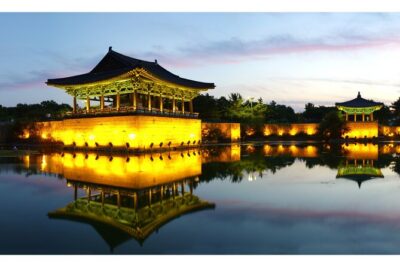
Gyeongju UNESCO sites Private tour with licensed tour guide
Read our review →
Private Gyeongju Tour – Explore Gyeongju UNESCO Sites
Read our review →
Gyeongju UNESCO Legacy Tour with National Museum
Read our review →
UNESCO Heritage Tour Including Bulguksa Temple
Read our review →Browse the lists this tour appears in