

Reviewed · COOKING CLASSES
Vegan Korean Food Cooking Class: Gimbap, Sundubu Jjigae, and more
Korean cooking gets hands-on here. In Seoul’s Itaewon district, this small workshop teaches you to make a full vegan Korean meal, including gimbap, sundubu-jjigae, Biji-jeon, and Hwa-jeon. I like the intimate class size, limited to four people, and I like the way instructor Soomin explains both cooking steps and food traditions. The main consideration is the location on a third floor with no elevator, so access may be difficult for some people.
You spend about two and a half hours cooking, eating, and asking questions rather than simply watching a demonstration. The $75 price is not cheap, but it covers several dishes, personal instruction, and a filling meal. If you need gluten-free food, request it in advance, and remember that cancellations made less than 24 hours before the start time are not refunded.
In This Review
- Key points at a glance
- Why this Itaewon class works so well
- Gimbap: a practical lesson in Korean assembly
- Sundubu-jjigae from scratch
- Biji-jeon turns soy pulp into something useful
- Hwa-jeon and the edible-flower finish
- What Soomin adds to the cooking
- A full meal for vegan and vegetarian visitors
- Is $75 a fair price?
- Timing, meeting point, and access
- Who should book this cooking class?
- Booking advice and cancellation terms
- Should you book it?
- FAQ
- Where does the vegan Korean cooking class meet?
- What time does the class start?
- How long does the cooking class last?
- Where does the class end?
- What dishes will I make?
- Is the cooking class fully vegan?
- Can I request gluten-free food?
- How many people can join the class?
- Is the class accessible by elevator?
Key points at a glance
- Four-person maximum: The small group gives you real time at the work surface and makes it easier to ask questions.
- A complete vegan Korean meal: You prepare gimbap, soft tofu stew, soy pulp pancakes, and flower-topped rice cakes.
- Soomin’s clear instruction: She explains ingredients, cooking methods, Korean food customs, and practical vegan eating tips in Seoul.
- A strong choice for plant-based diners: The class is vegan and also welcomes vegetarians, reducetarians, and Muslim-friendly dietary needs.
- Itaewon setting: The meeting point is in Itaewon-dong, near public transportation and the neighborhood’s World Food Street.
- Plan for a full meal: Several people found the portions generous, so arriving hungry is sensible, and bringing a container for leftovers may help.
Why this Itaewon class works so well

Itaewon is a useful place for a food class because the neighborhood is known for international dining and easy access from other parts of Seoul. The meeting point is in Itaewon-dong, Yongsan District, and the class begins at 11:00 a.m. You return to the same place when the session ends.
The small size matters. With no more than four people, you are not lost at the back of a large room or left watching someone else handle the knife, pan, or rolling mat. The format is designed for participation. You assemble, roll, stir, shape, and cook the food yourself, with Soomin guiding you through each stage.
That setup also makes the class friendly for solo participants. One person described having a one-on-one session when no one else had booked, with the class continuing normally. That is a useful detail if you are traveling alone: a quiet booking does not necessarily mean the class will be canceled or reduced to a brief demonstration.
More Cooking Classes in Seoul
- Local Home Korean Cooking Class & Market Adventure in Seoul
★ 5.0 · 1,024 reviews - Master Korean traditional cooking with a Kimchi chef
★ 5.0 · 385 reviews - Seoul: Korean Cooking Class at a Local Home and Market Tour
★ 5.0 · 348 reviews
Gimbap: a practical lesson in Korean assembly
Gimbap is one of the best dishes for learning how Korean food comes together. You work with seasoned fillings, rice, and sheets of seaweed, then learn how to assemble and roll the finished cylinder. It looks simple until you try to keep the contents even and the roll firm.
The class gives you a chance to practice the method instead of treating gimbap as a quick photo stop. You can see how texture and color matter as much as flavor. The result is visually neat, portable, and easy to understand as part of everyday Korean food culture.
For plant-based diners, this is especially useful. Many people know Korean food through barbecue or seafood dishes, but gimbap shows how satisfying a meal can be when vegetables, rice, seasoning, and careful preparation do the work. The class focuses on tofu and vegan ingredients without treating them as an afterthought.
Sundubu-jjigae from scratch

Sundubu-jjigae is the warm, spoonable centerpiece of the meal. You cook the soft tofu stew from scratch, learning how the ingredients come together rather than receiving a pre-made bowl. The dish gives the class a different rhythm from gimbap: instead of careful rolling and presentation, you work with heat, broth, seasoning, and tofu.
The tofu focus is one of the strongest parts of the experience. Tofu can seem plain when handled badly, but the right seasoning and cooking method give it body and character. Soomin uses the class to show how versatile tofu can be, which is useful knowledge you can carry into your own kitchen.
This course is also a good fit if Korean food feels intimidating. Soomin explains steps clearly and answers questions in detail, so you are not expected to know Korean ingredients or techniques before arriving. You still get a taste of traditional flavors, but the teaching style keeps the process approachable.
Biji-jeon turns soy pulp into something useful

Biji-jeon adds a less familiar dish to the menu. You prepare and cook pancakes made with soy pulp, also called biji. This is a good example of Korean cooking making use of an ingredient that might otherwise be discarded.
The pancake gives you another lesson in texture. Compared with soft tofu stew and rice-based gimbap, Biji-jeon is shaped and cooked until it becomes a more substantial, pan-fried dish. It also broadens your idea of what a tofu-centered meal can include.
I appreciate this part of the menu because it is not just a list of the most internationally recognized Korean dishes. You get a classic people may be less likely to order on their own, along with an explanation of the ingredient and its place in Korean cooking. That cultural context is one reason the class offers more value than a basic recipe lesson.
More Workshops in Seoul
- Yongpyong Ski Resort from Seoul with Optional Lesson and Packages
★ 5.0 · 217 reviews - Korean Cooking Class with Grocery Shopping at Seoul Local Market
★ 5.0 · 107 reviews - Royal Seoul Cooking Class in a 100-Year-Old Hanok
★ 5.0 · 81 reviews - Seoul : Taste of Korea, Authentic Home-Style Cooking Class
★ 5.0 · 64 reviews
Hwa-jeon and the edible-flower finish

The final dish is Hwa-jeon, made by shaping and cooking glutinous rice dough. You finish it with seasonal edible flowers, creating small rice cakes that are as decorative as they are edible.
This is the most presentation-focused part of the class. The flowers add color and make the finished plate feel special without requiring complicated equipment or advanced skill. You learn that Korean food is not only about strong seasoning and hearty comfort dishes. Shape, color, and seasonality also matter.
The edible flowers are seasonal, so the exact appearance may change. That is worth keeping in mind if you are hoping for a particular design. The point is the technique and the connection between food and presentation, not a fixed menu photograph.
What Soomin adds to the cooking

The instructor is Soomin, and her role is central to the class. Her teaching is described as warm, clear, and patient, with step-by-step guidance through the cooking. She also talks about ingredients, traditions, and vegan food options in Seoul.
That combination helps the session feel like a food culture lesson rather than a cooking school drill. You can ask why an ingredient is used, how a dish fits into Korean eating habits, or where to find suitable vegan food elsewhere in the city. For someone new to Korea, these conversations may be as useful as the recipes.
Soomin also adapts well to the group. The class continues in a friendly way even with only one participant, and the small format allows more conversation. If you enjoy asking questions and learning through discussion, this is likely a better match than a large, tightly timed cooking demonstration.
A full meal for vegan and vegetarian visitors
The entire menu is vegan, which removes the guesswork that often comes with ordering Korean food. Even dishes that appear vegetable-based can contain fish sauce, shrimp, meat stock, or other animal products, so a dedicated vegan class offers peace of mind.
The experience is also suitable for vegetarians, reducetarians, and Muslim-friendly dietary needs. Gluten-free preparation is available on request, but you should make that request before the class rather than assuming it will be handled automatically.
The menu is substantial. You prepare four different dishes, then eat what you have made. One useful piece of advice is to skip a large breakfast or arrive with a healthy appetite. You may also want to bring a container for leftovers, particularly if you are traveling with a small group or prefer a lighter lunch.
Is $75 a fair price?

At $75 per person, this is priced above a casual Korean meal, but you are paying for more than food. The fee includes about two and a half hours of instruction, hands-on preparation, several dishes, cultural explanation, and direct access to the instructor.
The maximum group size of four improves the value. In a class of a dozen or more, you might spend much of the time waiting for a turn or trying to see what is happening. Here, the odds are better that you will actually practice each main technique: rolling gimbap, cooking the stew, making the soy pulp pancakes, and shaping the rice dough.
Still, the price may not suit every budget. If you mainly want to eat vegan Korean food, a restaurant meal will cost less and take less time. Book this class for the learning and personal guidance, not just for lunch.
The experience has a 4.9 rating from 32 reviews, with 97 percent recommending it. Those figures point to strong satisfaction, especially with the food, friendly instruction, and small-group format, but they do not remove the practical limits: the class is upstairs, the start time is fixed, and the price is a splurge for a meal.
Timing, meeting point, and access
The class starts at 11:00 a.m. and ends back at the meeting point in Itaewon-dong. Since the duration is about two hours and 30 minutes, allow the rest of your day to remain flexible rather than scheduling a tight appointment immediately afterward.
The location is near public transportation, which helps when reaching Itaewon from another Seoul neighborhood. The exact meeting point is in the World Food Street area, so check the booking details carefully before setting out.
There is no elevator, and the class is on the third floor. This is the clearest physical limitation. Service animals are allowed, but the stairs may make the activity unsuitable for anyone who cannot comfortably climb several flights.
A mobile ticket is provided, and confirmation arrives within 48 hours of booking if space is available. Because the class is capped at four people and often booked well ahead, planning early makes sense. The average booking lead time is 41 days.
Who should book this cooking class?
I would point this experience toward several kinds of visitors:
- Vegans seeking a worry-free Korean meal: Every dish is vegan, and the class removes much of the uncertainty around hidden animal ingredients.
- Vegetarians and reducetarians: You can learn familiar Korean dishes without committing to a meat-centered food experience.
- Solo visitors: The small class can still run as a one-on-one session, giving you plenty of time with Soomin.
- First-time Korean cooks: The step-by-step format makes the ingredients and methods easier to follow.
- Food-focused couples or small groups: Four people is the limit, so the class suits a compact group better than a large party.
- People curious about tofu: The menu shows tofu in several forms, from soft stew to soy pulp pancakes.
I would think twice if you dislike stairs, have a very tight schedule, or want the cheapest possible meal. The class is also less suited to someone who prefers to sit back and watch. Its value comes from taking part.
Booking advice and cancellation terms
Because the activity is often reserved 41 days ahead, do not leave it until the last day if your Seoul dates are fixed. Confirmation is subject to availability and is sent within 48 hours of booking.
You can cancel for a full refund up to 24 hours before the local start time. Changes or cancellations inside that 24-hour window are not accepted for a refund, so wait until your plans are reasonably firm before booking.
If you need gluten-free preparation, ask for it when arranging the class. The food is already vegan, but special handling still needs to be requested in advance.
Should you book it?
Book it if you want to understand Korean food by making it yourself. The combination of gimbap, sundubu-jjigae, Biji-jeon, and Hwa-jeon gives you variety, while Soomin’s clear instruction and cultural explanations make the session useful beyond the meal itself.
The $75 cost is reasonable for a four-person class lasting two and a half hours, especially if you value personal attention and a full vegan lunch. Skip it if the stairs are a problem, your budget is tight, or you only want a quick taste of Korean food. For plant-based visitors, solo cooks, and curious eaters, this is one of the more practical ways to turn a Seoul meal into a skill you can take home.
FAQ
Where does the vegan Korean cooking class meet?
It meets in Itaewon-dong in Seoul’s Yongsan District, in the World Food Street area.
What time does the class start?
The class starts at 11:00 a.m.
How long does the cooking class last?
The activity lasts approximately two hours and 30 minutes.
Where does the class end?
It ends back at the meeting point in Itaewon-dong.
What dishes will I make?
You will prepare gimbap, sundubu-jjigae, Biji-jeon, and Hwa-jeon.
Is the cooking class fully vegan?
Yes. The class focuses on vegan Korean cooking and uses tofu and other plant-based ingredients.
Can I request gluten-free food?
Yes. Gluten-free preparation is available on request, so make the request before attending.
How many people can join the class?
The maximum group size is four people.
Is the class accessible by elevator?
No. The class is on the third floor and there is no elevator.
More Food Tours
- Seoul Street Food Market Tour
★ 5.0 · 1,226 reviews - Seoul: Night Market Food Tour with Local Guide
★ 4.9 · 943 reviews - Downtown Seoul Guided Food & Market Tour with 8+ Local Tastings
★ 5.0 · 580 reviews - Small-Group Night Food Tour in Seoul with Korean BBQ
★ 5.0 · 304 reviews
More Cooking Classes
- Seoul: Korean Cooking at Seoul Cooking Club!
★ 5.0 · 311 reviews - Korean Cooking at Seoul Cooking Club
★ 5.0 · 220 reviews - Experience Korean Cooking in Modern Hanok Kitchen
★ 5.0 · 118 reviews - Korean Kimchi Making Day Experience with a Local Market Tour
★ 5.0 · 99 reviews
Just added around Seoul
- Seoraksan National Park & Nami Island★ 4.5 · 3 reviews
- Strawberry Picking, Winter Sled with Eobi Ice Valley from Seoul★ 4.5 · 3 reviews
- Seoul Full Day small group Tour★ 5.0 · 3 reviews
- Majang Meat Market Experience: Private Tour with Han-woo Beef BBQ★ 5.0 · 3 reviews
- Seoul Korean BBQ Dinner Experience with Secret Food Tours★ 5.0 · 3 reviews
- Rice Wine Tasting with Sommelier – Finest Makgeolli (& Soju)★ 5.0 · 3 reviews
- Max Out Seoul: Must Visit City Highlights Panoramic Day Tour★ 5.0 · 3 reviews
- Seongsu-dong Walking Tour: K-Pop, Culture, Cheer, Friends & Relax★ 4.5 · 3 reviews
Cooking Classes, compared.

Local Home Korean Cooking Class & Market Adventure in Seoul
Read our review →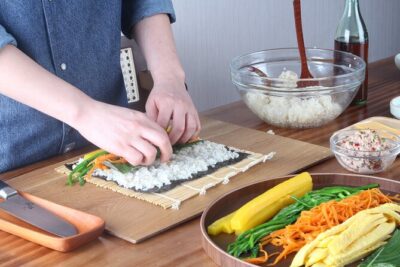
Master Korean traditional cooking with a Kimchi chef
Read our review →
Korean Cooking Class at a Local Home and Market Tour
Read our review →
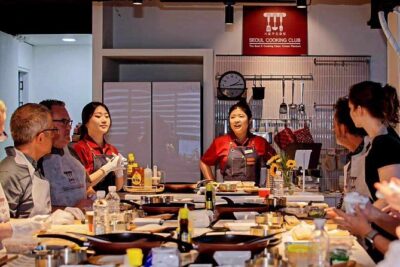

Experience Korean Cooking in Modern Hanok Kitchen
Read our review →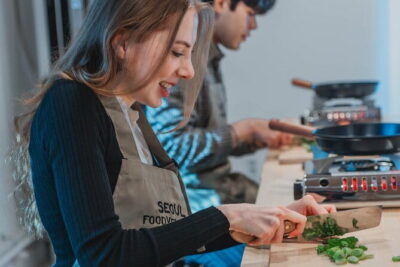
Korean Cooking Class with Grocery Shopping at Seoul Local Market
Read our review →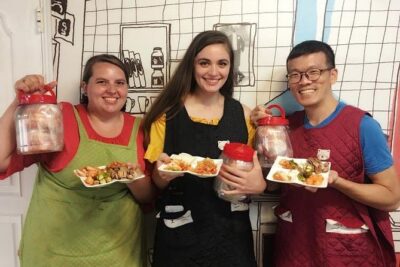
Korean Kimchi Making Day Experience with a Local Market Tour
Read our review →Browse the lists this tour appears in