
Reviewed · COOKING CLASSES
Korean cooking class in Haeundae, Busan
Come hungry, leave with Korean cooking skills. This three-hour class in Haeundae gives you your own cooking station, clear guidance from Min, and a meal of dishes you helped prepare. I especially like the small maximum group of seven people and the thoughtful cultural lessons, from Joseon-era palace food to Korean sauces and dining customs. The main consideration is price: at $100 per person, it costs more than a simple meal, so its value depends on how much you want instruction and personal attention.
I also like that the class works for complete beginners and offers alternatives for some dietary needs, including gluten-free and vegetarian options when arranged. The menu can change by date, and the class requires good weather, so check the details before you commit your morning.
In This Review
- Key points to know before you book
- What the Haeundae cooking class is really like
- Bibimbap, seaweed soup, and Korean pancakes
- From palace traditions to Korean table manners
- Lunch at a traditional bapsang
- The instructor makes the difference
- How the route fits around the class
- Is $100 a fair price?
- Who should book this experience?
- Timing, booking, and cancellation advice
- Should you book the Haeundae cooking class?
- FAQ
- Where does the Korean cooking class meet?
- What time does the class start?
- How long does the cooking class last?
- What dishes will I cook?
- Do I need cooking experience?
- How many people can join?
- Can I sit at a table instead of on the floor?
- Can I cancel for a refund?
Key points to know before you book

- Cook at your own station: You prepare the dishes yourself rather than watching a demonstration from the sidelines.
- Meet Min, the instructor: Her warm teaching style combines recipes with Korean language, food customs, and practical advice for exploring Busan.
- Expect a classic menu: Bibimbap, seaweed soup, and Korean pancakes are among the dishes taught, though the menu may vary.
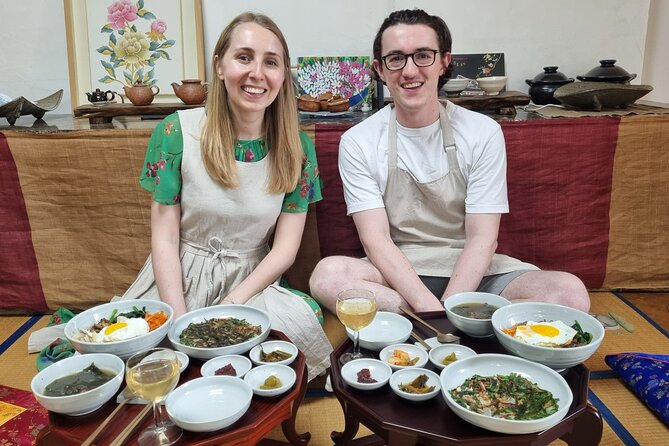
- Eat at a traditional bapsang: Your finished meal is served at a Korean dining table on the floor, with a chair and table available if needed.
- The group stays small: The maximum is eight people, with the class generally described as having no more than seven participants.
- You receive a certificate: A participation certificate comes at the end, along with tea, a simple dessert, and a small surprise gift mentioned by several participants.
What the Haeundae cooking class is really like
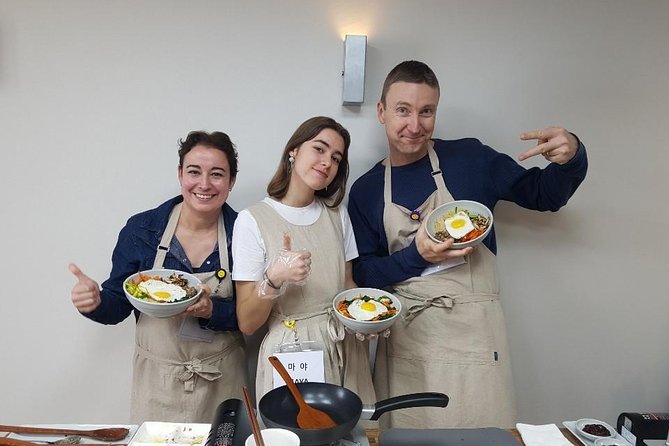
This is not a quick recipe demonstration squeezed into a sightseeing tour. It is a hands-on morning built around food, conversation, and Korean customs.
The class begins at 10:00 a.m. at 37 Marine City 3-ro in Haeundae. The activity lasts about three hours and ends back at the same meeting point. Since the class is in Marine City rather than directly on Haeundae Beach, allow time to reach the address and confirm the exact meeting instructions after booking.
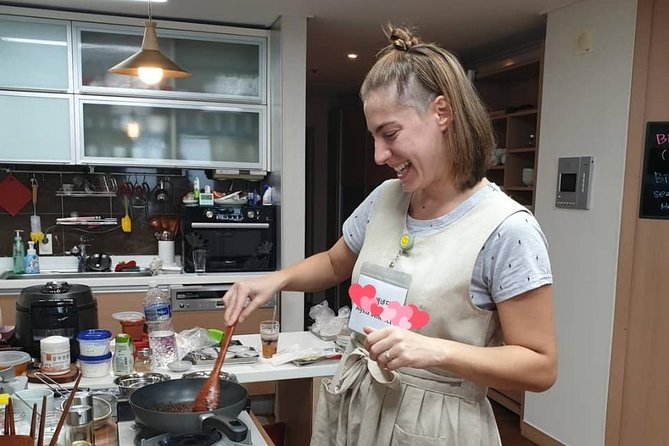
You start by putting on a traditional Korean apron. It represents the kind of clothing worn by cooks in the royal palace, and it sets the tone for the class. This is a small detail, but it gives the session a sense of place before the chopping boards come out.
A welcome drink follows. Then Min introduces several main Korean sauces, helping you understand the flavors behind the food rather than treating each recipe as a list of isolated steps. That matters because Korean cooking often depends on balancing savory, sweet, spicy, fermented, and nutty notes.
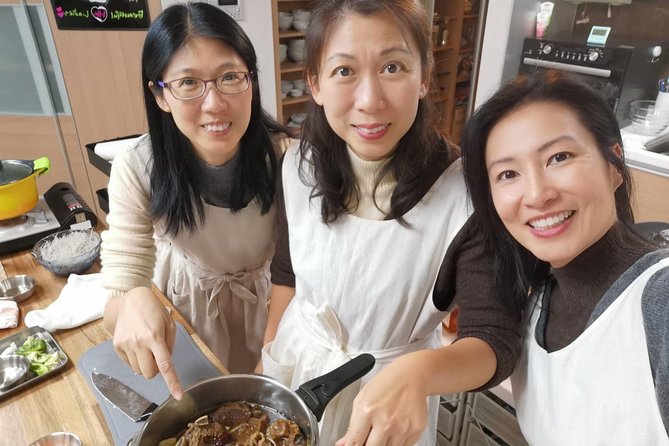
The teaching is designed for people with little or no kitchen experience. You get direct help at your personal station, and the small group means you can ask questions without stopping a large demonstration. If you cook often, the pace may feel gentle. If you rarely cook, that slower approach is a benefit.
More Workshops in Busan
- Busan Tailored Korean cooking class (Vegan OK)with market tour
★ 5.0 · 66 reviews - Busan: Small-Group Traditional Korean Food Cooking Class
★ 4.9 · 58 reviews - Busan Local Food Cooking Class with Market Tour
★ 5.0 · 53 reviews
Bibimbap, seaweed soup, and Korean pancakes
The best-known menu combination includes bibimbap, seaweed soup, and a Korean pancake such as buchon jeon or chive pancake. These dishes make a useful introduction to Korean home cooking because they show three different skills and textures.
Bibimbap teaches you how separate ingredients become one meal. You learn about the sauce, the arrangement of toppings, and the way the ingredients are mixed before eating. One participant specifically found a bibimbap set easy enough to recreate at home, which is a good sign if you want recipes that do not become holiday souvenirs forgotten in a drawer.
Seaweed soup adds a quieter dish to the meal. It is familiar in Korean households and has a strong connection with birthday meals and everyday comfort food. Learning it beside bibimbap gives you a better sense of how a Korean meal works, with rice, soup, vegetables, sauces, and side elements sharing the table.
The pancake is often the crowd favorite. Chive pancakes are savory, crisp at the edges, and satisfying without demanding advanced technique. The class also teaches you about ingredients and traditional sweets, so the food lesson extends beyond the three main dishes.
Do not assume the exact menu will be identical on every date. The supplied schedule says that special cooking dates and temple-food dates were not scheduled for 2025, and the general menu may change. If you have your heart set on one particular dish, confirm before booking.
From palace traditions to Korean table manners
The class puts food into a historical and cultural frame without turning the morning into a lecture. You hear about cooking traditions connected with the Joseon dynasty and the role of palace cooks. That background helps explain why presentation, balance, and careful preparation matter in Korean cuisine.
Min also includes some Korean language instruction. One useful detail mentioned by a participant is learning how to read Korean menus. This will not turn you into a fluent reader in three hours, but it can make your next meal out feel less like a guessing game.
The cultural information is one of the strongest reasons to choose this class instead of simply ordering bibimbap in a restaurant. You are not only told what a dish is called. You learn how it fits into Korean food culture and how the ingredients work together.
The class also gives you time to talk with people from different countries. That social side is not a formal feature you can guarantee, but the small size encourages conversation. Families, couples, solo participants, and friends can all fit into the setting. A family with daughters aged 12 and 16 found the class suitable for both teenagers, while another family appreciated the instructor’s care with different dietary needs.
Lunch at a traditional bapsang
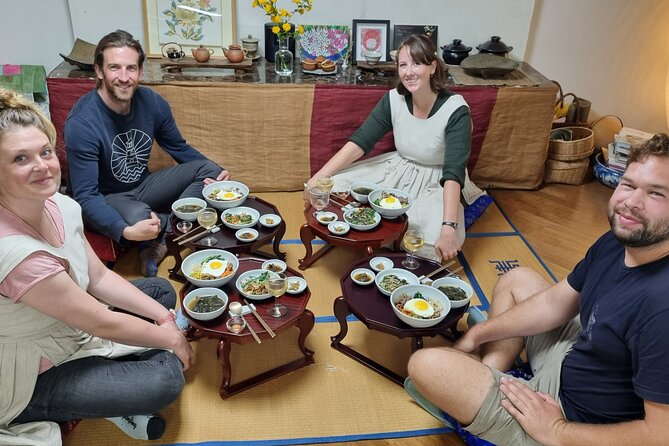
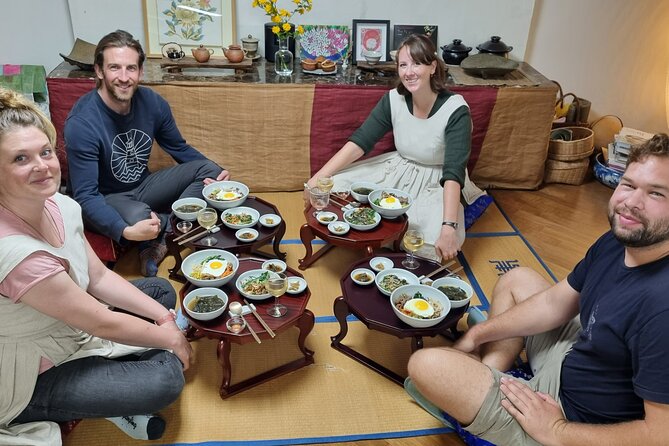
Once the cooking is finished, you eat what you made at a bapsang, a traditional Korean dining table arranged on the floor. This turns lunch into part of the lesson. You can see how the dishes sit together and understand the meal as a complete Korean table rather than three separate recipes.
Floor seating is not required if it is difficult for you. A regular table and chair are available. That is worth noting for anyone with knee, hip, or mobility concerns, although the supplied information does not give further accessibility details.
The meal is followed by tea and a simple Korean dessert. The dessert is complimentary and offers a gentle finish after the savory food. Several people also appreciated a small surprise gift at the certificate presentation, though the exact gift should not be treated as guaranteed.
You should plan to eat what you prepare, so this is not the best choice if you want only a light snack. It is a full morning activity with cooking, lunch, tea, and conversation.
More cooking classes:
- Busan Kkakdugi(Korean radish Kimchi) class with various options
★ 5.0 · 6 reviews - Local Home Korean Cooking Class & Market Adventure in Seoul
★ 5.0 · 1,024 reviews - Master Korean traditional cooking with a Kimchi chef
★ 5.0 · 385 reviews - Seoul: Korean Cooking Class at a Local Home and Market Tour
★ 5.0 · 348 reviews
The instructor makes the difference
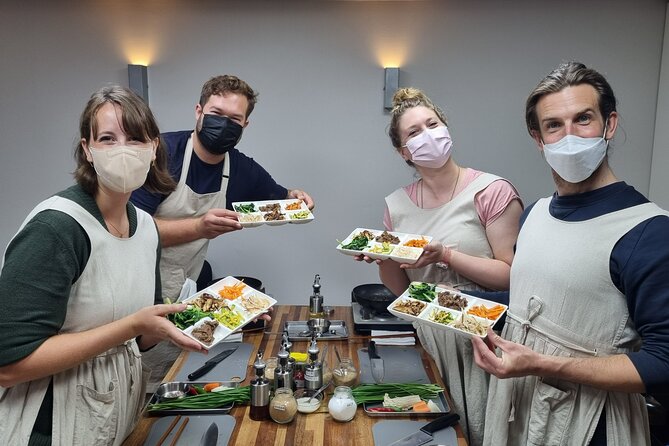
Min is repeatedly praised for being warm, patient, funny, and attentive. Those qualities matter in a cooking class because a recipe can be found online, but good teaching is harder to replace.
Her approach appears to work for mixed skill levels. People who cook very little received enough direction to succeed, while more experienced home cooks still valued the cultural explanations and conversation. One participant described the class as feeling like cooking with a friend, which captures the relaxed tone better than a formal culinary-school image.
Min also offers practical suggestions for the surrounding area. At the end, there is time for counseling about places nearby. This can be useful if you are still planning your Haeundae days, though the supplied information does not specify exactly what recommendations are included.
Dietary communication is important. Gluten-free and vegetarian meals have been provided, but you should state your needs when booking rather than arriving and hoping for a last-minute adjustment. The information confirms these options through past arrangements, not a fixed menu guarantee for every date.
How the route fits around the class
The listed area references include Dongbaekseom, Haeundae Beach, The Bay 101 Yacht Club, and Nurimaru APAC House. These are important Haeundae landmarks, but do not assume the cooking session includes a guided sightseeing walk to all four.
The start and end point is 37 Marine City 3-ro. The activity ends there, and the surrounding landmarks help you plan the rest of your day.
Dongbaekseom is the wooded coastal peninsula beside Haeundae Beach. It is a sensible place to visit before or after class if you want sea views and a walk.
Haeundae Beach is Busan’s most famous stretch of sand. It is close enough to pair with the cooking class, but allow time for transport and do not rush the class in order to fit in beach sightseeing.
The Bay 101 Yacht Club is a Marine City attraction known for waterfront views and the city skyline. Its location makes it a convenient add-on after lunch, especially if you want an urban Busan view rather than another historic site.
Nurimaru APAC House is associated with the 2005 APEC summit and sits on Dongbaekseom. It pairs naturally with a walk around the peninsula, but entrance arrangements and sightseeing time are separate from the cooking class.
The practical point is simple: treat these as nearby planning references, not as four guaranteed stops during the three-hour food lesson.
Is $100 a fair price?
At $100 per person, this class is not a bargain meal. You can eat Korean food for much less in Busan. The price makes more sense when you count the personal station, ingredients, instruction, cultural background, lunch, dessert, certificate, and small group.
The group limit is important here. With no more than eight people and usually a maximum of seven, Min can offer one-on-one help. That is very different from a large class where you stand behind someone else and watch a cook do the difficult parts.
The value is strongest for you if you enjoy learning a skill and want to understand what you are eating. It is weaker if your main goal is simply to sample several Korean dishes at the lowest cost.
The class also gives you something portable. Recipes for bibimbap, buchon jeon, and seaweed soup can go home with you. Several participants planned to cook the dishes again, including one person who felt comfortable making the meal after returning to Sydney.
I would compare the price with other structured activities in Busan, not just restaurant prices. A three-hour cultural experience with lunch can fit the budget of someone who values personal teaching. For a family of four, however, the total cost rises quickly, so make sure everyone actually wants to cook.
Who should book this experience?
I would recommend it most strongly to:
- First-time visitors who want a personal introduction to Korean food
- People who enjoy cooking classes while abroad
- Couples and friends looking for a shared morning activity
- Families with older children and teenagers
- Solo participants who like meeting a small international group
- Anyone who wants recipes that can be repeated at home
It is also a good fit if you are nervous about Korean food customs. The sauces, menu language, apron, bapsang meal, tea, and cultural explanations provide useful context in one sitting.
You may want to skip it if you dislike hands-on activities, need a very cheap meal, or have a tight morning schedule. The food menu varies, and the class requires good weather, so it is not ideal for someone who wants a fully fixed program with no uncertainty.
The activity allows service animals and is near public transportation. Still, you should check the meeting address carefully and contact the provider about any mobility, dietary, or other practical needs.
Timing, booking, and cancellation advice
The class starts at 10:00 a.m. and runs for about three hours. It is booked an average of 38 days ahead, which suggests that you should not leave it until the last morning of a short Busan visit.
A mobile ticket is provided, and confirmation arrives when you book. Free cancellation is available until 24 hours before the local start time. Changes or cancellations inside that 24-hour window are not accepted for a refund.
The good-weather requirement is unusual for a cooking class, so keep an eye on the forecast. If the provider cancels because of poor weather, you are offered another date or a full refund.
Book early if you need a specific date, a dietary adjustment, or a place in a small group. The class is not scheduled as a special temple-food or palace-style menu on the supplied 2025 dates, so confirm any special theme before paying.
Should you book the Haeundae cooking class?
Yes, if you want more than a meal. The strongest part of this experience is the combination of patient instruction and cultural context. Min’s teaching style, the small group, and the chance to sit down and eat your own Korean dishes give the morning a personal feel.
The price is the main hurdle. I would not choose it for a cheap introduction to Korean food. I would choose it for a useful, friendly class that helps you understand Korean sauces, recipes, dining customs, and menu language.
If you have one free morning in Haeundae and enjoy food, this is a worthwhile choice. Pair it with Dongbaekseom or Haeundae Beach afterward, but leave the class plenty of time. Good cooking should not be rushed.
FAQ
Where does the Korean cooking class meet?
The class starts at 37 Marine City 3-ro in Haeundae, Busan, South Korea. It ends back at the same meeting point.
What time does the class start?
The stated start time is 10:00 a.m.
How long does the cooking class last?
The experience lasts approximately three hours.
What dishes will I cook?
The standard menu can include bibimbap, seaweed soup, and a Korean pancake. The menu may vary by date.
Do I need cooking experience?
No. Previous culinary experience is not necessary, and the instructor provides individual attention at your cooking station.
How many people can join?
The activity has a maximum of eight participants. The class is also described as having a maximum of seven people, so expect a small group.
Can I sit at a table instead of on the floor?
Yes. The meal is normally served at a traditional Korean floor table, but a table with chairs is available if floor seating is difficult.
Can I cancel for a refund?
Yes, you can cancel up to 24 hours before the local start time for a full refund. Cancellations or changes made less than 24 hours before the start are not refunded.
More Busan Trips
- Busan: Gyeongju Guided Day Trip to Three Kingdoms Capital
★ 4.8 · 1,925 reviews - Small Group Full Day Busan Tour (Max 6 Pax)
★ 5.0 · 1,464 reviews - From Busan: Gyeongju UNESCO World Heritage Guided Day Tour
★ 4.8 · 1,250 reviews - Busan Private Tour with licensed tour guide + private vehicle
★ 5.0 · 1,143 reviews
More Workshops
- [BUSAN,GamcheonVillage] Private Korean Art Painting Class
★ 5.0 · 20 reviews - Korean Pottery Town Tour with the pottery class from Busan
★ 5.0 · 7 reviews - Busan private tour : K-pop dance class + tour
★ 5.0 · 6 reviews - Busan Dialect Class with local snack
★ 5.0 · 3 reviews
Just added around Busan
- Korean UNESCO World Heritage Tour including Gyeongju, Andong and Daegu(2N3D)★ 5.0 · 3 reviews
- Busan Bliss: Panoramic Yacht & Urban Exploration with Sky Capsule★ 5.0 · 3 reviews
- Busan day trip including Gamcheon culture village from Seoul by KTX train★ 5.0 · 3 reviews
- Busan Seafood Tour : Oyster village Tour with Oyster cuisines★ 5.0 · 3 reviews
- 1 Day Private Busan Guided Tour★ 4.5 · 3 reviews
- 2-DAYS Busan Customized and Included Night tour★ 5.0 · 3 reviews
- Full-Day Jinhae Cherry Blossom festival Private tour★ 5.0 · 3 reviews
- Busan Dialect Class with local snack★ 5.0 · 3 reviews
Cooking Classes, compared.

Local Home Korean Cooking Class & Market Adventure in Seoul
Read our review →
Master Korean traditional cooking with a Kimchi chef
Read our review →
Korean Cooking Class at a Local Home and Market Tour
Read our review →

Experience Korean Cooking in Modern Hanok Kitchen
Read our review →
Korean Cooking Class with Grocery Shopping at Seoul Local Market
Read our review →
Korean Kimchi Making Day Experience with a Local Market Tour
Read our review →Browse the lists this tour appears in