
Reviewed · GYEONGJU HERITAGE TOURS
Busan: 7 Highlights Gyeongju City One Day Tour
Gyeongju packs centuries into one day. This Busan day trip makes the city’s Silla tombs, Buddhist art, old villages, and food streets manageable without arranging several trains and taxis. I like the time-saving route from Busan and the chance to see both major monuments and everyday Korean culture, including Hwangnidan-gil’s famous 10 won bread. The main drawback is the pace: seven stops leave limited time for lingering.
I also like the practical transport and the guides’ personal help with photographs. Leo received special praise for his friendly, clear explanations, while another guide handled English, Chinese, and Korean. Just remember that meals are not included, Daereungwon admission is listed separately, and the vehicle may be a car, van, or coach depending on the group.
In This Review
- Key points to know before you book
- Why this Busan to Gyeongju day trip makes sense
- Daewangam Suspension Bridge: a new opening with sea air
- Bulguksa Temple and the stone pagodas
- Hwangnidan-gil: old Gyeongju with a modern appetite
- Daereungwon and the Silla royal tombs
- Cheomseongdae, Asia’s oldest astronomical observatory
- Gyochon Traditional Village and the Choi family story
- Woljeonggyo Bridge and the final photographs
- Guide quality and the value of explanation
- Is $47 good value?
- Who should choose this tour?
- Should you book the Gyeongju day tour?
- FAQ
- How much does the tour cost?
- What is included in the tour?
- Are meals and drinks included?
- Where does the tour start and finish?
- Does the tour visit Seokguram Grotto?
- Can infants join the tour?
- Is the tour suitable for wheelchair users?
- Can I cancel for a full refund?
- Can the itinerary or vehicle change?
Key points to know before you book
- A full day from Busan: Morning collection at three Busan meeting points, followed by a return to Haeundae or Seomyeon.
- Seven contrasting stops: Sea views at Daewangam, Bulguksa Temple, royal tombs, food shops, an old village, and a rebuilt Silla bridge.
- Important itinerary change: From September 15, 2025, Daewangam Suspension Bridge replaces Seokguram Grotto.
- Food and photos matter here: Hwangnidan-gil offers trendy snacks, shops, and plenty of picture spots, especially 10 won bread.
- History with a human scale: Gyochon Traditional Village connects Joseon-era homes with the story of the wealthy Choi family.
- Good value at $47: Transport, an English-speaking guide and attraction admissions are included, but meals and Daereungwon admission are not.
Why this Busan to Gyeongju day trip makes sense
Gyeongju is not a single historic compound. It is a whole city filled with royal graves, temples, observatories, bridges, village houses, and modern cafés. That makes independent sightseeing rewarding, but it also creates a transport problem. The main sites are spread across the city and surrounding hills.
For $47 per person, this tour handles the long round trip from Busan and connects seven notable places in one day. That is useful if you have only a short stay in Busan or do not want to work out local bus routes between distant sights. You are paying mainly for convenience, routing, and a guide who can explain what you are seeing.
The day begins from one of three Busan meeting points, with the exact point depending on the option you choose. You need to arrive at least 5 to 10 minutes early. Late arrival or a missed departure cannot be refunded, so this is not a morning for a last-minute coffee run.
The vehicle can be a car, van, or coach. Group size determines the setup, which means the feel of the day can vary. A smaller vehicle may feel more personal, while a coach gives you more room but may take longer to load at each stop.
More City Tours in Busan
- 7 Highlights Gyeongju City One Day Small Group Tour from Busan
★ 5.0 · 24 reviews - 3-Days 2-Nights Gyeongju UNESCO Sites & Busan City [Private Tour from Seoul]
★ 4.5 · 11 reviews - UNESCO World Heritage Gyeongju & Busan Two-city Private Tour.
★ 5.0 · 7 reviews
Daewangam Suspension Bridge: a new opening with sea air
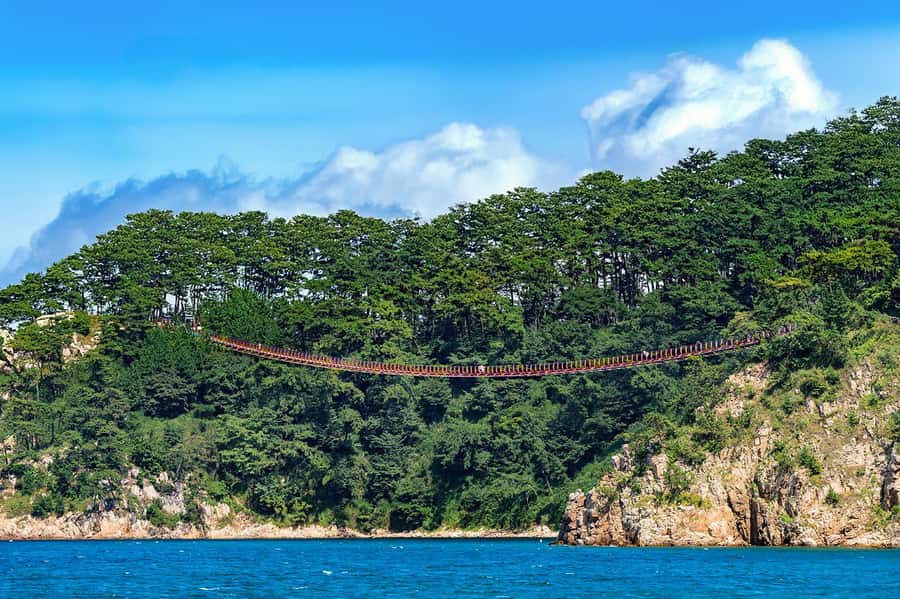
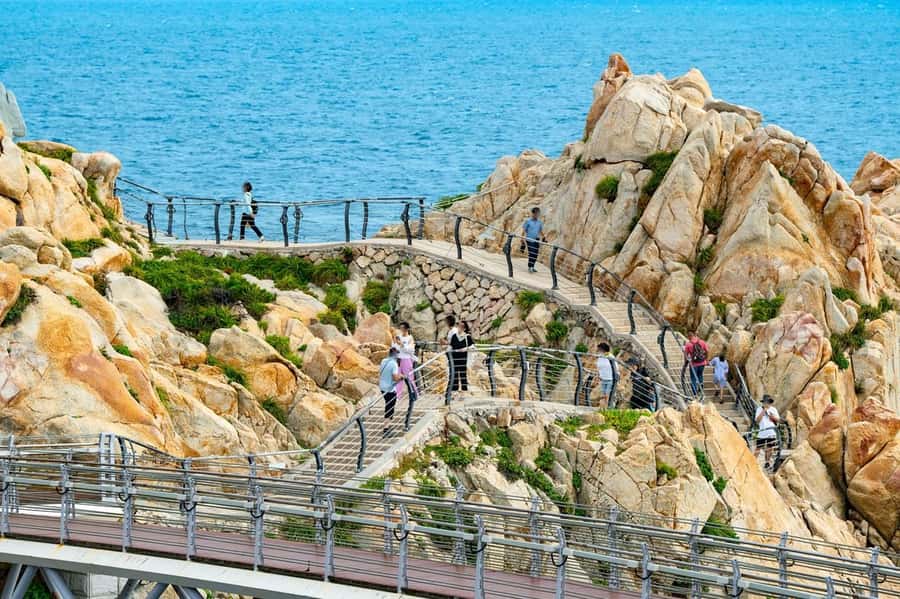
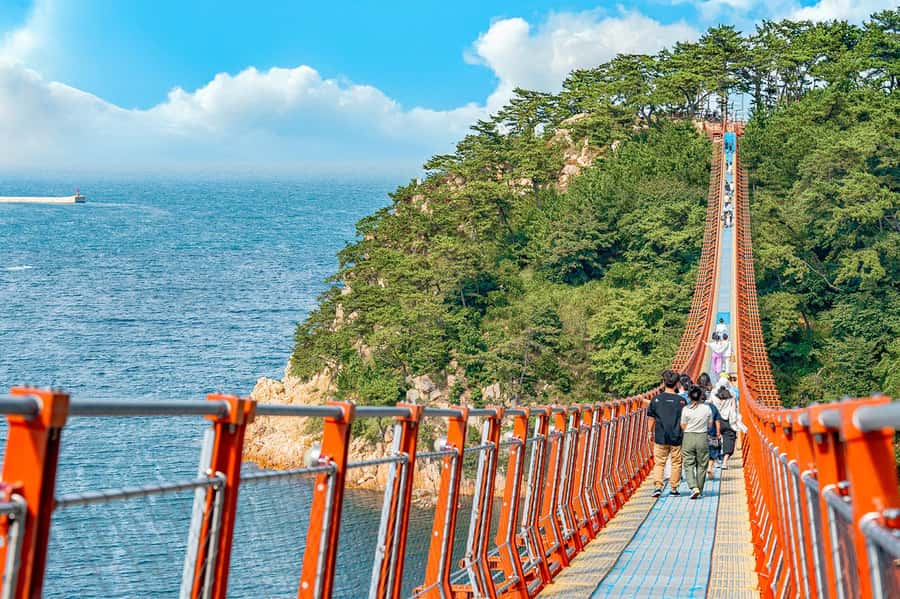
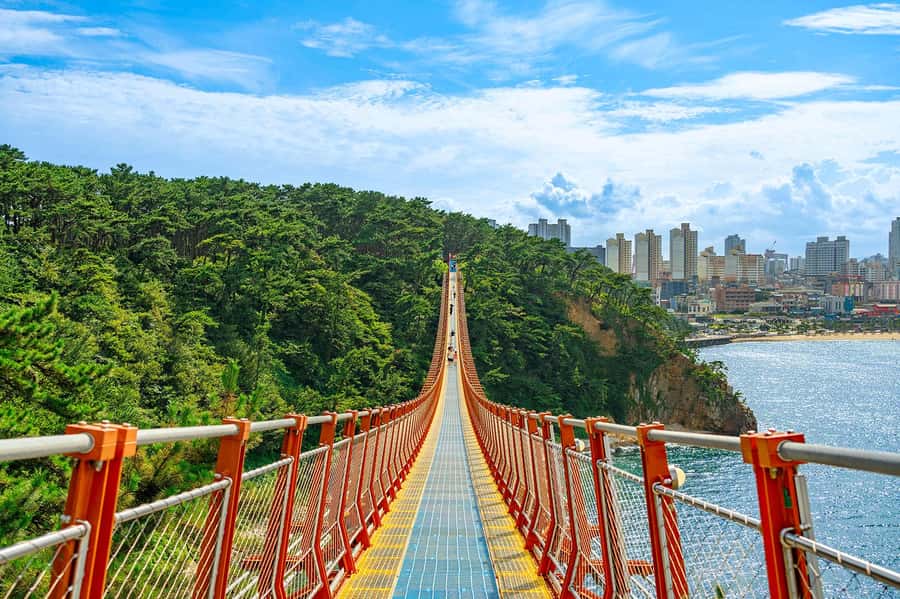
From September 15, 2025, the tour begins its sightseeing with Ulsan Daewangam Suspension Bridge instead of Seokguram Grotto. The bridge crosses a rocky coastal setting, with sea views and a more physical start to the day.
This is a useful change for anyone who wants variety. You begin with open views, rocks, and a little height before turning inland toward Gyeongju’s historic sites. It also gives the itinerary a more active opening than a museum-style visit.
The bridge is described as thrilling, so people with heart problems should take care. The tour is also not suitable for wheelchair users. Weather can affect the exact timing, and the order or stopping time may change with traffic and conditions.
If you are booking before September 15, 2025, check which version of the route applies. The supplied information specifically says Daewangam replaces Seokguram from that date. Do not assume both are included.
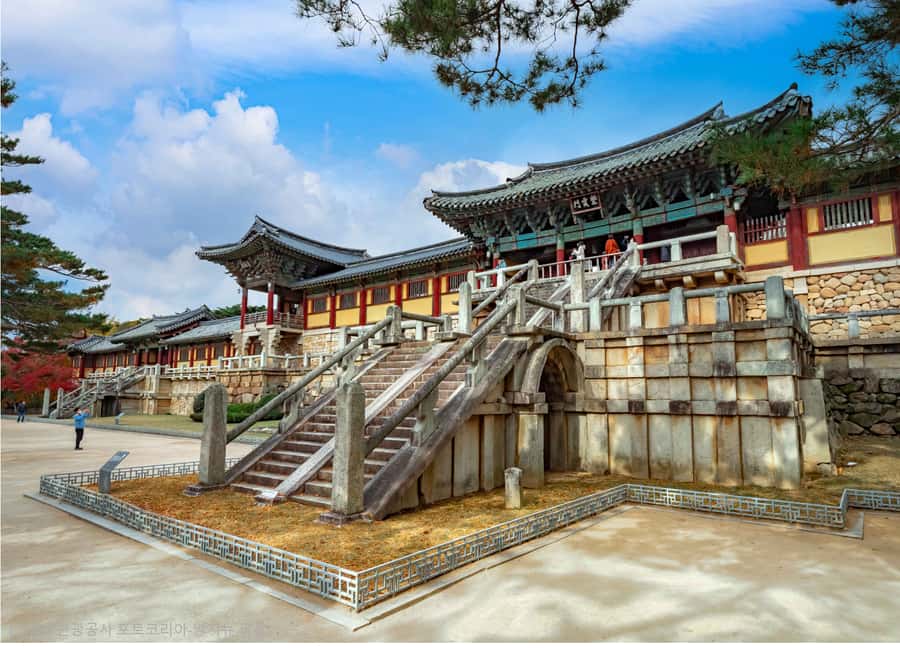
Bulguksa Temple and the stone pagodas
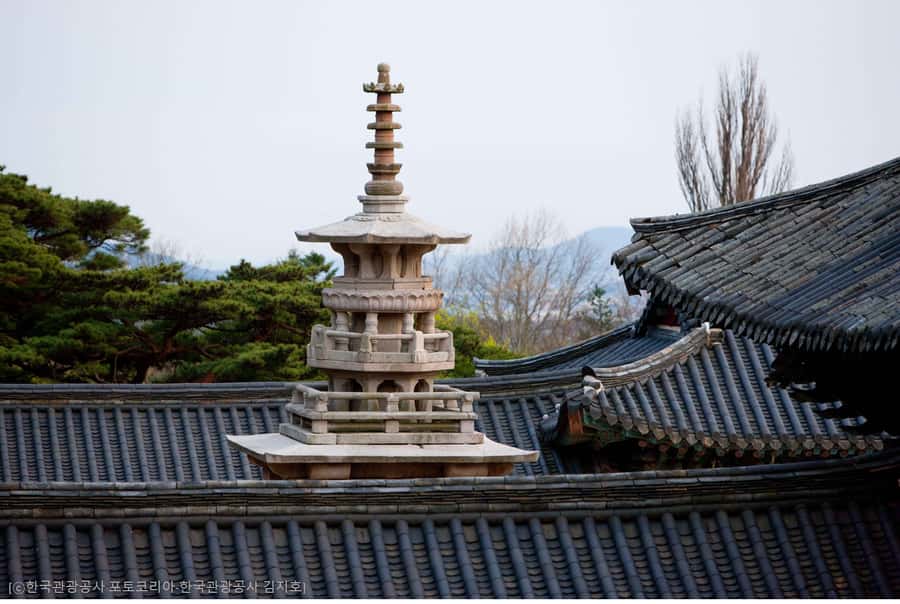
Bulguksa is the day’s major Buddhist site. Set on Tohamsan, the temple is associated with six National Treasures, including the Dabotap and Seokgatap stone pagodas.
The Dabotap has a fun modern connection: its image appears on the South Korean 10 won coin. That small detail helps you look at the pagoda differently. You are not just seeing an old stone structure, you are recognizing an image that appears in daily Korean life.
Bulguksa rewards attention to carved stone, temple structures, and the way the complex sits on the mountain. The stop is especially worthwhile if you want historical context rather than a quick collection of photo backdrops. A guide can explain why the temple matters and point out features you might otherwise walk past.
The tradeoff is time. A one-day route has to share its hours among several places, so you should not expect the slow, quiet pace of a dedicated Bulguksa visit. If the temple is your main reason for coming to Gyeongju, an overnight stay would let you see it with less pressure.
Hwangnidan-gil: old Gyeongju with a modern appetite
Hwangnidan-gil changes the mood completely. This pedestrian-only street is lined with trendy shops and restaurants, making it one of the city’s best places to see how Gyeongju mixes old architectural character with current Korean café and snack culture.
The signature bite is 10 won bread, or sipwonppang. It is a popular snack shaped around the coin’s name, and it is an easy food stop during a busy sightseeing day. Meals are not included, so you should budget for your own lunch, drinks, and snacks here.
I like this part of the route because it keeps the tour from becoming a string of ancient monuments. You can browse, eat, and take photographs while seeing how the historic center functions today. The street is also a practical place to pick up something small if you have not brought food.
Still, Hwangnidan-gil can feel more commercial than traditional. The shops and cafés are part of modern Gyeongju, not a preserved Joseon village. That is not a flaw, but it helps set expectations. You are coming for a lively tourist street with heritage surroundings, not an untouched old quarter.
More Day Trips in Busan
- Busan: Gyeongju Guided Day Trip to Three Kingdoms Capital
★ 4.8 · 1,925 reviews - From Busan: Busan & Gyeongju One Day Tour
★ 5.0 · 5 reviews - Busan: Winter Healing Park and (Gyeongju/Daegu) One Day Tour
★ 5.0 · 5 reviews - 1-Day Busan Shore Excursion – City Highlights for Cruise Guests
★ 4.5 · 36 reviews
Daereungwon and the Silla royal tombs
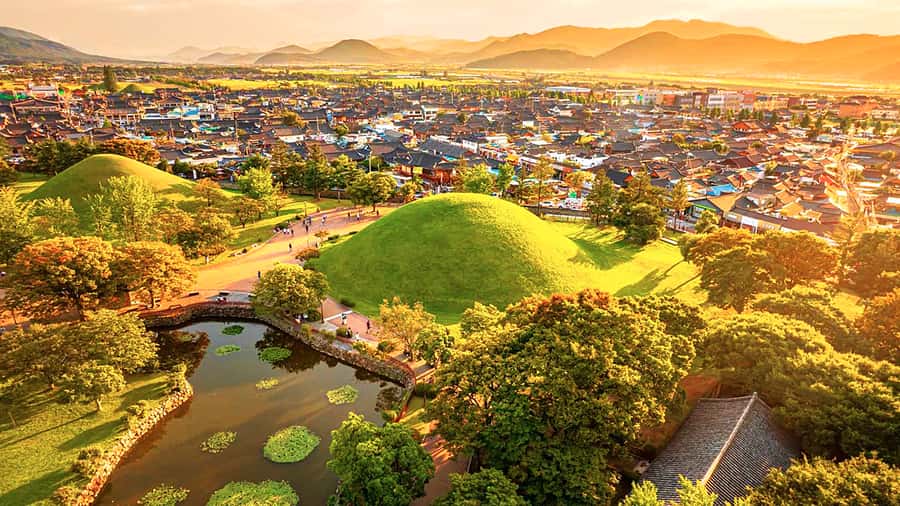
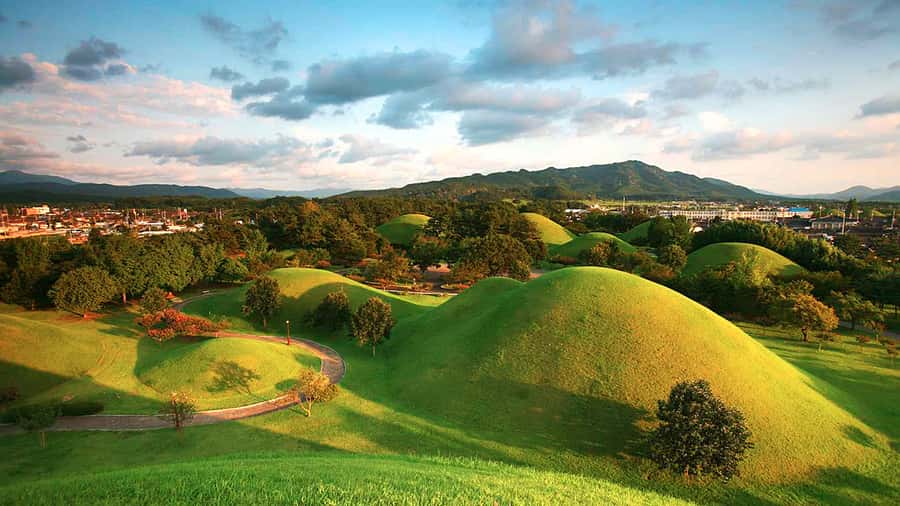
Next comes Daereungwon, a large complex of grass-covered tumuli from the Silla period. The grounds contain 23 tombs associated with kings, queens, and nobles.
The rounded burial mounds are simple from the outside, but their construction helped protect many objects from thieves. Some finds are now designated National Treasures. A guide adds real value here because the low green mounds do not explain themselves. Without context, you might see them as pleasant hills. With context, they become royal burial places built to guard the past.
Daereungwon sits right beside Hwangnidan-gil, so the pairing works well. One stop shows modern food and shopping, the other points back to the Silla capital. You move from a 10 won bread shop to royal tombs within minutes.
Pay attention to the admission detail. Daereungwon Tomb Complex admission is not included, even though attraction admissions are generally part of the tour package. Set aside a small amount for this separate entry rather than assuming every ticket is covered.
The open grounds may require a fair amount of walking. Comfortable shoes will help, especially since the full day includes the temple, bridge, village, and other outdoor stops.
Cheomseongdae, Asia’s oldest astronomical observatory
Cheomseongdae is presented as the oldest astronomical observatory in Asia. Its stone form is compact and distinctive, which makes it an easy stop for photographs, but its importance goes beyond its appearance.
This structure shows the scientific side of Silla Korea. The day is not only about royal power and religion. It also points to the effort to observe the skies and organize knowledge. That makes Cheomseongdae a useful counterpoint to Bulguksa and the tombs.
You will probably have time to look around and take photographs, but not to treat the area as a long independent visit. The tour’s strength is the number of different subjects covered. Its weakness is that each subject receives only a portion of the day.
Photography is one of the clear strengths of this route. Guides have helped participants find good angles and take group photos, which is valuable if you are sightseeing alone or want everyone in the picture.
Gyochon Traditional Village and the Choi family story
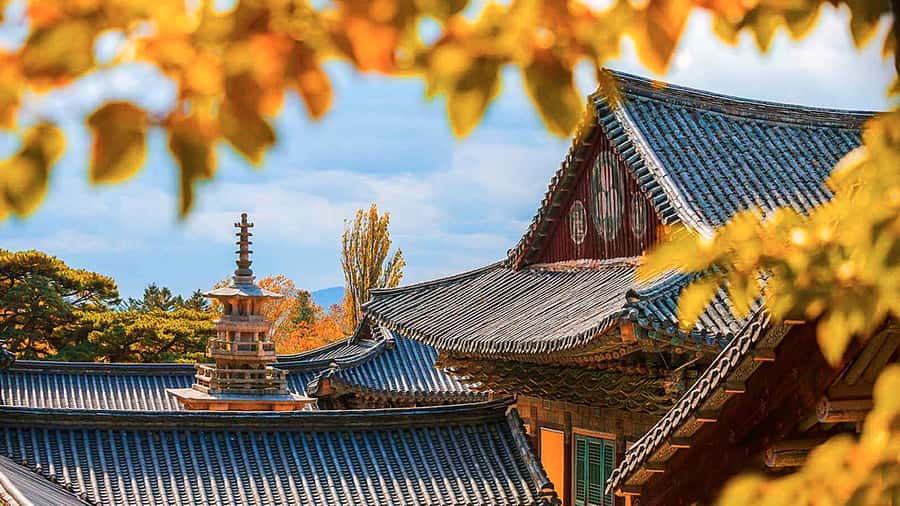
Gyochon Traditional Village brings you into a more domestic chapter of Korean history. The area contains old Hanok houses from the Joseon Dynasty, including homes connected with the Gyeongju Choi family.
The Choi family is remembered as a wealthy landowning family that remained the richest in the region for twelve generations, roughly 400 years. That detail gives the village a human story. You are not simply looking at tiled roofs and timber buildings. You are seeing the setting of a powerful local family and the social world that surrounded it.
The village is also associated with Gyeongju Gyo-dong Beopju, a traditional Korean rice wine brewed and sold there. Since food and beverages are not included, this is a chance to explore local tastes on your own budget. The tour does not promise a tasting, so consider it an optional purchase rather than a scheduled activity.
Gyochon is a good stop for visitors who want more than palace architecture. Hanok homes, family history, and traditional food production make the experience feel grounded in ordinary life. You may find the visit less dramatic than Bulguksa or Woljeonggyo, but it helps fill out the picture of Gyeongju.
Woljeonggyo Bridge and the final photographs
Woljeonggyo is adjacent to Gyochon Traditional Village, so the transition is easy. The bridge dates back to the Unified Silla period, from AD 676 to 935, though the original structure burned during the Joseon Dynasty. It was rebuilt in 2018 and is now described as Korea’s largest wooden bridge.
This is one of the tour’s strongest photo stops. The long wooden structure, water, and traditional design create a calmer finish after a busy day of monuments and streets. If the timing works with evening light, the bridge can be especially appealing. Exact timing depends on traffic and weather, and the information does not guarantee a night visit.
One published account also praised Donggung Palace and Wolji Pond, including the lit Woljeonggyo Bridge. However, the stated route for this experience lists Woljeonggyo, not Donggung Palace and Wolji Pond, so you should not book expecting both. The itinerary can change slightly, but the named stops are the safest guide to what you will see.
After Woljeonggyo, the vehicle returns to Busan, ending at the meeting point near Haeundae Station or Seomyeon Station according to the selected option. The return time is not fixed because weather and traffic can shift the schedule.
Guide quality and the value of explanation
A guide is important on this particular day. Gyeongju’s sights are visually impressive, but many of their stories are not obvious from the outside. The meaning of a tomb mound, a pagoda, or a rebuilt bridge becomes clearer when someone connects it to Silla, Joseon, religion, science, and local families.
The strongest praise has gone to the guides’ friendliness, clear explanations, and attention to each person in the group. Leo was singled out for being open, informative, and easy to spend the day with. Another guide was praised for speaking English, Chinese, and Korean clearly and for helping with photographs.
The official inclusion is an English-speaking guide and driver, so English is the reliable expectation. Multilingual service may depend on the guide assigned to your departure.
Is $47 good value?
At $47, this is a strong convenience buy for a first Gyeongju visit from Busan. Round-trip transport alone saves you from arranging a long journey and then connecting several city sights. You also get guided commentary and access to the listed attractions, with the specific exception of Daereungwon admission.
The price does not cover meals, beverages, personal purchases, or that separate Daereungwon ticket. If you buy lunch, 10 won bread, drinks, and rice wine, your total cost will rise. That is normal for a full-day outing, but budget for it before you book.
The best value comes when you want breadth. You will see coast, temple, tombs, food streets, Hanok homes, an observatory, and a major bridge. The weaker value comes if you prefer deep time at one or two places. For that style, public transport or an overnight stay would give you more freedom.
Who should choose this tour?
I would choose this tour if you are staying in Busan, have one free day, and want Gyeongju’s main themes without handling the transport yourself. It suits first-time visitors, solo sightseers who appreciate help with photos, and anyone who likes a structured day with a mix of history and food.
It is less suitable for wheelchair users, people with heart problems, or anyone who dislikes walking and changing locations. Infants aged 0 to 2 can ride free on an adult’s lap, but baby seats are not available.
The exact vehicle, route order, and drop-off time can change with group size, traffic, and weather. Cancellation is allowed up to 24 hours in advance for a full refund, but sudden sickness and ordinary rainy or snowy weather are not listed as grounds for an unforeseen-event refund.
Should you book the Gyeongju day tour?
Book it if you want an efficient introduction to Gyeongju from Busan and value a guide who can explain the details, point out photo spots, and keep the day moving. The combination of Bulguksa, Silla tombs, Hwangnidan-gil, Gyochon, and Woljeonggyo gives you a broad picture of the city for a reasonable $47.
Skip it if you want to spend half a day at Bulguksa, linger over every café, or set your own return time. For most short-stay visitors, though, this is a practical way to see a great deal of Gyeongju in one day. Arrive early, bring walking shoes, keep money aside for food and Daereungwon, and check the Daewangam versus Seokguram schedule before paying.
FAQ
How much does the tour cost?
The tour costs $47 per person.
What is included in the tour?
An English-speaking tour guide and driver, round-trip transfers between destinations, and admission to the listed attractions are included. Daereungwon Tomb Complex admission is specifically excluded.
Are meals and drinks included?
No. Meals, beverages, and other personal expenses are not included.
Where does the tour start and finish?
The meeting point varies according to the option booked. The tour finishes back at the meeting point, with returns to Haeundae Station or Seomyeon Station in Busan.
Does the tour visit Seokguram Grotto?
From September 15, 2025, Ulsan Daewangam Suspension Bridge replaces Seokguram Grotto on the route.
Can infants join the tour?
Infants aged 0 to 2 can join free of charge if they sit on an adult’s lap. Baby seats are not available.
Is the tour suitable for wheelchair users?
No. The experience is listed as unsuitable for wheelchair users.
Can I cancel for a full refund?
Yes. You can cancel up to 24 hours in advance for a full refund. Late arrivals and no-shows cannot be refunded.
Can the itinerary or vehicle change?
Yes. The vehicle may be a car, van, or coach depending on participant numbers. Traffic and weather can cause small itinerary or drop-off time changes.
More Busan Trips
- From Busan: Gyeongju UNESCO World Heritage Guided Day Tour
★ 4.8 · 1,250 reviews - Gyeongju UNESCO World Heritage Guided Day Tour from Busan
★ 5.0 · 660 reviews - Old Korea Thousand History Tour of Gyeongju from Busan
★ 5.0 · 518 reviews - Busan: Gyeongju UNESCO Legacy Tour with National Museum
★ 5.0 · 172 reviews
More Day Trips
- Mt. Seorak+Nami Island+Garden of Morning Calm Day Trip from Seoul
★ 5.0 · 959 reviews - Seoul: Gangwon-do Day Trip with Alpaca World & Nami Island
★ 4.7 · 581 reviews - Day Trip to Nami Island with Rail bike and The Garden of Morning Calm
★ 4.5 · 459 reviews - Day Trip to Nami Island with The Garden of Morning Calm
★ 4.5 · 215 reviews
Just added around Gyeongju
- 7 Day Essential Korea Tour(Seoul, Nami, DMZ, Andong, Gyeongju, Busan_Meal Incl.)★ 5.0 · 3 reviews
- Korean UNESCO World Heritage Tour including Gyeongju, Andong and Daegu(2N3D)★ 5.0 · 3 reviews
- From Busan: Gyeongju Small Group Photo Tour & Hotel Pick-up★ 5.0 · 3 reviews
- Full Day Busan and Gyeongju Guided Tour★ 5.0 · 4 reviews
- Gyeongju private tour with an official tour guide (Unesco)★ 4.5 · 4 reviews
- UNESCO Listed Historic Sites in Gyeongju National Park★ 5.0 · 5 reviews
- Full Day Private car tour to UNESCO Gyeongju&Yangdong village★ 5.0 · 5 reviews
- From Daegu: Gyeongju UNESCO Tour 7 Highlights with Bulguksa★ 4.6 · 5 reviews
Gyeongju Heritage Tours, compared.

Gyeongju Guided Day Trip to Three Kingdoms Capital
Read our review →
Gyeongju UNESCO World Heritage Guided Day Tour
Read our review →
Gyeongju UNESCO World Heritage Guided Day Tour from Busan
Read our review →
Old Korea Thousand History Tour of Gyeongju from Busan
Read our review →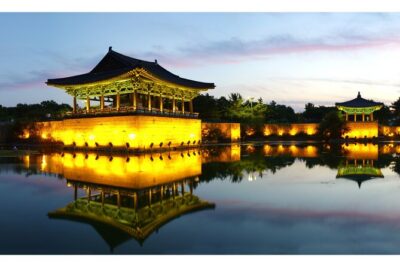
Gyeongju UNESCO sites Private tour with licensed tour guide
Read our review →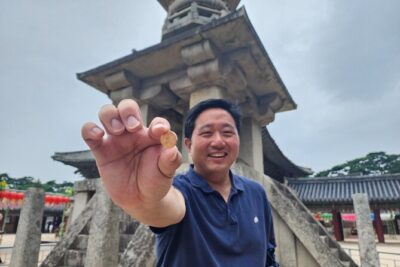
Private Gyeongju Tour – Explore Gyeongju UNESCO Sites
Read our review →
Gyeongju UNESCO Legacy Tour with National Museum
Read our review →
UNESCO Heritage Tour Including Bulguksa Temple
Read our review →Browse the lists this tour appears in