
Reviewed · GYEONGJU HERITAGE TOURS
Private World Heritage Gyeongju Taxi Tour
Gyeongju rewards a car. This private taxi tour makes it easy to reach Bulguksa, Seokguram, royal tombs, and other far-flung sights without wrestling with bus routes. I especially like the door-to-door pickup and the freedom to shape the day around your interests. The main drawback is that English-speaking drivers are temporarily unavailable as a standard option, so you may need a translation app or pay extra to request one.
I also like the small private format, with only your group in the vehicle, plus fuel, tolls, parking, and the driver’s meal included. The tour can run from three to eight hours, which is useful if you want a quick introduction or a full day around Silla-era Gyeongju. Just remember that admission fees, lunch, travel insurance, and tips are extra.
In This Review
- Key Points Before You Book
- Why a Private Car Helps in Gyeongju
- Bulguksa Temple and Seokguram Grotto
- Cheonnyeon Forest Garden and Bunhwangsa Temple
- Donggung and Wolji, Best in the Right Light
- Gyochon Village and Gyeongju’s Living Traditions
- Cheomseongdae, Daereungwon, and the Royal Tombs
- Hwangridan-gil, Cafes, and a Modern Gyeongju
- Timing, Vehicles, and What the Price Covers
- Language and Guide Support
- Who Will Get the Most From This Tour?
- My Booking Advice
- Should You Book the Gyeongju Taxi Tour?
- FAQ
- How much does the private Gyeongju taxi tour cost?
- How long does the tour last?
- Where does the tour start?
- Can I be picked up at my hotel?
- Does the tour return to the starting point?
- Is the tour private?
- Is an English-speaking driver included?
- Are admission fees included?
- Is lunch included?
- How much luggage can the vehicles carry?
Key Points Before You Book
- UNESCO highlights in one ride: Visit Bulguksa Temple and Seokguram Grotto, two of Korea’s first UNESCO World Heritage sites.
- Flexible timing: Choose a three to eight-hour outing and adjust the route to fit your interests and energy.
- Private vehicle only: Your group gets the car, so you avoid waiting for buses and can take short breaks between stops.
- Translation support matters: Korean-speaking drivers can use online language assistance. English-speaking drivers are available only by request with an extra fee.
- Good value for four people: The $112.70 rate is per group of up to four, not per person.
- Useful local care: Drivers have helped with photos, umbrellas, restaurant suggestions, and changes to the day’s plan.
Why a Private Car Helps in Gyeongju
Gyeongju is not a compact old town where every major sight sits around one square. Its temples, tombs, gardens, museums, and palace remains are spread across a wide area. Public transportation can get you around, but it takes planning, waiting, and patience.
This tour solves that problem in a simple way. You are collected at KTX Gyeongju Station or at a hotel in central Gyeongju, then driven between the places you choose. You can spend more time at a favorite stop and less time at one that does not grab you.
The vehicle is also a welcome break in hot or wet weather. Drivers have supplied umbrellas, helped with photographs, and provided short rest periods during long days. That practical care may matter more than a polished speech, especially when you are moving between outdoor sites.
The tour is private, so you do not have to match the pace of a busload of strangers. A family can keep the day gentle. A group of friends can add more stops. You can also ask for a shorter visit if you are fitting Gyeongju between train journeys.
More Historical Tours in Gyeongju
- From Busan: Gyeongju UNESCO World Heritage Guided Day Tour
★ 4.8 · 1,250 reviews - Gyeongju UNESCO World Heritage Guided Day Tour from Busan
★ 5.0 · 660 reviews - Old Korea Thousand History Tour of Gyeongju from Busan
★ 5.0 · 518 reviews
Bulguksa Temple and Seokguram Grotto
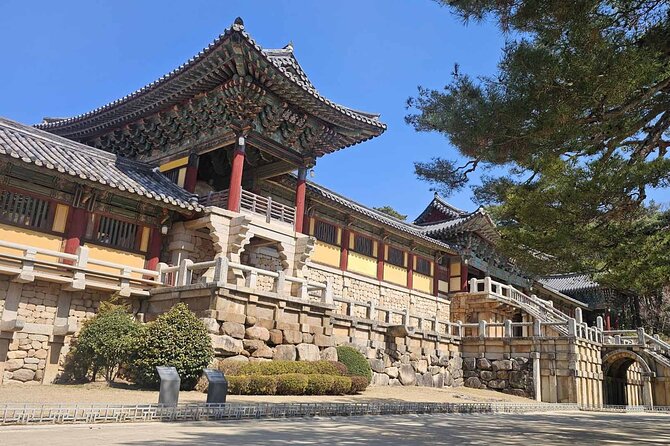
Bulguksa Temple is the natural first major stop. Built during the Silla period, it is one of Korea’s most important Buddhist sites and was listed with Seokguram Grotto as a UNESCO World Heritage site in 1995.
Allow about an hour here. That gives you time to walk through the temple grounds, see the stone features, and appreciate the setting without turning the visit into a hurried photo stop. The attraction is free according to the tour details, although the general terms say admission fees are not included, so you should confirm any current charges before setting out.
The temple is also a good test of how much explanation you need. An English-speaking driver, if specially arranged, provides brief comments at each stop. A Korean-speaking driver can assist through online translation. Do not expect a long formal lecture as part of the standard service. The value is having transport, local help, and a person who can point you in the right direction.
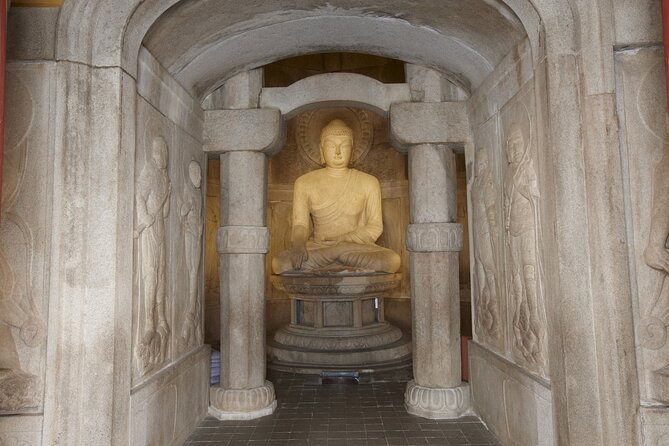
Seokguram Grotto is usually paired with Bulguksa because the two sites belong to the same UNESCO designation and are linked by the Silla Buddhist tradition. Plan about an hour here as well.
The grotto is more focused than Bulguksa. You are going for the famous stone Buddha and the unusual setting, not for a sprawling complex. The ride up also shows why a car is useful. Having a driver take you between the temple and grotto saves energy and makes it easier to fit both into a short tour.
These two stops form the strongest historical core of the outing. If you only have three or four hours, I would give them priority, then choose one or two central Gyeongju sights.
Cheonnyeon Forest Garden and Bunhwangsa Temple
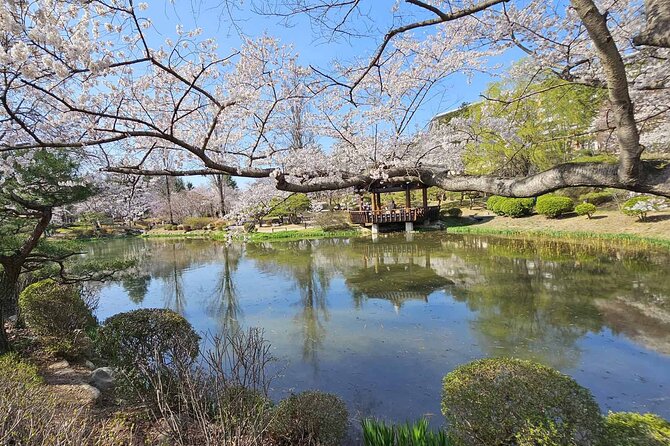
Cheonnyeon Forest Garden, also called Gyeongju Millennium Forest, covers about 28 hectares. It offers a quieter change of pace after the major temple sites, with trees, open paths, and a more relaxed setting.
The planned visit is about 30 minutes. That is enough for a short walk and photographs, but not enough for a slow exploration of the whole garden. If green space is a major reason for your visit, ask the driver about spending longer here and trimming another stop.
Bunhwangsa Temple dates to 634, during the Silla dynasty, and lies near the former Hwangnyongsa Temple. Its most notable feature is the stone brick pagoda, along with other cultural remains.
The half-hour allocation makes sense for a quick look. Bunhwangsa is smaller than Bulguksa, so you can see its key features without giving up most of the day. I would pair it with the Hwangnyongsa History and Culture Center if ancient temple architecture interests you.
The center explains the former Hwangnyongsa Temple and its place in Gyeongju’s past. The supplied schedule does not give a fixed visit length or admission detail, so treat it as a possible addition rather than a guaranteed timed stop. Tell the driver early if you want to include it.
Donggung and Wolji, Best in the Right Light
Donggung and Wolji was part of a Silla royal palace complex and served as a royal residence. The pond and palace remains are among Gyeongju’s most recognizable sights.
This stop can work during the day, but it is especially attractive after dark, when the buildings and water are lit. One night outing received praise for the beauty of the sights, though the same experience could be walked if you are comfortable covering a lot of ground.
That is an important point about the taxi option. The car is most valuable for linking distant areas. Within the central historic zone, several sights are close enough to visit on foot, depending on your stamina and the weather. A private ride remains useful if you want to reduce walking, but you should not assume every central stop requires a taxi.
Ask about Donggung and Wolji when you set your timing. If you are taking a six to eight-hour tour, the driver may be able to arrange the route so you see it at a more attractive time. The exact order is flexible, which is one of the tour’s better features.
More Private Tours in Gyeongju
- Gyeongju UNESCO sites Private tour with licensed tour guide
★ 5.0 · 275 reviews - Private Gyeongju Tour – Explore Gyeongju UNESCO Sites
★ 5.0 · 272 reviews - Gyeongju: Private Car Tour with a Licensed Tour Guide
★ 5.0 · 85 reviews - Full day Private Gyeongju UNESCO Heritage Tour : a glimpse into Silla
★ 5.0 · 60 reviews
Gyochon Village and Gyeongju’s Living Traditions
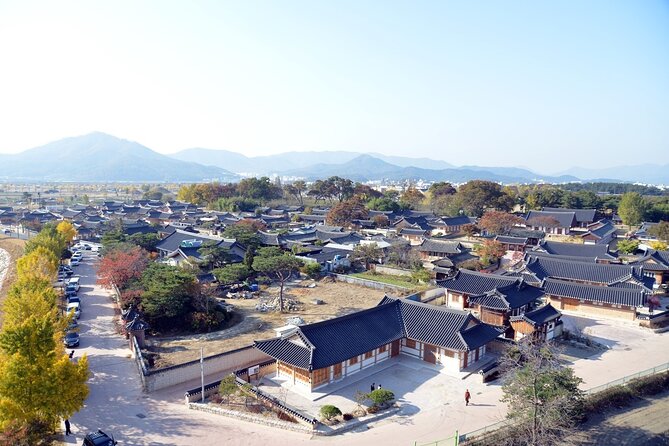
Gyeongju Gyochon Traditional Village gives the day a different feel. Instead of monumental temple remains, you see traditional homes and a neighborhood tied to the Gyeongju Choi clan.
The House of the Gyeongju Choi Clan is an Important Folklore Material. The village is also associated with Gyeongju Gyodong Beopju, a traditional liquor designated as an Important Intangible Cultural Property. A 30-minute visit lets you look around and get a taste of the area, though it is short if you want to linger over food or local products.
Lunch is not included. That is reasonable for a private custom tour, since you can choose your own menu, but it means you should discuss your plans before the car arrives. The operator can suggest a restaurant or cafe if you provide a preferred menu, dietary restriction, or specific type of place.
I would use Gyochon Village as a relaxed middle or late stop. It is a good place to slow down after several archaeological sites, especially if you want something connected to local life rather than another large monument.
Cheomseongdae, Daereungwon, and the Royal Tombs
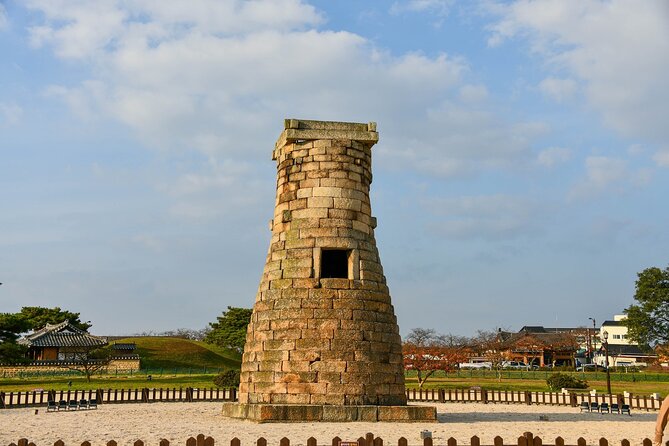
Cheomseongdae Observatory is one of Gyeongju’s best-known landmarks. It was built during the reign of Queen Seondeok, from 632 to 647, and has a distinctive cylindrical form.
The planned visit is about 30 minutes. That is enough to see the structure and take photographs, but not a full lesson in Silla astronomy. The site is near other central attractions, so it fits well into a walking segment if you prefer to leave the car for a while.
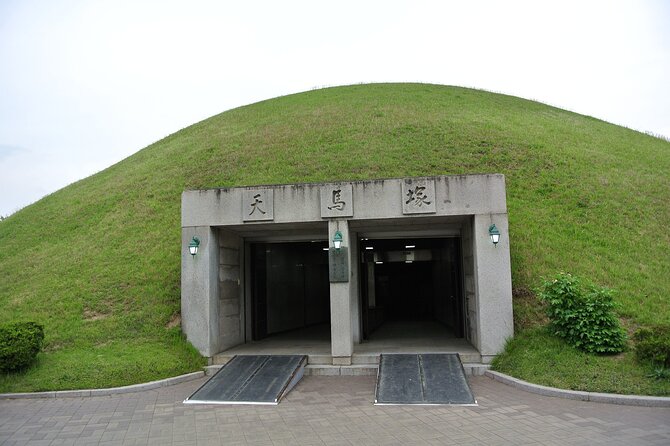
Daereungwon, or the Daereungwon Tomb Complex, contains large ancient burial mounds. The complex includes tomb areas associated with Nodong-ri, Noseo-ri, Hwangnam-ri, Hwango-ri, and Inwang-ri. Cheonmachong, one of the tombs, is part of the area most people want to see.
The size and shape of the tombs make this one of Gyeongju’s most memorable areas. You are not simply looking at ruins. The grassy mounds give you a clear sense of how royal burial grounds shaped the city.
The tour details do not assign a fixed duration to Daereungwon, so this is another place where your preferences matter. If you enjoy archaeology, ask for more time here. If you mainly want photographs and a quick orientation, half an hour may be enough.
Hwangridan-gil, Cafes, and a Modern Gyeongju
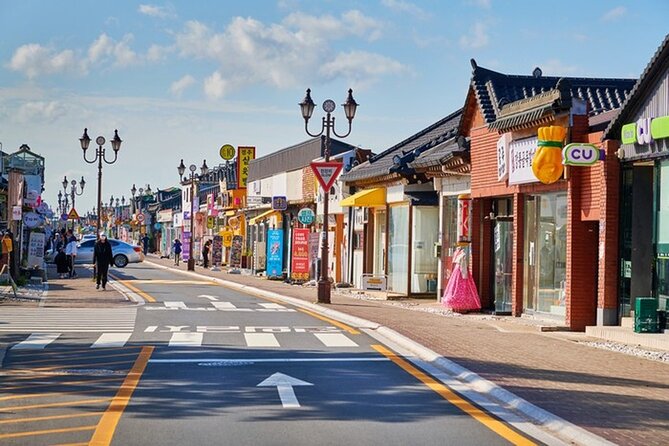
Hwangridan-gil brings you into present-day Gyeongju. The street grew from the area around Hwangnam-dong and Poseok-ro, with a name that combines Hwangnam-dong and Seoul’s Gyeongnidan Street.
The planned stop is 30 minutes. That is a quick introduction, not a leisurely cafe crawl. You might use it for a drink, a short walk, or a look at the area’s shops and renovated buildings. If food and cafes are central to your plans, ask to extend this stop and remove another one.
This contrast is useful. Gyeongju is not only temples and tombs. A good day connects the Silla capital’s old remains with the city people use now. Hwangridan-gil gives you that modern counterpoint, even if the short time limit keeps it brief.
Timing, Vehicles, and What the Price Covers
The price is $112.70 per group of up to four people. Split four ways, that is about $28.18 per person before any admission, food, or optional driver fee. For a couple, the per-person cost is higher, but you are paying for a private vehicle and a route built around your group rather than a seat on a fixed coach.
The advertised duration is approximately three to eight hours. This range needs careful reading. Any remaining hours are used for travel time from pickup until drop-off, so an eight-hour booking does not mean eight full hours walking through attractions.
The included costs are useful:
- Private transportation
- Fuel
- Tolls
- Parking
- All listed taxes and fees
- The driver’s meal
- Car accident insurance
Lunch, admission fees, travel insurance, and tips are not included. Tips are recommended but not required.
Vehicle capacity depends on what you book. A sedan allows two pieces of luggage measuring 24 inches. An MPV allows six, and a minibus allows ten. If you are arriving with suitcases, state this before the tour so the vehicle matches your group.
The activity begins at KTX Gyeongju Station, though free pickup is also offered from hotels in central Gyeongju. It returns to the meeting point. That makes it handy for a same-day arrival, but you should allow enough time for the train arrival, luggage, and meeting the driver.
Language and Guide Support
Language is the main practical issue. The standard Korean-speaking driver option uses online language assistance, and this has worked well when visitors used a translation app. Drivers have still managed to handle requested routes, photographs, and small changes to the plan.
The English-speaking driver option is temporarily deactivated. It may be available on request for an extra fee, so contact the provider after booking if clear spoken English is important to you.
If you continue with a Korean-speaking driver, prepare your preferred stops in writing. A saved itinerary in Korean or English, plus your lunch preference and hotel name, can reduce confusion. Keep your translation app ready, especially for questions about timing.
The service style appears more practical than theatrical. Drivers such as Mr Park and Jeon have been praised for being attentive, flexible, helpful with photos, and proud of their home area. You may get brief explanations rather than a long guided tour, but you can still gain useful local help along the way.
Who Will Get the Most From This Tour?
I would choose this taxi tour if you have limited time in Gyeongju, want to combine distant sites, or prefer not to plan several bus connections. It is also a strong choice for families, small groups, older people, and anyone visiting during hot summer weather or rain.
It suits four people especially well because the group price becomes attractive when divided among everyone. Couples can still find value if comfort and flexibility matter more than the lowest possible cost.
You should think twice if you enjoy slow independent walks and have plenty of time. Parts of central Gyeongju can be explored on foot, and one night route could have been completed without a taxi for those willing to walk a lot.
The tour is also less suitable if you require detailed English guiding at every stop. Request an English-speaking driver early and confirm the extra charge. Otherwise, expect to rely partly on translation tools and short explanations.
My Booking Advice
I would book this for a six-hour day if I wanted the best balance. That gives you room for Bulguksa, Seokguram, several central sites, and a break without forcing every stop into a rushed checklist.
For a shorter booking, focus on Bulguksa and Seokguram, then choose Donggung and Wolji or the central tomb area. For a longer day, add Cheonnyeon Forest Garden, Bunhwangsa, Hwangnyongsa, Gyochon Village, and Hwangridan-gil according to your interests.
The free cancellation policy allows a full refund if you cancel at least 24 hours before the start time. Changes or cancellations within 24 hours are not refunded, and the cut-off uses local time.
Should You Book the Gyeongju Taxi Tour?
Book it if you want to cover Gyeongju’s scattered sights with little transport stress and the privacy of your own car. The strongest reasons are the flexible route, included driving costs, helpful drivers, and good value for a group of up to four.
Do not book it expecting a full English lecture or unlimited time at every attraction. Confirm the language arrangement, state your must-see sites, and decide whether you want a three, six, or eight-hour plan.
For a first visit with limited time, this is a practical way to connect Gyeongju’s major Buddhist sites, royal tombs, palace remains, traditional village, and modern cafe district in one manageable day.
FAQ
How much does the private Gyeongju taxi tour cost?
The price is $112.70 per group of up to four people.
How long does the tour last?
The tour lasts approximately three to eight hours. Travel time from pickup through drop-off is counted within the selected hours.
Where does the tour start?
The listed starting point is Gyeongju Station, at 80 Singyeongjuyeok-ro, Geoncheon-eup, Gyeongju.
Can I be picked up at my hotel?
Yes. Free pickup is offered from hotels in the central Gyeongju area. Pickup is also available from KTX Gyeongju Station.
Does the tour return to the starting point?
Yes. The activity ends back at the meeting point.
Is the tour private?
Yes. Only your group participates in the activity.
Is an English-speaking driver included?
The English-speaking driver option is temporarily deactivated. It may be available upon request for an extra fee, so contact the provider after booking if you need one.
Are admission fees included?
No. Admission fees are listed as not included. The tour details also show free admission beside several stops, so confirm current charges before visiting.
Is lunch included?
No. Lunch is not included. You can provide your preferred menu, dietary restrictions, or a restaurant or cafe request, and a suitable option can be suggested.
How much luggage can the vehicles carry?
A sedan can carry two pieces of 24-inch luggage. An MPV can carry six, and a minibus can carry ten.
More Historical Tours
- Gyeongju: UNESCO Heritage Tour Including Bulguksa Temple
★ 4.8 · 104 reviews - Gyeongju UNESCO World Heritage Sites and History Full-Day Tour with Lunch
★ 5.0 · 104 reviews - From Busan: Echoes of Silla Gyeongju Historical Day Tour
★ 4.8 · 55 reviews - Gyeongju Historic Areas Day Tour with Sky Capsule from Busan
★ 5.0 · 18 reviews
More Taxi Day Tours
- Gyeongju: Private Car Charter Taxi Tour
★ 5.0 · 37 reviews - Jeju English Private Taxi Tour(1day, 2days, 3days & 1 to 12pax)
★ 5.0 · 118 reviews - Jeju Island Private Taxi Tour : 2 Full days
★ 5.0 · 106 reviews - Jeju Island Private Taxi Tour : UNESCO Day Tour
★ 4.5 · 82 reviews
Just added around Gyeongju
- 7 Day Essential Korea Tour(Seoul, Nami, DMZ, Andong, Gyeongju, Busan_Meal Incl.)★ 5.0 · 3 reviews
- Korean UNESCO World Heritage Tour including Gyeongju, Andong and Daegu(2N3D)★ 5.0 · 3 reviews
- From Busan: Gyeongju Small Group Photo Tour & Hotel Pick-up★ 5.0 · 3 reviews
- Full Day Busan and Gyeongju Guided Tour★ 5.0 · 4 reviews
- Gyeongju private tour with an official tour guide (Unesco)★ 4.5 · 4 reviews
- UNESCO Listed Historic Sites in Gyeongju National Park★ 5.0 · 5 reviews
- Full Day Private car tour to UNESCO Gyeongju&Yangdong village★ 5.0 · 5 reviews
- From Daegu: Gyeongju UNESCO Tour 7 Highlights with Bulguksa★ 4.6 · 5 reviews
Gyeongju Heritage Tours, compared.

Gyeongju Guided Day Trip to Three Kingdoms Capital
Read our review →
Gyeongju UNESCO World Heritage Guided Day Tour
Read our review →
Gyeongju UNESCO World Heritage Guided Day Tour from Busan
Read our review →
Old Korea Thousand History Tour of Gyeongju from Busan
Read our review →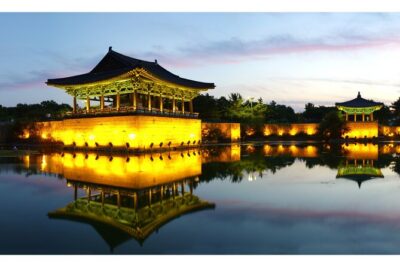
Gyeongju UNESCO sites Private tour with licensed tour guide
Read our review →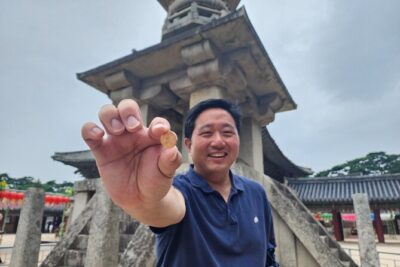
Private Gyeongju Tour – Explore Gyeongju UNESCO Sites
Read our review →
Gyeongju UNESCO Legacy Tour with National Museum
Read our review →
UNESCO Heritage Tour Including Bulguksa Temple
Read our review →Browse the lists this tour appears in