
Reviewed · COOKING CLASSES
Busan Kkakdugi(Korean radish Kimchi) class with various options
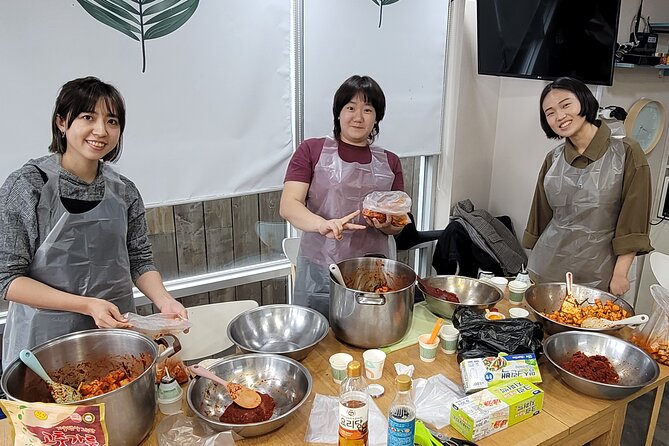
Kimchi is better when you make it yourself. This Busan class turns kkakdugi, Korean radish kimchi, into a friendly 3.5-hour lesson with cooking, lunch, and a small taste of local life. I like the simple recipe, which suits first-timers, and the chance to take your finished kimchi home in a plastic container. I also like the small-group setting and Paul’s warm, enthusiastic teaching style. The main consideration is timing: the radish must marinate for about two hours, so part of the class is spent at lunch rather than cooking.
You meet at Seomyeon subway station before moving to the instructor’s kitchen. The class includes Korean Chinese lunch, coffee or tea, seasoning sauce for a later batch, and a short beach visit for photographs. At $100 per person, it is not a cheap meal, but the price covers instruction, food, ingredients, and a finished batch to take away. Note that the market tour is not included.
In This Review
- Key points to know before booking
- Why Busan kkakdugi makes a good cooking lesson
- Meeting at Seomyeon and moving to the kitchen
- The opening lesson: understanding the recipe first
- Two hours of salting, followed by a Korean Chinese lunch
- Returning to the kitchen to finish the kkakdugi
- Paul’s teaching style and the social feel
- The nearby beach photo stop
- What the $100 price includes
- Timing, transport, and practical planning
- Who should book this Busan cooking class?
- Should you book the kkakdugi class?
- FAQ
- Where does the Busan kkakdugi class begin?
- Where does the activity end?
- How long does the experience last?
- How much does the class cost?
- Is lunch included?
- Do I receive kimchi to take home?
- How long does the radish marinate?
- Is a market tour included?
- How many people can join?
- What happens if the class is canceled because of weather?
Key points to know before booking
- The radish marinates for about two hours, creating a natural break for lunch.
- Paul leads the class in English and explains Korean food and culture with clear, friendly instruction.
- You make a large batch of kkakdugi, with one class producing about 5 kilograms according to the experience details.
- A take-home container is provided, so your cooking lesson continues after you leave Busan.
- The group is intended to be small, with a stated limit of six in the highlights and a maximum of eight in the additional information.
- A nearby beach photo stop follows the cooking class, but a local market visit is not part of the program.
Why Busan kkakdugi makes a good cooking lesson
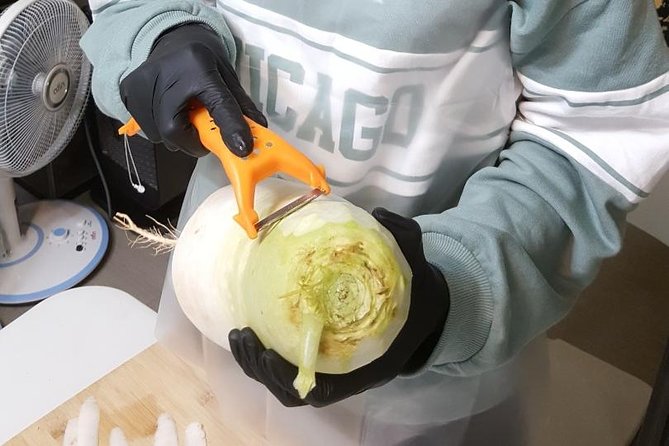
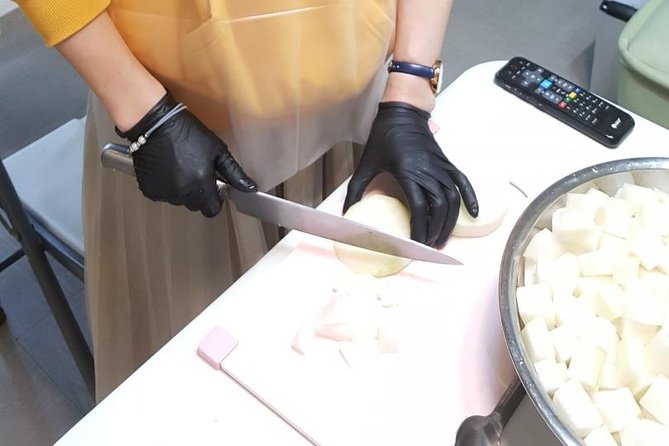
Kkakdugi is the cubed-radish version of kimchi. Instead of working with long napa cabbage leaves, you season chunks of Korean radish with a spicy mixture. That makes the process easier to follow and easier to repeat at home.
I like this choice for a cooking class because you do not need advanced knife skills or a long list of difficult techniques. The recipe is presented as a straightforward sequence: learn the method, salt the radish, prepare the seasoning, wait, then mix everything together.
The instructor keeps the recipe practical. You are not simply watching a demonstration and eating a sample. You take part in the work, then leave with food you made during the class. That gives the experience more value than a standard restaurant meal, especially if you want a Korean food memory you can repeat in your own kitchen.
The class also gives you a little cultural context. The focus is not only on red pepper and radish. Paul explains how the dish fits into Korean food traditions and shares recipes that can help you make kkakdugi again later.
More Workshops in Busan
- Korean cooking class in Haeundae, Busan
★ 5.0 · 92 reviews - Busan Tailored Korean cooking class (Vegan OK)with market tour
★ 5.0 · 66 reviews - Busan: Small-Group Traditional Korean Food Cooking Class
★ 4.9 · 58 reviews
Meeting at Seomyeon and moving to the kitchen
The experience begins at Seomyeon subway station, at 730 Jungang-daero in Busan’s Busanjin District. Starting at a subway station is useful because you do not need to find an unfamiliar private kitchen on your own.
From there, the group moves to the instructor’s kitchen. The supplied information does not give a detailed travel time between the meeting point and the kitchen, so you should allow enough time to meet promptly and follow the group.
The group size deserves a careful note. The main description promises a six-person maximum, which is a real advantage for a hands-on lesson. The additional information gives a maximum of eight travelers. Since those numbers do not match, I would confirm the expected group size when booking if personal attention matters to you.
A small group should make it easier to ask questions, handle ingredients, and follow the recipe without waiting too long. It also suits visitors who want conversation rather than a formal demonstration from the back of a large room.
The opening lesson: understanding the recipe first
Once you reach the kitchen, Paul first gives a short explanation of how to make radish kimchi. This opening matters because the class has a waiting period built into it. You learn what is happening before the hands-on work begins.
The recipe is designed to be accessible to someone making kimchi for the first time. You do not need to arrive with specialist cooking knowledge. The instruction is step by step, and the goal is to give you a method you can use again at home.
Paul’s English is described as very good, and his manner is enthusiastic and friendly. That is especially helpful in a cooking lesson, where small misunderstandings about timing or ingredients can affect the result. He also shares more than one recipe approach, including different seasoning options.
That flexibility is useful because Korean kimchi can be very spicy. One class member found the full amount of chili paste too hot and reduced it by half. I would treat that as practical advice: if you are sensitive to heat, ask about adjusting the chili paste before mixing the sauce.
Two hours of salting, followed by a Korean Chinese lunch
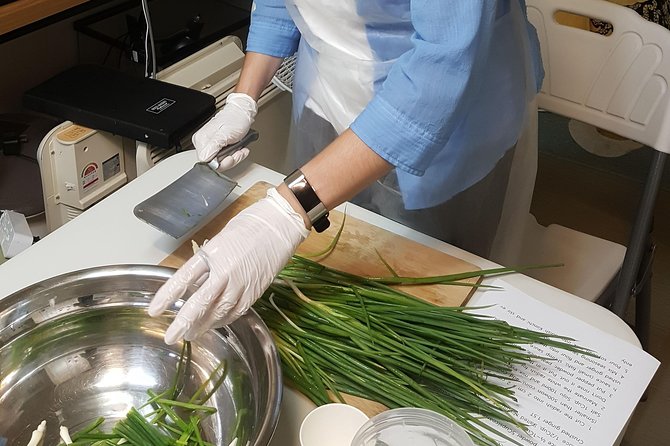
The radish is salted first and needs roughly two hours to marinate properly. This is the longest pause in the schedule, but it is not wasted time. Salting changes the texture of the radish and helps prepare it for the seasoning sauce.
During the break, you eat lunch at a Korean Chinese restaurant with the instructor. Lunch is included, as are coffee and tea. The meal gives the class a social rhythm: you begin with instruction, pause for food, then return to the kitchen to finish the kimchi.
The lunch is also one of the more distinctive parts of the experience. You are not only making a Korean side dish. You are sharing a meal connected to the local food scene, with the instructor available to talk about Korean dishes and culture.
A note from the experience describes spicy mixed noodles with sea snail as part of the meal. That gives you an idea of the food on offer, though the exact lunch should be confirmed if you have allergies, dietary restrictions, or strong dislikes.
The two-hour wait may feel long if you expect nonstop cooking. I see it differently: the pause prevents the class from becoming a rushed demonstration and gives you time to eat. Still, if you want a tightly packed cooking lesson with constant activity, this format may feel slower than expected.
More cooking classes:
- Busan Local Food Cooking Class with Market Tour
★ 5.0 · 53 reviews - Local Home Korean Cooking Class & Market Adventure in Seoul
★ 5.0 · 1,024 reviews - Master Korean traditional cooking with a Kimchi chef
★ 5.0 · 385 reviews - Seoul: Korean Cooking Class at a Local Home and Market Tour
★ 5.0 · 348 reviews
Returning to the kitchen to finish the kkakdugi
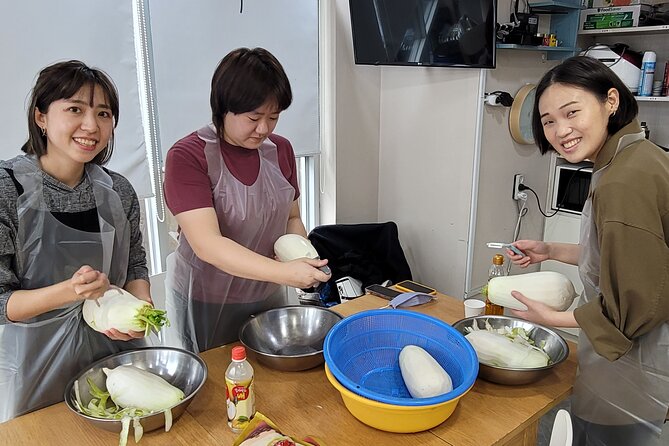
After the radish has marinated, you make the seasoning sauce. The instructor prepares enough sauce to give participants extra for a future batch of radish kimchi. That is a thoughtful part of the class because the lesson does not end with one recipe and one container.
You then combine the properly marinated radish with the seasoning. This is the point where the earlier explanation becomes useful. You can see how the texture has changed and how the sauce coats the radish.
The class has produced about 5 kilograms of kkakdugi in one reported session. That is a substantial amount, not just a tiny tasting portion. The precise amount you take home may depend on the group and the batch, but you should expect more than a single serving.
A plastic food container is provided. You do not need to arrive with your own storage box, which makes the experience easier for visitors staying in hotels or short-term accommodation. You will need to think about how you plan to carry it afterward, since kimchi has a strong smell and may continue fermenting.
The take-home portion is the strongest practical feature of the class. You can taste it during your stay and try the recipe again later. Just remember that food storage and transport are your responsibility after the activity ends.
Paul’s teaching style and the social feel
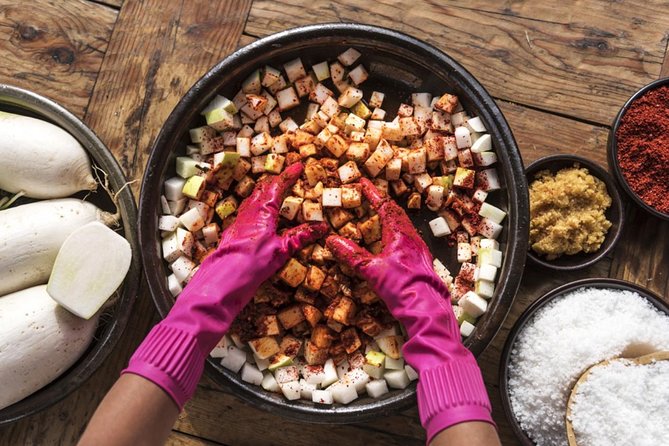
Paul is the named leader for the class, and his teaching style is a major part of its appeal. He is described as friendly, enthusiastic, and eager to share Korean culture. That combination matters more than polished presentation in a small cooking class.
The setting should feel more like cooking with a local host than attending a formal culinary school. You are encouraged to participate, and the process is simple enough for people who have never made kimchi.
Paul also follows up with recipes after the class. One message promises an additional recipe, which adds value for anyone who wants to continue cooking Korean food after leaving Busan.
The class seems best suited to people who enjoy conversation and direct participation. Families, couples, friends, and solo visitors who like meeting others should find the small group format appealing. It is less suitable if you prefer to cook privately or avoid group meals.
The nearby beach photo stop
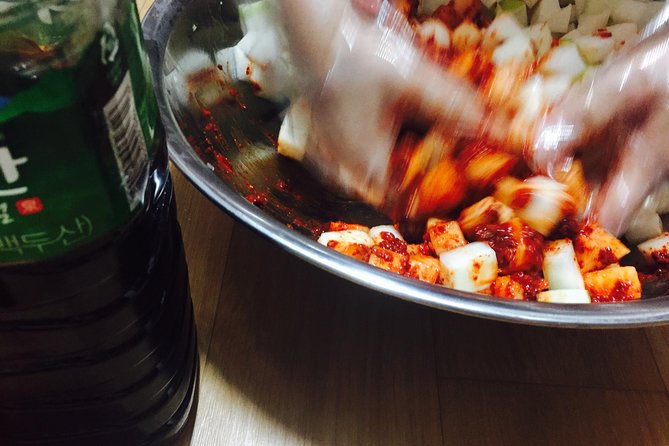
After the cooking session, the instructor takes the group to a nearby beach for photographs. This adds a change of setting after several hours indoors and gives you a few images connected to your Busan visit.
The beach stop is not presented as a sightseeing tour or a long coastal excursion. Think of it as a short photo opportunity rather than a major attraction. The supplied information does not name the beach or specify how long you stay, so do not book this experience expecting a detailed beach visit.
Still, the timing works well. You finish with your kimchi packed away, then get a chance to step outside and take photos. The activity ends back at the original meeting point, so you have a clear return location.
What the $100 price includes
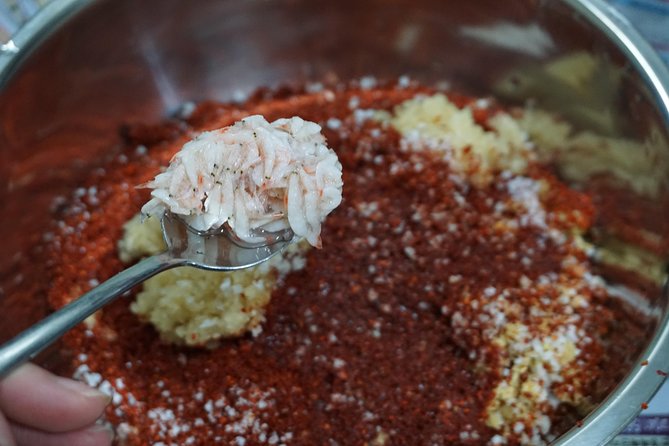
At $100 per person, the class sits above the cost of a simple Korean meal. The value depends on how much you want from the experience beyond eating.
The price includes:
- Kimchi instruction and hands-on preparation
- Radish kimchi to take home
- A plastic food container
- Korean Chinese lunch
- Coffee and tea
- Extra seasoning sauce for another batch
- The beach photo stop
You are paying for a small-group activity, not only ingredients. The lesson, host interaction, lunch, and take-home food make the cost easier to justify for visitors who want an active cultural experience.
The value is weaker if you only want to sample kimchi or buy it ready-made. Busan has plenty of places to eat Korean food for less. This class makes sense when you want to learn the process and carry part of it with you.
Group discounts are available, which may improve the price for a larger party. Private expenses and travel insurance are not included. The market tour is also excluded, so you should not expect a stop at a traditional food market as part of the $100 fee.
Timing, transport, and practical planning
Plan on about 3 hours and 30 minutes from the meeting point through the class and return. The schedule includes the opening explanation, salting period, lunch, seasoning preparation, final mixing, container packing, and beach photographs.
The class is near public transportation because it starts at Seomyeon subway station. That makes it easier to fit into a Busan itinerary without arranging a separate taxi transfer to an unknown neighborhood.
The meeting point is Seomyeon, and the activity ends back there. This gives you a convenient place to continue sightseeing, shopping, or dining afterward, though the experience details do not specify an exact finish time.
You should also allow for the possibility of a change caused by weather or group numbers. The experience requires good weather and a minimum number of participants. If the operator cancels for either reason, you are offered another date or experience, or a full refund.
Your own cancellation terms are strict. The booking is non-refundable and cannot be changed for any reason once purchased. I would avoid booking until your Busan schedule is firm.
Confirmation is sent within 48 hours, subject to availability. Since the activity is often booked about 14 days ahead, early planning is sensible if you want a particular date.
Who should book this Busan cooking class?
I would recommend it to you if you:
- Want a hands-on introduction to Korean food
- Have never made kimchi before
- Like small groups and informal conversation
- Enjoy eating a full meal during a class
- Want food to take home
- Are comfortable with spicy flavors or willing to adjust the chili level
- Have about half a day available in Busan
It is particularly useful for a first visit because the class combines food, conversation, and a short local outing. You get more than a recipe, but less than a full-day cultural tour.
You may want to skip it if you are looking for a market tour, a long beach visit, or a highly technical cooking course. You should also ask about the menu before booking if you have food allergies or dietary requirements, since lunch is part of the program and the provided details do not list substitutions.
Should you book the kkakdugi class?
Book this experience if you want to do something with your hands and leave Busan with a container of food you made yourself. The clear instruction, friendly host, included lunch, and extra seasoning sauce give the class more substance than a quick cooking demonstration.
The main tradeoffs are the $100 price, the two-hour marinating break, possible spice levels, and strict cancellation policy. The group-size information also needs clarification, since one section states six people while another allows up to eight.
For food lovers, first-time kimchi makers, and visitors who enjoy meeting a local host, I think the experience is worth considering. For a market-focused food tour or a fast lesson with nonstop cooking, choose something else.
FAQ
Where does the Busan kkakdugi class begin?
The class begins at Seomyeon subway station, at 730 Jungang-daero in Busanjin District, Busan.
Where does the activity end?
The activity ends back at the original meeting point in Seomyeon.
How long does the experience last?
The experience lasts approximately 3 hours and 30 minutes.
How much does the class cost?
The listed price is $100 per person. Group discounts are available.
Is lunch included?
Yes. The experience includes lunch at a Korean Chinese restaurant, along with coffee or tea.
Do I receive kimchi to take home?
Yes. Radish kimchi and a plastic food container are included.
How long does the radish marinate?
The radish marinates with salt for about two hours before you finish making the kimchi.
Is a market tour included?
No. The local market tour is not included in this cooking class.
How many people can join?
The highlights state a maximum of six people, while the additional information states a maximum of eight travelers. Confirm the expected group size before booking if this is important to you.
What happens if the class is canceled because of weather?
If poor weather causes the experience to be canceled, you are offered a different date or a full refund. A different date, another experience, or a full refund is also offered if the minimum number of participants is not reached.
More Busan Trips
- Busan: Gyeongju Guided Day Trip to Three Kingdoms Capital
★ 4.8 · 1,925 reviews - Small Group Full Day Busan Tour (Max 6 Pax)
★ 5.0 · 1,464 reviews - From Busan: Gyeongju UNESCO World Heritage Guided Day Tour
★ 4.8 · 1,250 reviews - Busan Private Tour with licensed tour guide + private vehicle
★ 5.0 · 1,143 reviews
More Workshops
- [BUSAN,GamcheonVillage] Private Korean Art Painting Class
★ 5.0 · 20 reviews - Korean Pottery Town Tour with the pottery class from Busan
★ 5.0 · 7 reviews - Busan private tour : K-pop dance class + tour
★ 5.0 · 6 reviews - Busan Dialect Class with local snack
★ 5.0 · 3 reviews
Just added around Busan
- Korean UNESCO World Heritage Tour including Gyeongju, Andong and Daegu(2N3D)★ 5.0 · 3 reviews
- Busan Bliss: Panoramic Yacht & Urban Exploration with Sky Capsule★ 5.0 · 3 reviews
- Busan day trip including Gamcheon culture village from Seoul by KTX train★ 5.0 · 3 reviews
- Busan Seafood Tour : Oyster village Tour with Oyster cuisines★ 5.0 · 3 reviews
- 1 Day Private Busan Guided Tour★ 4.5 · 3 reviews
- 2-DAYS Busan Customized and Included Night tour★ 5.0 · 3 reviews
- Full-Day Jinhae Cherry Blossom festival Private tour★ 5.0 · 3 reviews
- Busan Dialect Class with local snack★ 5.0 · 3 reviews
Cooking Classes, compared.

Local Home Korean Cooking Class & Market Adventure in Seoul
Read our review →
Master Korean traditional cooking with a Kimchi chef
Read our review →
Korean Cooking Class at a Local Home and Market Tour
Read our review →

Experience Korean Cooking in Modern Hanok Kitchen
Read our review →
Korean Cooking Class with Grocery Shopping at Seoul Local Market
Read our review →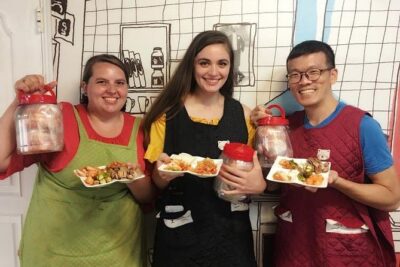
Korean Kimchi Making Day Experience with a Local Market Tour
Read our review →Browse the lists this tour appears in