
Reviewed · COOKING CLASSES
Busan: Small-Group Traditional Korean Food Cooking Class
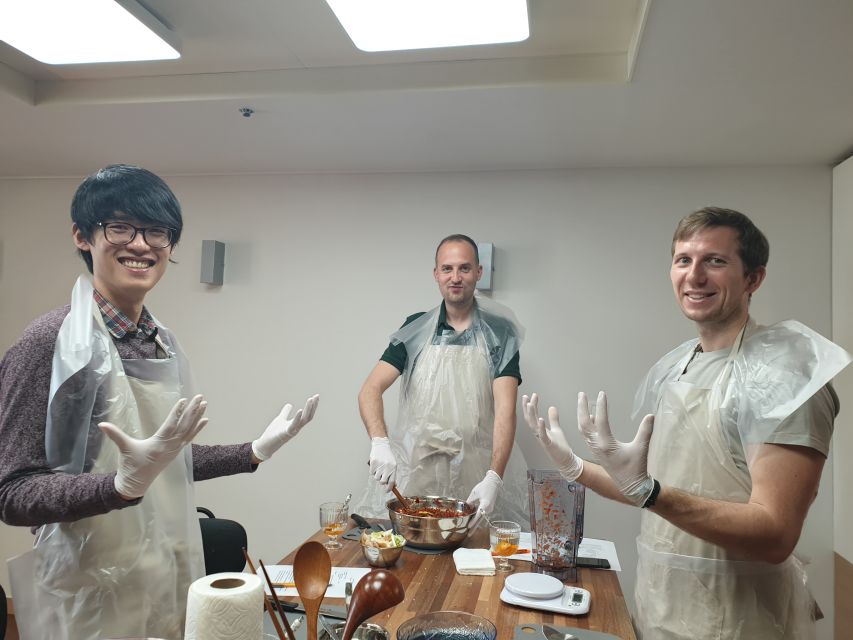
Korean food makes more sense at the stove. Near Haeundae Beach, this three-hour Busan class takes you beyond simply eating bibimbap: you taste sauces, cook with fresh seasonal ingredients, and sit down to enjoy your meal at a traditional bapsang, a personal Korean dining table. I like the small class size, limited to about nine or ten people, and the warm, clear teaching style praised by many participants, especially instructor Min.
I also like the cultural touches: a welcome drink, Korean tea, dessert, recipes, a certificate, and a small surprise gift. The main thing to consider is the $98 price, which is not cheap for a cooking lesson, and the class does not include hotel pickup. Still, the meal, instruction, ingredients, cultural background, and keepsakes make it a stronger value than a basic recipe demonstration.
In This Review
- Key points at a glance
- Why this Busan cooking class feels personal
- Starting with sauces, ingredients, and a welcome drink
- Cooking bibimbap step by step
- Soup and Korean pancakes add useful variety
- Eating your meal at a traditional bapsang
- Tea, dessert, recipes, and a small keepsake
- Min’s teaching style and the group atmosphere
- Getting to the Marine City meeting point
- Is $98 a fair price?
- Who should book this experience?
- Booking flexibility and timing
- Should you book the Busan Korean cooking class?
- FAQ
- How long does the Korean cooking class last?
- Where does the cooking class meet?
- How do I reach the class by subway?
- Is hotel pickup included?
- Is the class taught in English?
- Can I request a vegan meal?
- What is included in the price?
Key points at a glance
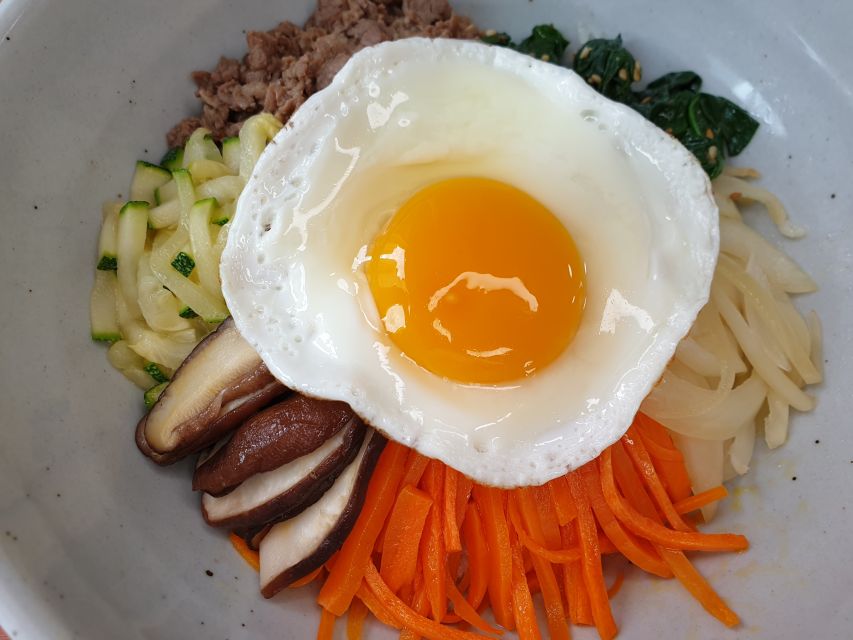
- Cook more than bibimbap: Depending on the class menu, you may prepare bibimbap, seaweed and beef soup, and a Korean vegetable pancake.
- Learn by tasting: The chef introduces Korean sauces and ingredients before you start cooking, making unfamiliar flavors easier to understand.
- Eat at a bapsang: You place your finished dishes on a traditional personal dining table and enjoy the meal you prepared.
- Small, friendly setting: With no more than about nine or ten participants, the class allows room for questions and individual help.
- A good family activity: A 12-year-old participant took part successfully, and the step-by-step format suits beginners.
- Haeundae location: The class takes place in Marine City, within walking distance of Dongbaek Station and several bus stops.
Why this Busan cooking class feels personal
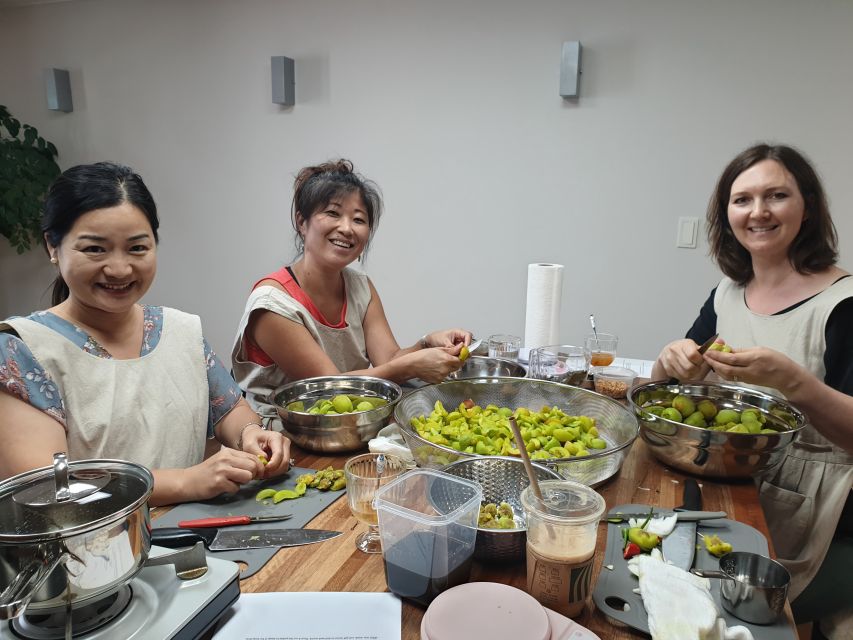
Busan has plenty of food experiences, but eating at a restaurant only shows you the finished plate. This class lets you see how Korean food is built, one sauce, vegetable, and cooking step at a time.
The setting near Haeundae Beach is useful for a half-day plan. You can cook in the morning, then continue toward Haeundae, Dongbaek, or other parts of Busan. The meeting point is Flat 2406 at Hoabin Busan Haeundae, 37 Marine City 3-ro, in the U 1(il)-dong area.
The class is limited to a small group, with the stated maximum varying between nine and ten participants. That distinction is worth noting when you book, but either size is small enough to feel more like a friendly workshop than a large demonstration.
English and Korean are spoken. The English instruction has been praised as easy to understand, and Min is often singled out for explaining each step clearly and adding useful advice about Busan. The atmosphere sounds relaxed rather than formal, which matters when you are handling unfamiliar ingredients or trying new kitchen techniques.
More Food Tours in Busan
- 4-Hours Hiking and Tasting Rice Wine in the Mountain of Busan
★ 5.0 · 79 reviews - Busan: Hiking and Tasting Rice Wine in the Hidden Village
★ 4.9 · 74 reviews - Busan history and market food tour with local chef
★ 5.0 · 58 reviews
Starting with sauces, ingredients, and a welcome drink
The class begins with a welcome drink. The chef then introduces the ingredients and lets you taste Korean sauces before cooking.
This opening is one of the most useful parts of the experience. Korean food can seem complicated when you meet a finished dish full of red, salty, sweet, sour, and fermented flavors. Tasting the sauces separately gives you a better idea of how those flavors work together. You are not just told that a sauce is spicy or savory. You get to decide what it actually tastes like.
Fresh, local, seasonal ingredients are used. The exact selection can change, so you should not assume that every date has the same menu. Bibimbap is the central dish described for the class, while past menus have also included miyeok guk, a seaweed and beef soup, and buchu jeon, a Korean vegetable fritter.
That combination gives you a useful introduction to Korean home cooking. Bibimbap shows how rice, vegetables, meat, and sauce come together in one bowl. Soup adds a lighter, more comforting element. A vegetable pancake introduces another texture and another way of cooking with everyday produce.
Cooking bibimbap step by step
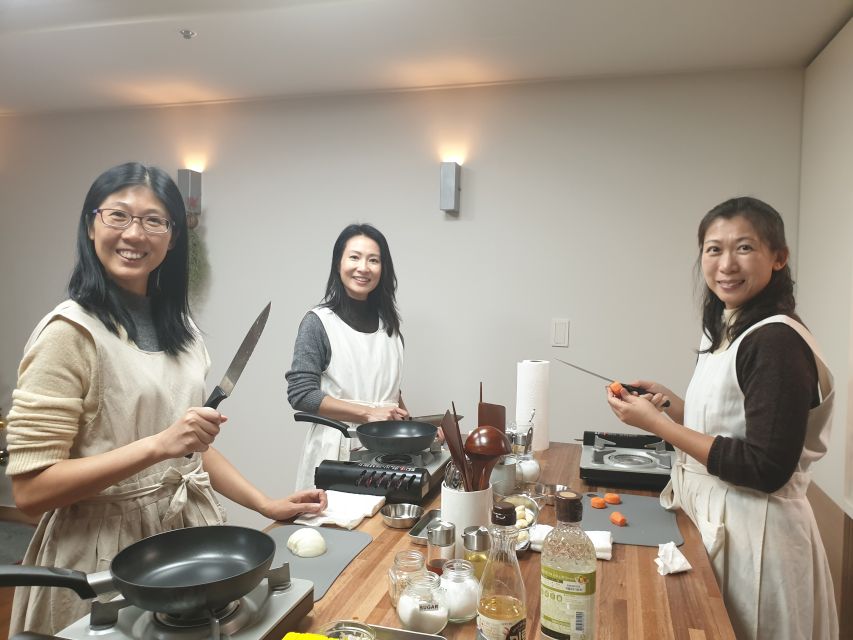
Bibimbap is a smart choice for a first Korean cooking lesson. It is familiar enough to recognize, but it also teaches several important ideas in Korean food.
You cook rice with assorted vegetables and meat, then bring the components together with seasoning and sauce. The appeal is not only the finished bowl. You learn that the dish depends on balance: warm rice, contrasting vegetables, savory meat, and a sauce that brings everything into focus.
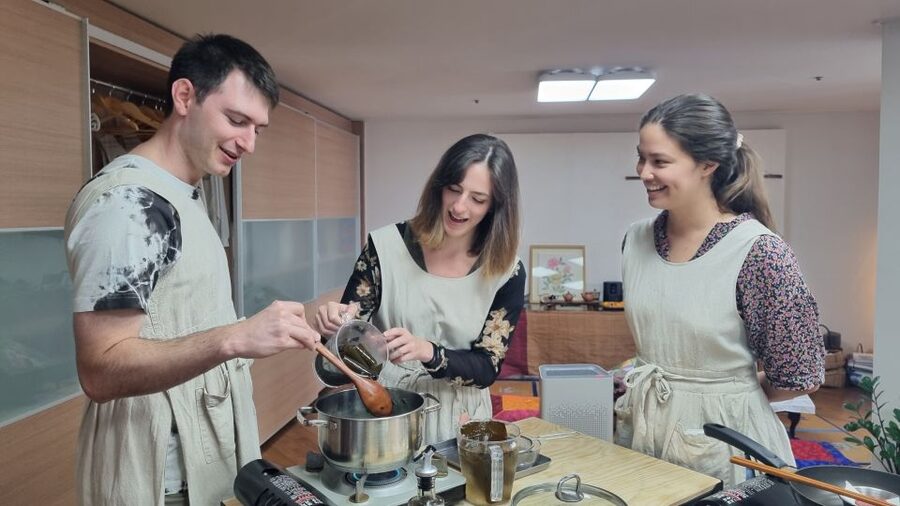
The cooking is presented step by step, with the chef explaining what to do as you go. That is helpful if you are new to Korean ingredients or do not cook often. Instead of trying to copy a recipe from a printed page, you can watch the process, ask questions, and correct mistakes as they happen.
Past participants have described the food as full of flavor and authentic, but the class is not presented as advanced chef training. You are learning practical home cooking, not restaurant-level knife work or professional kitchen speed. I see that as a strength for most people visiting Busan.
The class also gives you a chance to taste what you have made while the method is still fresh in your mind. You leave with the recipe, so the meal does not have to end when you leave the building.
Soup and Korean pancakes add useful variety
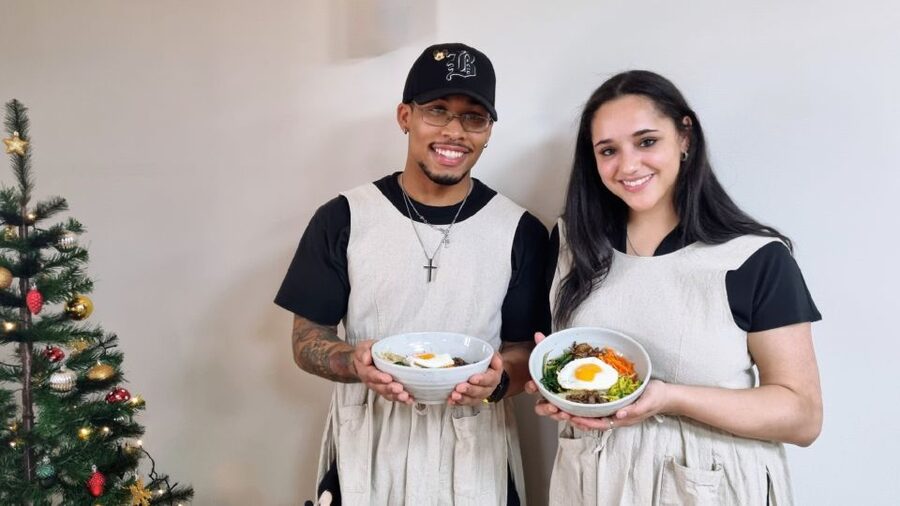
Although bibimbap receives the main attention, the class has included other traditional dishes. Miyeok guk, or seaweed and beef soup, and buchu jeon, a vegetable fritter, have both appeared in the cooking session.
These extra dishes make the experience more worthwhile. You are not spending three hours learning one bowl and then leaving. You get a broader look at Korean home meals, including a soup and a pan-cooked side dish.
Miyeok guk is especially useful as a cultural introduction because it is a familiar Korean home dish and not simply a restaurant novelty. Buchu jeon shows how vegetables can become a savory pancake with a very different texture from bibimbap ingredients.
Since the class uses seasonal produce, the exact dishes may vary. I would treat the named dishes as examples of the food style rather than a fixed promise for every date. If one particular dish matters to you, ask before booking.
More Workshops in Busan
- Korean cooking class in Haeundae, Busan
★ 5.0 · 92 reviews - Busan Tailored Korean cooking class (Vegan OK)with market tour
★ 5.0 · 66 reviews - Busan Local Food Cooking Class with Market Tour
★ 5.0 · 53 reviews - [BUSAN,GamcheonVillage] Private Korean Art Painting Class
★ 5.0 · 20 reviews
Eating your meal at a traditional bapsang
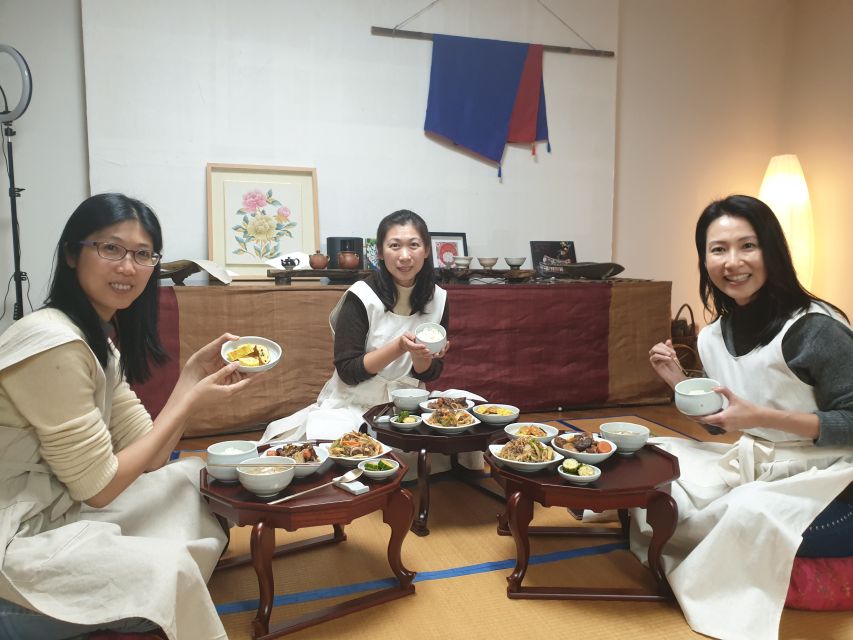
After cooking, you place the food on a bapsang and sit down to eat. A bapsang is a small personal dining table traditionally used for serving an individual meal.
This changes the mood of the class. You are not standing around a work surface sampling bites between instructions. You get a proper meal, arranged and served in a distinctly Korean way.
The meal is included in the price, along with dessert, water, and the ingredients used during the class. You also receive an apron and utensils to use, so you do not need to bring cooking equipment.
I like the fact that the meal is the food you prepared yourself. Even a simple dish feels more memorable when you understand its ingredients and cooking steps. It also gives you a chance to compare flavors with the other people in the group and talk about what you learned.
The class is social, but it does not appear to be built around drinking or a rushed group meal. The focus stays on food, culture, and instruction.
Tea, dessert, recipes, and a small keepsake
The experience finishes with Korean tea and dessert tasting. This is a gentle way to end a savory cooking session, and it adds a part of Korean food culture that many visitors might otherwise miss.
The dessert is not described in detail, so you should not book this expecting a specific sweet. The same applies to the tea. What you can count on is a tasting after the meal, not a separate dessert-making lesson.
The take-home items add value. You receive the recipes, a certificate, and a surprise gift. The recipes are the most useful item for practical purposes, since they give you a chance to recreate the dishes after returning home.
The certificate and gift are lighter souvenirs, but they suit the experience. You are taking home more than a food photograph. You have a written record of what you cooked and a small reminder of the class.
Min’s teaching style and the group atmosphere
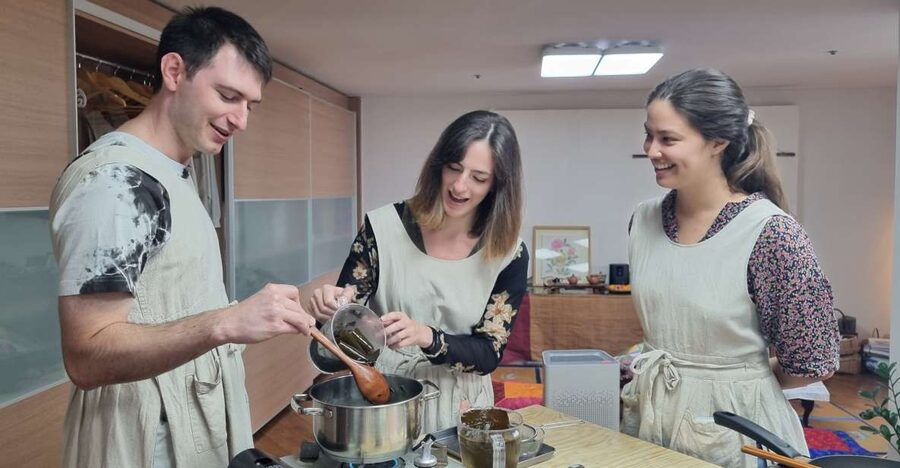
Min receives particularly warm praise for her manner, English, organization, and explanations. She has been described as kind, welcoming, easy to understand, and good at explaining the cultural background of the dishes.
That personal teaching style is important. Korean recipes often involve ingredients and techniques that are unfamiliar to first-time cooks. A teacher who explains why a step matters is more useful than someone who only tells you what to do.
Min has also offered suggestions about things to see and do around Busan. That is a welcome bonus, especially early in your visit when you are still planning your days. It should not replace a proper sightseeing plan, but local advice can help you make better use of your time.
The group size helps here. A maximum of around ten people means the teacher can keep the session moving while still responding to questions. It is not a private class, so you will share the work area and meal with others. For most people, that is part of the fun. If you want one-on-one culinary coaching, this is not the right format.
The class has also worked well for families. A 12-year-old participant followed the step-by-step cooking and enjoyed the meal, making this a practical choice for parents who want an activity beyond sightseeing.
Getting to the Marine City meeting point
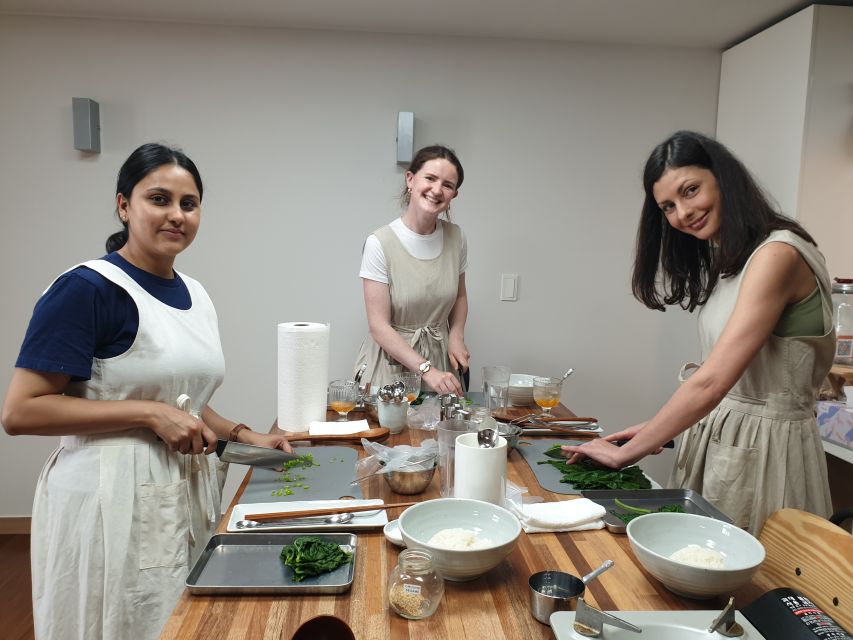
You must make your own way to the class. Hotel pickup and drop-off are not included.
By subway, take Busan Metro Line 2, the green line, to Dongbaek Station. From Exit 1, the walk takes about 10 minutes.
By bus, the Daewoo Marina Apartment stop is about a seven-minute walk away. Routes listed for this stop include 139, 307, and 1003, with the 1003 route connecting to Busan Train Station.
The Dongbaek stop is about a 15-minute walk away and is served by routes including 31, 38, 39, 40, 63, 100, 100-1, 115-1, 141, 181, and 200.
Marine City is a modern part of Haeundae, so allow time to find the correct building and apartment number. The meeting point is Flat 2406, Hoabin Busan Haeundae. I would arrive with a little extra time rather than trying to locate a high-rise apartment at the last minute.
The location works best if you are staying around Haeundae or planning time in eastern Busan. If you are based far across the city, the cooking class can still be reached by public transport, but the trip will take more planning.
Is $98 a fair price?
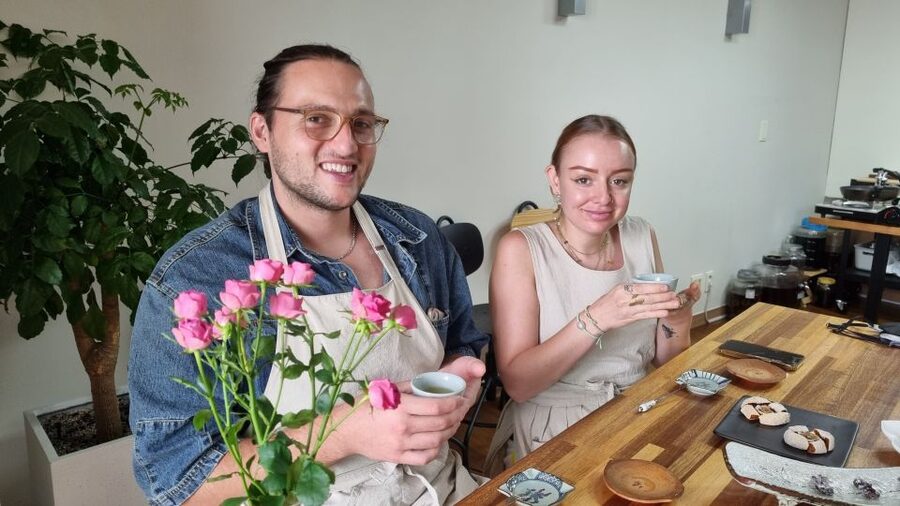
At $98 per person, this is a premium cooking activity. You can eat a Korean meal for less elsewhere, and a simple recipe class would cost less in many places.
The value comes from what is bundled into the three hours: instruction from an English-speaking chef, ingredients, equipment, apron, a welcome drink, your prepared meal, dessert, tea, water, recipes, a certificate, and a gift. You are also paying for a small group and a lesson that covers food culture as well as cooking.
I think the price makes sense if you want an activity with real participation. It is less convincing if you only want a cheap meal or a quick taste of bibimbap. You should also factor in your own transport to Marine City.
The strongest value is for people who plan to cook Korean food again at home. The recipes and hands-on practice can continue to pay off after your Busan visit. If you are unlikely to cook again, the cultural experience and meal still have value, but the price may feel harder to justify.
Who should book this experience?
I would recommend the class to first-time visitors who want a useful introduction to Korean cuisine without committing to a full-day food tour.
It suits:
- Beginners who want clear instruction rather than a professional cooking challenge
- Families with older children, including children around 12 years old
- Couples and friends looking for a shared Busan activity
- Solo visitors who enjoy meeting a small group over a meal
- Anyone staying near Haeundae or Dongbaek
- People who want recipes and practical food knowledge to take home
You should contact the provider at least 24 hours before the class if you need a vegan meal. A vegan request must be made at booking or in advance so the proper ingredients can be prepared.
The class is wheelchair accessible, which is useful for visitors who need that feature. Still, you may want to confirm the exact access arrangements for the building and apartment before arrival if you have specific mobility needs.
Booking flexibility and timing
The class lasts three hours, with starting times based on availability. That gives you room to fit it around sightseeing, but check the exact time before building your Busan day around it.
You can cancel up to 24 hours in advance for a full refund. You can also reserve now and pay later, which helps if your schedule is still changing.
Those policies are useful, but they do not remove the need to arrive at the right address on time. Cooking classes run on a shared schedule, and missing the opening explanation could make the rest harder to follow.
Should you book the Busan Korean cooking class?
Book it if you want to do something active, eat what you make, and leave with a better grasp of Korean home cooking. The small group, English instruction, fresh seasonal ingredients, bapsang meal, and tea and dessert finish give the class more substance than a quick cooking demonstration.
I would be especially inclined to book if Min is teaching your session, since her clear explanations, friendly manner, and Busan suggestions add a personal touch. The $98 price is the main caution, and the experience is not ideal for someone seeking a bargain meal or a tightly fixed menu.
For most food-loving visitors staying near Haeundae, this is a well-rounded three-hour activity. You learn, cook, eat, and take the lesson home with you.
FAQ
How long does the Korean cooking class last?
The class lasts three hours.
Where does the cooking class meet?
It meets at Flat 2406, Hoabin Busan Haeundae, 37 Marine City 3-ro, U 1(il)-dong, Haeundae, Busan, South Korea.
How do I reach the class by subway?
Take Busan Metro Line 2, the green line, to Dongbaek Station. The meeting point is about a 10-minute walk from Exit 1.
Is hotel pickup included?
No. Pickup and drop-off are not included, so you must travel to the meeting point yourself.
Is the class taught in English?
Yes. Instruction is available in English and Korean.
Can I request a vegan meal?
Yes. You must request a vegan meal when booking or contact the provider at least 24 hours in advance so suitable ingredients can be prepared.
What is included in the price?
The price includes cooking ingredients, utensils, an apron, your meal with dessert, water, and recipes to take home. The experience also includes tea and dessert tasting, a certificate, and a surprise gift.
More Food Tours
- Busan Private Night Tour – City Lights & Food
★ 5.0 · 22 reviews - Busan Night Food Market with Night View points
★ 5.0 · 12 reviews - Busan Food Market Tour Seafoods and Street Foods
★ 5.0 · 8 reviews - Busan: Food Crawl with Fish Market, Soju Tents & Local Snacks
★ 5.0 · 8 reviews
More Cooking Classes
- Busan Kkakdugi(Korean radish Kimchi) class with various options
★ 5.0 · 6 reviews - Local Home Korean Cooking Class & Market Adventure in Seoul
★ 5.0 · 1,024 reviews - Master Korean traditional cooking with a Kimchi chef
★ 5.0 · 385 reviews - Seoul: Korean Cooking Class at a Local Home and Market Tour
★ 5.0 · 348 reviews
Just added around Busan
- Korean UNESCO World Heritage Tour including Gyeongju, Andong and Daegu(2N3D)★ 5.0 · 3 reviews
- Busan Bliss: Panoramic Yacht & Urban Exploration with Sky Capsule★ 5.0 · 3 reviews
- Busan day trip including Gamcheon culture village from Seoul by KTX train★ 5.0 · 3 reviews
- Busan Seafood Tour : Oyster village Tour with Oyster cuisines★ 5.0 · 3 reviews
- 1 Day Private Busan Guided Tour★ 4.5 · 3 reviews
- 2-DAYS Busan Customized and Included Night tour★ 5.0 · 3 reviews
- Full-Day Jinhae Cherry Blossom festival Private tour★ 5.0 · 3 reviews
- Busan Dialect Class with local snack★ 5.0 · 3 reviews
Cooking Classes, compared.

Local Home Korean Cooking Class & Market Adventure in Seoul
Read our review →
Master Korean traditional cooking with a Kimchi chef
Read our review →
Korean Cooking Class at a Local Home and Market Tour
Read our review →
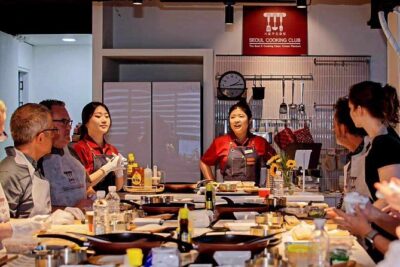

Experience Korean Cooking in Modern Hanok Kitchen
Read our review →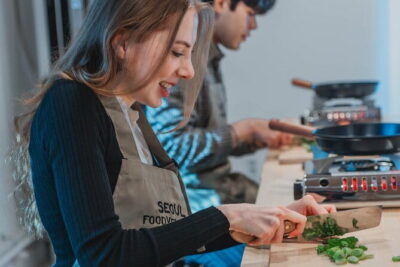
Korean Cooking Class with Grocery Shopping at Seoul Local Market
Read our review →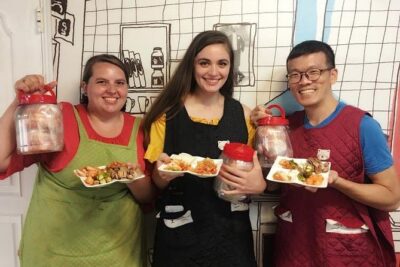
Korean Kimchi Making Day Experience with a Local Market Tour
Read our review →Browse the lists this tour appears in