
Reviewed · GYEONGJU HERITAGE TOURS
Guided Car Tour in Geyongju with a Local Guide
Gyeongju rewards a little help. This four-hour private-style car tour links major Silla-era sights with a guide from Gyeongju, making it easier to cover ground than you could on foot. I especially like the small maximum of three people and the use of an air-conditioned electric car. You also get local food tips and personal stories, not just a ride between monuments.
The main consideration is communication. The assigned driver may not speak much English, so conversations and explanations often rely on Google Translate or another translation app. That has worked well for many people, but you should download Papago or Google Translate before setting off and allow a little extra patience for back-and-forth questions.
In This Review
- Key points at a glance
- Why a car helps in Gyeongju
- Bulguksa Temple: the essential first stop
- Seokguram: the hour many people remember
- Bomun Lake: a change of pace
- Woljeonggyo Bridge and the Silla setting
- Gyeongju National Museum: finish with context
- The guide makes the difference
- Communication: workable, but know the limits
- Is $70.70 per person a fair price?
- Timing, weather, and practical planning
- Who should book this Gyeongju tour?
- Should you book it?
- FAQ
- How long is the guided car tour in Gyeongju?
- Which places does the tour visit?
- How many people can join the tour?
- Is pickup available?
- Does the guide speak English?
- What is the cancellation policy?
Key points at a glance
- A local’s route through Gyeongju: Visit Bulguksa, Seokguram, Bomun Lake, Woljeonggyo, and the Gyeongju National Museum in one compact outing.
- A maximum of three people: This is far more personal than a large coach tour, with room to adjust the pace and discuss what interests you.
- Comfortable electric transport: The air-conditioned electric car helps with Gyeongju’s spread-out sights while keeping the ride quiet and more environmentally friendly.
- Translation apps are part of the experience: English may be limited, but Google Translate has allowed lively conversations and detailed explanations.
- Flexible sightseeing: The guide can adjust the pace and, when practical, swap a stop such as Bomun Lake for Woljeonggyo Bridge.
- Strong value for a half-day: At $70.70 per person, the price includes a driver-guide, pickup, and transport to sites that are awkward to connect by public transportation.
Why a car helps in Gyeongju
Gyeongju is not a city you understand from one central street. Its important sights are spread across a wide area, from the eastern temple complex of Bulguksa and Seokguram to the lake district and museum area.
That is where this tour earns its keep. In four hours, you can reach places that would take careful planning by bus, taxi, or a patchwork of separate outings. The car also gives you a place to cool down between stops, which matters during warm weather or a busy holiday period.
Pickup is offered from Noseo-dong, and the end point can be arranged anywhere in Gyeongju. The information also notes access near public transportation, and several people have used the ride to finish at a hotel, restaurant, or train station. Confirm your exact pickup and drop-off details in advance, especially if you are not staying in Noseo-dong.
The group limit is three people. That makes this a good choice for a couple, a small family, or a solo visitor who wants direct attention without paying for a large private vehicle.
More Gyeongju trips:
- Busan: Gyeongju Guided Day Trip to Three Kingdoms Capital
★ 4.8 · 1,925 reviews - From Busan: Gyeongju UNESCO World Heritage Guided Day Tour
★ 4.8 · 1,250 reviews - Gyeongju UNESCO World Heritage Guided Day Tour from Busan
★ 5.0 · 660 reviews
Bulguksa Temple: the essential first stop
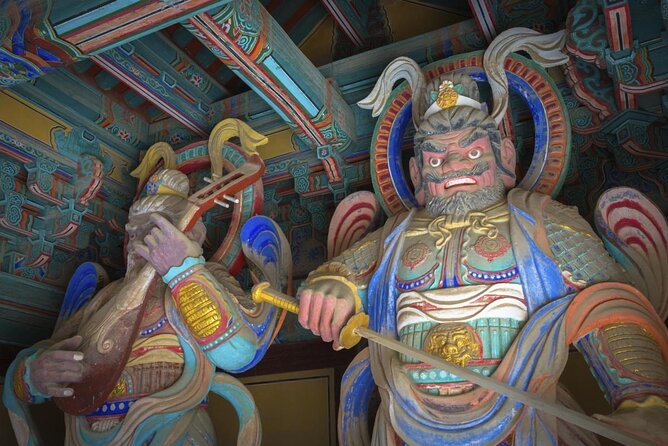
Bulguksa is the tour’s strongest introduction to Gyeongju. This major Buddhist temple is one of South Korea’s most important historic and architectural sites, and it is recognized as a UNESCO World Heritage Site.
Plan on about an hour here. That gives you time to walk through the temple grounds, look closely at the design, and hear how the site fits into Gyeongju’s Silla-period story. The guide’s local perspective is useful because the visit becomes more than a quick photo stop. You can ask about the buildings, the religious setting, and details that might be easy to miss alone.
The temple is also a good test of the tour’s communication style. Explanations may arrive through a phone rather than a fluent spoken conversation. Several people found the translation app perfectly workable, especially because the guide was willing to keep explaining and answer questions.
One particularly warm account describes a visit during a Buddha’s Birthday celebration, when Bulguksa was decorated for the occasion. That kind of timing can add color to the experience, although the tour does not promise a festival or special decoration on your date.
Admission is listed as free. The one-hour schedule is sensible for a half-day route, though a serious student of Buddhist art could easily want longer.
Seokguram: the hour many people remember
Seokguram is near Bulguksa, so pairing the two makes practical sense. This eighth-century Buddhist cave temple is another UNESCO World Heritage Site and one of Gyeongju’s most distinctive cultural stops.
The focus here is the ancient Buddha inside the grotto. One person described the Seokguram Grotto as the highlight of the outing, and I can see why. It offers a very different experience from Bulguksa’s open temple grounds: more contained, quieter in mood, and centered on a single powerful work of Buddhist art.
The scheduled time is one hour, including the visit near Bulguksa. Your guide can provide background before or after you enter, then let you take in the site at your own pace. That balance matters. You are not pushed through every stop as part of a large group, but you still have someone ready to explain what you are seeing.
Seokguram’s location is one of the clearest reasons to choose a car. The tour reaches it as part of a connected route rather than leaving you to work out the transport between two major sites. If Buddhist architecture and Silla culture are your main interests, this pair alone gives the tour real value.
Bomun Lake: a change of pace
After two major cultural sites, Bomun Lake provides a short break. The stop lasts about 30 minutes and takes you to the Bomun Tourist Complex, an artificial lake created by damming the Bomunho River.
This is not the main reason to book a history tour, but it gives the day some variety. You can enjoy the open setting, take photographs, and give your mind a rest before returning to monuments and museum displays. The lake covers more than 2.6 square kilometers, so half an hour is enough for a brief look rather than a full circuit.
The stop may be less important to you if your time in Gyeongju is short and you care most about archaeology. One useful feature is that the route can sometimes be adjusted. A guest staying at Bomun Lake asked to replace the lake visit with Woljeonggyo Bridge, and the change was accepted.
Do not assume every request can be made at the last minute, but the example shows why a very small group is helpful. Tell the guide early if you would prefer more temple time, a bridge visit, or a different balance between history and scenery.
A few more trips of this kind worth comparing:
- Gyeongju UNESCO sites Private tour with licensed tour guide
★ 5.0 · 275 reviews - Gyeongju: Private Car Tour with a Licensed Tour Guide
★ 5.0 · 85 reviews - Echoes of Silla Gyeongju Historical Guided Day Tour from Busan
★ 5.0 · 14 reviews - Gyeongju Private Tour with hidden gem by local tour guide
★ 5.0 · 8 reviews
Woljeonggyo Bridge and the Silla setting
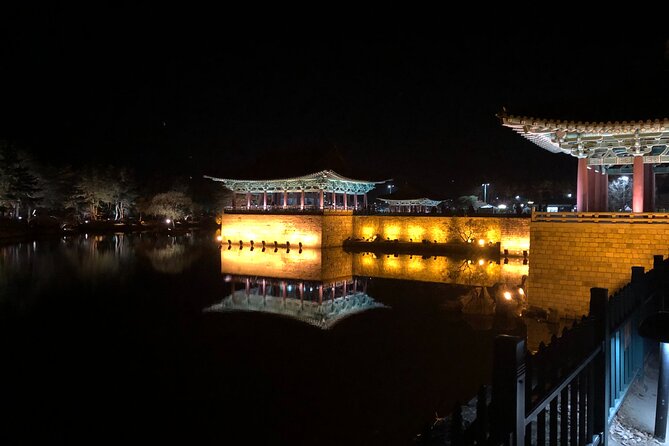
Woljeonggyo, also called Woljeong Bridge, is a historic stone bridge with major cultural and architectural importance. It is described as one of the country’s oldest surviving bridges, dating back to the Silla period.
The scheduled visit is 30 minutes. That makes it a quick stop, but it adds an important piece to the city’s story. Gyeongju was the capital of the Silla Kingdom from 57 BC to AD 935, and the bridge helps connect that long period of royal power with the physical city you see today.
You may prefer this stop to Bomun Lake if you want more architecture and less resort scenery. It is also a good place for photographs, and the guide may help with commemorative pictures. Several people appreciated the guide’s attention to taking photos during the day, a small service that can make a solo visit or couple’s outing more memorable.
The short schedule means you should arrive ready to walk and look closely. If you want extended photography time, ask whether the guide can adjust another stop rather than expecting the standard 30 minutes to cover everything.
Gyeongju National Museum: finish with context
The Gyeongju National Museum is the tour’s best place to pull the pieces together. Its collection contains more than 160,000 artifacts connected with Gyeongju and the Silla Kingdom.
You have about an hour here. That is long enough for a useful introduction, though not enough to examine every gallery in detail. The museum works well at the end because Bulguksa, Seokguram, and Woljeonggyo have already given you real places to picture. Objects in the collection can then make more sense instead of appearing as isolated displays.
If you are strongly interested in archaeology, you might want to return to the museum on your own. The tour’s one-hour visit is an overview, not a full museum day. Still, for a first look at Gyeongju, it is a smart final stop.
The guide can also help point out what deserves your attention. That personal direction is useful when a museum has a very large collection and your time is limited.
The guide makes the difference
The most praised part of this experience is the guide’s attitude. People describe a kind, punctual, friendly, and attentive driver who adjusts the pace to match the group. That matters because this tour is not only about getting from one attraction to another.
The guide is from Gyeongju and shares personal knowledge of the area. He can recommend local food and provide suggestions for places to visit after the tour. One person received a list of additional sights that could be explored on foot, which is especially useful if you are using this tour as an introduction on your first day.
There are also thoughtful personal touches. When one participant’s husband was ill and could not join, the guide brought him rice porridge and abalone. That is not a promised feature, but it shows the warm, considerate approach that appears repeatedly in the feedback.
Names vary in the available accounts. One person identifies the guide as Sang Jong, while another refers to Mr. Lee. Since the assigned guide may differ by date, confirm who will meet you if having a specific person matters.
Communication: workable, but know the limits
You should book this experience for the guide’s local insight, not for polished English commentary. Several people expected an English-speaking guide and instead met a local driver who used a translation app.
That arrangement has generally worked. Guests have held lively conversations through Google Translate, and the guide has used his phone to explain sites, answer questions, and keep the day moving. One clear tip is to download Papago before the tour. Google Translate is another practical choice.
Still, translation takes longer than natural conversation. Complex questions about religion, dates, or architecture may need to be broken into shorter sentences. I would prepare a few questions in advance and keep your phone charged.
The language issue is the main reason this tour is not a perfect fit for everyone. If you want a formal, continuous lecture in fluent English, choose a different format. If you are comfortable with a friendly guide, visual explanations, short translated messages, and a little patience, the language gap need not spoil the day.
Is $70.70 per person a fair price?
At $70.70 per person, the cost is reasonable for a four-hour outing if you value convenience and personal service. You are paying for a local driver-guide, an air-conditioned electric car, pickup, and a route linking five important places.
The value becomes stronger with two or three people sharing the experience. A small group can move quickly, stop for photos, and adjust the order or pace without negotiating with strangers. The car is also useful for Bulguksa and Seokguram, which are not as easy to connect with the central parts of Gyeongju.
The price is less compelling if you already have a rental car and are happy to research every site yourself. It is also not the best match if you want to spend several hours at one temple or museum. This is a broad first look, not a specialist tour of one monument.
Admission is listed as free for each stop, so the main value lies in transport, time saved, and the guide’s local help.
Timing, weather, and practical planning
The tour begins at 10:00 am and lasts about four hours. The schedule allocates one hour each to Bulguksa, Seokguram, and the National Museum, plus 30 minutes each at Bomun Lake and Woljeonggyo Bridge.
That is a full half-day. Traffic can affect the plan, especially during Chuseok holidays. Bad weather can also lead to cancellation, with a different date or full refund offered in that case. Plan your most important independent activity with some flexibility afterward.
Confirmation is provided when you book. Free cancellation is available up to 24 hours before the start time. Changes or cancellations made inside that 24-hour window are not accepted for a refund.
Service animals are allowed, and most people can participate. If you have a particular mobility or medical concern, ask before booking because the available information does not describe every surface or walking condition at the sites.
Who should book this Gyeongju tour?
I would choose this tour if you have only half a day, are staying in Gyeongju briefly, or want a clear introduction before exploring alone. It suits couples, small families, solo visitors, and anyone who prefers door-to-door transport over figuring out several connections.
It is especially useful for people who want to see both famous temples and the museum in one outing. The guide’s food recommendations and walking suggestions can also help shape the rest of your stay.
You should think twice if you need fluent English guiding, want a slow museum visit, or prefer to spend the whole day on foot. The translation app works, but it is still a compromise.
Should you book it?
For most first-time visitors with limited time, yes. The tour combines Gyeongju’s major cultural sights, uses a comfortable electric car, and gives you a local point of contact who can adjust the pace and offer advice beyond the scheduled route.
Book it early in your stay if possible. You will get your bearings quickly, learn which places deserve a longer return visit, and gain practical suggestions for food and walking routes. Just bring a translation app, keep your expectations realistic about English, and tell the guide early if you want to adjust Bomun Lake or another short stop.
With a 4.9 rating from 38 ratings and 100 percent recommendation shown in the supplied details, this is a strong half-day choice, particularly for visitors who value kindness, flexibility, and easy transport more than formal tour narration.
FAQ
How long is the guided car tour in Gyeongju?
The tour lasts approximately four hours, beginning at 10:00 am.
Which places does the tour visit?
The route includes Bulguksa Temple, Seokguram, Bomun Lake, Woljeonggyo Bridge, and the Gyeongju National Museum.
How many people can join the tour?
The tour has a maximum of three participants.
Is pickup available?
Yes. Pickup is offered, with the listed starting point in Noseo-dong, Gyeongju. The end point can be arranged anywhere in Gyeongju.
Does the guide speak English?
English ability may be limited. The guide uses Google Translate or another translation app to communicate and explain the sights.
What is the cancellation policy?
You can cancel up to 24 hours before the start time for a full refund. Cancellations or changes made less than 24 hours before the start time are not accepted for a refund. If poor weather or insufficient bookings cancel the tour, you will be offered another date or a full refund.
Just added around Gyeongju
- 7 Day Essential Korea Tour(Seoul, Nami, DMZ, Andong, Gyeongju, Busan_Meal Incl.)★ 5.0 · 3 reviews
- Korean UNESCO World Heritage Tour including Gyeongju, Andong and Daegu(2N3D)★ 5.0 · 3 reviews
- From Busan: Gyeongju Small Group Photo Tour & Hotel Pick-up★ 5.0 · 3 reviews
- Full Day Busan and Gyeongju Guided Tour★ 5.0 · 4 reviews
- Gyeongju private tour with an official tour guide (Unesco)★ 4.5 · 4 reviews
- UNESCO Listed Historic Sites in Gyeongju National Park★ 5.0 · 5 reviews
- Full Day Private car tour to UNESCO Gyeongju&Yangdong village★ 5.0 · 5 reviews
- From Daegu: Gyeongju UNESCO Tour 7 Highlights with Bulguksa★ 4.6 · 5 reviews
Gyeongju Heritage Tours, compared.

Gyeongju Guided Day Trip to Three Kingdoms Capital
Read our review →
Gyeongju UNESCO World Heritage Guided Day Tour
Read our review →
Gyeongju UNESCO World Heritage Guided Day Tour from Busan
Read our review →
Old Korea Thousand History Tour of Gyeongju from Busan
Read our review →
Gyeongju UNESCO sites Private tour with licensed tour guide
Read our review →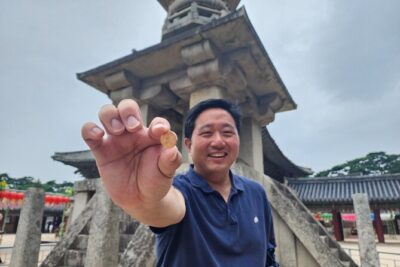
Private Gyeongju Tour – Explore Gyeongju UNESCO Sites
Read our review →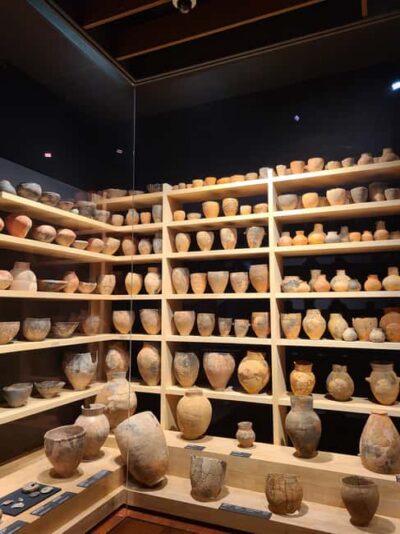
Gyeongju UNESCO Legacy Tour with National Museum
Read our review →
UNESCO Heritage Tour Including Bulguksa Temple
Read our review →Browse the lists this tour appears in